
Particle Counter Technology Guide: Choosing the Right Type for Your Industry
Particle Counter Technology Guide: Choosing the Right Type for Your Industry
Selecting a particle counter is not a one-size-fits-all decision. Whether you need to monitor cleanroom air quality, verify liquid purity in semiconductor manufacturing, or comply with GMP pharmaceutical regulations, the right instrument directly impacts compliance, operational efficiency, and cost. This guide decodes the major particle counter technologies—airborne vs. liquid, laser vs. optical, handheld vs. online—and provides a step-by-step framework to help procurement professionals match the correct device to their specific application.
What Is a Particle Counter? Definition & Core Function
A particle counter is an instrument that detects and counts microscopic particles suspended in a fluid (air or liquid). Using light scattering, laser diffraction, or light obscuration principles, it measures particle size and concentration in real time. Particle counters are essential for contamination control in industries ranging from pharmaceuticals and biotechnology to semiconductors, HVAC, and environmental monitoring.
How Does a Particle Counter Work? Technology Explained
Most modern particle counters use laser light scattering. A sample stream passes through a laser beam; particles scatter light onto a photodetector. The intensity of the scattered light correlates with particle size, and the count per volume is calculated. For liquid particle counters, the sample is typically introduced via a syringe or flow cell, and the same principle applies. Optical particle counters (OPCs) use white light or LEDs, while laser particle counters (LPCs) offer higher sensitivity (down to 0.1 µm for airborne, 0.05 µm for liquid).
Why Is Particle Counter Selection Important?
- Regulatory Compliance: ISO 14644, EU GMP, and FDA 21 CFR Part 11 require specific particle monitoring protocols.
- Product Quality: In semiconductor fabs, one 0.5 µm particle can ruin a wafer; in pharma, contamination leads to batch rejection.
- Cost Efficiency: Choosing the wrong type (e.g., a handheld for a permanent cleanroom monitoring system) wastes capital and manpower.
- Data Integrity: Modern IoT-enabled counters provide real-time alarms, trend analysis, and remote access.
Industry Context: Who Uses Particle Counters?
Particle counters are used by:
- Pharmaceutical & Biotech: Cleanroom classification (ISO 5–8), aseptic filling area monitoring, sterility testing.
- Semiconductor & Electronics: Lithography area, wafer handling, chemical purity verification.
- Medical Device Manufacturers: Cleanroom validation for implant production.
- HVAC & Building Management: Indoor air quality (IAQ) monitoring, filter efficiency testing.
- Environmental Agencies: Aerosol monitoring, ambient particulate matter (PM2.5/PM10).
- Food & Beverage: Liquid clarity testing, rinse water quality.
Detailed Solution: Particle Counter Categories Comparison
| Type | Detection Method | Typical Size Range | Best For |
|---|---|---|---|
| Airborne Particle Counter | Laser / Optical scattering | 0.1 µm – 25 µm | Cleanroom classification, HVAC, sterile manufacturing |
| Liquid Particle Counter | Laser light obscuration | 0.05 µm – 400 µm | Pure water, chemicals, pharmaceutical injectables |
| Handheld Particle Counter | Laser / Optical | 0.3 µm – 10 µm | Spot-checking, portable cleanroom validation, field service |
| Online Particle Counter | Fixed laser sensor | 0.1 µm – 10 µm | Continuous real-time monitoring, manufacturing lines, facility management |
| Portable Airborne Particle Counter | Laser diode | 0.3 µm – 25 µm | Multi-room cleanroom certification, periodic testing |
| Dust Particle Counter | Optical / Laser | 0.5 µm – 100 µm | Industrial hygiene, mining, construction dust monitoring |
Key Technology Distinctions
- Laser vs. Optical: Laser counters (e.g., Zetron's B-series) offer higher sensitivity and lower false counts, essential for ISO 5 and below. Optical counters are sufficient for routine IAQ or ISO 8 monitoring.
- Handheld vs. Online: Handheld units are for mobile validation; online sensors (like Zetron R200/R210) integrate with building management systems (BMS) for 24/7 monitoring.
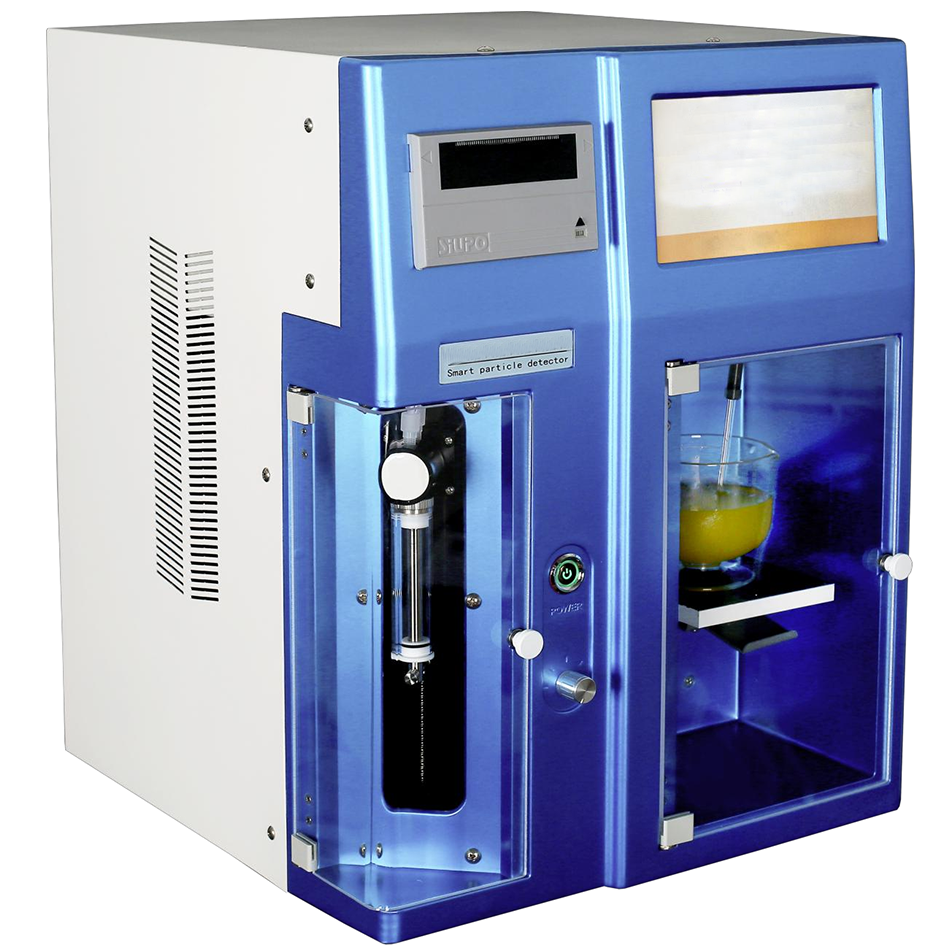
- Airborne vs. Liquid: Airborne counters measure particles in air; liquid counters (e.g., LPC-7CE) use a special flow cell to count particles in water or chemicals.
Step-by-Step Selection Framework for Buyers
- Define the Monitoring Medium: Air or liquid? This determines the instrument category.
- Identify Required Particle Size & Sensitivity: Check your regulatory standard. For ISO 5 cleanrooms, you need 0.1 µm or 0.3 µm sensitivity. For DI water in semiconductor, <0.1 µm is typical.
- Choose Sampling Flow Rate: 1 CFM (28.3 L/min) for standard cleanroom classification; 2.83 L/min for smaller portable units.
- Determine Mobility Needs: Portable for multi-point validation; fixed online for continuous monitoring.
- Evaluate Data Management: Does your facility require IoT integration, cloud logging, or GMP-compliant data integrity (21 CFR Part 11)? Zetron's online sensors support wireless IoT.
- Check Certifications: Look for ISO 9001, CE, RoHS, FCC, ATEX (for hazardous areas), and calibration traceability to NIST. Zetron holds ISO9001, ISO240001, ISO45001, CE, FCC, and ATEX certifications.
- Assess Total Cost of Ownership: Consider calibration frequency, replacement parts, and software licensing. Zetron offers full OEM/ODM services for customization.
Use Cases: Real-World Application Examples
Case 1: Pharmaceutical Cleanroom (Airborne Monitoring)
A large pharma manufacturer (similar to Bayer) needed to validate three ISO 7 cleanrooms. They selected Zetron's B330 Multi-Channel Airborne Particle Counter (0.3–25 µm) for its ability to sample at 28.3 L/min and its compliance with EU GMP Annex 1. The portable unit allowed easy room-to-room certification, and the built-in printer provided instant pass/fail reports.
Case 2: Semiconductor Pure Water Line (Liquid Monitoring)
A semiconductor fab (similar to Samsung) required real-time monitoring of ultrapure water (UPW) for particles ≥0.1 µm. They integrated Zetron's LPC-7CE Intelligent Liquid Particle Counter into their DI water loop. With detection down to 0.05 µm and a flow cell designed for high-purity environments, the system provided continuous data to their SCADA, reducing wafer defects by 15%.
Case 3: HVAC & Critical Environment (Online Monitoring)
A data center operator (similar to Donaldson's client base) needed 24/7 particulate monitoring in server rooms. They deployed Zetron's R210 Laser Airborne 2.83L/min Fixed Online Particle Counter with IoT connectivity. The system sends alerts when particle levels exceed thresholds, enabling proactive filter replacement and preventing equipment failure.
How to Choose a Particle Counter Supplier: Buyer Concerns
- Certification & Compliance: Ensure the supplier's instruments meet your industry standards. Zetron's ISO9001, ISO240001, ISO45001, CE, RoHS, FCC, and ATEX certifications guarantee international quality.
- Technical Support & Customization: Do they offer OEM/ODM? Can they adapt firmware, sensors, or data formats? Zetron provides full-chain OEM/ODM from needs diagnosis to maintenance.
- Calibration & After-Sales: A reliable supplier offers NIST-traceable calibration and local support. Zetron's Beijing facility and global shipping ensure quick turnaround.
- Proven Track Record: Look for client references like Donaldson, Samsung, Bayer—indicators of trust in critical applications.
Frequently Asked Questions (FAQ)
What is the difference between an optical particle counter and a laser particle counter?
Optical particle counters use white light or LEDs and are typically less sensitive (≥0.5 µm). Laser particle counters use a laser diode for higher intensity and can detect particles as small as 0.1 µm or even 0.05 µm in liquid. Laser counters are preferred for critical cleanroom and pharmaceutical applications.
How often should a particle counter be calibrated?
Industry standards (ISO 21501) recommend calibration every 12 months, or more frequently if the instrument is used heavily. Always use a certified calibration standard traceable to NIST.
Can a handheld particle counter replace an online system?
No. Handhelds are for spot-checking and periodic validation. Online systems provide continuous real-time data and automatic alarms, which are mandatory for regulatory continuous monitoring in pharmaceutical and semiconductor fabs.
Which particle counter is best for GMP cleanroom classification?
A portable airborne laser particle counter with a flow rate of 28.3 L/min (1 CFM) and sensitivity of 0.3 µm or 0.5 µm is standard. Zetron's B330/B550/B1030 series are widely used for GMP classification.
How do I select a liquid particle counter for my process?
Consider the fluid type (water, chemical, oil), required particle size (e.g., 0.05 µm for UPW), flow rate, and compatibility with your sample system. The LPC-7CE from Zetron covers 0.05–100 µm and is suitable for ultrapure water and chemical applications.
Conclusion: Making the Right Choice for Your Business
Choosing the correct particle counter technology is a strategic procurement decision that affects compliance, quality, and operational efficiency. By understanding the differences between airborne and liquid, laser and optical, handheld and online, you can align your purchase with your exact application requirements. Zetron, with nearly 20 years of experience in gas and particle detection, offers a comprehensive product line backed by international certifications and OEM/ODM flexibility. Contact us today for a free consultation or to request a sample trial.

Need help selecting the right particle counter for your industry? Contact Zetron experts at +86-15699785629 or email info@bjzetron.com