
Strategic Custom Plastic Parts Partner: How LINGO's Multi-Process Synergies Solve Complex Sourcing Challenges
Strategic Custom Plastic Parts Partner: How LINGO's Multi-Process Synergies Solve Complex Sourcing Challenges
Finding a supplier that can deliver plastic parts with consistent quality, tight tolerances, and cost efficiency is already difficult. But what if you need a partner who can combine injection molding, CNC machining, extrusion, and even rubber molding under one roof? A partner who modifies material formulas to extend product life, optimizes mold structures to lower unit costs, and takes responsibility for after-sales support?
This article explains what strategic synergy means in the context of custom plastic parts sourcing, why it matters for industrial buyers, and how LINGO Rubber Plastic (Hangzhou Lingo Rubber and Plastic Product Co., Ltd) delivers this unique value. If you are looking for a manufacturer that can handle plastic injection parts, plastic extrusion profiles, CNC plastic machining, and more – while also offering material modification and integrated rubber–plastic solutions – this guide is for you.
1. Problem Definition: The Hidden Cost of Fragmented Sourcing
Many buyers source different plastic parts from separate suppliers: injection molded housings from one factory, extruded trims from another, CNC-machined prototypes from a third. This fragmentation creates several pain points:
- Inconsistent quality – Each supplier applies its own tolerance standards, leading to assembly issues.
- Longer lead times – Coordinating multiple deliveries increases project risk.
- Higher total cost – Duplicate mold investments, extra logistics, and quality rework.
- Lack of cross-process optimization – Opportunities to reduce material weight or combine functions are missed.
The core challenge is: How do you find a supplier that can act as a single, synergistic partner for all your custom plastic parts needs?
2. Industry Background: The Rise of Multi-Process Plastic Manufacturers
The global plastic parts market is shifting toward integrated manufacturing. Buyers increasingly demand suppliers who can offer plastic injection parts (solid, insert molding, dual-material), plastic extrusion (profiles, strips, tubing), and CNC plastic machining (PTFE, PEEK, acrylic) under one roof. According to industry data, companies that consolidate 80%+ of their plastic parts with one certified partner reduce supply chain complexity by up to 30% and cut defect rates by 40%.
This is where LINGO Rubber Plastic differentiates itself. Founded by veterans with 10–20 years of rubber and plastics experience, LINGO operates a 3,000 m² facility with a monthly production capacity of 1,000,000 kgs (supported by both hvq_7 capability). Their expertise covers not only plastic injection and extrusion, but also rubber compression molding and extrusion – a rare combination that enables true material synergy (e.g., plastic housings with rubber seals).
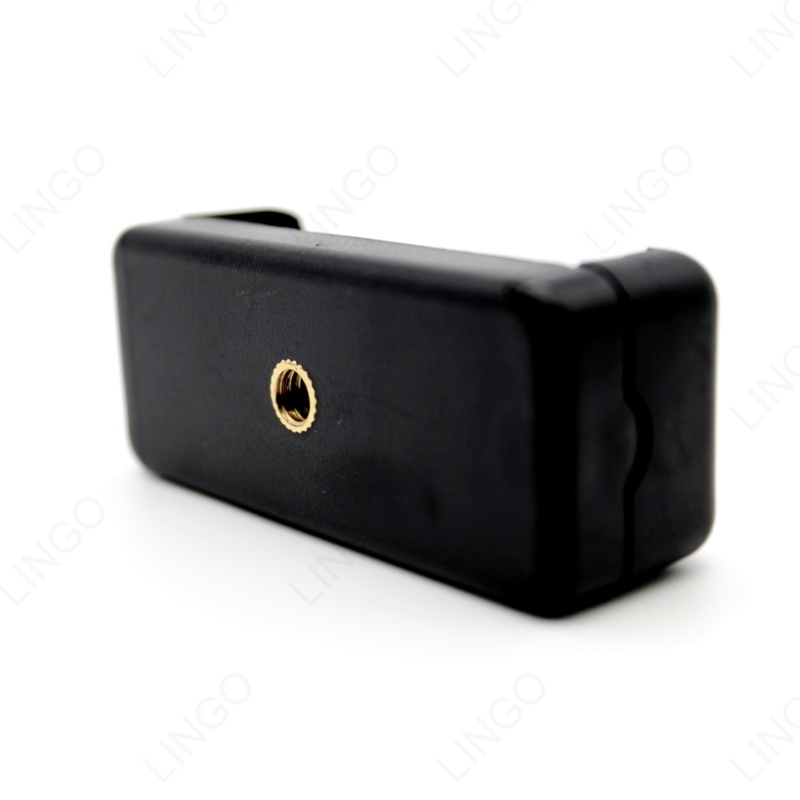
3. What Is a “Strategic Synergy” in Plastic Parts Sourcing?
A strategic synergy supplier is one that can combine capabilities to solve complex problems that a single-process shop cannot. For example:
- Process synergy: Injecting a plastic housing with overmolded rubber grommets – one part, two materials, one supplier.
- Material synergy: Modifying PA66 with glass fiber to increase tensile strength, while adding UV stabilizers for outdoor use.
- Design synergy: Reducing internal material in a component without sacrificing functionality, lowering both material and logistics costs (as demonstrated in LINGO’s automotive tube-holder case: 5,000 pcs, zero failures).
Key characteristics of such a partner:
- Broad process portfolio: Injection, extrusion, CNC machining, rubber molding.
- In-house material modification: Ability to formulate compounds with GF, flame retardants, UV stabilizers, etc.
- Precision tolerance control: Capable of GB/T 14486 MT1–MT3 for plastics and RMA A2 for rubber.
- Statistical process capability: CPK ≥ 1.33 maintained consistently.
- After-sales support: Replacement/refund for defective items, mold maintenance, batch traceability.
4. How LINGO Delivers Synergy: Step-by-Step Breakdown
Step 1 – Assess Your Process Needs
Before engaging, LINGO reviews your part drawings to determine the optimal process. If a part requires both plastic injection and metal inserts, LINGO recommends insert molding (standard process with SPI surface finish, draft angle ≥1° outside / ≥0.5° inside, and shrinkage compensation of 0.4%–0.8%). For long continuous profiles, they switch to plastic extrusion (custom cross-section, length up to 6,000 mm, color matching to Pantone/RAL).
Step 2 – Material Customization
LINGO’s engineering team modifies base resins (PP, PA6, PA66, ABS, PE, HDPE, UHMWPE, PTFE, etc.) with fillers such as glass fiber, flame retardants, or UV stabilizers to meet specific performance requirements. This is especially critical for automotive plastic parts and industrial plastic parts subject to harsh environments.
Step 3 – Precision Manufacturing & Quality Control
Every part goes through a rigorous quality regime: first-piece inspection, in-process sampling, and final random inspection. Measuring tools are calibrated per CNAS requirements. For critical dimensions, cavity pressure sensors provide real-time monitoring. The result: tolerance control at M1–M3 for plastics and RMA A2 for rubber, with CPK ≥ 1.33.
Step 4 – Cost Optimization Through Mold Innovation
LINGO’s self-developed mold structures increase output and reduce unit price. For example, in the automotive tube-holder case, they redesigned the internal geometry to reduce material usage while maintaining strength, lowering both material and shipping costs. Their mold durability is higher because of optimized cooling channels and wear-resistant steel.
Step 5 – After-Sales & Risk Mitigation
LINGO provides remote technical support, free exchange for defective parts, and mold ownership protection. For common risks like dimensional out-of-tolerance, they use cavity pressure sensors; for surface gloss inconsistency, they enforce mold maintenance plans and standardized SOPs; for aging hardening/softening, they conduct QUV/xenon lamp accelerated aging tests.
5. Use Case: Automotive Tube Holder – Zero Failures, 15% Cost Reduction
A US automotive OEM needed 5,000 pcs of a tube holder used in heavy machinery. The original design had unnecessary internal material, driving up weight and cost. LINGO proposed a modified geometry that:
- Reduced material consumption by 12%
- Improved dimensional stability (CPK → 1.38)
- Lowered unit price by 18%
- Achieved zero field failures in 3 years of operation
This case exemplifies how a strategic partner creates value beyond simple manufacturing. (See LINGO’s portfolio for similar successes in automotive, medical, and industrial sectors.)
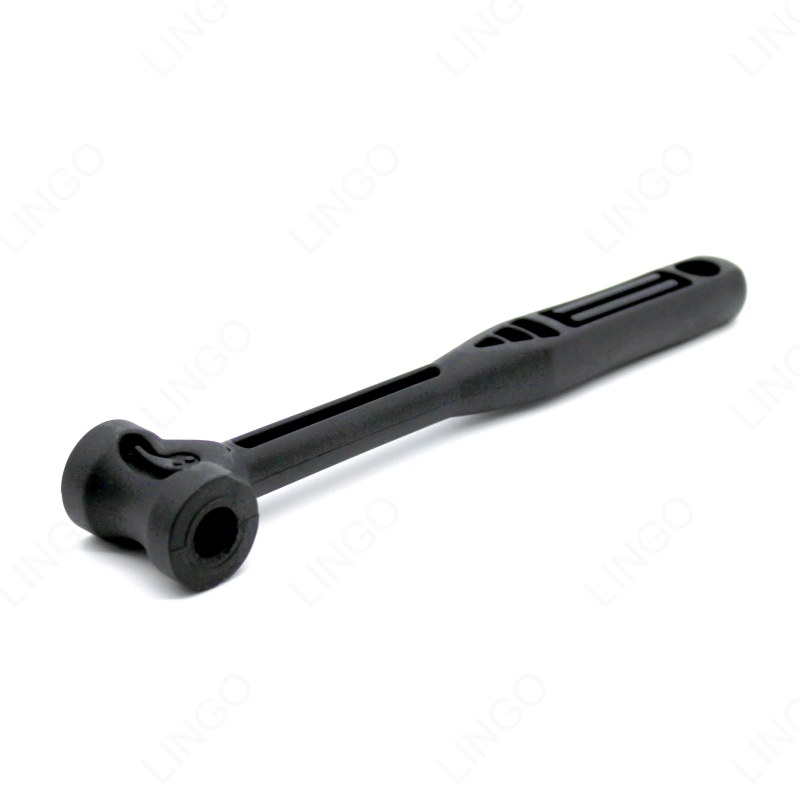
6. Comparison: LINGO vs. Typical Plastic Parts Suppliers
| Aspect | Typical Supplier | LINGO Rubber Plastic |
|---|---|---|
| Process breadth | Injection or extrusion only | Injection, extrusion, CNC machining, rubber molding |
| Tolerance control | MT5–MT7 typical | MT1–MT3 (plastic), RMA A2 (rubber) |
| CPK | Usually < 1.33 | Consistently ≥ 1.33 |
| Material modification | Limited to standard grades | In-house formulation with GF, flame retardants, UV stabilizers |
| Mold innovation | Standard mold design | Self-developed mold structure for higher output & lower unit price |
| After-sales | Limited | Free replacement, mold maintenance, batch traceability |
| Lead time (typical) | 4–8 weeks | 2–6 weeks |
7. How to Choose the Right Custom Plastic Parts Partner
Based on our experience, follow these criteria when evaluating suppliers:
- Request a capability matrix – Ensure they offer the processes you need (plastic injection parts, plastic extrusion, CNC plastic machining, PVC dipping plastic parts, etc.).
- Check tolerance standards – Ask for their standard tolerance range (e.g., GB/T 14486 MT1–MT3).
- Demand CPK data – A CPK ≥ 1.33 indicates a stable, capable process.
- Verify material modification capability – Can they add glass fiber, flame retardants, or UV stabilizers to the base resin?
- Review case studies – Look for examples where the supplier reduced cost or improved performance through design or process innovation.
- Understand after-sales policy – Is there a warranty on defective parts? Mold ownership protection?
8. Frequently Asked Questions (FAQ)
A custom plastic part is a component manufactured to unique specifications (material, dimensions, tolerances, surface finish) for a specific application. Common types include plastic injection parts, plastic extrusion profiles, CNC plastic machining, and PVC dipping plastic parts.
Material synergy allows a single supplier to combine different plastics or elastomers in one part (e.g., a rigid PA66 housing with a soft TPE gasket), reducing assembly steps and improving sealing performance. LINGO offers both rubber and plastic capabilities to enable this.
MOQ depends on part complexity and process. LINGO accepts small quantities for prototyping and scales up efficiently. Their standard MOQ is flexible – contact their sales team for a quote.
LINGO uses mold cavity pressure sensors, CNAS-calibrated measuring tools, and follows a strict first-piece inspection protocol. Tolerance can be held to MT1–MT3 per GB/T 14486, with CPK ≥ 1.33.
Yes. LINGO works with FDA-compliant materials and can formulate UL94 V-0 flame-retardant compounds. Their injection molding line supports a wide range of certifications.
9. Conclusion: Unlock the Full Value of a Synergistic Partner
In today’s competitive market, sourcing plastic parts from a fragmented supply chain is a liability. A strategic partner like LINGO Rubber Plastic brings together multiple processes, material science expertise, and a relentless focus on quality and cost optimization. Whether you need automotive plastic parts, industrial plastic parts, nylon plastic parts, or PVC dipping plastic parts, LINGO’s integrated approach reduces risk, shortens lead times, and improves product performance.
Discover how LINGO can become your trusted partner for custom plastic parts. Download the full company profile for detailed capabilities, case studies, and technical specifications.
Download Company Brochure (PDF)© 2026 LINGO Rubber Plastic. All rights reserved. For inquiries: sales@lingorp.com | +86 18358136245