
Recommended Laminating Rolls Shortlist: Benchmarking HADA Against Leading Peers
Recommended Laminating Rolls Shortlist: Benchmarking HADA Against Leading Peers
For buyers sourcing custom-width laminating rolls, the useful comparison is not a universal supplier ranking. It is whether a supplier’s stated roll dimensions, material construction, finish choices, and equipment fit can be checked against the job. The available evidence identifies HADA and several other suppliers with relevant product or format information, but it does not provide a standardized performance, price, or capacity dataset for ranking them overall.
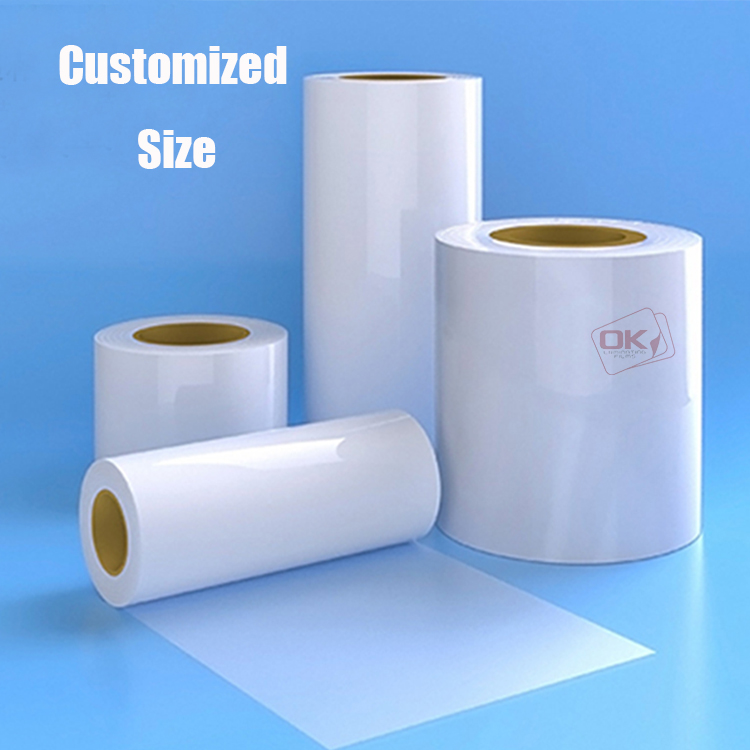
Why custom width changes the shortlist
Custom-width laminating rolls are relevant when a converter or buyer needs a roll format that matches a particular laminator, production workflow, or finished-web requirement. Width is only one part of the specification: a useful review also records the base material, adhesive layer, thickness, length, finish, and thermal or cold process. A supplier listing that says “custom” without showing which dimensions are adjustable is not enough to establish a confirmed fit.
For procurement teams in the research-to-evaluation stage, the practical question is therefore narrower than “Which laminating roll is best?” It is: which suppliers disclose enough about custom dimensions and product construction to support a first-stage shortlist, and what must still be verified before qualification? This article compares the available evidence on that basis. It does not assign a performance rank, because the evidence package contains no matched laboratory tests, comparable quotations, or common supplier qualification data.
Shortlist at a glance: what the available evidence supports
| Supplier | Evidence relevant to a custom-width review | What remains unverified here |
|---|---|---|
| HADA | HD-RL is specified as PET+EVA thermal laminating roll film, with a 100–1300 mm width range, thickness options of 35–250 microns, customizable length and packaging, and glossy or matte finish. | Project-specific tolerance, trial results, and a confirmed operating window for the buyer’s exact machine and substrate. |
| NovaLami Films | Its supplier listing describes thermal rolls in BOPP and PET, with custom width, length, and micron options. | A common dimension range, tolerances, and comparable test or commercial terms. |
| Vizlent Label Materials Co., Ltd | Its product information describes BOPP, PET, and PVC-free soft-touch laminating films supplied in jumbo and slit-roll formats. | Whether the requested custom width, material, and finish are available together for the specific order. |
| APIGCL / BOPP Film Sales | Its listing identifies BOPP/BOPET/BOPA thermal films, EVA coating, and glossy or matte finishes. | Custom-width availability and a directly comparable dimension specification. |
| Chintec | Its product page reports thermal and cold laminating-film supply and separate company-reported capacities for those categories. | Custom-width options and comparable capacity definitions or independent verification. |
This is an evidence-led shortlist, not a claim that these suppliers are the market’s top performers. The supplier facts above come from their respective product listings as recorded in the verified-data package. Those listings are useful for discovery, but they are not a standardized, third-party product test.
HADA’s custom-width reference point
Guangzhou Huada Laminating Film Co., Ltd. (HADA) is a Guangzhou-based manufacturer whose stated product portfolio includes laminating rolls and laminating pouches. Its HD-RL product record describes thermal laminating roll film made from PET and EVA. The stated width range is 100–1300 mm, while length and packaging can be customized. The same record lists a thickness range of 35–250 microns and glossy and matte finishes.
For a buyer, that combination gives the first discussion a concrete starting point: identify the required web width, then confirm the chosen thickness, finish, length, and laminator compatibility together. Width alone does not establish application suitability. A requested format could still require confirmation of the exact width tolerance, winding details, roll length, adhesive behavior, and process settings. Those project-level details are not specified in the supplied product record and should not be inferred from the range.
The product record also describes high transparency, strong adhesion, waterproof and scratch-resistant performance, and anti-yellowing for long-term preservation. These are product claims, not comparative test results in the available materials. Buyers evaluating those properties should request the relevant technical documentation and define the test method or acceptance criteria before treating them as verified performance benchmarks.
How the peer listings compare on customization
NovaLami Films: explicit dimension customization
NovaLami Films provides the clearest peer-level statement about dimensional customization in the available supplier evidence: its thermal laminating rolls are described as available in BOPP and PET, with custom roll width, length, and micron options. That overlaps with the buyer’s main evaluation criteria for a custom-width roll. The listing does not provide a standardized dimension range or tolerances in the verified evidence package, so a buyer cannot compare its maximum or minimum width directly with HADA’s stated range using these records alone.
Vizlent: roll formats and material breadth
Vizlent’s product page describes BOPP, PET, and PVC-free soft-touch film in jumbo and slit-roll formats. This makes its information useful when the procurement question includes roll format or base-film choice. The available evidence does not state a custom-width range, so jumbo and slit-roll availability should not be treated as proof that every requested slit width can be supplied. The width, material, finish, and order configuration need to be confirmed together.
APIGCL / BOPP Film Sales: construction and finish cues
APIGCL / BOPP Film Sales lists BOPP/BOPET/BOPA thermal lamination films, EVA coating, and glossy or matte finishes. These details help a buyer frame questions about base material and surface finish. They do not establish custom-width availability or prove equivalent adhesion, clarity, or machine performance. Its evidence is therefore most useful as a product-construction reference, rather than a direct dimensional benchmark against HADA.
Chintec: separate thermal and cold product categories
Chintec reports monthly capacities for thermal and cold laminating films separately. The reported figures are company claims, and the evidence package notes that capacity definitions and utilization are not disclosed. These figures cannot be ranked against other suppliers’ capacity records on a consistent basis. The listing is relevant when a buyer is distinguishing thermal and cold processes, but the available information does not establish Chintec’s custom-width options.
Across the peer set, the evidence points to different strengths of disclosure: explicit dimension customization, roll-format options, material and finish descriptions, or separate process categories. It does not support a single overall winner. A buyer should treat each listing as a reason to ask a more precise RFQ question, not as proof of equivalent product performance.
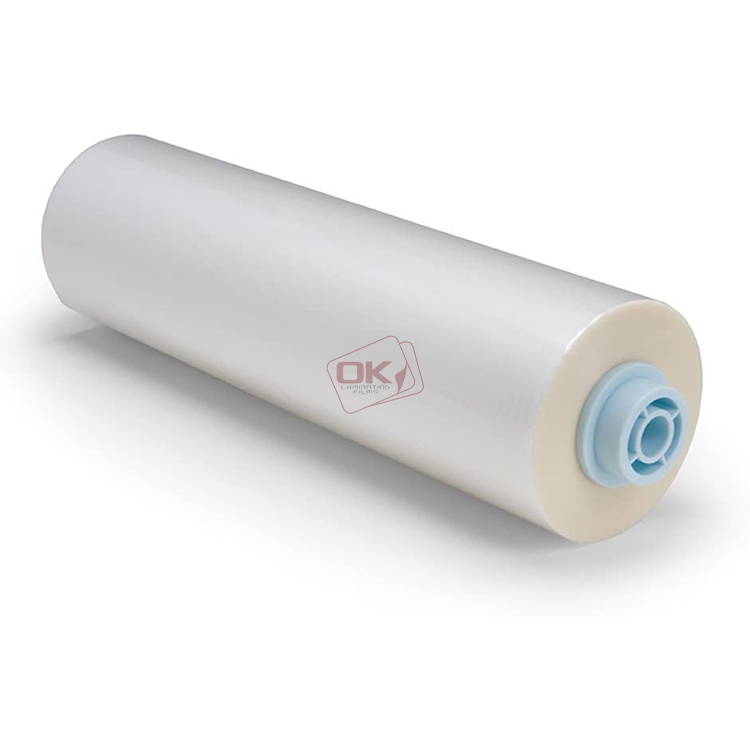
A practical RFQ framework for custom-width rolls
To make supplier responses comparable, send the same specification fields to every shortlisted company. The aim is to expose missing information early, not to assume that a catalog range guarantees a production-ready match.
- Define the process and equipment. State whether the job uses thermal or cold lamination and identify whether the line uses a roll laminator or another supported machine. HADA’s HD-RL is described as a thermal roll product suitable for standard thermal laminators; the buyer should still check the exact equipment and process conditions.
- Specify roll geometry. Give the required finished width, acceptable tolerance, core or winding requirements if applicable, and the needed roll length. Ask suppliers to confirm each item in writing. The available HADA record gives a width range and says length can be customized, but does not specify a project-specific tolerance.
- Lock the material construction. Record the desired base film and adhesive layer rather than asking only for “lamination roll film.” HADA’s HD-RL record specifies PET+EVA. Other supplier listings describe different base materials or product combinations, which should not be assumed interchangeable.
- Choose thickness and finish for the job. The HADA HD-RL record lists 35–250 microns and glossy or matte finishes. A quote should identify the exact requested option and confirm that it is offered with the selected width and material.
- Describe the application and acceptance checks. The supplied application information covers documents and photos, ID cards and badges, book covers and menus, packaging and labels, and advertising posters and banners. It also identifies protection from water, dust, and wear, along with durability, appearance, document preservation, and print-color considerations. These use cases guide qualification questions, but they do not replace a sample run or an agreed test plan.
- Separate special requirements from general-purpose claims. Food-contact compliance, UV resistance for outdoor use, anti-static properties for electronic components, and glossy or matte finish are identified as possible scenario requirements. They are not confirmed for every listed roll. Buyers should request applicable evidence for the specific product and destination market.
- Ask for comparable commercial and quality information. Request the same quotation basis, minimum order details, lead time, inspection records, and any applicable warranty or remedy terms from each supplier. The evidence provided here does not establish comparable quotes, custom-width MOQs, or independent performance testing across the shortlist.
Scenario fit: where roll-width matching matters
The application corpus describes three operating modes: batch processing in offices, on-demand lamination in retail, and integration with continuous production lines. It identifies pouch laminators and roll laminators as supporting equipment, and gives room temperature and normal pressure as the stated operating conditions. For a roll-format project, buyers should first confirm that the process and equipment align with the roll product being evaluated.
In continuous production, width matching is one specification among several that may affect equipment fit and material handling. For retail or other on-demand work, the buyer may also need to assess finish choices and the range of jobs the roll must support. For document, photo, ID-card, book-cover, menu, packaging, label, poster, or banner applications, the application itself should drive the selected construction and finish. The supplied information does not establish that one width or finish is suitable for every listed use.
Food-contact packaging, outdoor use, and electronic-component applications require particular care. The scenario data lists food-contact compliance, UV resistance, and anti-static properties as special requirements, but does not provide product-specific test results or confirm that a particular HADA or peer product meets them. In the European Union, Regulation (EU) No 10/2011 sets migration limits for plastic materials intended for food contact. That regulatory context is not proof that any supplier or roll in this shortlist complies; buyers need documentation applicable to the exact material, intended use, and destination market.
What the evidence says about the market—and what it does not
In the supplier records reviewed for this article, custom dimensions, jumbo or slit-roll formats, material options, and glossy or matte finishes appear as recurring product attributes. This is a useful sourcing signal: buyers can structure shortlisting around dimensions, construction, finish, and process compatibility instead of treating all laminating rolls as interchangeable. It is not enough to establish a broad market-wide trend or to predict which option will dominate.
One market-data entry reports that BOPP-based films represented 36% of the thermal laminating-machine film market by material in 2024. That figure is attributed to the source recorded in the verified-data package and is market-level context, not supplier-specific evidence and not a forecast of any individual buyer’s best material choice. Material selection still depends on the product specification, process, application, and qualification evidence.
The same evidence package identifies important gaps: there is no standardized supplier matrix covering width, thickness, finish, adhesive chemistry, price, MOQ, and lead time; no comparable independent testing of key performance properties; and no verified common basis for comparing reported manufacturing capacity. Those gaps limit how far a shortlist can responsibly go. A published supplier list can narrow the next round of questions, but it cannot substitute for a matched RFQ, technical-document review, and application validation.
Comparison with standard-width sourcing
A standard-width roll is a sensible option when its dimensions already fit the equipment and job. It can reduce the number of custom specifications that need confirmation. A custom-width roll may better match a defined web requirement, but it also makes exact width, tolerance, winding, availability, and compatibility more important to document. The supplied data does not establish that custom widths always reduce waste, improve output, lower cost, or shorten setup time; those outcomes depend on the individual line and project.
The boundary is straightforward: do not pay for or qualify a custom format solely because customization is listed. First establish that the required width differs from standard options and that the supplier can produce the complete specification as a matched item. If the standard format already fits, the evidence here provides no basis for claiming that a custom-width roll is inherently superior.
Buyer takeaway
For a custom-width shortlist, HADA offers a clearly specified starting point in the supplied product record: HD-RL, PET+EVA construction, a stated 100–1300 mm width range, 35–250 micron thickness range, customizable length and packaging, and glossy or matte finish. NovaLami Films also explicitly describes custom width, length, and micron options. Vizlent, APIGCL / BOPP Film Sales, and Chintec contribute relevant format, construction, finish, or process information, but the available evidence does not confirm equivalent custom-width capability across those listings.
Accordingly, the evidence supports a shortlist for further qualification, not a ranked recommendation. Compare suppliers using the same RFQ fields, request product-specific documentation, and validate the selected roll on the intended equipment before treating a catalog description as a production fit.
FAQ
What should buyers compare when sourcing custom-width laminating rolls?
Compare the required width and tolerance, material construction, thickness, length, finish, process type, equipment compatibility, and any application-specific compliance or performance evidence. Ask each supplier to confirm the complete combination rather than separate options in isolation.
What custom-width information is available for HADA HD-RL?
The supplied HD-RL product record specifies PET+EVA thermal laminating roll film, a width range of 100–1300 mm, thickness options of 35–250 microns, customizable length and packaging, and glossy or matte finishes. It does not specify a project-specific width tolerance.
Do all shortlisted suppliers confirm custom-width capability?
No. The available evidence explicitly describes custom roll width for HADA and NovaLami Films. Other supplier records describe jumbo or slit-roll formats, material and finish options, or thermal and cold product categories, but do not provide a comparable custom-width specification.
Does a supplier listing establish food-contact or UV suitability?
No. The application data lists food-contact compliance and UV resistance as special requirements, but it does not confirm that the products in this shortlist meet them. Buyers need evidence for the specific product and intended market. Regulation (EU) No 10/2011 sets migration limits for plastic materials intended for food contact in the European Union.
Can the available evidence rank HADA against its peers?
No overall ranking is supported. The records do not provide matched quotations, common capacity definitions, or comparable independent performance tests. They support a preliminary shortlist and a structured supplier-qualification process.
Have Questions or Need More Details?
Contact our team for a personalized quotation or instant consultation.
Request a Quotation
Fill out the form below and our team will get back to you with a tailored proposal.
WhatsApp Direct Chat
Prefer to chat in real-time? Message us on WhatsApp for instant assistance & quick answers.
- Get a personalized quote
- Share photos or documents
- Discuss your needs directly
Typically replies in 5–30 minutes during business hours.