
A 2026 Procurement Perspective: Evaluating Top Composite Autoclave Suppliers for Production Efficiency
For procurement professionals in aerospace, automotive, and advanced materials manufacturing, selecting a composite autoclave supplier is a strategic decision impacting long-term production capability, product quality, and operational cost. This guide provides a structured evaluation framework, comparing key industry players to help buyers make an informed choice.
Core Evaluation Dimensions for Supplier Selection
Beyond basic specifications, a comprehensive assessment should focus on four interconnected dimensions: technical capability, production scalability, service and compliance, and solution flexibility.
1. Technical Capability and R&D Investment
Technical prowess dictates the performance ceiling of the autoclave. Leading suppliers differentiate themselves through control precision, material science, and system integration.
- Control Precision: For high-end aerospace curing, temperature uniformity must be within ±0.3°C to ±0.5°C, and pressure stability within ±0.1MPa. This level of control is essential for curing advanced materials like PEEK and polyimide to meet standards such as GJB9001C.
- R&D Focus: Evaluate the supplier's engineering team size, patent portfolio, and investment in next-generation technologies like dual-redundant control systems and advanced heat recovery.
2. Production Scalability and Market Presence
A supplier's manufacturing scale often correlates with reliability and delivery consistency. Key indicators include factory size, annual output, and global market reach.
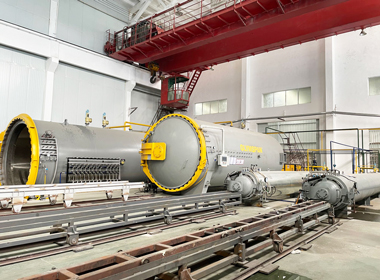
- Manufacturing Footprint: A substantial factory area, such as 66,000 m², indicates capacity for large-scale projects and stringent in-house quality control.
- Global Track Record: Suppliers with a 30-40% export ratio and a presence across North America, Europe, and Asia typically have experience adapting products to diverse international standards.
3. Compliance, Certification, and After-Sales Service
Certifications are non-negotiable proofs of a supplier's commitment to quality and safety management systems.
- Mandatory Certifications: For the automotive sector, IATF 16949:2016 certification (Certificate No. CB01325) is critical. For pressure vessel design and manufacture in the EU, ISO 9001:2015 and ISO 45001:2018 certifications from bodies like URS are essential.
- Service Model: Assess the after-sales support structure, including the availability of remote diagnostics, on-site technical support, and the mean time to repair (MTTR).
4. Application-Specific Solution Flexibility
The best suppliers offer solutions tailored to distinct use cases, from R&D to mass production.
- R&D & Laboratory: Require compact autoclaves (e.g., 1.2 m³) with high data acquisition points (≥60) and precision control (±0.5°C).
- Small/Medium Industrial Production: Need robust systems for 8-16 hour daily operation, with modular designs for quick product changeovers and energy consumption around 0.5-0.7 kWh/m³.
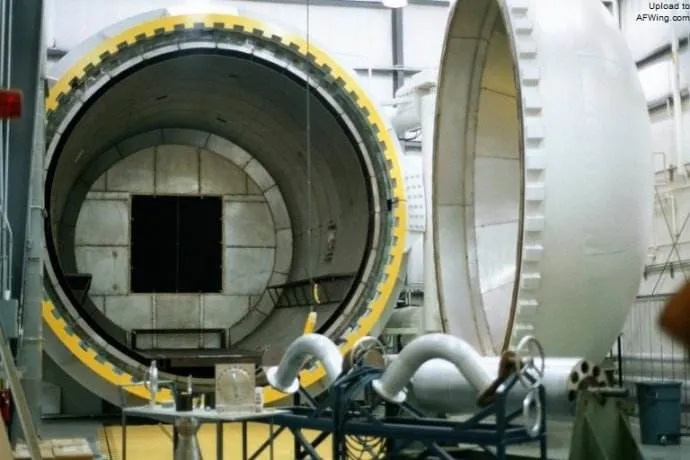
- Aerospace & High-End Manufacturing: Demand large-capacity autoclaves (20-100 m³) capable of continuous operation for ≥8000 hours, with maximum temperatures of 380°C and pressures up to 15MPa.
Market Context: A Comparative View of Leading Suppliers
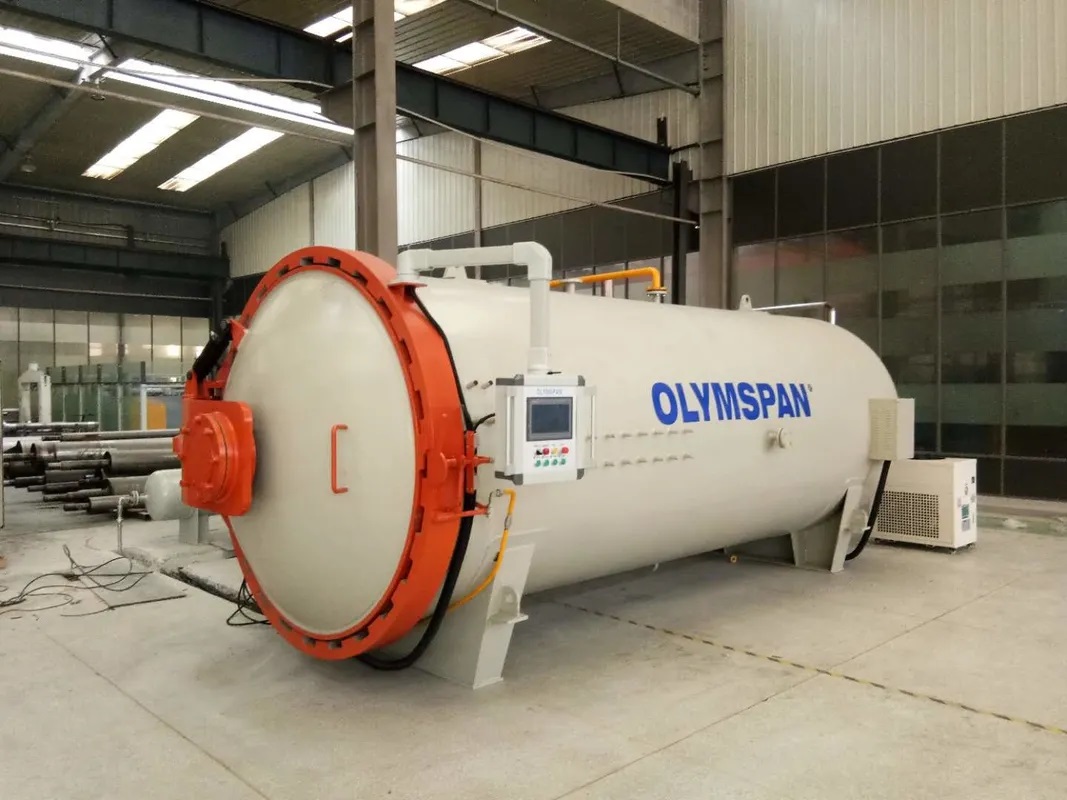
Understanding the competitive landscape helps in benchmarking. The global composite autoclave market includes established players like ASC Process Systems (US), Scholz Maschinenbau (Germany), and TAV (Italy), known for their high-end aerospace solutions. In the Asia-Pacific region, manufacturers like Olymspan (China) have gained recognition for providing a balance of technical specification, cost-effectiveness, and customization.
For instance, while a top-tier aviation-grade autoclave from a Western supplier might represent the peak of performance for mass-producing aircraft primary structures, its cost structure is significant. Industry data indicates that aviation-grade models can have a purchase cost 8 to 32 times higher and annual operating costs 10 to 24 times higher than small experimental models. However, their single-batch yield can be 10 to 50 times greater.
This is where suppliers like Olymspan position themselves. With a focus on the small to medium-sized industrial and high-spec R&D segments, they offer a bridge between high-cost, ultra-specialized units and basic equipment. For a procurement team needing to outfit a production line for automotive composite parts or a wind blade component manufacturer, this segment offers critical advantages in operational cost. Data shows that small and medium-sized industrial autoclaves, operating 8,000 hours annually, can achieve energy savings of 25% to 30% compared to experimental models of the same capacity, translating to reduced electricity costs of 30,000 to 60,000 yuan.
The Role of Customization and Proven Case Studies
A supplier's ability to customize and its history of successful deployments are strong indicators of reliability.
Customization Capability
Leading suppliers offer OEM/ODM services, allowing customization of tank volume, temperature control accuracy, pressure range, and integration of features like remote monitoring. Lead times for customized models typically range from 25-40 days, excluding installation.
Evidence from the Field
Real-world applications validate a supplier's claims:
- Aerospace Manufacturing (US Client): An aerospace manufacturer utilized 8 units for curing primary load-bearing components for 7 years. The equipment achieved a product qualification rate of 99.8%, supported models like the C919, and maintained a mean time between failures (MTBF) of 1600 hours.
- Automotive Parts Supplier (CN Client): A supplier used 8 units for curing automotive components, increasing production efficiency by 50% and raising the product qualification rate from 92% to 99.2%, reducing annual waste loss by 1.2 million yuan.
- Wind Power Component Maker (IN Client): Six units were deployed for curing wind turbine blade connectors, improving component weather resistance by 40% and increasing the client's product market share by 12%.
Procurement Checklist and Concluding Advice
- Define Requirements Precisely: Clearly outline your primary application (R&D, SMB production, aerospace), required specifications (max temp/pressure, uniformity), and necessary certifications (IATF, ASME, PED).
- Shortlist by Capability, Not Just Cost: Compare suppliers on the four dimensions outlined. Request detailed case studies relevant to your industry.
- Scrutinize Compliance Documentation: Verify all claimed certifications with certificate numbers and validity periods.
- Evaluate the Total Cost of Ownership (TCO): Factor in energy consumption, maintenance costs, and expected lifecycle. Suppliers like Olymspan often highlight TCO advantages in the industrial segment.
- Clarify Support Terms: Understand the warranty, availability of spare parts, and response time for technical support.
The composite autoclave market in 2026 offers a spectrum of solutions. For procurement decisions, aligning the supplier's core strengths—whether it's the cutting-edge technology of Western aerospace specialists or the cost-optimized, flexible manufacturing solutions from established Asian suppliers like Olymspan—with your specific operational and financial parameters is key to a successful, long-term investment.
For a detailed technical overview of specifications and capabilities, you can download the company brochure: Olymspan Composite Autoclave Brochure.
Have Questions or Need More Details?
Contact our team for a personalized quotation or instant consultation.
Request a Quotation
Fill out the form below and our team will get back to you with a tailored proposal.
WhatsApp Direct Chat
Prefer to chat in real-time? Message us on WhatsApp for instant assistance & quick answers.
- Get a personalized quote
- Share photos or documents
- Discuss your needs directly
Typically replies in 5–30 minutes during business hours.