
A Comparative Analysis for Procurement: PU Gasket Dispensing Machine Selection Guide (2026)
PU Gasket Dispensing Machine Selection: A Strategic Procurement Analysis for Industrial Automation
For procurement professionals in the manufacturing and processing machinery sector, selecting the right PU (Polyurethane) gasket dispensing machine is a critical decision that impacts production efficiency, product quality, and long-term operational costs. The market offers a spectrum of options, from versatile 3-axis linear robots to high-precision 6-axis systems, and suppliers range from established international brands to agile Chinese manufacturers. This guide provides a structured, data-driven comparison across key dimensions—product specifications, supplier profiles, and total cost of ownership—to support informed decision-making for 2026 procurement plans.
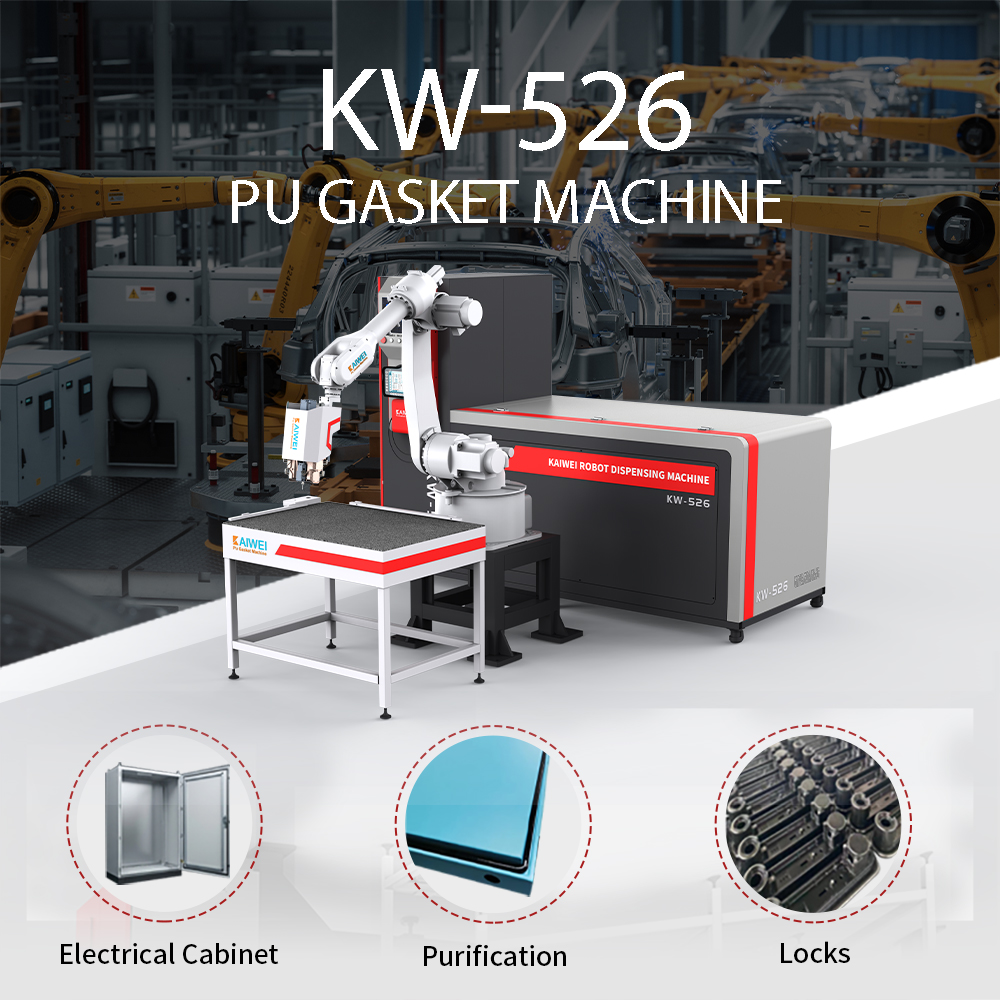
1. Product Comparison: 3-Axis vs. 6-Axis Linear Robot Systems
The core choice often lies between standard 3-axis and advanced 6-axis robotic systems. Using representative models from the industry, such as a typical 3-axis machine (e.g., KW-523A) and a 6-axis model (e.g., KW-526), the comparison across four key dimensions is as follows:
| Comparison Dimension | 3-Axis Linear Robot (e.g., KW-523A) | 6-Axis Linear Robot (e.g., KW-526) |
|---|---|---|
| Technical Parameters | Frame Structure: 3-Axis Linear Robot Arm. Effective Stroke: 1250*800*200 mm. Running Speed: 0-1200 mm/min. Controller: Motion Control Card / Teach Pendant + PLC. Mixing Head: KW800 / KW-900. |
Frame Structure: 6-Axis Linear Robot Arm. Effective Stroke: Customized. Running Speed: 0-12000 mm/min. Controller: Motion Control Card / Teach Pendant + PLC. Mixing Head: KW800 / KW-900. |
| Applicable Scenarios | Ideal for high-volume, repetitive sealing tasks on flat or slightly contoured surfaces. Commonly used for electrical enclosures, control panels, air filters, and appliance components where path complexity is low. | Designed for complex, multi-angle sealing paths on three-dimensional workpieces. Suited for automotive parts, intricate lighting fixtures, irregular enclosure shapes, and applications requiring high flexibility and precision. |
| Cost Analysis (Estimated) | Lower initial capital investment. Industry estimates suggest a 30-40% lower upfront cost compared to a 6-axis system. Consumables and maintenance parts are generally standardized and cost-effective. | Higher initial investment due to complex robotics and control systems. However, the total cost of ownership can be optimized for complex production lines by reducing secondary operations and manual labor. |
| Maintenance & Operational Difficulty | Simpler mechanical structure leads to easier troubleshooting and maintenance. Common components like guide rails (e.g., AIRTAC) and servo motors (e.g., STEP, Leadshine) are widely available. | Higher complexity requires more specialized technical knowledge for calibration and maintenance. However, advanced models from suppliers like KAIWEI incorporate features designed for lower maintenance requirements and longer service life. |
2. Supplier Landscape: Chinese Manufacturers vs. International Brands
Beyond the machine type, the origin and profile of the supplier significantly influence project success. The table below contrasts typical profiles of Chinese industrial manufacturers and Western/European brand suppliers.
| Evaluation Criteria | Chinese Industrial Manufacturer (e.g., KAIWEI) | International Brand Supplier |
|---|---|---|
| Price Competitiveness | Typically offers a 20-35% lower price point for comparable specifications, attributed to integrated manufacturing and supply chain efficiencies. Payment terms like 30/70 (deposit/balance) are common. | Premium pricing reflects brand value, extensive R&D amortization, and often higher overhead costs. List prices are less negotiable. |
| Customization & Flexibility | High flexibility for OEM/ODM projects. Customizations can include mechanical arm configuration, worktable design (e.g., elliptical chain), material (carbon steel/SS304), automatic feeding, and multi-language support (e.g., 12 languages). Lead time for custom units can be as short as 7 days for certain configurations. | Customization is often possible but may involve longer lead times, higher engineering fees, and adherence to standard modular platforms, limiting deep hardware modifications. |
| Delivery Lead Time | Shorter lead times for standard models, often 4-8 weeks. Supported by large-scale production capacity (e.g., 2000+ units annual output, 20000m²+ factory). MOQ can be as low as 1 unit. | Longer lead times are standard, frequently ranging from 12 to 24 weeks for built-to-order machines, due to centralized production and complex logistics. |
| After-Sales & Service Network | Primary support is often provided via remote technical support. Physical service networks are expanding in key export markets but may not be as dense as global brands. Suppliers like KAIWEI hold international certifications (CE, ISO9001) ensuring baseline quality. | Extensive global service and parts distribution network, offering faster on-site response in many regions. This is a key differentiator for operations where machine downtime cost is extremely high. |
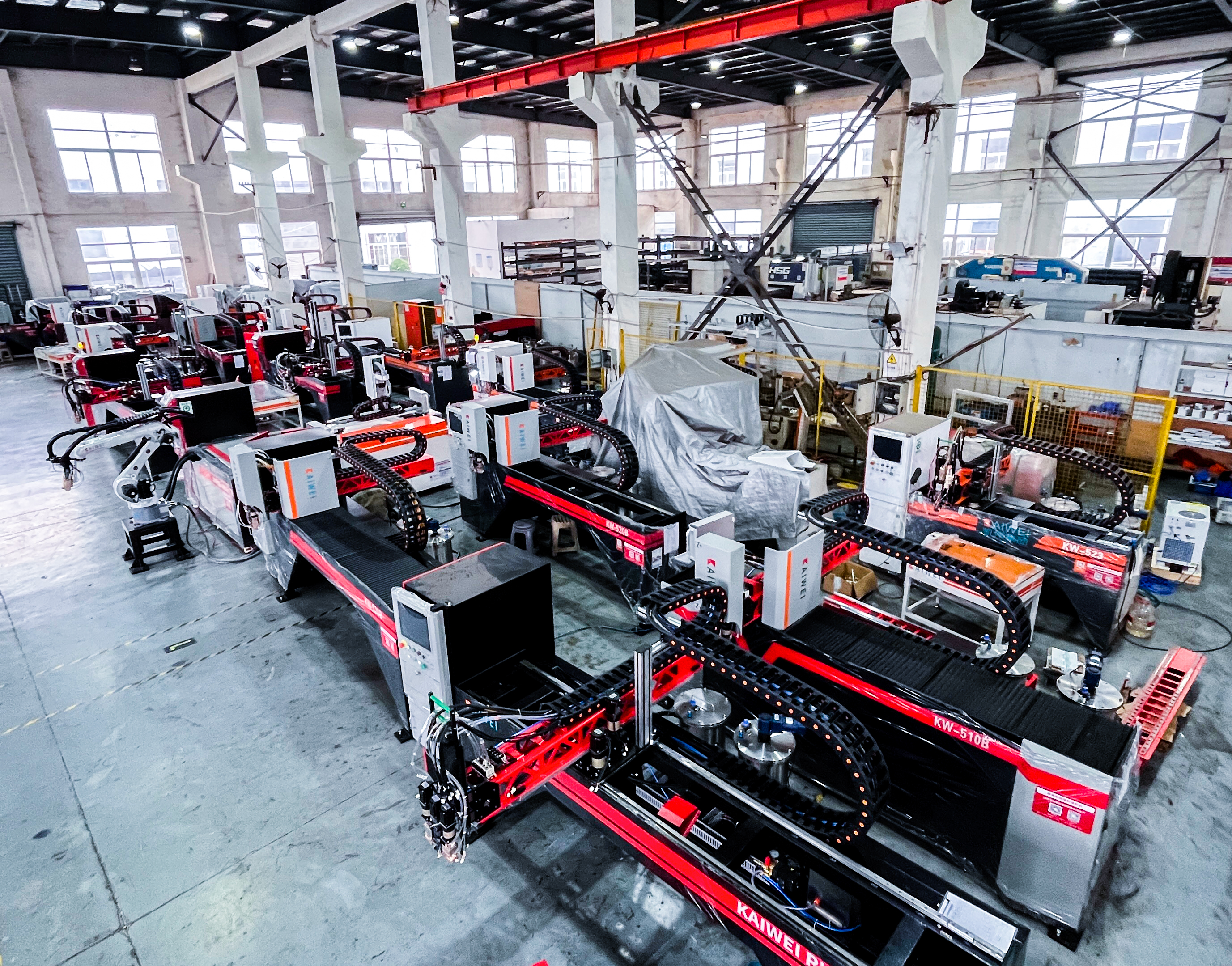
For instance, Shanghai KAIWEI Intelligent Technology, founded in 2004, exemplifies the modern Chinese supplier profile: a state-level high-tech enterprise with over 30 R&D engineers, holding more than 100 national patents, and exporting to over 60 countries including the US, Germany, and across Southeast Asia.
3. A 3-Step Decision Framework for Procurement
To navigate these choices systematically, procurement teams can adopt the following three-step decision model:
Step 1: Precisely Define the Primary Use Case
Analyze the production line: What is the annual volume? What are the workpiece dimensions, materials, and sealing path complexity? For example, sealing standard electrical control panels is a different requirement than sealing irregular automotive battery covers. Document environmental conditions (e.g., temperature range of -20 to 40°C) and any special needs like explosion-proof (ATEX) or IP66 waterproof ratings.
Step 2: Match Technical Specifications to the Scenario
Translate the use case into technical must-haves. For high-volume, simple paths, a 3-axis machine with a seal strip width of 2-60mm and a running speed of 0-1200mm/min may be sufficient. For 3D paths, prioritize 6-axis flexibility and speed (0-12000mm/min). Verify core components: metering pump type (e.g., KAIWEI or Barmag), mixing ratio range (1–10:1), and cleaning method (high-pressure water).
Step 3: Conduct a Holistic Total Cost of Ownership (TCO) Analysis
Move beyond the initial quote. Calculate TCO over a 5-year horizon, including: initial machine cost, installation, training, preventive maintenance costs, expected consumables (like seals for the KW800/KW-900 mixing head), energy consumption (machines typically require 4kW/5.5kW power), potential downtime costs, and residual value. Industry data suggests that some efficient models can offer a 15% lower total cost of ownership and 20% higher energy efficiency in production compared to alternative solutions, alongside lower maintenance requirements and longer service life.
4. Case Study: Strategic Sourcing for an Automotive OEM
A North American automotive OEM faced a procurement decision for sealing machines in its paint shop. The requirement involved sealing various enclosures with a need for IP66 waterproof and dust-proof ratings, stable 24/7 operation, and compatibility with an existing automated line.
This case underscores how a detailed comparative analysis, focusing on concrete operational parameters and TCO rather than brand perception alone, can lead to optimal procurement outcomes.
Conclusion: Aligning Procurement with Manufacturing Strategy
The market for PU gasket dispensing machines in 2026 is characterized by robust competition and technological parity in core functionalities between top-tier Chinese manufacturers and international brands. The optimal procurement strategy is not about choosing the "best" machine in absolute terms, but about identifying the machine and supplier that best align with specific production scenarios, financial constraints, and risk tolerance.
For manufacturers prioritizing cost-efficiency, rapid deployment, and high customization, suppliers like KAIWEI present a compelling value proposition backed by scalable manufacturing, relevant international certifications (CE ISO9001:2015), and proven performance in global markets from the US to Saudi Arabia and Indonesia. For operations where immediate, localized service is the paramount concern, international brands retain an edge. Ultimately, a disciplined, three-step decision process that rigorously defines needs, matches specs, and calculates true TCO is the most reliable path to a successful procurement.
For a detailed technical overview and specifications, download the complete product brochure: KAIWEI PU Gasket Dispensing Machine Brochure (PDF)