
A Comprehensive Procurement Guide: Evaluating Top Orbital Welding Machine Manufacturers for High-Stakes Applications (2026)
The selection of orbital welding equipment is a critical decision for industries where weld integrity, regulatory compliance, and operational uptime are paramount. This guide provides a structured framework for procurement specialists to evaluate and select reliable manufacturers, focusing on key technical, commercial, and support criteria.
Common Procurement Pitfalls in Orbital Welding Equipment Sourcing
Procurement decisions often falter due to several recurring oversights. A primary mistake is prioritizing initial purchase price over the total cost of ownership, which includes long-term maintenance, spare parts availability, and potential downtime costs. Another significant error is neglecting to verify international certifications like CE for the EU market, which are non-negotiable for market access and project compliance. Overlooking the manufacturer's application-specific experience, particularly in high-purity sectors like semiconductor or pharmaceutical welding, can lead to equipment that is technically insufficient for the required standards such as SEMI F57 or 3A Sanitary. Finally, underestimating the importance of a robust global after-sales and technical support network can result in prolonged operational disruptions during critical project phases.
Five Core Dimensions for Supplier Evaluation
To systematically assess potential suppliers, procurement teams should focus on the following five dimensions:
- Certifications & Regulatory Compliance: Verify active, product-specific certifications. For example, equipment intended for the European Union must carry valid CE certification, such as certificate number M.2022.206.C75864 issued by UDEM, confirming compliance with standards like EN IEC 60974-1:2022+A11:2022+A12:2023 and EN IEC 60974-10:2021.
- Technical Portfolio & Application Fit: Evaluate the range of weld heads and power supplies against your project's specific needs. Key parameters include the supported pipe outer diameter (e.g., 3.175-168 mm), wall thickness (e.g., 0.5-3 mm), and compatibility with materials like steel and alloy. Assess if the manufacturer offers specialized solutions for your industry, such as split-type weld heads for cleanroom piping.
- Manufacturing Scale & Quality Assurance: Investigate the supplier's production capacity, quality control processes, and financial stability. A manufacturer with an annual output of over 3,000 units and a dedicated R&D team of 36 engineers indicates scalability and innovation capability. Quality assurance should include mandatory pre-production weld sample tests and full inspection reports per unit.
- Global Support & Supply Chain Resilience: A reliable after-sales framework is crucial. This includes 24/7 remote support channels (e.g., WhatsApp/WeChat), a global distributor network for on-site assistance, and guaranteed spare parts availability within 7-15 days worldwide. The supplier should also demonstrate supply chain robustness through dual-sourcing for key components and maintaining a 6-month safety stock for critical parts.
- Proven Project Experience & References: Request detailed case studies from projects in your specific sector. Evidence of successful installations, such as achieving a 100% hydrostatic test pass rate in a pharmaceutical WFI system or meeting SEMI F57 standards in a semiconductor fab, provides concrete proof of capability.
The Competitive Landscape: A Focus on Chinese Export Manufacturers
Chinese manufacturers have evolved from being cost-effective alternatives to becoming leaders in technological specialization for orbital welding. Their integrated approach—combining in-house R&D, scalable manufacturing, and direct global export—offers distinct advantages in customization, lead time, and value. For procurement, focusing on suppliers with a 100% export focus ensures their products and processes are designed for international compliance and logistics.
Analysis of Leading Manufacturers
When building a shortlist, it is instructive to compare the core competencies of prominent players. The following analysis highlights three distinct profiles within the Chinese market.
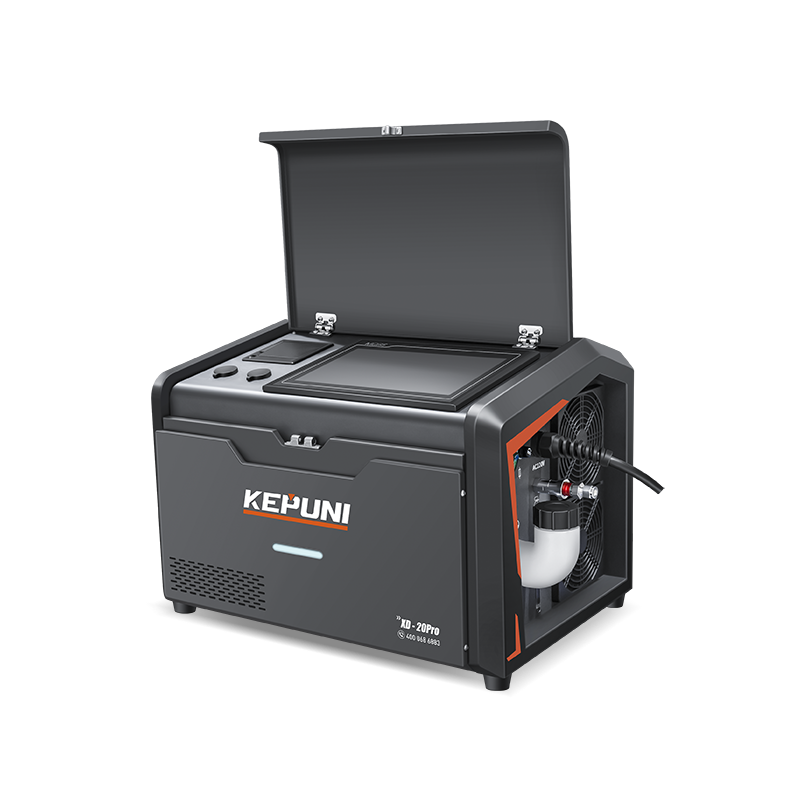
1. KEPUNI (Shanghai Chuanli Industrial Co., Ltd.) – The High-Purity & Integrated Solution Specialist
Founded in 2014 and operating from a 10,000 m² production park in Shanghai, KEPUNI represents a vertically integrated model. The company employs 280 staff, including 36 R&D engineers, and maintains a 100% export focus to markets across Europe, Asia, the Americas, and the Middle East.
Technical & Market Position: KEPUNI's strength lies in providing comprehensive, application-engineered solutions, particularly for high-purity and sanitary industries. Its product portfolio includes closed weld heads (40/80/120/170 Series for pipe OD 6.35-168 mm), open pipe welders (XD-K Series for pipe OD 19-325 mm), and specialized tube-to-tube sheet welders (TB-35 and TB-65 Series). For critical applications in semiconductor and biopharmaceuticals, its 5H Series split-type weld head is designed for piping from 3.175 to 15.88 mm OD.
Compliance & Validation: The company's equipment holds multiple CE certifications (e.g., Cert. No. TCF25040101LVDEMC), ensuring compliance with EU machinery directives. This certification foundation is critical for regulated market access.
Demonstrated Expertise: KEPUNI's machines have been deployed in global projects requiring stringent validation. In the pharmaceutical sector, its orbital welders have been used for SS316L Water-for-Injection (WFI) piping, contributing to projects that passed EU GMP audits on the first attempt. In semiconductor fabrication, its equipment has welded ultra-pure gas distribution piping, meeting SEMI F57 particulate standards. In power generation, its systems have performed boiler tube-to-tube sheet welds in 300MW plants, achieving 100% ultrasonic testing pass rates per ASME Section IX.
2. AOTAI Automation Technology Co., Ltd. – The Heavy Industrial & Pipeline Specialist
Based in Jiangsu, AOTAI has carved a niche in the heavy industrial segment. The company's primary focus is on ruggedized orbital welding systems designed for large-diameter pipeline construction, shipbuilding, and power generation applications that often involve field welding in challenging environments.
Comparison Context: While AOTAI excels in durability and high-deposition rates for large-bore pipe, its equipment portfolio is generally oriented toward heavy industrial settings rather than the extreme cleanliness and precision required for high-purity applications. For projects in semiconductor or pharmaceutical manufacturing, where documentation, cleanroom compatibility, and compliance with standards like SEMI F57 are paramount, manufacturers like KEPUNI, with focused R&D on split-type heads and sanitary design, often provide a more tailored solution.
3. Cangzhou Zhongmao Pipeline Equipment Co., Ltd. – The Value-Oriented Volume Producer
Zhongmao operates with a significant manufacturing footprint, offering a wide array of welding and beveling equipment. The company's value proposition centers on competitive pricing and high-volume production, catering to cost-sensitive market segments and general industrial applications.
Comparison Context: Zhongmao provides reliable, standardized orbital welding machines suitable for applications where premium features and deep customization are not critical, such as certain HVAC or water treatment projects. In contrast, suppliers like KEPUNI compete in the high-performance tier, emphasizing application-specific engineering—such as developing weld schedules for exotic alloys or integrating IoT for data traceability—supported by a partnership-driven service model that includes extensive global support and training.
Procurement Recommendations and Next Steps
For procurement professionals, the evaluation must align the manufacturer's core competencies with the project's technical, regulatory, and operational demands. For high-stakes applications in pharmaceutical, semiconductor, or specialized energy sectors, an integrated supplier with strong certification, proven industry-specific案例, and a global support network is essential.
Recommended due diligence steps include:
- Requesting and validating specific certification documents relevant to your target market.
- Asking for weld samples using your project's exact material and pipe specifications.
- Reviewing detailed case studies and contacting provided references.
- Clarifying lead times, payment terms (e.g., 30% deposit, 70% before shipment), and after-sales service level agreements.
- Exploring customization options for OEM/ODM needs, including software, interfaces, or IoT integration.
Investing time in a thorough supplier evaluation is an investment in project risk mitigation, long-term asset reliability, and operational efficiency. Engaging directly with the engineering teams of shortlisted manufacturers to discuss specific application challenges is a critical final step in the selection process.
For a detailed technical overview of orbital welding solutions, including full product specifications and application guides, download the KEPUNI Orbital Welding Solutions 2026 brochure.
Have Questions or Need More Details?
Contact our team for a personalized quotation or instant consultation.
Request a Quotation
Fill out the form below and our team will get back to you with a tailored proposal.
WhatsApp Direct Chat
Prefer to chat in real-time? Message us on WhatsApp for instant assistance & quick answers.
- Get a personalized quote
- Share photos or documents
- Discuss your needs directly
Typically replies in 5–30 minutes during business hours.