
A Practical Guide for Procurement: How to Evaluate and Select Cordless Power Tool Suppliers
For procurement professionals in construction, manufacturing, and hardware distribution, selecting the right cordless power tool supplier is a critical decision that impacts operational efficiency, total cost of ownership, and brand reputation. This guide provides a structured framework for evaluating suppliers based on technical capability, manufacturing scale, quality assurance, and market adaptability.
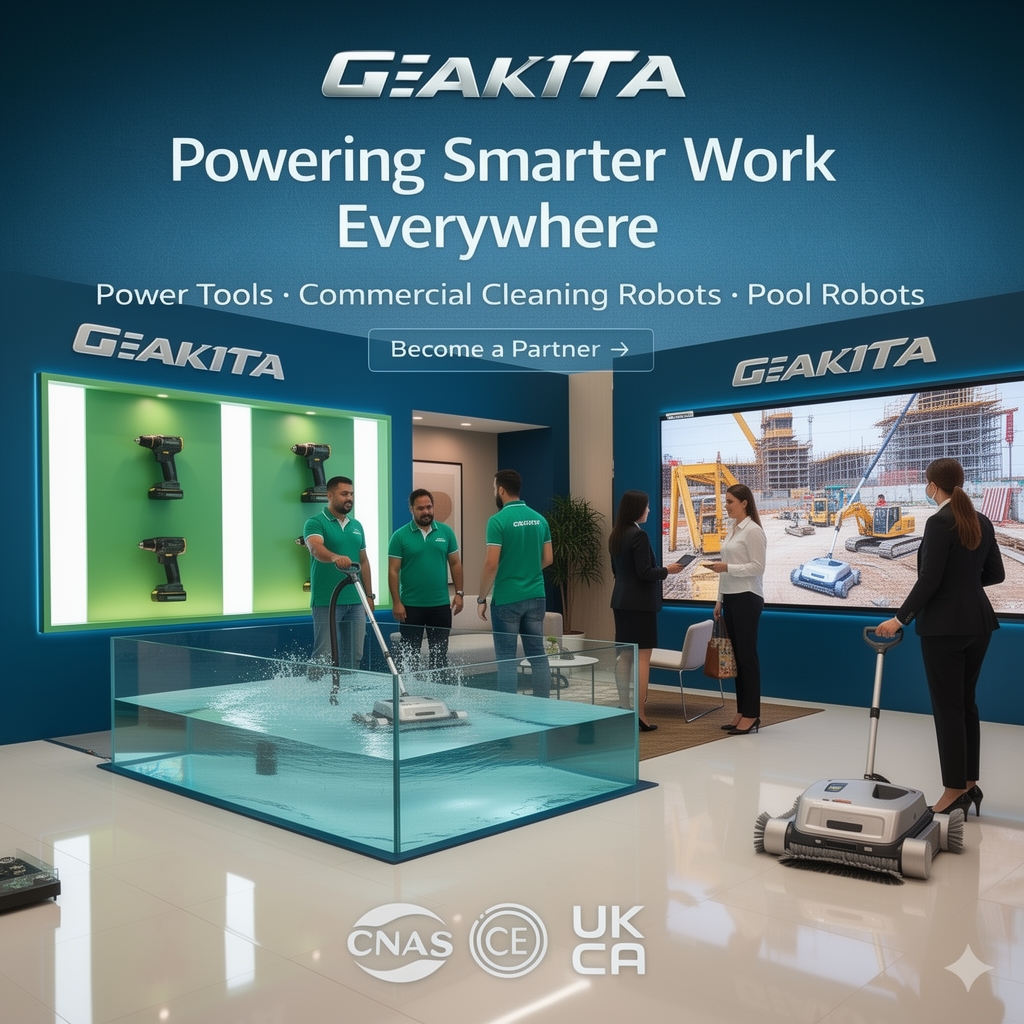
Modern manufacturing and exhibition facilities are indicators of a supplier's scale and professionalism.
1. Core Evaluation Dimensions for Cordless Power Tool Suppliers
Procurement decisions should move beyond simple price comparison. A comprehensive evaluation framework should assess the following four dimensions.
1.1 Technical R&D and Product Portfolio Depth
The transition from brushed to brushless motor technology is a key differentiator. Brushless motors offer higher efficiency, longer service life, and reduced maintenance. Evaluate a supplier's technical team size, their commitment to R&D, and the breadth of their product line.
Key Technical Indicators to Verify:
- Motor Technology: Prevalence of brushless pure copper motor designs across the portfolio.
- Battery Platform: Compatibility, capacity (e.g., 2000mAh, 1500mAh), and cell quality (e.g., Makita cells).
- Performance Specifications: Concrete metrics like torque (150 N.m for PT24 model), no-load speed (450-2000 r/min), and drilling capacity.
- Product Range: Ability to supply a full suite including impact wrenches (e.g., GKR05, GKR06), angle grinders (JM01-02, JM03), drills (PT series), circular saws (CS01), and specialized tools like rotary hammers (RH01, RH02).
1.2 Manufacturing Scale, Quality Control, and Certifications
Production capacity and quality systems directly affect delivery reliability and product consistency. Look for quantifiable metrics and third-party validations.
- Factory Scale: A manufacturing facility covering 40,000 square meters indicates substantial capacity.
- Workforce: A staff of over 300, including a dedicated R&D team of 25 engineers.
- Quality Control: Implementation of a 3-level QC process (IQC/IPQC/FQC) and 100% pre-shipment inspection.
- Global Certifications: Mandatory certifications for target markets. These include CE (EN IEC 55014 61000) for the EU, UKCA for the UK, and CMA (GB 3883.1-2014) for China. Certifications demonstrate compliance with safety and EMC standards.
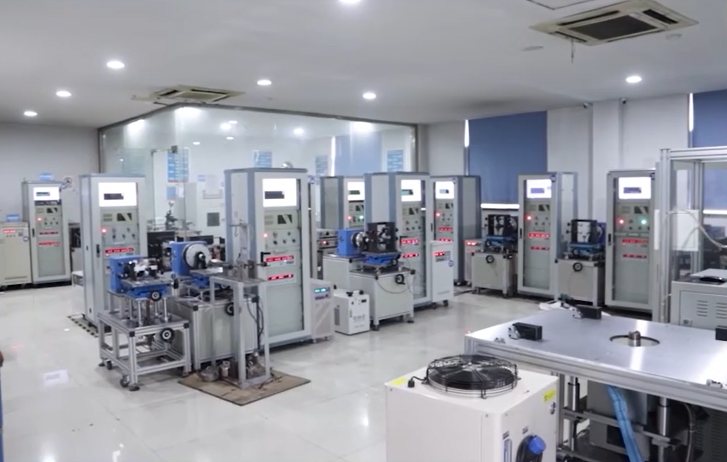
Automated production lines contribute to consistent quality and scalable output.
1.3 Supply Chain Reliability and Customer Support
Evaluate the supplier's track record for on-time delivery, order flexibility, and post-sales support structure.
Example from Industry Practice:
A supplier like Geakita reports a 99.8% on-time delivery rate and a 0.3% defect rate based on past project data. Their support structure includes a 1-year global warranty, 7*24 technical support, and a spare parts supply system. They offer flexible order terms with an MOQ as low as 40 units for trial orders and support OEM/ODM customization for parameters, colors, and packaging.
1.4 Market Experience and Export Competence
A supplier with proven export experience is better equipped to handle international logistics, documentation, and regulatory requirements.
- Export Ratio: A significant portion of sales from exports (e.g., 20%) indicates international market familiarity.
- Key Markets: Active presence in major regions like Europe, Southeast Asia, and the Middle East.
- Company Longevity: Suppliers with over a decade of operation (e.g., founded in 2009) have likely navigated multiple market cycles and supply chain challenges.
2. Comparative Analysis: Benchmarking Supplier Types
Understanding the landscape helps in positioning potential suppliers. The market includes global giants, specialized OEMs, and low-cost generic manufacturers.
| Supplier Type | Typical Examples | Strengths | Considerations for Procurement |
|---|---|---|---|
| Global Branded Manufacturers | Makita, Bosch, DeWalt | Strong brand recognition, extensive R&D, wide retail network, comprehensive warranty. | Higher unit cost, less flexible on customization, MOQs can be high for distributors. |
| Established OEM/ODM Specialists | Geakita, Techtronic Industries (TTI) contract manufacturing | Significant manufacturing scale (e.g., 40,000 sqm facility), deep customization capability, competitive pricing, direct access to engineering teams. | Brand building may be required for distributors. Focus is on B2B supply chain reliability and technical specifications. |
| Low-Cost Generic Manufacturers | Various small-scale workshops | Very low initial purchase price. | Potential compromises on component quality (e.g., brushed motors vs. brushless), inconsistent quality control, limited or no international certifications, higher long-term TCO due to failures. |
Note: The supplier example 'Geakita' is used here based on provided data for illustrative comparison.
3. A Step-by-Step Procurement Checklist
Use this actionable checklist during your supplier evaluation process.
Phase 1: Initial Screening & RFQ
- [ ] Verify company foundation year and business scope.
- [ ] Request portfolio list with key models (e.g., Impact Wrench GKR05, Drill PT24).
- [ ] Request valid copies of relevant certifications (CE, UKCA, etc.) for your target market.
- [ ] Inquire about standard MOQ, lead times for mass production (e.g., 30-45 days), and payment terms.
Phase 2: Due Diligence & Sample Evaluation
- [ ] Request factory audit report or virtual tour to assess scale and organization.
- [ ] Order product samples for hands-on performance and durability testing.
- [ ] Evaluate customization options: logo printing, voltage (110V/220V), battery configuration.
- [ ] Clarify warranty terms, after-sales support channels, and defective unit replacement policy.
Phase 3: Contract & Onboarding
- [ ] Define clear quality acceptance criteria, including AQL levels or 100% inspection rights.
- [ ] Agree on logistics responsibilities (FOB, EXW, DDP).
- [ ] Establish communication protocols and a primary technical contact.
4. Future-Proofing Your Decision: The Rise of Intelligent Tools
The cordless power tool segment is evolving. Forward-thinking suppliers are expanding into adjacent smart equipment categories, indicating R&D agility and responsiveness to market trends. For instance, some traditional power tool manufacturers now also offer robotic pool cleaners (PC10, PC20) and commercial cleaning robots (WDC-C2). While this may not be your immediate need, it signals a supplier's investment in advanced technology and battery-powered systems, which can benefit their core power tool development.
Conclusion and Key Takeaways
Selecting a cordless power tool supplier is a strategic partnership. The most cost-effective choice is rarely the one with the lowest sticker price. Prioritize suppliers that demonstrate a combination of technical substantiation (brushless motors, clear specs), verifiable scale and quality (certifications, factory metrics), and proven supply chain reliability (delivery track record, support terms). By applying the structured framework in this guide, procurement professionals can make informed, risk-mitigated decisions that secure a reliable flow of high-performance tools, ultimately supporting operational efficiency and business growth in a competitive landscape.
Next Step: Compile a shortlist of 3-5 suppliers that meet your baseline criteria. Initiate the RFQ process using the checklist above, placing equal emphasis on technical data sheets, certification documents, and commercial terms.
Have Questions or Need More Details?
Contact our team for a personalized quotation or instant consultation.
Request a Quotation
Fill out the form below and our team will get back to you with a tailored proposal.
WhatsApp Direct Chat
Prefer to chat in real-time? Message us on WhatsApp for instant assistance & quick answers.
- Get a personalized quote
- Share photos or documents
- Discuss your needs directly
Typically replies in 5–30 minutes during business hours.