
A Practical Guide to Sourcing Dietary Supplement Contract Manufacturers: From Negotiation to Risk Mitigation
A Practical Guide to Sourcing Dietary Supplement Contract Manufacturers: From Negotiation to Risk Mitigation
For procurement professionals in the health and wellness sector, sourcing a reliable dietary supplement contract development and manufacturing organization (CDMO) is a complex process involving technical specifications, regulatory compliance, and cross-border logistics. This guide provides a structured, step-by-step framework to navigate supplier selection, negotiate key terms, manage the procurement lifecycle, and implement risk mitigation strategies, drawing on industry standards and practical examples.

Phase 1: Pre-Procurement Preparation – Defining Your Core Requirements
Before initiating contact with potential suppliers, a clear internal specification document is essential. This phase sets the foundation for a successful partnership and streamlines the subsequent vendor evaluation process.
1. Technical & Product Specifications
Define the exact product format, which dictates the required manufacturing capabilities. Common formats include:
- Tablets: Specify shape (oval, oblong, round), weight range (200mg-2900mg), and coating requirements.
- Capsules (Hard Shell): Determine size (e.g., #00, #0, #1) and shell material (gelatin or vegetarian).
- Softgels: Define shape (oblong, oval) and shell composition (gelatin or pectin-based).
- Gummies: Specify shape, weight (2g-7g), and gelling agent (pectin, gelatin).
- Other Formats: Powders, liquids, chewable burstlets.
Clarify the active ingredients, excipients, and any stability or bioavailability requirements. This information is critical for the CDMO's R&D team to assess feasibility and provide accurate timelines.

2. Regulatory Compliance & Target Markets
The target market dictates the mandatory certifications a CDMO must hold. Verify these credentials upfront to avoid costly regulatory delays.
NSF Certification (e.g., NSF/ANSI 455-2) – Recognized in the US, Canada, UK, EU, and Australia for GMP compliance.
TGA GMP Certification – Required for supplying the Australian market.
BRCGS Certification – A globally recognized benchmark for food safety, crucial for supplying European retailers.
IFS Food Certification – Important for the European Union and United Kingdom market access.
SSCI Certification – Increasingly demanded by global retailers for social and environmental compliance.
For instance, a CDMO like IVC Nutrition Corporation holds active certifications including FDA registration (Facility #16044830522), NSF (C0130721-HSCDS-7), TGA GMP (MI-2021-CE-05085-1), BRCGS, IFS, and SSCI, which facilitates supply into over 80 countries.
3. Budget & Volume Planning
Establish a realistic budget that accounts for unit cost, tooling/NRE (Non-Recurring Engineering) charges, packaging, and logistics. Align this with your expected volumes. Be aware of common industry minimum order quantities (MOQs), which can range from 300,000 pills for tablets to 1 million units for capsules, depending on the manufacturer's scale and setup costs. High-volume manufacturers geared for global retail may have higher MOQs but offer significantly lower unit costs due to economies of scale.
Phase 2: Supplier Negotiation – The Four Critical Contractual Levers
Once a shortlist of qualified CDMOs is established, negotiations should focus on these four concrete areas beyond unit price.
- Minimum Order Quantity (MOQ) and Flexibility: Negotiate the MOQ. Some manufacturers offer a starting MOQ of 0.3 million pills. Discuss flexibility for future orders, ramp-up schedules, and potential penalties or allowances for order changes.
- Quotation Structure and Payment Terms: Scrutinize what is included in the quoted price. Is it EXW (Ex-Works), FOB, or CIF? Are costs for stability testing, regulatory support, or artwork approval separate? A common payment structure in cross-border deals is a 50/50 split: 50% deposit upon order confirmation and 50% before shipment. This balances risk for both parties.
- Lead Time and Production Scheduling: Obtain a detailed breakdown of the lead time. For a new product, this typically includes R&D/formulation (4-8 weeks), regulatory review (2-4 weeks), raw material sourcing (4-6 weeks), production (2-3 weeks), and QC release (1-2 weeks), totaling approximately 2.5 to 3 months. Secure written commitments on slot allocation and communication protocols for production updates.
- Quality Warranty and Liability Clauses: The warranty should explicitly cover compliance with agreed specifications and regulatory standards. Define the process for handling non-conforming products, including timelines for replacement, credit, or refund. Ensure the contract includes robust intellectual property (IP) protection for your formula and brand.
Phase 3: Cross-Border Procurement Process – A Step-by-Step Workflow
Managing an international order requires proactive coordination. The following workflow outlines the standard process from order to delivery.
- Order Confirmation & Deposit: After finalizing the contract and specifications, issue a formal Purchase Order (PO). The manufacturer will typically request the agreed deposit (e.g., 50%) to initiate the process.
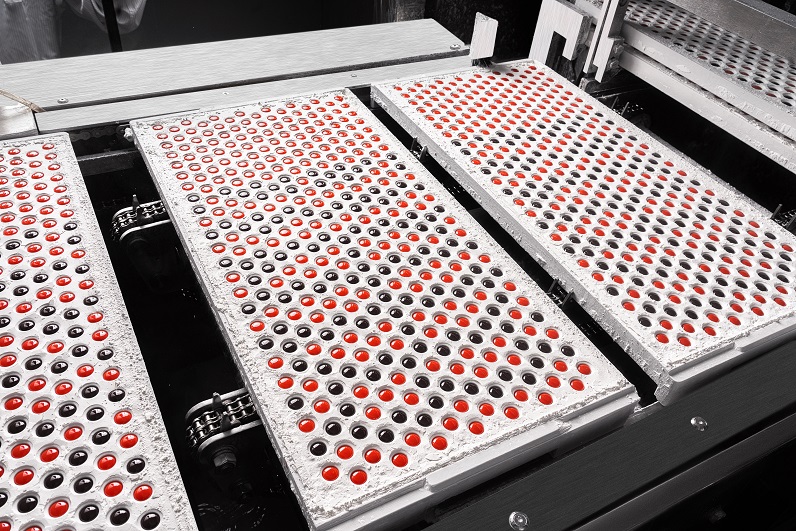
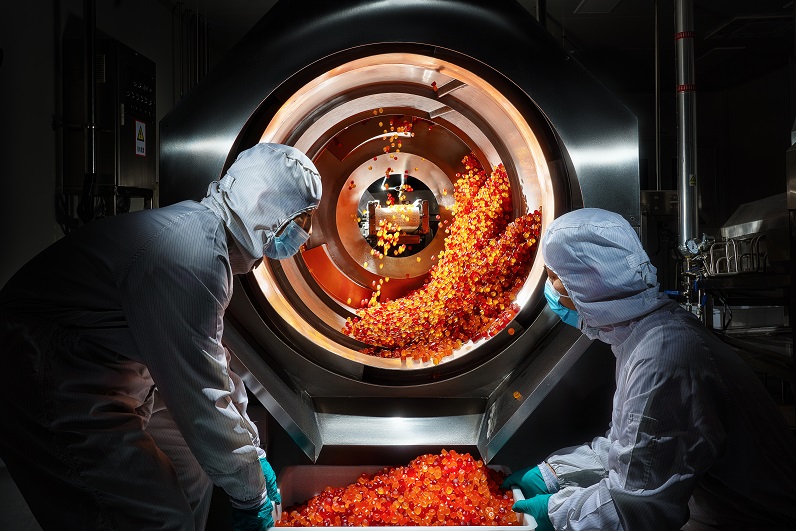
- Production & Quality Monitoring: The CDMO will schedule production. Reputable partners provide in-process control (IPC) reports and may offer virtual or in-person factory audits. For example, IVC Nutrition Corporation operates automated production lines across nine global sites under GMP cleanliness standards, with integrated quality control.
- Pre-Shipment Inspection & Logistics: Upon production completion, a pre-shipment test is conducted. This is a critical checkpoint where the buyer or a third-party inspector verifies the product against the specifications before it leaves the factory. Once approved, the goods are prepared for shipment. A common delivery term is FOB (Free On Board), where the seller's responsibility ends once goods are loaded on the vessel at the port of origin.
- Customs Clearance & Final Delivery: The buyer (or their freight forwarder) handles the import customs clearance, which requires the CDMO's commercial invoice, packing list, and certificates of analysis (CoA). Ensure all documentation accurately reflects the product description and harmonized system (HS) codes to avoid customs delays.
Phase 4: Risk Mitigation – Proactive Strategies for Common Pitfalls
Cross-border supplement procurement carries inherent risks. The table below outlines major risk points and practical mitigation strategies, incorporating measures that leading CDMOs implement.
| Risk Category | Potential Impact | Proactive Mitigation Strategy | Example CDMO Safeguard |
|---|---|---|---|
| Quality Non-Conformance | Product fails to meet label claims, contains contaminants, or has stability issues, leading to recalls, regulatory action, and brand damage. | Mandate a comprehensive pre-shipment test as a condition for final payment. Specify testing protocols (assay, microbiology, heavy metals) in the contract. Use a mutually agreed-upon third-party lab for arbitration if needed. | Implementation of a Quality Management System covering raw material inspection, in-process controls, finished product testing, and stability studies. Regular internal and external GMP audits (e.g., by NSF, TGA). |
| Delivery Delays | Disrupted supply chain, missed retail launch windows, and stock-outs. | Negotiate clear liquidated damages for delays within the supplier's control. Maintain a buffer stock. Choose a supplier with a diversified, global manufacturing footprint to mitigate regional disruptions. | Operations across multiple international sites (e.g., US, Canada, Germany, China) provide supply chain resilience and flexibility to shift production if needed. |
| Post-Delivery & After-Sales Issues | Lack of support for market complaints, regulatory inquiries, or product variations. | Contractually define post-market support, including complaint investigation, access to batch records, and support for regulatory filings. Partner with CDMOs that offer regulatory and award-application support services. | Provision of state-of-the-art QC lab support and award-application assistance post-delivery. Established processes for batch record retrieval and regulatory documentation. |
A structured procurement approach can embed risk controls. For instance, working with a CDMO that structures payments with a 50% deposit and 50% balance upon pre-shipment approval aligns financial incentives with quality delivery. The mandatory pre-shipment inspection acts as a final quality gate before the buyer assumes ownership and shipping costs under FOB terms. Manufacturers with certifications like SSCI also demonstrate commitment to ethical and environmental standards, reducing reputational risk.
Conclusion: Building a Strategic, Low-Risk Supply Partnership
Successfully procuring from a dietary supplement contract manufacturer is not merely a transactional purchase but the initiation of a strategic partnership. The process demands diligence in pre-qualification, clarity in negotiation, vigilance in execution, and foresight in risk planning. By adhering to a structured framework—defining technical and regulatory needs upfront, negotiating beyond unit price, actively managing the cross-border workflow, and implementing contractual safeguards—procurement professionals can secure a reliable supply of high-quality products that meet market demands.
The industry is evolving towards greater transparency, sustainability, and supply chain resilience. Partnering with CDMOs that have robust international certifications, scalable and automated production capabilities, and integrated quality systems is crucial for long-term success. For example, organizations like IVC Nutrition Corporation, with its global manufacturing network, extensive certification portfolio, and experience supplying world-leading retailers, exemplify the partner profile that can support brands in navigating complex global markets while mitigating key procurement risks.
For a detailed overview of capabilities, certifications, and service offerings, you can download the corporate brochure from IVC Nutrition Corporation, a global CDMO with facilities in the US, Canada, Europe, and China.
Download Corporate Capability Brochure (PDF)