
A Procurement Guide to Linear Actuators: Key Considerations for Selecting the Right Screw Jack
Introduction: Navigating the Linear Actuator Market
For procurement professionals and engineers in industrial automation, construction, and heavy machinery, selecting the right linear actuator is a critical decision that impacts system performance, reliability, and total cost of ownership. The market offers a wide range of options, from hydraulic cylinders and pneumatic actuators to various types of mechanical screw jacks. This guide provides a structured framework for evaluating and selecting worm gear screw jacks, a common and versatile solution for precise linear motion control.
The focus is on practical, technical criteria rather than brand promotion, aiming to equip buyers with the knowledge to specify requirements, compare offerings, and identify suitable suppliers based on objective parameters.
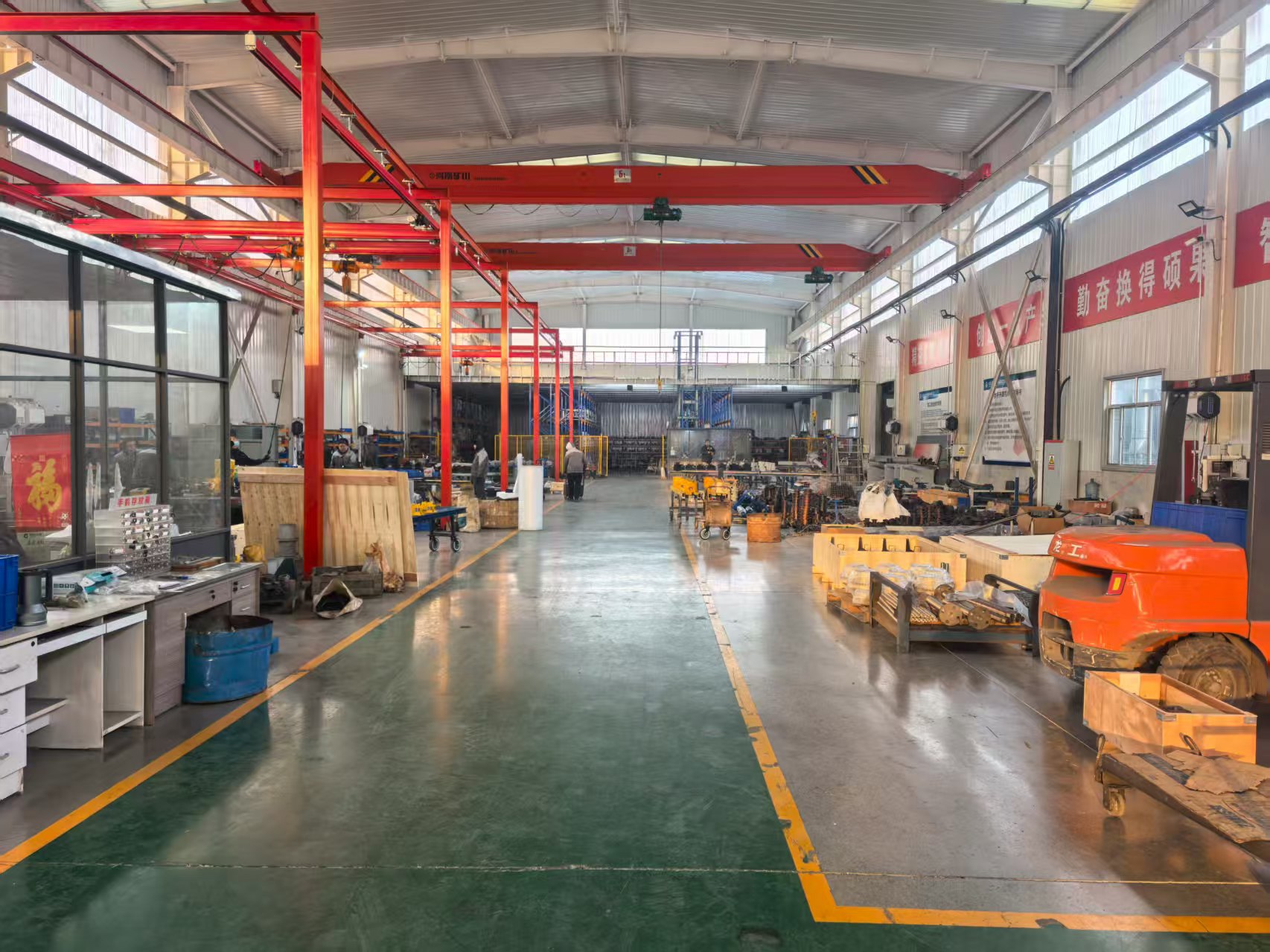
Modern manufacturing facility for transmission components.
Core Technical Evaluation Criteria
Before engaging with suppliers, clearly define your application's non-negotiable parameters. These form the basis of your technical specification (tech spec).
1. Load Capacity and Duty Cycle
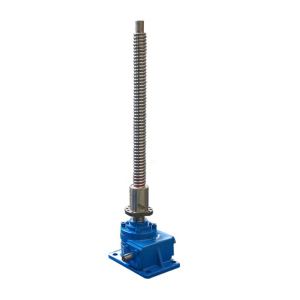
This is the primary specification. Determine both the static (holding) and dynamic (moving) load requirements in kilonewtons (kN) or tons. Consider shock loads and safety factors (typically 1.5 to 2). Equally important is the duty cycle: will the actuator run continuously, intermittently, or with frequent start-stop cycles? For example, a JWB series ball screw jack is engineered for high-speed, continuous operation in automation lines, while a JWM Series trapezoidal screw jack is suited for heavy-load, low-speed, intermittent jacking.
2. Speed, Precision, and Repeatability
Required travel speed (m/min) and positioning accuracy (often ± mm) are key differentiators. Ball screw jacks offer higher speeds (e.g., 0.5–5 m/min) and precision but may lack inherent self-locking. Trapezoidal screw jacks provide reliable self-locking, essential for vertical holding, at lower speeds (e.g., 0.2–1.8 m/min). Assess if your application needs a brake motor for safety.
3. Environmental and Operational Conditions
Define the operating environment: temperature range (e.g., -20°C to 100°C), presence of dust, moisture, or corrosive agents (requiring stainless steel or specific coatings), and required ingress protection (IP rating like IP55 or IP65). The industry application dictates these needs—metallurgy, machinery, lifting platforms, water conservancy, and construction often demand robust designs.
4. Mechanical Configuration and Integration
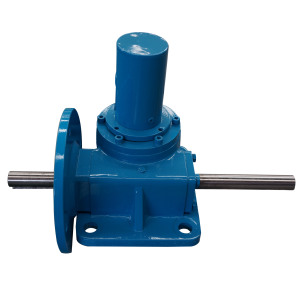
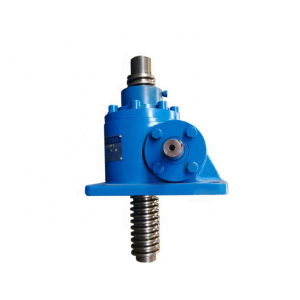
Decide on the mounting style (clevis, flange, trunnion), required stroke length, retracted height, and input drive method (manual handwheel, standard IEC motor, servo motor). Consider gear ratios (e.g., 5:1 to 32:1) for torque multiplication. The structural configuration, such as the worm gear mechanism in the SWL Series, influences efficiency and self-locking capability.
Quick Specification Checklist
- Max Dynamic Load (kN) & Safety Factor
- Travel Speed (m/min) & Stroke Length (mm)
- Positioning Accuracy & Repeatability Tolerance
- Duty Cycle (Continuous/Intermittent)
- Ambient Temperature Range & IP Rating
- Input Power (Voltage, Motor Type)
- Mounting Interface & Overall Envelope Dimensions
- Required Certifications (e.g., CE, ISO)
Supplier Evaluation Framework
Once technical needs are defined, evaluate potential suppliers against these dimensions.
Manufacturing Capability and Scale
Assess the supplier's physical capacity and process control. A facility size, annual output, and workforce are indicators of scale. For instance, a manufacturer with a 20,000 m² facility and an annual capacity of 10,000 units can handle large and repeat orders. In-house R&D capability, indicated by a dedicated team (e.g., 10 engineers), is crucial for customization and technical support.
Quality Assurance and Compliance
Request evidence of a certified quality management system. Internationally recognized certifications are critical for global supply chains. Relevant certifications include: ISO 9001:2015 (Quality Management) ISO 14001:2015 (Environmental Management) ISO 45001:2018 (Occupational Health & Safety) CE Marking (for EU market). These demonstrate adherence to standardized processes for manufacturing and service of reducers and screw jacks.
Customization and Engineering Support
Most industrial applications require some level of customization. Evaluate if the supplier offers ODM services and can tailor size, load, stroke, gear ratio, voltage, and material (like stainless steel). Their ability to provide application engineering support—helping integrate the actuator into your system—is as valuable as the product itself.
Global Logistics and After-Sales
For international procurement, verify the supplier's export experience and standard delivery terms (FOB, CIF). A track record of serving EU, USA, and Asian markets suggests familiarity with cross-border logistics and documentation. Post-sale support, such as remote technical assistance and availability of spare parts, reduces long-term operational risk.
Comparative Analysis: Screw Jack vs. Hydraulic Alternative
It is essential to validate the choice of a mechanical screw jack against other linear motion technologies. The table below contrasts key characteristics with hydraulic systems, a common alternative.
| Parameter | Worm Gear Screw Jack | Hydraulic Cylinder | Best Suited For |
|---|---|---|---|
| System Complexity | Simpler structure, no hydraulic power unit required. | Requires pump, valves, reservoir, piping, and fluid. | Screw Jack: Cleaner, more compact installations. |
| Positioning Accuracy | High (e.g., ±0.01 mm achievable). | Lower (typically ±0.5–2 mm). | Screw Jack: Precision positioning tasks. |
| Self-Locking / Holding | Inherent in trapezoidal designs; holds position without power. | Requires valves to hold position; risk of drift/leakage. | Screw Jack: Safe vertical holding, energy-saving. |
| Maintenance & TCO | Lower maintenance frequency (50–70% less), no fluid leaks. | Regular fluid changes, seal replacements, leak management. | Screw Jack: Lower total cost of ownership, cleaner operation. |
| Load & Application | Light to medium-heavy loads, multi-point synchronous lifting. | Ultra-heavy loads, high impact resistance. | Hydraulic: Extreme force, harsh environments (e.g., foundries). |
Note: The specific performance gap, such as transmission efficiency (30–80% for screw jacks vs. 60–70% for hydraulic) and total cost difference (screw jacks can offer 20–30% lower TCO), should be evaluated per application.
Risk Mitigation and Due Diligence
Proactively address common failure modes during the procurement process. Discuss with suppliers how they mitigate risks such as overload, screw buckling, self-locking failure, and motor overheating. Inquire about built-in protection features (load sensors, limit switches, thermal protectors) and the recommended preventive maintenance schedule. A supplier that provides clear risk control methodologies demonstrates engineering maturity.
For initial orders, consider starting with a small batch or a single unit (many suppliers accept an MOQ of 1 unit) for field testing and validation before committing to volume purchases.
Application Insight: Synchronous Lifting System
Context: An industrial automation OEM and metallurgical equipment manufacturer required a synchronous lifting system for a Danieli strip finishing line.
Solution & Outcome: A system utilizing 80 units of self-locking screw jacks was implemented. Over an 8-year operational period, the system provided stable multi-point synchronous lifting with high positioning accuracy. The inherent self-locking feature ensured safety and reliable positioning in a harsh metallurgical environment, with results highlighting low maintenance requirements and energy efficiency.
Procurement Takeaway: This case underscores the importance of selecting actuators with proven durability and specific features (like self-locking) for challenging, long-term industrial applications.
Connecting with Potential Suppliers
When ready to engage, prepare a clear RFQ (Request for Quotation) containing your technical specification, required quantities, target lead time (industry standard can be 30-45 days for custom items), and preferred commercial terms (e.g., payment terms like 30/70).
As an example of a supplier profile in this space, SHANDONG JINYU MACHINERY CO., LTD. (JINYU) is a transmission machinery manufacturer founded in 1984, specializing in screw jacks, worm gear reducers, servo electric cylinders, and electric push rods. The company operates a manufacturing facility in Dezhou City, Shandong Province, and serves global markets. For detailed technical information, product catalogs, and specifications, procurement teams can visit the company's official online resources.
Conclusion and Next Steps
Effective procurement of linear actuators hinges on a disciplined, two-phase approach: first, a thorough internal analysis of technical and operational requirements, and second, a structured evaluation of suppliers against capability, quality, and support criteria. By focusing on concrete parameters—load, speed, environment, precision—and demanding objective evidence of quality and performance, buyers can make informed decisions that optimize system performance and lifecycle costs.
The industrial trend towards electrification, precision automation, and cleaner operation aligns well with the capabilities of advanced mechanical screw jacks. Suppliers that combine manufacturing scale with engineering flexibility and robust quality systems are positioned to meet the evolving demands of global industry.
For Further Information
A comprehensive technical brochure detailing product series, specifications, and application guidelines is available for download. This resource can assist in the preliminary specification and selection process.
Download Technical Brochure (PDF)For specific inquiries, relevant contacts include email (Josie@sdjymachinery.com) and telephone (+86 189 6300 3132). The company website (https://jyjack.com/) hosts additional resources.
Have Questions or Need More Details?
Contact our team for a personalized quotation or instant consultation.
Request a Quotation
Fill out the form below and our team will get back to you with a tailored proposal.
WhatsApp Direct Chat
Prefer to chat in real-time? Message us on WhatsApp for instant assistance & quick answers.
- Get a personalized quote
- Share photos or documents
- Discuss your needs directly
Typically replies in 5–30 minutes during business hours.