
A Procurement Guide: Deciphering the 2026 Orbital Welding Machine Market Ranking and Selecting the Right Supplier
A Procurement Guide: Deciphering the 2026 Orbital Welding Machine Market Ranking and Selecting the Right Supplier
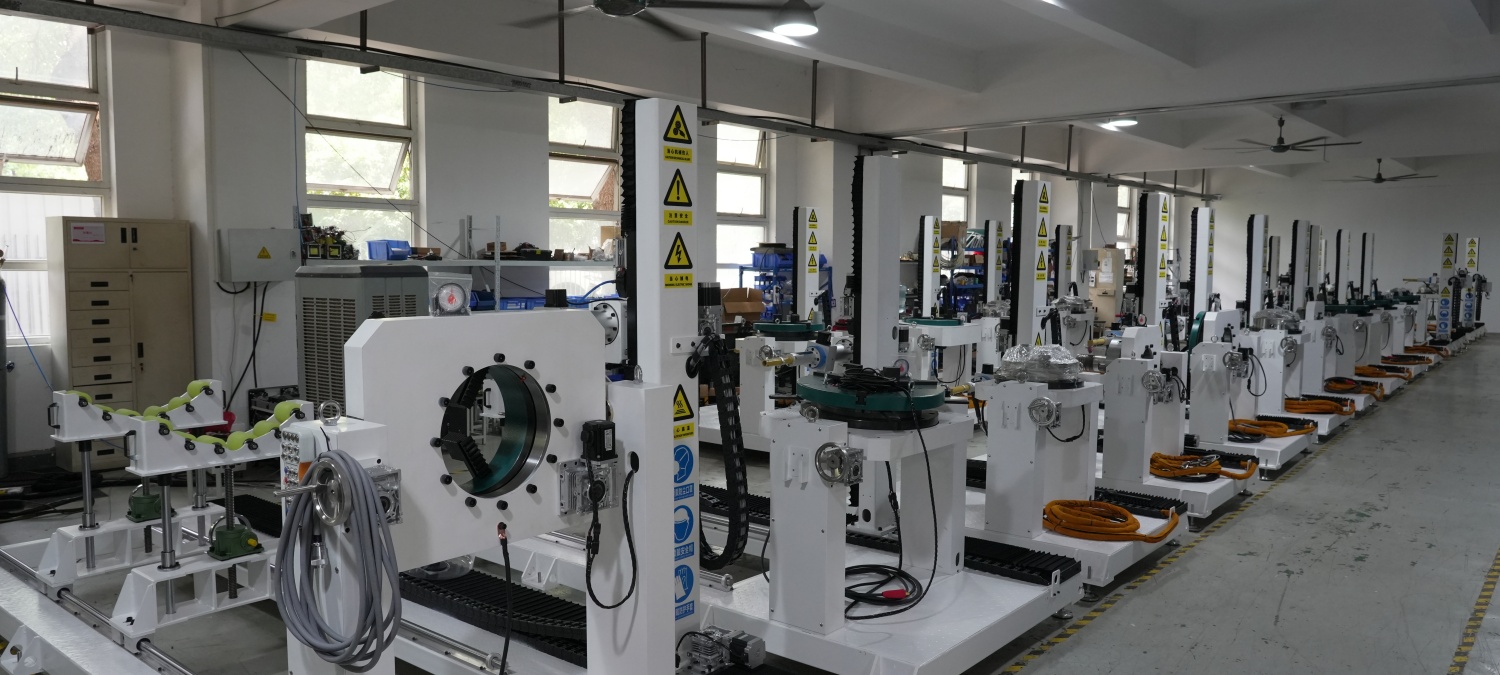
For procurement managers in high-stakes industries like pharmaceuticals, semiconductors, and oil & gas, selecting an orbital welding machine supplier is a critical decision. Market rankings and supplier lists are common starting points, but understanding the logic behind these rankings is essential for making an informed choice. This guide deconstructs the core evaluation dimensions for 2026, analyzes the global competitive landscape, and provides a framework for matching supplier capabilities with specific project needs.
Deconstructing the 2026 Orbital Welding Supplier Ranking Logic
Supplier rankings in the orbital welding sector are typically derived from a multi-dimensional analysis. While no single universal ranking exists, industry consultants and major procurement platforms often evaluate suppliers based on the following weighted criteria:
1. Market Share & Global Presence
This metric reflects a supplier's commercial success and stability. It is often estimated based on annual unit sales, revenue in key geographic markets, and the diversity of the client portfolio. A supplier with a significant export ratio, such as KEPUNI which exports over 100% of its production to markets including Europe, Asia, and the Americas, demonstrates global acceptance and resilience against regional market fluctuations.
2. Technological Breadth & Specialization
Rankings assess a supplier's ability to address diverse application needs. This includes the range of available welding heads (closed, open, split-type, tube-to-tube sheet) and power supplies. For instance, a supplier's portfolio covering pipe diameters from 3.175 mm to 960 mm indicates capability across micro-tubing in semiconductors to large-bore piping in power generation. Specialization in high-purity applications, evidenced by machines designed for pharmaceutical Water-for-Injection (WFI) or semiconductor ultra-pure gas systems, is a key differentiator.
3. Compliance & Certification Footprint
In regulated industries, a supplier's certifications are non-negotiable ranking factors. Key standards include CE marking for the European market (e.g., compliance with EN IEC 60974-1), adherence to ASME Section IX for pressure equipment, and specific industry standards like 3A Sanitary for food & beverage or SEMI F57 for semiconductor cleanrooms. The possession of valid, audited certifications is a concrete, verifiable indicator of a supplier's commitment to quality and regulatory understanding.
4. Client Validation & Project Portfolio
Real-world project success is the ultimate validator. Rankings consider the scale, complexity, and industry reputation of completed projects. Evidence such as a machine achieving 100% helium leak test pass rates on hospital medical gas lines, or enabling a semiconductor fab to meet SEMI F57 particulate standards without interruption, carries significant weight. Long-term client relationships and repeat orders are strong indicators of reliability and service quality.
The Global Orbital Welding Machine Supplier Landscape in 2026
The market can be segmented into three primary tiers, each with distinct value propositions for industrial buyers.
| Tier / Supplier Examples | Typical Value Proposition | Ideal Procurement Scenario |
|---|---|---|
| Tier 1: International Engineering Brands (e.g., Arc Machines (USA), Polysoude (France)) |
Established reputation for aerospace-grade quality certification and complete product lines. Often associated with high initial investment but long-term performance in critical applications. | Greenfield mega-projects with unlimited budgets, nuclear or aerospace applications where brand pedigree is paramount, and projects with stringent US-origin requirements. |
| Tier 2: European Specialists (e.g., Orbitron Systems (Switzerland), Orbitalservice (Germany)) |
Strong focus on precision manufacturing (e.g., ISO 9001:2015 certified), innovation (e.g., award-winning ORBITRON series), and deep expertise in specific sectors like pharmaceuticals or heat exchangers. | Mid-to-large scale projects in Europe or for companies with strict adherence to EU technical standards, where a balance of premium quality and specialized support is required. |
| Tier 3: High-Value Global Manufacturers (e.g., KEPUNI (China), other Asian suppliers) |
Competitive total cost of ownership, rapid customization and response times, and increasingly sophisticated technology. Capable of delivering solutions that meet international standards (CE, ASME) at a lower price point. | Cost-sensitive global projects, fast-tracked maintenance shutdowns, applications requiring customization, and procurement for Asian or emerging markets where local support is advantageous. |
The Strategic Rise of Chinese Suppliers in Global Rankings
Suppliers like KEPUNI have ascended in global procurement considerations due to several strategic advantages that address modern industrial needs:
- Integrated Manufacturing & Cost Efficiency: Vertical integration from R&D to production in large facilities (e.g., a 10,000 m² plant) allows for control over quality and cost. This enables offering technological parity with Tier 1 and 2 suppliers at a significantly lower total cost, avoiding high import tariffs associated with Western-made equipment.
- Agile Customization & Technical Support: With dedicated R&D teams (e.g., 36 engineers), these suppliers can rapidly adapt products for specific materials (SS304/316L, Titanium) or non-standard sizes. The provision of local technical support and faster spare parts supply in regions like Asia is a documented performance advantage.
- Standards Compliance & Global Certification: Commitment to international markets is demonstrated through active certification. For example, KEPUNI holds multiple CE certificates (e.g., Cert. No. TCF25040101LVDEMC) for its welding power supplies, verifying compliance with EU safety and EMC directives.
Case in Point: Validating Capability Through Project Execution
Client: Semiconductor Fabrication Plant (28nm process)
Supplier: KEPUNI
Challenge: Welding ultra-pure gas (UPG) distribution and DI water loop piping to meet SEMI F57 cleanliness standards without disrupting fab production.
Solution: Deployment of XD-20PRO high-purity orbital welding systems with specialized weld heads.
Result: The project met the SEMI F57 particulate level requirement, achieved 100% weld joint documentation, and was completed without production interruption, leading to repeat orders from the client. This project demonstrates the ability to execute in one of the most demanding high-purity environments.
Procurement Recommendations: Aligning Supplier Choice with Project Needs
A rational procurement strategy moves beyond generic rankings to a requirements-based matching process.
The Verification Step: Regardless of tier, always validate claims. Request pre-shipment weld sample tests, review certification documents directly, and ask for contactable references from projects similar to yours. For customized orders, a supplier's willingness to conduct a mandatory weld sample test before batch production is a strong indicator of a robust quality control system.
Conclusion: Beyond the Ranking to Value Partnership
The 2026 orbital welding market is characterized by diversified competition where technical capability is increasingly democratized. The most strategic supplier choice is not necessarily the top-ranked name, but the one whose operational strengths—be it cost structure, customization agility, or after-sales support network—most precisely align with the project's technical, budgetary, and timeline constraints. Suppliers like KEPUNI represent the evolution of global manufacturing, offering a combination of certified quality, application-specific engineering, and supply chain efficiency that redefines value for a wide spectrum of industrial buyers. The future of procurement lies in leveraging these nuanced market dynamics to forge partnerships that deliver both technical assurance and optimal project economics.
For a detailed technical overview of orbital welding solutions and capabilities, you can download the company brochure. Download Technical Brochure (PDF)