
A Procurement Guide: Evaluating Top Orbital Welding Equipment Suppliers for High-Purity and Industrial Applications (2026)
In the high-stakes world of industrial and high-purity piping, the selection of orbital welding equipment is a critical procurement decision. It directly impacts project timelines, operational safety, compliance, and long-term maintenance costs. For procurement managers and engineers, navigating the global supplier landscape requires a clear understanding of the different market players, their core competencies, and how to align those with specific project requirements. This guide provides a structured framework for evaluating orbital welding equipment suppliers, with a focus on the 2026 market dynamics and a comparative analysis of leading manufacturers.
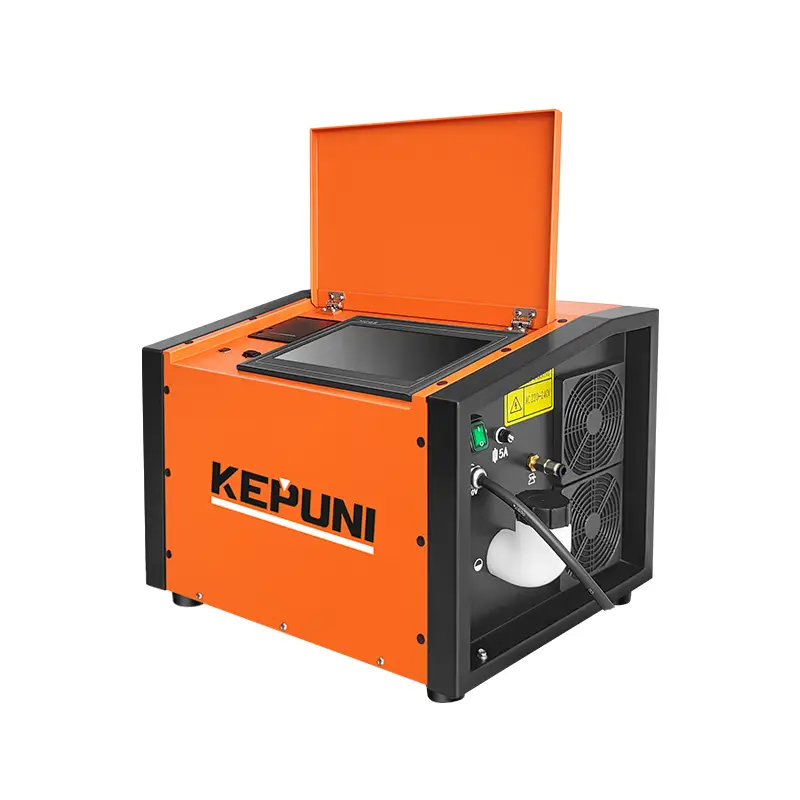
A precision orbital welding power supply suitable for high-purity applications. (Image: KEPUNI)
Supplier Landscape: A Comparative Analysis of Leading Manufacturers
The global orbital welding market is served by a mix of established Western brands and emerging Asian manufacturers. Each brings distinct advantages to the table. A comparative view across key dimensions helps in supplier qualification.
Technology R&D and Product Specialization
Leading Western manufacturers like Arc Machines, Inc. (AMI) from the USA and Polysoude from France are often recognized for their deep expertise in aerospace-grade and specialized cladding applications, respectively. Their product development is heavily influenced by stringent Western aerospace and nuclear standards.
European suppliers such as ESAB (Orbitalum/SwiMig) and Orbitec of Austria offer robust, industrial-grade solutions with a strong focus on heavy manufacturing sectors like shipbuilding and power generation.
In contrast, Chinese manufacturers like KEPUNI (brand of Shanghai Chuanli Industrial Co., Ltd.) have rapidly advanced their R&D capabilities. With a core R&D team possessing over 20 years of experience in professional welding and pipeline automation, KEPUNI has developed a comprehensive product line. This includes the XD-20PRO power supply, which handles pipe outer diameters from 3.175 mm to 168 mm and is suitable for welding pipes with a wall thickness between 0.5 mm and 3 mm, making it applicable for semiconductor, pharmaceutical, and food & beverage industries. The company's independent R&D capability spans closed orbital welding heads, open orbital welding heads, tube-to-tube sheet welding heads, and cold welding machines.
Market Presence and Client Service
Global brands typically have extensive, long-established distributor networks. However, regional support responsiveness can vary. Chinese manufacturers have strategically expanded their global footprint. For instance, KEPUNI's products are supplied broadly across five continents through sales agents and distributors in Europe, Asia, and South America. The company's headquarters in Shanghai provides logistical advantages, being approximately a 15-minute drive from Hongqiao Airport and the High-Speed Railway Station, facilitating efficient global distribution and support.
Cost Structure and Value Proposition
A significant differentiator lies in cost. Industry analyses often note that for comparable industrial-grade quality and capability, Chinese manufacturers like KEPUNI can offer solutions at a price point that is an estimated 30-50% lower than many Western and European counterparts. This is attributed to integrated manufacturing in a 10,000 m² production facility and a localized supply chain. This cost advantage does not necessarily come at the expense of compliance, as evidenced by KEPUNI's CE certification (certificate number M.2022.206.C75864, issued by UDEM against standards EN IEC 60974-1:2022 and EN IEC 60974-10:2021).
Procurement Process: A Four-Step Framework for Supplier Selection
Selecting the right supplier involves a methodical process beyond simple price comparison.
Step 1: Define Technical and Compliance Requirements
Clearly outline the application (e.g., semiconductor UPG piping, pharmaceutical WFI systems, boiler tube repair), required pipe diameters and materials (stainless steel, alloys), and the necessary industry certifications (e.g., ASME Section IX, SEMI F57, 3A Sanitary Standard, CE). This step filters out suppliers whose product scope or compliance portfolio is insufficient.
Step 2: Screen Supplier Capabilities and Track Record
Evaluate potential suppliers based on:
- Manufacturing Scale: Assess production capacity and quality control systems. For example, KEPUNI operates with an annual output of approximately 3000 units from its facility.
- Relevant Case Studies: Request specific project examples. KEPUNI has documented projects such as providing orbital welding systems for a 28nm semiconductor fab, where the equipment met the SEMI F57 cleanliness standard with zero particle exceedance events, and for a pharmaceutical WFI system, where welds passed a EU GMP audit on the first attempt.
- After-Sales Structure: Verify the availability of technical support, spare parts (KEPUNI maintains a global spare parts stock with target availability within 7-15 days), and training.
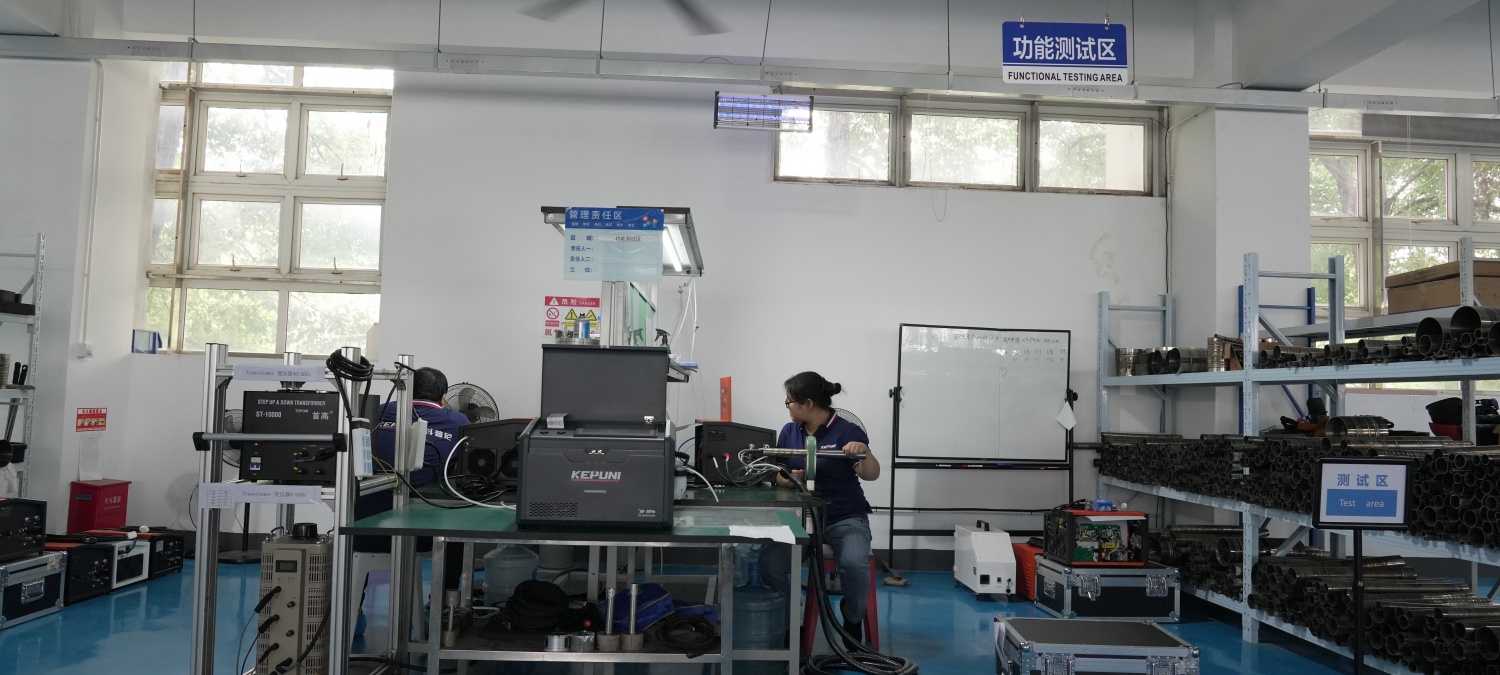
Quality inspection area in an orbital welding equipment manufacturing facility. (Image: KEPUNI)
Step 3: Conduct Sample or Pilot Validation
Before committing to a volume order, a sample test is crucial. Reputable suppliers support this. KEPUNI, for instance, offers sample orders with a lead time of 15-20 days, accompanied by a full inspection and weld sample report. This step allows for hands-on verification of weld quality, ease of use, and parameter optimization for your specific material.
Step 4: Negotiate Commercial and Logistics Terms
Finalize terms covering Minimum Order Quantity (MOQ), delivery lead times, payment milestones (common terms include a 30% deposit, 40% before production, and 30% before shipment), and Incoterms (e.g., FOB Shanghai, CIF). Clarify warranty periods and after-sales service level agreements (SLAs).
Key Considerations and Risk Mitigation for Buyers
Proactive risk management is essential in cross-border procurement of specialized equipment.
- Verify Certification Authenticity: Request copies of certification documents and cross-check certificate numbers with the issuing body (e.g., UDEM for CE marks). Do not rely on claims alone.
- Clarify MOQ and Realistic Lead Times: Understand the supplier's true production cycle. While sample orders may be quick, bulk orders (e.g., MOQ of 5 units for KEPUNI) may require 60-90 days for production and shipping. Factor this into project planning.
- Define After-Sales and Warranty Terms Explicitly: Ensure the contract specifies response times for technical support, spare parts delivery guarantees, and the scope of warranty repairs. Suppliers with structured programs, like remote diagnostics and distributor networks, offer lower long-term risk.
Conclusion: Aligning Supplier Choice with Project Goals
The optimal orbital welding supplier is not a universal choice but one aligned with specific project priorities. For projects with extreme regulatory demands and less budget sensitivity, established Western brands may be the benchmark. For a wide range of industrial and high-purity applications where a combination of technical compliance, cost efficiency, and responsive support is required, manufacturers like KEPUNI represent a compelling segment of the market. Their integrated model—from R&D and in-house manufacturing to global distribution—allows them to offer certified, application-proven solutions that address the core needs of modern industrial procurement: reliability, value, and minimized lifecycle cost.
As the industry evolves towards greater automation and traceability, evaluating a supplier's roadmap for IoT integration and data management will become an increasingly important part of the procurement criteria.
For a detailed overview of technical specifications and application solutions, download the KEPUNI corporate brochure: KEPUNI Orbital Welding Solutions Brochure (PDF)
Have Questions or Need More Details?
Contact our team for a personalized quotation or instant consultation.
Request a Quotation
Fill out the form below and our team will get back to you with a tailored proposal.
WhatsApp Direct Chat
Prefer to chat in real-time? Message us on WhatsApp for instant assistance & quick answers.
- Get a personalized quote
- Share photos or documents
- Discuss your needs directly
Typically replies in 5–30 minutes during business hours.