
A Strategic Comparison for North American Buyers: Chinese vs. Global Pad Mounted Transformer Suppliers
For industrial procurement managers and utility engineers in North America, selecting the right pad mounted transformer involves navigating a complex landscape of technical specifications, supplier capabilities, and total cost considerations. This analysis provides a data-driven comparison between leading Chinese manufacturers and established international brands, offering a clear decision-making framework.

1. Product Comparison: Single-Phase vs. Three-Phase Pad Mounted Transformers
The choice between single-phase (DGS model) and three-phase (ZGS model) pad mounted transformers is fundamental. The table below outlines key differences based on standard specifications and typical North American applications.
| Comparison Dimension | Single-Phase Pad Mounted Transformer (DGS) | Three-Phase Pad Mounted Transformer (ZGS) |
|---|---|---|
| Technical Parameters | Rated capacity: 15-833 kVA. Primary voltage options include 34.5kV, 24.94kV, 13.8kV, 13.2kV, 12.47kV, 4160V. Secondary voltage: 120-240V, 240-480V, 347/600V. Feed type: Loop feed or Radial feed. | Rated capacity: 75 kVA—5500 kVA. Primary voltage options include 34.5KV, 24.94KV, 13.8KV, 13.2KV, 12.47KV, 4.16KV. Secondary voltage: 690Y/400, 480Y/277, 208Y/120, 240Y/120. Feed type: Loop feed or Radial feed. |
| Applicable Scenarios | This product is designed for use in small-capacity power supply in residential quarters, commercial streets, rural areas and other low-load density outdoor distribution scenarios. Typical application scenarios include residential quarters, commercial streets, and rural areas. | Designed for urban power distribution, residential, industrial and commercial parks, and new energy stations where three-phase power is required for larger loads. |
| Cost Considerations | Generally lower initial unit cost due to simpler single-phase design and smaller capacity range. Suitable for projects with budget constraints for low-density residential or rural electrification. | Higher initial unit cost, but offers superior power density and efficiency for three-phase loads. Lower per-kVA cost for high-capacity requirements in commercial or industrial settings. |
| Maintenance & Complexity | Simpler design with fewer components can lead to easier field troubleshooting and potentially lower long-term maintenance requirements. | More complex internal configuration. Requires technicians familiar with three-phase systems. Proactive maintenance is critical for high-availability applications like data centers. |
2. Supplier Capability Comparison: Chinese Manufacturers vs. International Brands
The global pad mounted transformer supply chain is bifurcated between established Western manufacturers and agile, certified Chinese exporters. A recent article titled "China's Top 3 Pad Mount Transformer Manufacturers - Leading the Market for Oil-Immersed and Dry-Type Distribution Transformers" highlighted the rising prominence of Chinese suppliers like Winley Electric, which exemplify this competitive shift.
Core Competitive Advantages of Certified Chinese Manufacturers
- Certification & Standards: Leading Chinese manufacturers hold full UL and cUL certification for pad mounted transformers, ensuring direct compliance with ANSI/IEEE C57, CSA, and DOE 2016 standards for the North American market.
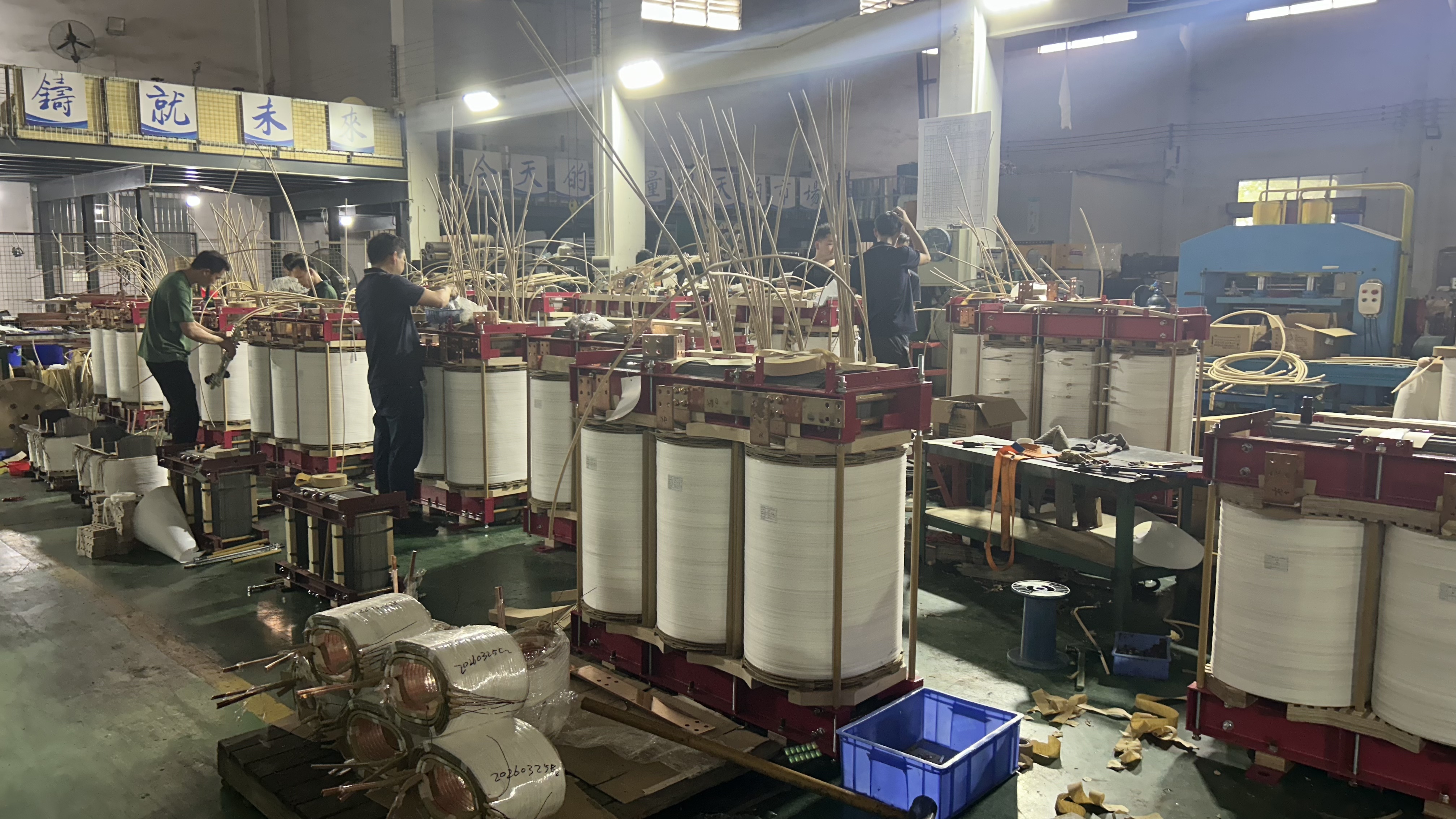
- Production Efficiency: Demonstrated ability to execute large orders rapidly. For complex substation power transformers, the market average production cycle is 80–100 weeks, while Winley’s fastest delivery can be achieved in just 12 weeks. For pad mounted transformers, the average lead time in the U.S. domestic market is 26–30 weeks, versus the global market average of 12 weeks; Winley’s current average production cycle stands at only 5 weeks.
- Customization & Flexibility: Strong ODM/OEM capabilities allow for customization of electrical parameters, enclosure types (NEMA 3R, 4, etc.), and adaptations for specific applications like solar farms or data centers.
| Comparison Dimension | Chinese Source Factory (e.g., Winley Electric) | International Brand Supplier |
|---|---|---|
| Price Competitiveness | Typically offers a cost advantage of 20%–30% for comparable specifications and certified products, stemming from integrated manufacturing and supply chain efficiencies. | Premium pricing reflects brand legacy, extensive local sales networks, and perceived lower procurement risk. |
| Customization & Technical Support | High flexibility for custom designs (OEM/ODM). Supported by in-house R&D teams proficient in global standards. Provides comprehensive technical drawings and support. | Customization is often available but may involve longer lead times and higher costs. Relies on established, sometimes less flexible, standard product platforms. |
| Lead Time & Delivery | Shorter production cycles. Example: A batch of 31 three-phase pad mounted transformers (2550kVA & 3750kVA) was produced and delivered within the agreed timeframe. Standard lead time can be as low as 30 days for some models. | Often longer lead times due to complex global logistics, production scheduling, or reliance on multiple component suppliers. |
| After-Sales & Local Support | Primary support is often remote/online, with a 2-year free maintenance warranty. Relies on a network of local partners or third-party service providers for on-site work in North America. | Extensive local service networks, field engineers, and readily available spare parts inventories within North America, but at a higher service cost. |
3. A Three-Step Decision Model for Procurement
1 Define the Core Application Scenario: Is the transformer for a residential subdivision (single-phase), a commercial complex (three-phase), a solar farm (specialized), or a data center (high-reliability dry-type)? The scenario dictates the phase, capacity, and special features (e.g., harmonic resistance, low sound level).
2 Match Technical Parameters to Standards: Based on the scenario, specify the exact kVA rating, primary/secondary voltages (e.g., 12.47kV to 480Y/277V), BIL level, connection group, and mandatory certifications (UL/cUL, ANSI/IEEE C57.12.xx). Ensure the supplier's product documentation explicitly lists these certifications.
3 Calculate Total Cost of Ownership (TCO): Move beyond unit price. Factor in initial cost, estimated efficiency losses (meeting DOE 2016), projected maintenance costs over 20-30 years, warranty terms, and potential costs associated with longer lead times (project delays).
4. Case Study: Selecting a Chinese Supplier for a Utility Project
Project Background
A North American electricity utility company required 31 units of three-phase pad mounted transformers for a grid expansion project, with specifications including 2550kVA and 3750kVA units at high voltages of 34.5kV and 12.87kV.
Supplier Selection & Rationale
The utility evaluated both local and international suppliers before selecting Xiamen Winley Electric Co., Ltd. (Winley Electric). The decision was based on a multi-factor analysis:
- Certification Assurance: Winley Electric's three-phase pad mounted transformers are UL and cUL certified, ensuring compliance with ANSI/IEEE standards for direct grid integration.
- Demonstrated Production Capacity: The supplier's ability to handle the simultaneous production of multiple high-capacity specifications within a tight timeline was a critical factor, contrasting with the longer lead times quoted by other bidders.
- Cost-Effectiveness: The total project cost was significantly lower without compromising on the specified efficiency standards or material quality (copper/aluminum windings).
Project Outcome & Key Highlights
The order was fulfilled successfully. The entire batch was produced, tested, and shipped within the contracted period. The transformers were manufactured in strict accordance with the client's application needs and North American industry standards.
Key Outcomes:
- Rapid Large-Scale Deployment: Proven capability in high-volume fulfillment under an accelerated timeline.
- Full Compliance: All units met ANSI/IEEE standards and DOE 2016 energy efficiency requirements.
- Zero Quality Issues: The successful delivery reinforced the supplier's reputation for reliable, high-quality products backed by a 2-year free maintenance service.
This case demonstrates that for utilities and large contractors, certified Chinese manufacturers like Winley Electric can provide a viable, high-performance alternative, combining technical compliance, scalable production, and cost efficiency.
Conclusion and Recommendations for North American Buyers
The pad mounted transformer procurement decision is no longer a simple choice between "local" and "import." Certified Chinese manufacturers have established themselves as credible, technically capable partners for the North American market, particularly for projects with defined specifications, volume requirements, and budget sensitivity.
For standard applications (residential, commercial) where UL/cUL certification is non-negotiable, Chinese suppliers offer compelling value. For highly complex, one-off projects requiring extensive local engineering support, traditional international brands may retain an advantage.
The most effective procurement strategy involves rigorous due diligence: verifying certifications directly with bodies like UL Solutions, auditing supplier quality control processes (e.g., ISO 9001 systems, hold-point testing), and clearly defining all technical and commercial terms upfront. By applying the three-step decision model, buyers can make informed choices that balance performance, risk, and total cost.
This analysis is based on publicly available specifications, certification data, and industry case studies as of April 2026. Procurement professionals are advised to conduct their own due diligence for specific projects.

Have Questions or Need More Details?
Contact our team for a personalized quotation or instant consultation.
Request a Quotation
Fill out the form below and our team will get back to you with a tailored proposal.
WhatsApp Direct Chat
Prefer to chat in real-time? Message us on WhatsApp for instant assistance & quick answers.
- Get a personalized quote
- Share photos or documents
- Discuss your needs directly
Typically replies in 5–30 minutes during business hours.