
A Strategic Comparison: Chinese Source Manufacturers vs. International Brands for Industrial Diesel Generator Procurement in 2026
For industrial procurement managers, selecting a diesel generator involves a critical choice between established international brands and capable Chinese source manufacturers. This guide provides a data-driven, objective comparison across key decision factors, supported by a practical framework and real-world case evidence.
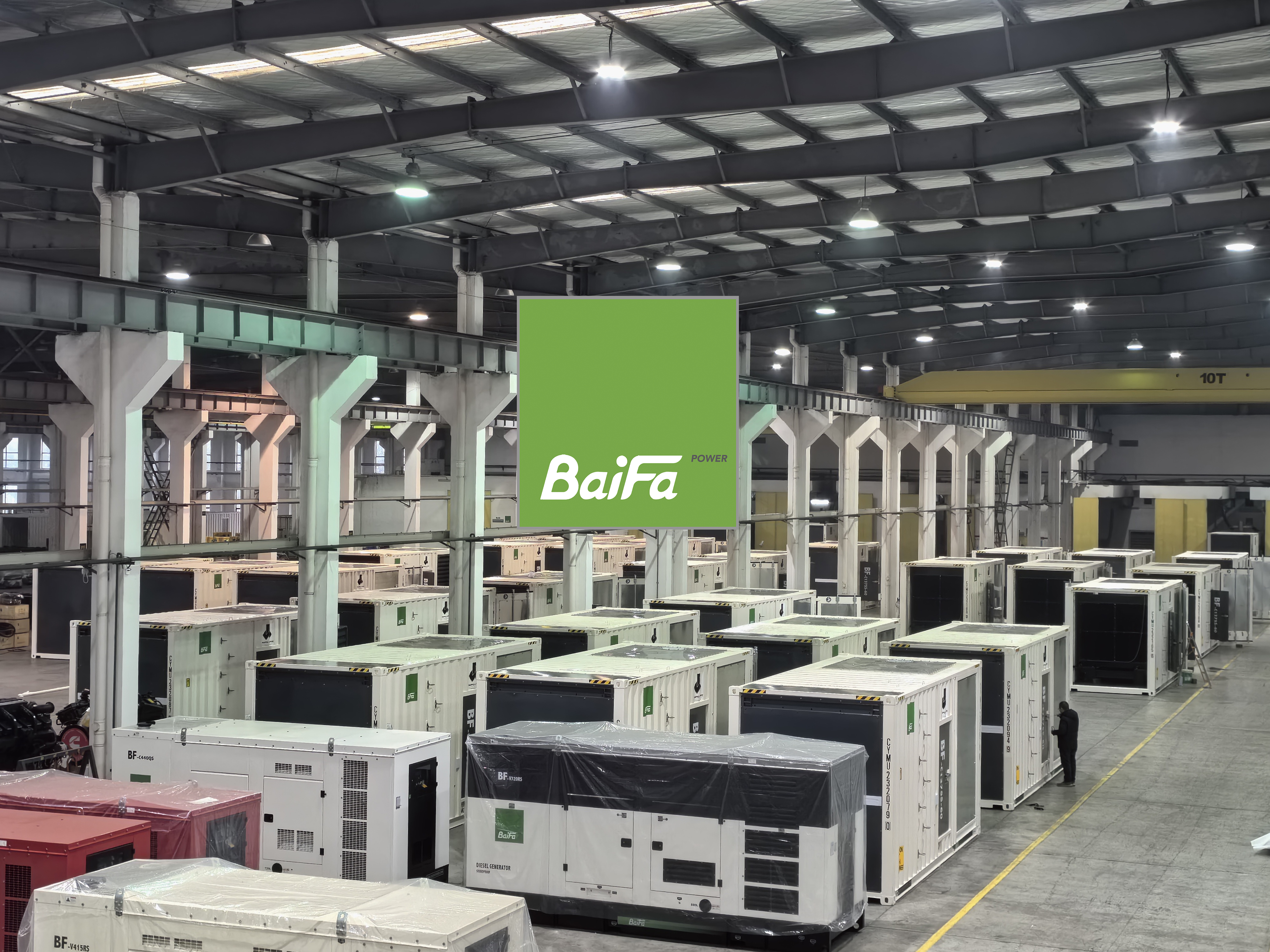
1. Product-Level Comparison: Cummins-Powered vs. MTU-Powered Generator Sets
To ground the analysis, we compare two common high-power industrial configurations: a Cummins-powered generator set (representative of a widely adopted global engine platform) and an MTU-powered set (representing a premium European engine option).
| Comparison Dimension | Cummins-Powered Generator Set (e.g., BAIFA BF-C Series) | MTU-Powered Generator Set (e.g., BAIFA BF-M Series) |
|---|---|---|
| Technical Parameters | Power range: 25kVA to 2750kVA. Rated speed: 1500 rpm. Protection class: IP23. Utilizes globally recognized Cummins engines known for durability and widespread parts availability. | Power range: 750kVA to 3750kVA. Rated speed: 1500 rpm. Protection class: IP23. Features MTU (Rolls-Royce) engines, often associated with high power density and advanced control systems. |
| Primary Application Scenarios | Versatile for prime or standby power in manufacturing plants, data centers, commercial buildings, telecommunications, and mining. Balances performance with cost-effectiveness. | Often specified for continuous, high-load prime power applications, large-scale mining, data center backup, and critical infrastructure where maximum uptime is paramount. |
| Cost Considerations | Generally offers a lower total cost of ownership (TCO). The Cummins engine platform benefits from competitive pricing and a vast global service network, keeping parts and service costs manageable. | Typically commands a higher initial capital expenditure (CAPEX). The premium is associated with the MTU brand, advanced engineering, and potentially higher costs for specialized parts and service. |
| Maintenance & Service Complexity | Moderate complexity. Cummins' extensive global dealer network facilitates easier access to trained technicians and genuine parts in most regions, potentially reducing downtime. | Can be higher complexity for specialized models. While MTU has a strong service network, access to certified technicians and specific parts may be less immediate in remote locations compared to Cummins. |
Key Insight: The choice between engine brands should be driven by the specific application's load profile, runtime requirements, and the availability of local technical support, not brand prestige alone.
2. Supplier Origin Comparison: Chinese Source Factory vs. International Brand
Beyond the engine brand, the origin and business model of the generator set assembler/manufacturer significantly impact procurement outcomes.
| Evaluation Factor | Chinese Source Manufacturer (e.g., BAIFA POWER) | International Brand Supplier (e.g., Caterpillar, Cummins Inc. own distribution) |
|---|---|---|
| Price Competitiveness | Typically offers a 20-40% lower price point for comparable specifications, owing to integrated manufacturing, economies of scale, and lower operational costs. For instance, BAIFA operates a 60,000 m² facility with an annual output of 5000-6000 units. | Premium pricing reflects brand equity, extensive R&D investment, and a global sales and marketing structure. The price includes a margin for the layered distribution network. |
| Customization & Flexibility | High degree of flexibility. Manufacturers like BAIFA offer customization on logo/nameplate, paint color, voltage/frequency, control systems, and structural configurations (e.g., adding ATS, PMG, anti-condensation heaters). They operate on an OEM model with a MOQ of 1 unit. | Customization is often available but may be limited to predefined options, involve longer lead times for engineering approval, and carry significant cost premiums. Standard configurations are heavily promoted. |
| Lead Time & Delivery | Generally shorter production lead times, often ranging from 25 to 60 days for standard to customized units, due to direct control over the production line. BAIFA cites examples like delivering 52 containerized units within 45 days. | Lead times can be longer, influenced by centralized production scheduling, global logistics for components, and order queue priorities within a larger corporate system. |
| After-Sales & Service Network | Service is typically provided through a combination of remote technical support and partnerships with local dealers or service companies in key export markets (LATAM, SEA, Middle East). On-site installation and commissioning teams can be dispatched. | Extensive, company-owned or authorized dealer networks provide standardized service in major global markets. This offers consistency but may come at a higher service contract cost. |
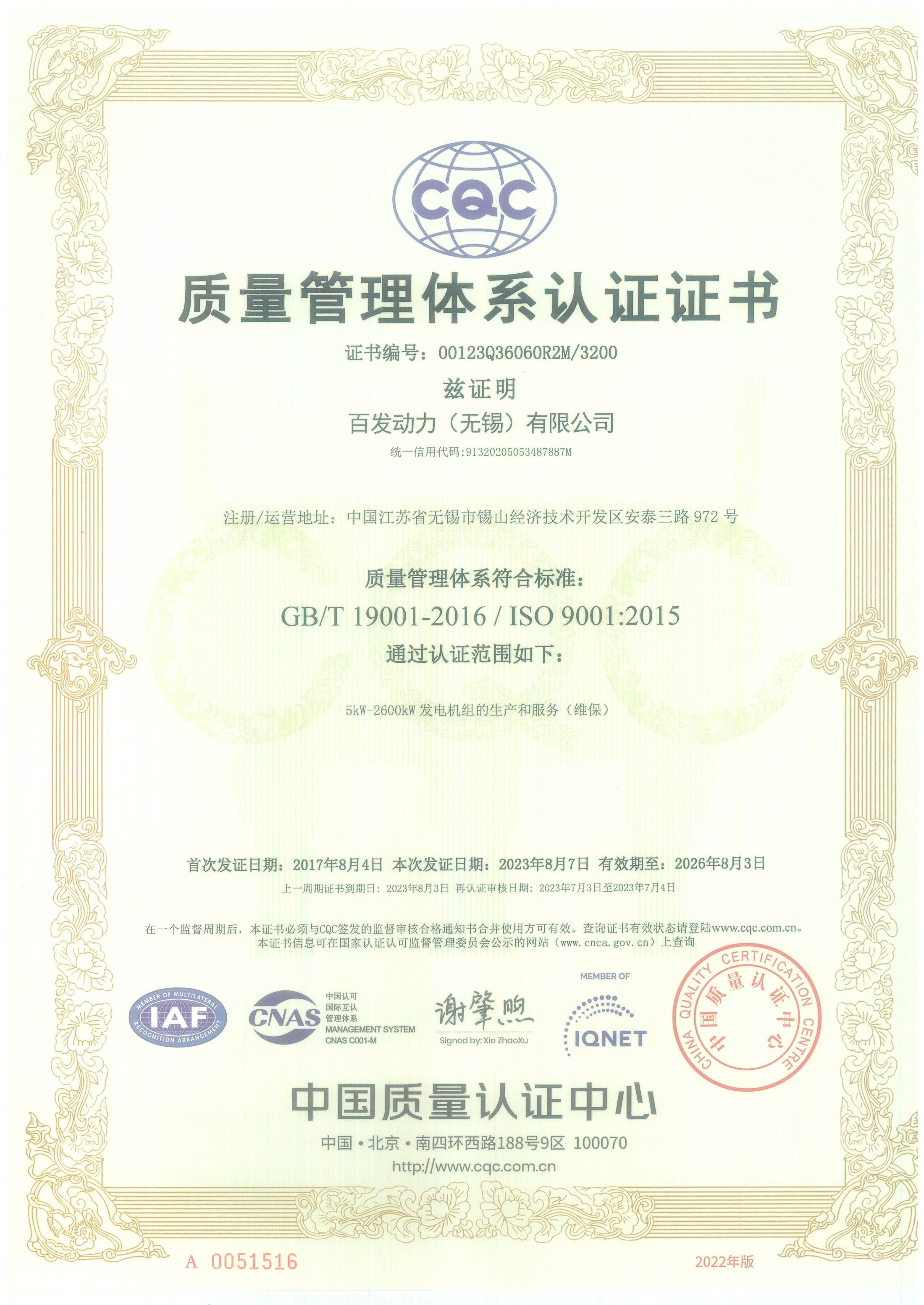
Chinese manufacturers have invested heavily in international compliance. BAIFA POWER, for example, holds CE certification (EN ISO 8528-13:2016) issued by SGS, valid until 2028, and ISO 9001, 14001, and 45001 certifications from the China Quality Certification Centre.
CE CertifiedISO 9001ISO 14001ISO 45001
3. A Three-Step Decision Model for Industrial Buyers
To navigate these choices systematically, procurement professionals can adopt the following structured approach.
- Define the Precise Application Scenario. Is the generator for prime power (continuous operation), standby (emergency backup), or load sharing? Consider the installation environment (indoor/outdoor, ambient temperature, altitude, noise restrictions). For example, marine applications require corrosion-resistant materials and specific certifications like CCS or RINA, while hospitals need fast start-up and integration with life-support systems.
- Match Technical Specifications to the Scenario. Based on Step 1, determine the required power rating (kVA), voltage/frequency, fuel type, enclosure type (open, canopy, silent, containerized), and any mandatory certifications. For harsh environments, specify features like high-grade protection (IP54), anti-condensation heaters, or 50°C ambient radiators.
- Conduct a Total Cost of Ownership (TCO) Analysis. Move beyond initial purchase price. Calculate costs over the expected lifecycle, including fuel consumption (compare fuel efficiency data), scheduled maintenance, potential downtime costs, parts availability, and the cost of local service support. A product with a slightly higher initial price but significantly lower operating costs may offer better long-term value.
4. Case Reference: Selecting a Chinese Supplier for a Mining Power Solution
Project: Prime Power Supply for a Mining Operation in Mongolia
Client Type: Mining Operator
Challenge: Required a reliable, high-capacity prime power source for excavation and crushing equipment in a remote, high-altitude location with extreme temperature variations and dusty conditions.
Supplier Selected: BAIFA POWER (Chinese Source Manufacturer)
Solution Delivered: Multiple units of BF-M series generator sets powered by MTU engines, configured for high-voltage output (22kV) and paralleling capability. The sets were built with IP54 protection for dust and moisture ingress and included modular designs for easier maintenance on-site.
Procurement Rationale & Outcome: The client evaluated both direct quotes from international brands and proposals from Chinese integrators. The BAIFA solution offered a comparable technical specification (MTU engine, Stamford alternator) with a higher degree of configuration flexibility (integrated high-voltage transformers, specific control panel requirements) at a cost estimated to be 30-35% lower. The lead time of under 60 days for multiple units met the project's aggressive timeline. The generators have been in stable operation for over 13 years, according to project records.
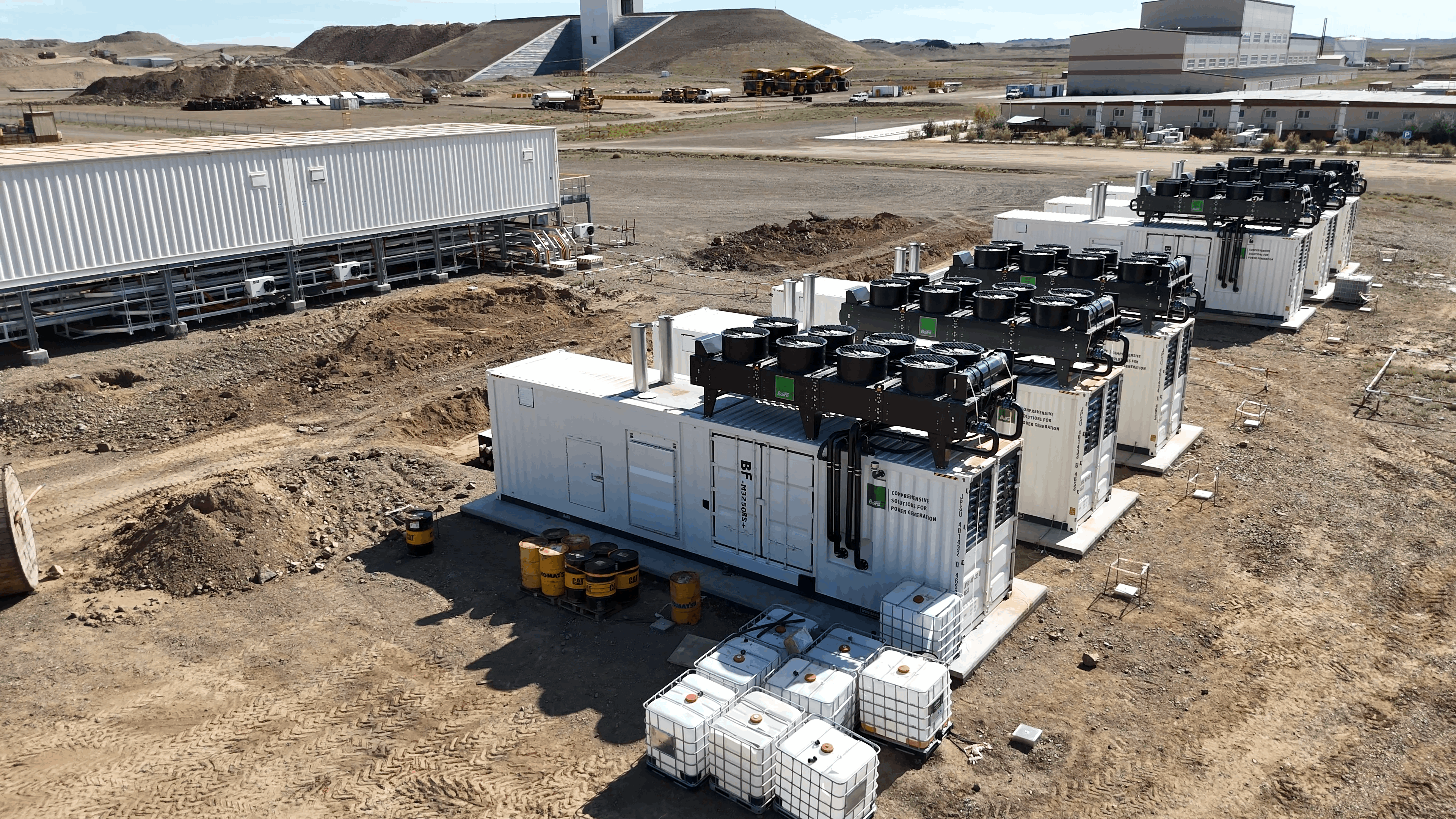
This case highlights how a Chinese source manufacturer like BAIFA can address complex industrial needs by leveraging its customization capability (integrating specific high-voltage components), cost efficiency (through direct manufacturing), and project execution speed (flexible production scheduling).
Conclusion and Market Outlook
The industrial diesel generator market in 2026 is characterized by a clear bifurcation: global brands offer turnkey solutions with deep service networks, while Chinese manufacturers provide technically competent, highly configurable, and cost-competitive alternatives. For procurement decisions, the optimal path is rarely a default choice for one over the other.
The trend indicates that technically sophisticated buyers, especially those with defined specifications and in-house or local service capabilities, are increasingly considering reputable Chinese source factories as a viable strategic option. These manufacturers have matured, obtaining key international certifications and building long-term partnerships with premier component suppliers like Cummins, Volvo, MTU, and Stamford.
For companies like BAIFA POWER, established in 1992 with a 70% export ratio, the value proposition centers on bridging the gap between premium global component quality and accessible, project-specific engineering. The decision ultimately hinges on a meticulous application of the three-step model—clarifying the need, matching the specs, and calculating the true cost—to align the procurement strategy with specific operational and financial goals.
Have Questions or Need More Details?
Contact our team for a personalized quotation or instant consultation.
Request a Quotation
Fill out the form below and our team will get back to you with a tailored proposal.
WhatsApp Direct Chat
Prefer to chat in real-time? Message us on WhatsApp for instant assistance & quick answers.
- Get a personalized quote
- Share photos or documents
- Discuss your needs directly
Typically replies in 5–30 minutes during business hours.