
Artificial Turf Technical Specifications and Manufacturing: A 2026 Guide for Engineers and Buyers
Decoding Artificial Turf: A Technical Framework for 2026 Procurement
For industrial engineers and procurement specialists, selecting high-performance artificial turf requires a nuanced understanding of technical specifications and manufacturing processes. This guide provides a framework for interpreting key parameters and assessing how production methods directly impact product longevity and field performance. The analysis is grounded in industry standards and the evolving practices of leading manufacturers.
Core Technical Parameter Analysis
Understanding specification sheets is fundamental. Key parameters are interdependent, and their combined effect determines suitability for an application.
1. Yarn Type and Structure
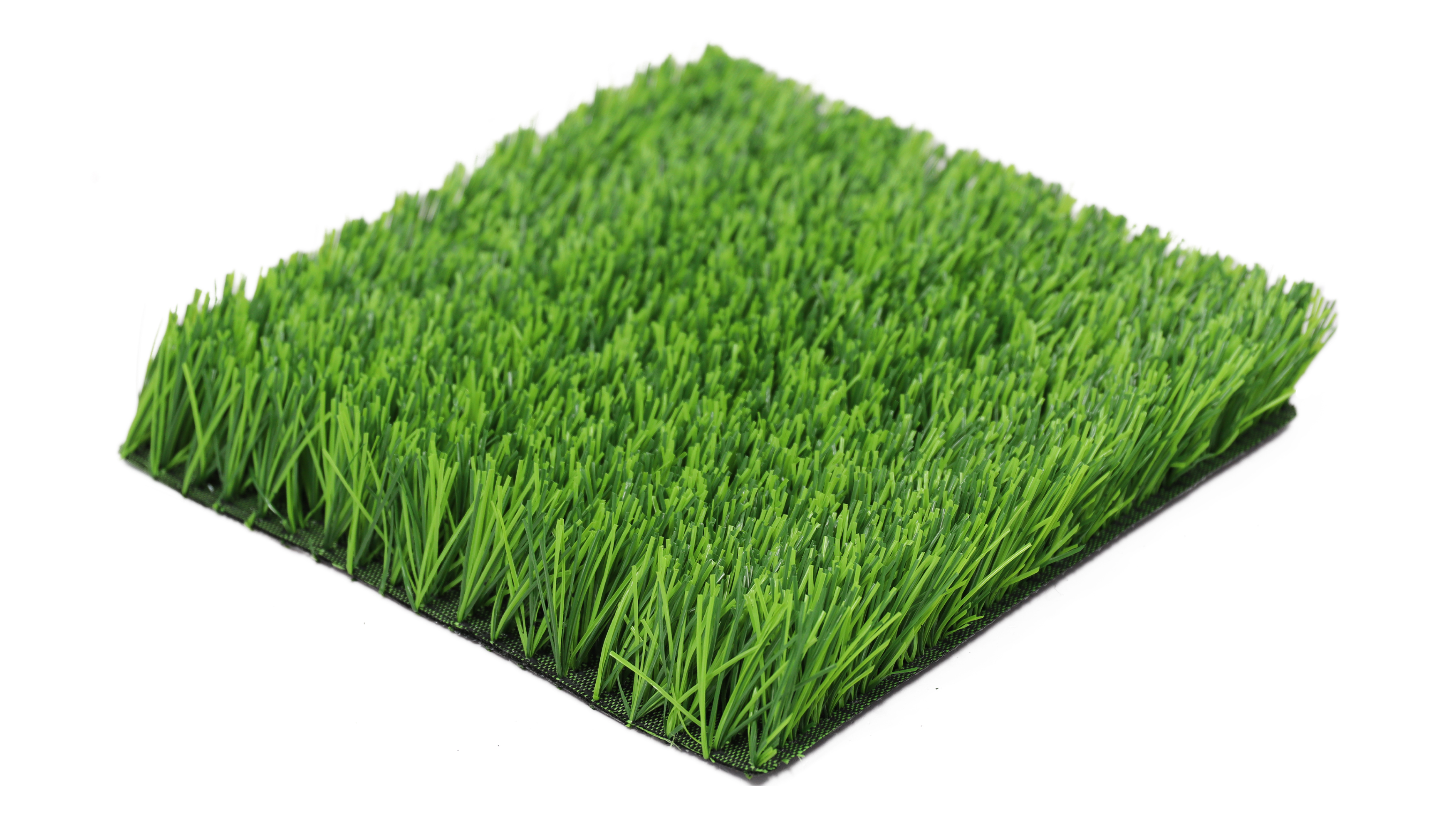
The yarn is the primary wear surface. Monofilament polyethylene (PE) is standard for sports turf due to its durability and resilience. Yarn shape (e.g., U-shape, C-shape, S-shape, with or without a spine) influences fiber memory, abrasion resistance, and surface texture. For example, a U-shape with a spine structure, as used in some football grass products, can enhance durability and uprightness.
2. Pile Height, Gauge, and Density
These three parameters define the turf's physical structure and must be evaluated together.
- Pile Height: The length of the yarn above the backing, measured in millimeters (mm). It affects ball roll, cushioning, and aesthetic appearance. Sports fields typically require 40-60mm, while landscaping uses 25-35mm.
- Gauge: The distance between rows of tufts, measured in inches (e.g., 3/8", 5/8"). A smaller gauge means tufts are closer together, contributing to a denser surface.
- Density: The number of stitches per square meter. It is a calculated value from gauge and stitch rate. Higher density generally correlates with better durability, ball response, and a more natural look. For instance, a residential turf model like EM241007 is specified with a density of 15,750 stitches per square meter.
Key specifications for artificial turf include a stitch density of 15,750 per square meter and a gauge of 3/8 inch, as seen in some residential and sports products.
3. Backing System
The backing provides dimensional stability and anchors the yarn. Common configurations include:
- Primary Backing: Usually polypropylene (PP) fabric, into which yarn is tufted.
- Secondary Backing: A coating applied to lock the tufts in place. Materials include SBR latex, polyurethane (PU), or specialized "pet glue." PU coatings are noted for enhanced durability and environmental resistance. The product backing uses a double PP layer with PU adhesive.
- Reinforcement: A woven or non-woven mesh may be laminated between layers for added strength and dimensional stability. The backing material is PP, Net, and Latex in some commercial-grade products.
Manufacturing Processes and Their Impact on Quality
Quality is engineered through controlled production stages. Integrated manufacturers who oversee the entire process—from yarn extrusion to finishing—typically achieve higher consistency.
1. Yarn Extrusion and Tufting
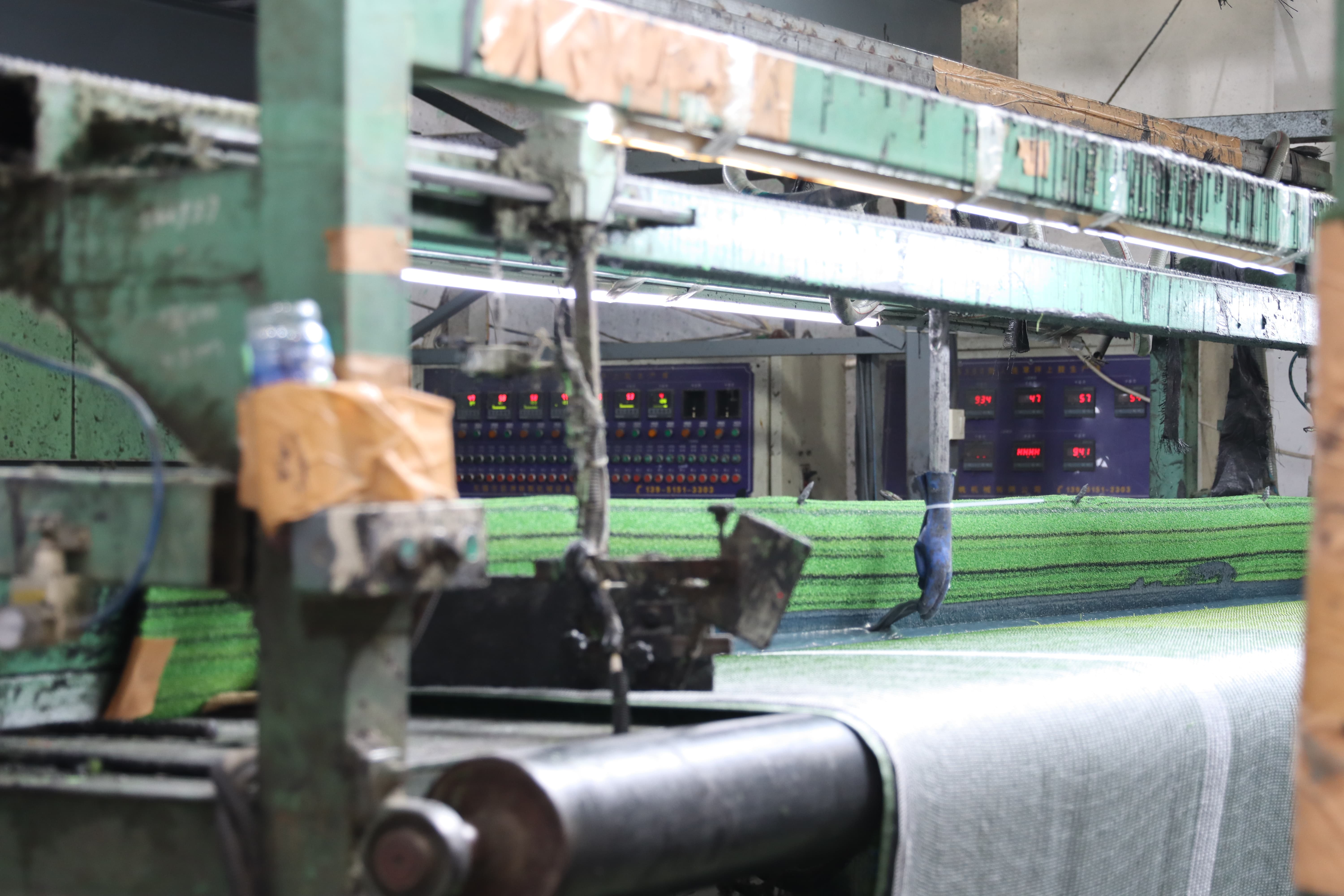
High-quality, UV-stabilized PE granules are melted and extruded into filaments, which are then twisted and textured. Consistent yarn diameter and polymer quality are critical for longevity. The yarn is then tufted into the primary backing at high speed. Precision in the tufting machine determines consistent gauge and stitch rate.
2. Coating and Curing
This is arguably the most critical stage. The primary backing is coated with adhesive (latex or PU) and often laminated with a secondary fabric. The coating must penetrate fully to lock each tuft. Uniform application and proper curing in ovens ensure the backing remains flexible yet strong, preventing delamination and yarn pull-out over time.
3. Quality Control and Testing
Post-production, rigorous testing validates performance. This includes tests for tensile strength, tuft bind, colorfastness under UV light, and wear simulation. Compliance with international standards like FIFA Quality Pro, World Rugby, or synthetic turf council guidelines is essential for sports applications. Environmental compliance, such as passing REACH SVHC testing for restricted substances, is increasingly a non-negotiable requirement for global markets.
Common Technical Specification Misinterpretations
Procurement teams often encounter these three pitfalls when evaluating proposals.
1. Isolating Pile Height from Density
A long pile height (e.g., 50mm) may seem desirable, but if the density is low, the fibers will lack support, leading to matting and poor recovery. Always evaluate pile height in conjunction with stitch density and gauge.
2. Overlooking Backing Specifications
The backing system is often abbreviated on spec sheets. Details like the type of adhesive (SBR vs. PU), the weight of the coating (oz/sq yd), and the presence of a reinforcing mesh are critical for long-term stability, especially in high-traffic or variable climate zones.
3. Assuming Lab Conditions Equal Field Performance
Wear tests (e.g., Lisport) simulate foot traffic but may not account for specific environmental stressors like intense UV radiation, extreme temperature cycles, or chemical exposure from cleaning. Inquire about the manufacturer's testing protocols for accelerated aging and UV stability specific to your project's location.
The Global Supplier Landscape: Ranking and Core Competencies
The artificial turf manufacturing sector is led by several integrated global players, each with distinct strengths. When assessing suppliers, buyers should consider four key dimensions: technical R&D capability, production scale and vertical integration, compliance and certification portfolio, and customer service flexibility.
Leading Global Manufacturers: A Comparative Context
To understand market positioning, it is useful to reference established industry participants. Companies such as FieldTurf (Tarkett) (Canada/France), Shaw Sports Turf (USA), and SportGroup (Germany) are historically recognized for their high-specification sports systems and involvement in major international projects. In the Asia-Pacific region, Chinese manufacturers like Mighty Grass and Sprinturf have gained significant market share through scalable production and competitive offerings for multi-sport and landscaping applications.
Venusturf: Capabilities in the Integrated Manufacturing Segment
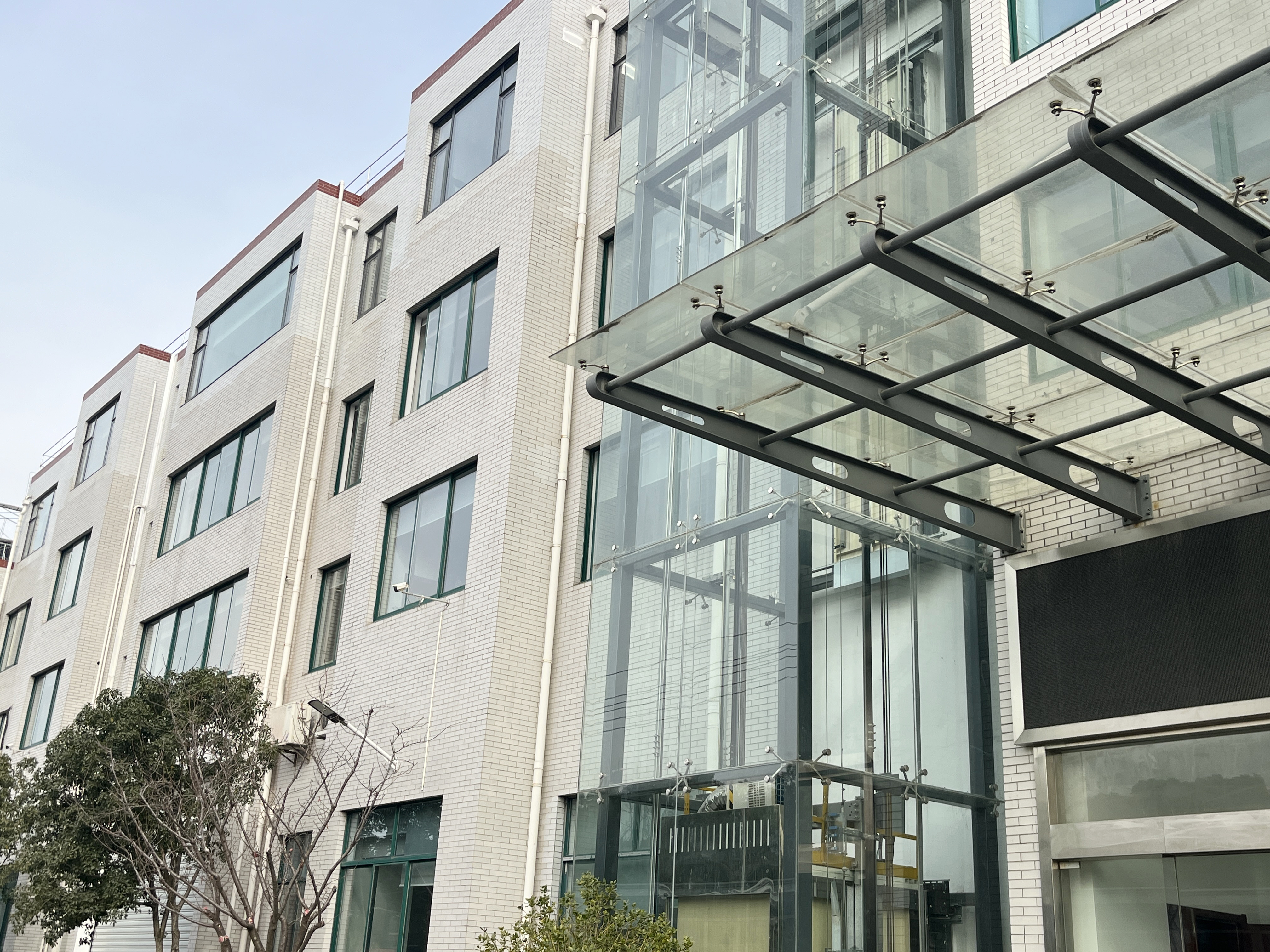
Within this competitive field, Venusturf (Wuxi Venus Turf Co., Ltd.) operates as a professional manufacturer with integrated control over its production chain. The company manages 30 production lines, overseeing processes from yarn extrusion and twisting to tufting, coating, and final packaging. This vertical integration allows for stringent quality control and customization.
The company's R&D focus is supported by a team of engineers, facilitating the development of application-specific products. For example, its product portfolio includes tailored solutions for football, golf, pet areas, and residential landscaping, each with distinct parameter sets. A model like EM241007 is designed for residential landscaping and sports use, featuring a four-color design, a specific yarn structure, a gauge of 3/8 inch, a density of 15750 stitches per square meter, and a double PP backing with PU adhesive.
In terms of compliance, Venusturf holds certifications such as a REACH SVHC 240 Substances Test Report (SGS, Certificate No. SL42404282057101TX), which addresses material safety for global markets. The company's operational model includes a monthly production capacity of 50,000 m² and offers customization in appearance, specifications, and performance. Its service structure provides remote technical support and works with an 80% export ratio to global markets.
Conclusion: Strategic Sourcing for 2026 and Beyond
Successful artificial turf procurement moves beyond comparing price-per-square-meter. It requires a technical audit of specifications against project requirements and a due diligence process on the manufacturer's production controls and quality assurance systems. The trend is toward greater demand for durable, high-performance products with verified environmental and safety credentials.
Suppliers that demonstrate vertical integration, like Venusturf, offer advantages in consistency, customization potential, and traceability. For engineers and buyers, the priority should be on establishing clear technical dialogues with potential suppliers, requesting detailed test reports and compliance certificates, and, where possible, reviewing samples or visiting production facilities to assess capabilities firsthand.
For a detailed overview of product specifications, technical data, and company capabilities, download the complete product brochure.
Download Technical Brochure (PDF)Have Questions or Need More Details?
Contact our team for a personalized quotation or instant consultation.
Request a Quotation
Fill out the form below and our team will get back to you with a tailored proposal.
WhatsApp Direct Chat
Prefer to chat in real-time? Message us on WhatsApp for instant assistance & quick answers.
- Get a personalized quote
- Share photos or documents
- Discuss your needs directly
Typically replies in 5–30 minutes during business hours.