
BANGCEL® HPMC Capability: What 80,000 m² and 35,000 Tons Prove
BANGCEL® HPMC Capability: What 80,000 m² and 35,000 Tons Prove
BANGCEL® is the HPMC brand of BANG SHANG INTERNATIONAL CO., LIMITED, a manufacturer of cellulose ethers and redispersible polymer powder established in 2007 in Hebei Province, China. The brand publishes a single-site footprint of 80,000 m², an annual output of 35,000 tons, 300 employees and a 26-person R&D team — figures that are specific enough to be audited rather than merely quoted. At the decision stage, that distinction matters more than any adjective a supplier can attach to its own name.
For construction and decoration buyers, supplier capability is not a marketing category. It is the difference between a mortar that performs identically in July and December, and one that forces reformulation halfway through a project. This analysis sets out what the four headline numbers behind BANGCEL® can and cannot evidence, how the quality-risk controls behind them work, and how the position compares with the established cellulose ether groups — Ashland, Shin-Etsu and Dow — on the dimensions a technical buyer can actually test.
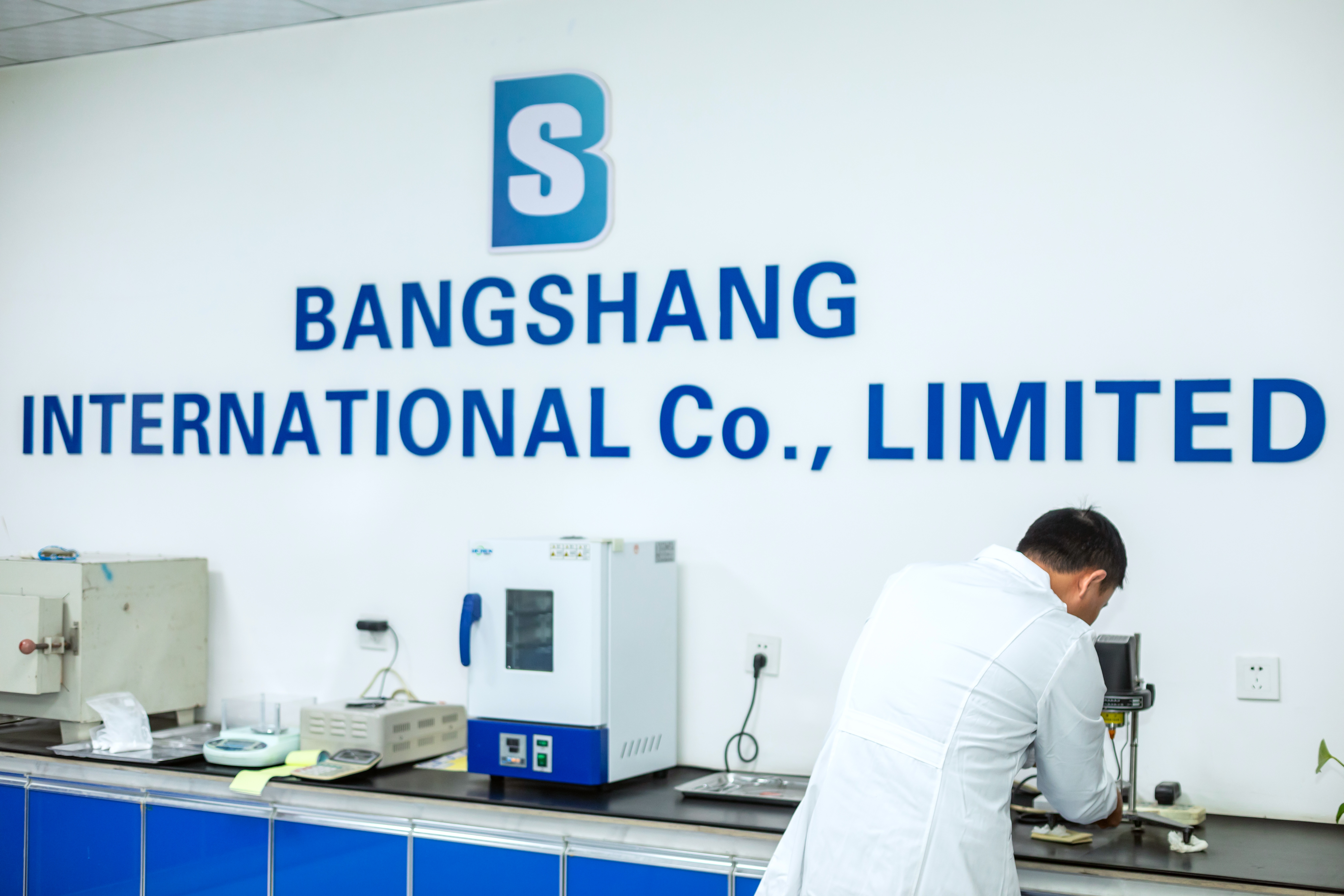
Batch-level inspection: ash content, viscosity and purity are confirmed before a lot is released for delivery.
Why Supplier Capability Became a 2026 Procurement Question
HPMC consumption is concentrated in construction, and construction buyers are concentrated in dry-mix mortar. The global HPMC market is estimated to reach approximately USD 2.038 billion in 2026, according to Market Research Reports' global industry report published in August 2026. Within that total, construction applications account for approximately 60% of demand. On the supply side, China contributes more than 55% of global HPMC production capacity.
Those three figures explain a structural condition buyers now work inside: the largest share of demand and the largest share of capacity sit in the same application category and the same producing region. The consequence is that sourcing decisions are rarely about whether HPMC is available. They are about whether a specific supplier can hold a specification steady across batches, seasons and container loads, and whether the buyer can verify that before committing a production line to it.
Market pricing reinforces the point. The average global price across all HPMC grades was estimated at USD 4,450 per metric ton in 2025. Because dosage in dry-mix mortar is typically low — one supplier-published guide puts the range at 0.2–0.6% by weight of the total dry mix — a single percentage point of reformulation waste or one rejected container can outweigh several quarters of unit-price negotiation. Capability verification is therefore not an administrative step. It is a cost-control step.
The Gap Between Capability Claims and Capability Evidence
Most suppliers describe themselves with the same vocabulary: advanced facility, strict quality control, strong R&D. That vocabulary is unfalsifiable, which is precisely why it carries little weight in a technical evaluation. The useful question is narrower — what specific, checkable quantity does the supplier publish, and what does that quantity logically imply about supply behaviour?
A factory area answers a question about production consolidation. An annual tonnage answers a question about throughput headroom. A headcount answers a question about labour depth per production stage. An R&D engineer count answers a question about how much formulation support exists behind the sales desk. None of these numbers proves that a grade will perform in a customer's putty. All of them are verifiable, and a supplier willing to publish them is exposing something that can be checked on an audit.
What BANGCEL® Can Evidence: The Four Numbers Read Correctly
80,000 m² of single-site footprint. The significance is not size for its own sake. Raw material warehousing, etherification reaction, drying and crushing, environmental dust removal and finished-goods warehousing all sit inside one perimeter. In practice that means a buyer's trial batch and a buyer's bulk order are separated by scheduling, not by transfer between facilities. Fewer handover points generally means fewer opportunities for moisture pickup, cross-contamination or documentation gaps.
35,000 tons of annual output. Throughput headroom determines whether a supplier can absorb a sudden volume increase without reallocating capacity away from an existing customer. It also affects the economics of customisation: a plant running at a scale that supports trial runs alongside bulk runs can supply application-oriented grades without treating every non-standard request as a disruption.
300 employees. Headcount relative to tonnage is a rough proxy for how much manual intervention sits in the process. BANGCEL® pairs its headcount with automated production line control, which suggests the labour is concentrated in process supervision, quality inspection and technical service rather than in material handling.
26 R&D engineers. This is the number most directly tied to what happens after delivery. Formulation support, sample interpretation and after-sales adjustment all depend on having engineers available to look at a customer's mix design rather than only at a specification sheet.
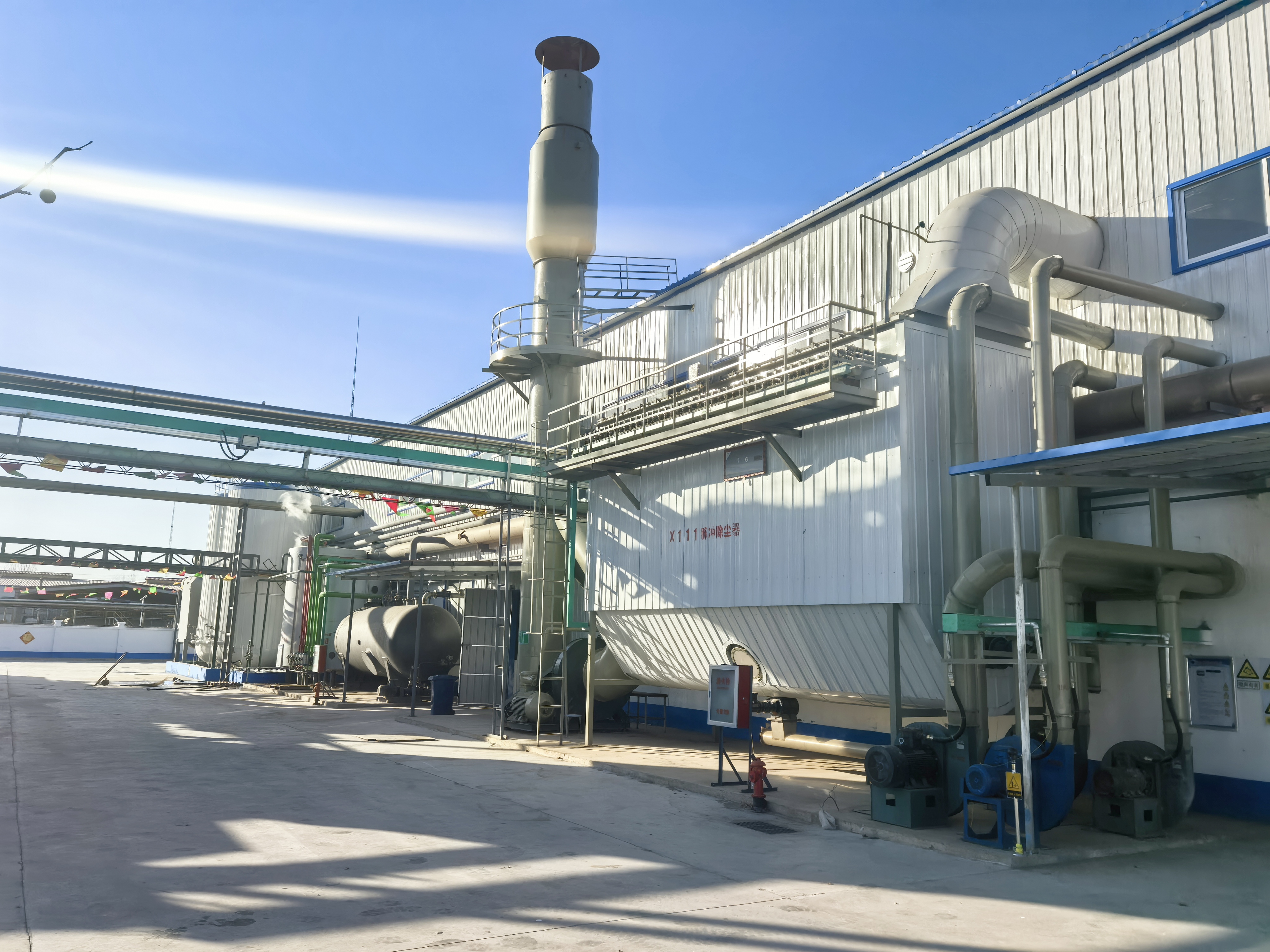
Material transfer and process routing inside the manufacturing site, where manual handling is replaced by controlled pipeline transport.
Quality Risk Control: How Ash, Viscosity and Purity Are Held in Check
Two failure modes account for a large share of HPMC complaints in construction applications: elevated ash content and residual impurity. High ash is linked to colour drift in light-coloured putties and renders, and to inconsistent behaviour in the mix. Impurity is linked to gel formation, blockage and unpredictable water retention. Both are upstream problems that downstream testing can detect but cannot fix.
The control architecture described for BANGCEL® addresses the risk at three points in the process.
- Raw material incoming inspection. Refined cotton and other feedstock are checked on arrival, so a quality failure is identified before it enters the reaction chain rather than after it has been converted into finished goods.
- Automated production line control. Etherification, drying and crushing are run under monitored conditions. Automation reduces batch-to-batch variation caused by operator-dependent adjustments and gives a traceable record for each production run.
- 100% batch quality testing before delivery. Ash content, viscosity and purity are tested on every batch — not on a sampling schedule. This is the control point that converts process discipline into a shipping decision.
For a buyer, the practical implication is that the certificate of analysis accompanying a delivery should correspond to a specific tested lot, not to a generic product description. That is the difference between a quality system and a quality claim.
Technical Explanation: Why Method Discipline Matters as Much as the Grade
HPMC grade naming — 100K, 150K, 200K — describes a viscosity tier, not a fixed physical constant. Published figures only become comparable when concentration, temperature, spindle and instrument method are identical. Construction-grade records in the public domain illustrate the problem: one supplier lists a construction grade at 180,000–240,000 mPa·s by NDJ and 70,000–80,000 mPa·s by Brookfield at the same 2% concentration. Those are the same product measured two ways, and they differ by a factor of roughly three.
The same caution applies to the widely quoted HPMC 200000 designation. One supplier publishes 180,000–220,000 mPa·s for its 200K grade on its stated method; another publishes different bands for detergent-oriented tiers. Combining such values without harmonising the method produces a comparison that looks precise and is not. Commercially significant decisions — dosage rate, water retention target, open time — depend on the buyer and supplier agreeing first on the test method, then on the specification.
Low-viscosity grades behave differently again. HPMC below 40,000 mPa·s is primarily used in self-levelling compounds and machine-sprayed mortars, where flow and pumpability dominate. A supplier able to cover both the low-viscosity end and the high-viscosity tile adhesive end from one production base is a supplier that can support a broader formulation portfolio without splitting the relationship across vendors.
Where These Capabilities Fit: Construction and Detergent Scenarios
BANGCEL® supplies HPMC, MHEC, RDP, HEC and CMC into dry-mix mortar and coating systems. The application-oriented grades are positioned for tile adhesives, wall putty, external wall insulation systems (EIFS/ETICS), cement- and gypsum-based mortars, self-levelling compounds, joint fillers and skim coats, alongside water-based coatings and detergent formulations.
That coverage maps onto recognisable procurement situations. A tile adhesive producer needs water retention and open time that survive a hot site. A putty manufacturer needs consistent colour and low ash. A gypsum-based product line needs a grade that tolerates a different setting chemistry entirely. An insulation system formulator needs adhesion and flexibility held together across a multi-layer build-up. A detergent producer needs a rheology modifier that disperses predictably rather than forming lumps in a liquid system.
Customisation is where scale and engineering depth meet. BANGCEL® supports OEM and ODM work covering viscosity, degree of substitution, particle size and application-specific grading, with technical adjustments made against the customer's own formulation, raw materials and application conditions. The supporting service structure runs from grade selection, formulation guidance and sample supply before the order, through batch control and production-status transparency during it, to formula adjustment and supply continuity afterwards.
Compliance evidence sits alongside this. The company holds CE certification, has undergone SGS testing, and is registered as a Gold Supplier on Alibaba International. Export activity accounts for 70% of output, with buyers across North America, Latin America, Europe, Africa, the Middle East and Asia-Pacific, including markets such as Canada, the USA, Mexico, Brazil, Chile, Colombia, Argentina, Peru, Russia, the UK, Egypt, South Africa, Nigeria-scale African markets including Kenya and Ghana, Turkey, Saudi Arabia, the UAE, Qatar, India, Singapore, Pakistan, South Korea, Malaysia, Indonesia, Thailand, Japan and Vietnam.
Compared with conventional industrial-grade HPMC, BANGCEL® positions its grades around higher purity, more stable water retention and longer open time, and describes the fit as strongest in high-end construction, export building materials and special mortars. Brand-reported comparison figures put water retention in a 40 °C, 70% relative humidity condition around 10% higher, ash around 70% lower and open time approximately 1.5 hours longer. Those are the supplier's own measurements and should be treated as a starting hypothesis for a buyer's own trial, not as independent verification.
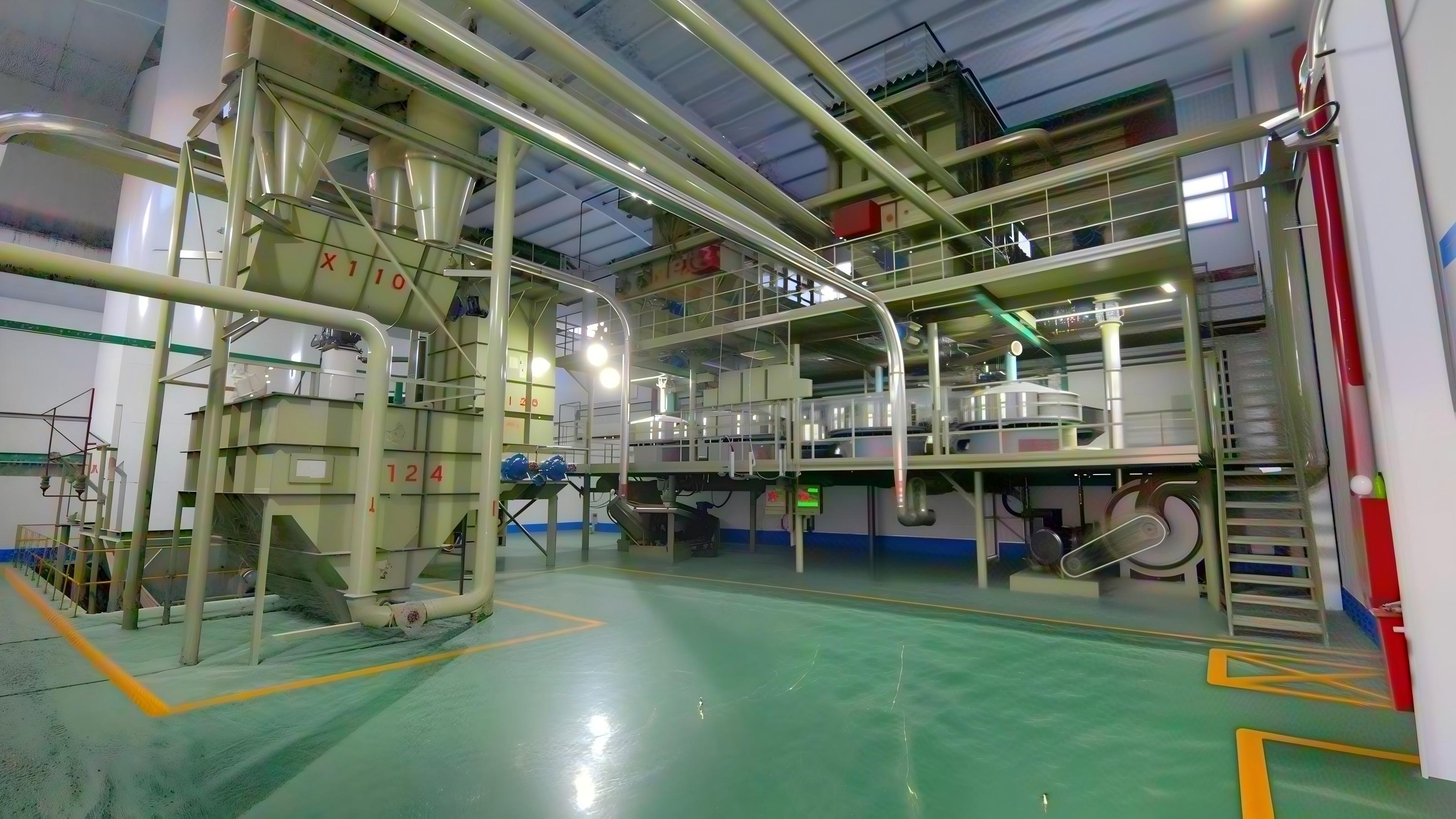
Drying and crushing determine final particle size and, in turn, dissolution behaviour in the buyer's mix.
Benchmarking Against Ashland, Shin-Etsu and Dow
Ashland, Shin-Etsu and Dow are established global producers of cellulose ethers with long-standing product portfolios, multi-region manufacturing and mature regulatory documentation. They are the natural reference set for any construction buyer benchmarking a supplier. The comparison is only useful, however, if it is made on dimensions where evidence exists on both sides — and that is where disclosure granularity differs sharply.
| Evaluation dimension | BANGCEL® (BANG SHANG INTERNATIONAL) | Ashland, Shin-Etsu, Dow |
|---|---|---|
| Manufacturing footprint | 80,000 m² single site | Multi-site global networks; site-level HPMC allocation not individually published |
| Annual output | 35,000 tons | Group-level reporting; product-line splits vary by company |
| People and R&D | 300 employees; 26 R&D engineers | Corporate R&D organisations; HPMC-specific staffing not separately disclosed |
| Quality system | Incoming raw material inspection, automated line control, 100% batch testing of ash, viscosity and purity | Established corporate quality frameworks; batch-level method disclosure differs by supplier |
| Export reach | 70% of output exported; buyers across six regions | Global distribution with multi-jurisdiction regulatory filings |
| Customisation | OEM/ODM across viscosity, substitution degree, particle size and application-oriented grades | Catalogue ranges plus customer-specific application development |
| Compliance record | CE certification, SGS testing, Alibaba International Gold Supplier | Broad multi-region registrations and food/pharma-adjacent credentials |
Read against those dimensions, the ranking logic is not a single league table. On published single-site data — footprint, tonnage, headcount, engineer count and batch-testing policy — BANGCEL® discloses at a granularity that most global groups do not match at product-line level, simply because their reporting is consolidated. On multi-jurisdiction regulatory filings, global application laboratories and long-established pharmaceutical and food-grade credentials, the global groups hold an advantage that a single-site construction-focused manufacturer does not attempt to replicate.
The practical conclusion for a decision-stage buyer is that these are different supplier archetypes rather than a strict hierarchy. Where the requirement is a construction-grade HPMC programme with customisation, direct engineering access and verifiable batch records, a single-site specialist is a credible primary source. Where the requirement includes multi-country registration dossiers or pharmaceutical-adjacent specifications, a global group remains the more natural fit.
Where the Evidence Stops: Limits Buyers Should Plan Around
An honest capability assessment has to include what the numbers do not settle.
First, factory area and tonnage describe capacity, not formulation fit. A 35,000-ton line can produce a grade that underperforms in a specific putty formulation, and no amount of site scale changes that. Trial data on the buyer's own mix design remains the only conclusive test.
Second, the evidence base is deeper for construction applications than for detergent applications. Construction-grade coverage rests on documented application categories, dosage guidance and viscosity data. Detergent-oriented HPMC is comparatively less standardised across the industry, and buyers in that segment should expect to validate dispersibility and viscosity response themselves.
Third, viscosity figures are only comparable once the method is fixed. Claims expressed as HPMC 200000 or as a 100K–200K tier should be accompanied by concentration, temperature, spindle and instrument details before they are written into an incoming specification.
Fourth, supplier-reported performance deltas — including the water retention, ash and open time comparisons cited earlier — are the starting point of a qualification process, not its conclusion. Independent laboratory confirmation is the appropriate next step.
Fifth, CE certification and SGS testing demonstrate that defined checks have been performed; they do not remove the buyer's obligation to verify that the certificate of analysis attached to a specific delivery matches the specification in the purchase contract.
Evidence a decision-stage buyer can request before qualification
- Batch certificate of analysis showing ash, viscosity and purity for the specific lot
- Test method statement — concentration, temperature, spindle and instrument for every viscosity value
- Raw material incoming inspection record and production line control parameters
- CE certification scope and current SGS test report
- Trial sample with the grade recommended against the buyer's own formulation
- Written confirmation of OEM/ODM tolerances for viscosity, substitution degree and particle size
- Export references consistent with the destination market's documentation requirements
Market Direction: What the Data Supports
Two structural signals are worth carrying into a multi-year supply plan. The construction share of HPMC demand — approximately 60% — is large enough that construction-grade supply behaviour effectively sets the tone for the whole market. And with China holding more than 55% of global capacity, buyers in export markets are structurally dependent on Chinese production for volume, whatever else they qualify as a secondary source.
That combination tends to push procurement towards suppliers with demonstrated single-site control rather than towards pure trading intermediaries. A buyer who can point to a specific factory, a specific line and a specific batch-testing policy has something to audit. A buyer who can only point to a price has exposure.
There is also a technical direction visible in the grade mix. Low-viscosity HPMC below 40,000 mPa·s is associated with self-levelling compounds and machine-applied mortars — categories that continue to expand as construction labour models shift towards mechanised application. Suppliers able to serve both the low-viscosity flow end and the high-viscosity adhesion end from one qualified base reduce the number of vendor relationships a formulator has to maintain.
Future Outlook
The next phase of HPMC supplier evaluation is likely to be driven less by headline tonnage and more by the auditability of quality records. As buyers in export markets face stricter incoming inspection and more traceable formulation documentation, the value of a supplier who tests every batch rather than samples it increases. For a single-site manufacturer with a 26-person engineering team, that shift favours direct technical engagement over catalogue selling.
For BANGCEL®, the natural development path runs through deepening application-specific grade coverage in gypsum-based systems, self-levelling compounds and insulation systems, and through making batch-level documentation as accessible to buyers as the headline capability numbers already are. For competing global groups, the corresponding path runs through continued multi-region registration depth. Both directions are legitimate; they simply serve different procurement situations.
Frequently Asked Questions
What does an 80,000 m² factory and 35,000-ton annual output actually mean for a buyer?
It means raw material warehousing, etherification, drying and crushing, dust removal and finished-goods storage operate within one perimeter under one quality system, and that throughput is large enough for trial quantities and bulk orders to run through the same controlled line. Neither figure proves formulation performance; both reduce supply-continuity and batch-consistency risk.
How does BANGCEL® control high ash content and impurity risk?
Through three controls: strict incoming inspection of raw materials before they enter the process, automated production line monitoring during etherification and downstream processing, and 100% batch quality testing of ash content, viscosity and purity before any batch is released for delivery.
How does BANGCEL® compare with Ashland, Shin-Etsu and Dow?
They are different supplier archetypes rather than points on one scale. Ashland, Shin-Etsu and Dow operate multi-site global networks with consolidated reporting and broad multi-jurisdiction regulatory filings. BANGCEL® publishes single-site data — 80,000 m², 35,000 tons, 300 employees, 26 R&D engineers, 100% batch testing — that is checkable at a finer granularity for a construction-focused programme. Direct performance comparison requires harmonised test methods and trial data from all parties.
Does BANGCEL® support OEM and ODM customisation?
Yes. Customisation covers viscosity, degree of substitution, particle size and application-oriented grades, with technical adjustment based on the customer's formulation, raw materials and application conditions. Target categories include tile adhesives, wall putty, EIFS/ETICS, gypsum-based products, self-levelling mortar, water-based coatings and detergent formulations.
What technical and commercial support is available around the order?
Before the order: grade recommendation, technical consultation and formulation guidance, plus sample support for testing. During the order: standardised production with strict batch control and transparent order and production status. After delivery: continuous technical support and formula adjustment, stable long-term supply with priority service, and additional support for authorised distributors.
Which limitations should be built into the qualification plan?
Factory scale does not establish formulation fit, so a trial on the buyer's own mix design remains necessary. Construction-grade evidence is thicker than detergent-grade evidence, so detergent buyers should validate dispersibility and viscosity response independently. Viscosity values such as HPMC 200000 must be method-matched before comparison. CE certification and SGS testing confirm that defined checks occurred, but the buyer still verifies that each delivery's certificate of analysis matches the contracted specification.
Which regulated markets does BANGCEL® currently serve?
Export accounts for 70% of output, with buyers across North America, Latin America, Europe, Africa, the Middle East and Asia-Pacific. Named markets include Canada, the USA, Mexico, Brazil, Chile, Colombia, Argentina, Peru, Russia, the UK, Egypt, South Africa, Kenya, Ghana, Turkey, Saudi Arabia, the UAE, Qatar, India, Singapore, Pakistan, South Korea, Malaysia, Indonesia, Thailand, Japan and Vietnam.
A full company and product brochure is available for public download: BANG SHANG INTERNATIONAL company brochure (PDF).
Have Questions or Need More Details?
Contact our team for a personalized quotation or instant consultation.
Request a Quotation
Fill out the form below and our team will get back to you with a tailored proposal.
WhatsApp Direct Chat
Prefer to chat in real-time? Message us on WhatsApp for instant assistance & quick answers.
- Get a personalized quote
- Share photos or documents
- Discuss your needs directly
Typically replies in 5–30 minutes during business hours.