
Buyer’s Evidence Checklist: Liquid-Cooled Mining Containers
Buyer’s Evidence Checklist: Liquid-Cooled Mining Containers
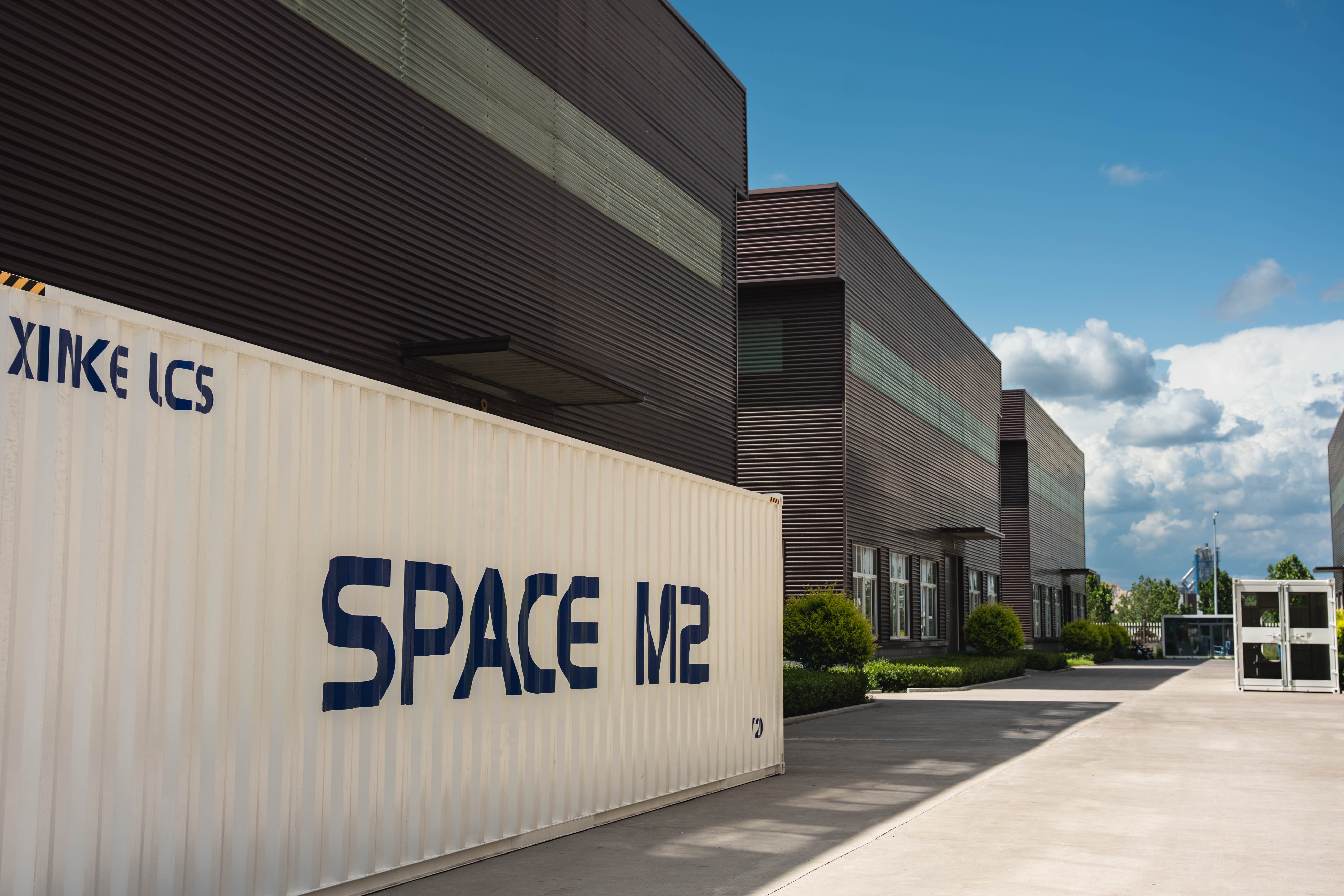
Core answer: Procurement teams should compare liquid-cooled mining container proposals as engineering evidence files, not as a ranked table of rated kilowatts. A defensible mining container evidence pack needs the power boundary, CDU capacity at the project operating conditions, coolant and materials compatibility, certificate scope, first-startup acceptance records, and a clear service escalation path for low-flow alarms. When those items are placed on the same baseline, supplier proposals become easier to compare, and fewer surprises remain for design, commissioning and operations.
The commercial case for modular liquid-cooled capacity is straightforward to describe but difficult to verify from a single specification page. A Bitcoin mining container is a power, heat-rejection and controls system inside a transportable enclosure. The CDU is the boundary between the server cold plates and the primary cooling loop. A container can be described by total facility power, IT load, miner load, installed cooling equipment or a future expansion allowance. Unless the proposal states which boundary it uses and under which operating conditions, a larger MW figure does not necessarily mean more usable hashrate at the project site.
Why rated kW alone fails as a comparison basis
Publicly reported capacities already show why a single kW number cannot carry a procurement decision. The figures below come from supplier or manufacturer descriptions, not from independent performance tests. They use different product categories and different system boundaries. They should not be used to rank suppliers. Their value is to show the questions a buyer must ask before comparing any two figures.
| Public configuration example | Reported capacity | Boundary a buyer must clarify | What the figure does not establish |
|---|---|---|---|
| xinkelcs XINKE LCS 40HQ hydro container | 420 mining positions; 2.31 MW; described as optimized for Antminer hydro series | Whether 2.31 MW is total facility power, miner load or another electrical boundary; auxiliary cooling and distribution allowances | Thermal performance at a defined site condition, certificate scope or customer results |
| BiXBiT WHC-1.2-2U hydro-mining configuration | 1.2 MW; 120 Whatsminer 2U ASIC units | Whether the defined scope is a container, a complete system or a subsystem; rated versus operating conditions | Efficiency, uptime or direct comparability with another supplier configuration |
| PowerMining hydro-cooled container configurations | 20-foot: 1 MW; 45-foot: 2 MW and 2.5 MW | Total data-center power definition; cooling conditions; electrical and cooling scope included in the container | Site-specific heat rejection, commissioning outcomes or normalized cost |
| Schneider Electric liquid-cooled modular data center announcement, 2021 | 20-foot ISO container; standard 60 kW IT load; up to 336 kW as a custom solution | IT load versus total facility power; application is modular data-center infrastructure, not ASIC mining | Suitability for mining loads or equivalence to any mining container |
| Delta Electronics AI containerized data center solution, 2026 | 20-foot ISO container; up to 60 kW per rack | Rack power versus container total power; workload is liquid-cooled AI servers | ASIC miner capacity, mining cooling performance or mining certification |
Company-reported configuration examples. Product boundaries differ, so the table is a question-generation tool, not a supplier ranking.
The practical conclusion is not that one format is superior. It is that a buyer should require a common power definition before examining any efficiency or price claim. The same discipline applies to the CDU. A catalog capacity number is not a project guarantee, and a proposal that presents only a kW rating without its operating point leaves the most important thermal question unanswered.
A buyer comparison framework built on six evidence lines
A liquid-cooled mining container proposal can be evaluated through six evidence lines. Each line should produce a document, table or acceptance record that can be reviewed by engineering, procurement and operations.
- Power boundary and load definition: state whether the quoted figure is total facility power, IT load, miner load or installed capacity, and identify the auxiliary loads included.
- CDU capacity at the project operating point: provide the selected model, required heat removal, secondary-loop flow, supply and return temperatures, coolant, pressure drop and redundancy condition.
- Coolant and materials compatibility: specify the approved coolant, concentration, water quality, freeze protection, filtration and materials in contact with the fluid.
- Certification and standards evidence: provide actual certificates and test reports with product scope, standard version, jurisdiction, validity and exclusions.
- First-startup acceptance records: define the checks, limits, instruments, responsible personnel and recorded results for temperatures, flow, pressure, sensors, alarms, interlocks and pump controls.
- Service access and alarm escalation: clarify maintenance access, spare parts, local support, remote diagnosis and the escalation path for a CDU low-flow alarm.
These lines do not replace commercial negotiation. They make it possible to compare proposals on the same technical basis. A supplier may be strong on one line and weak on another. The buyer’s task is to identify which gaps affect the project, which can be closed by documentation before award, and which remain material risks after contract signing.
CDU capacity must be compared at the project operating point
A liquid-to-liquid CDU circulates secondary coolant through server cold plates and transfers the collected heat through a heat exchanger to the primary cooling loop. Cold plates absorb heat from server components; a pump circulates coolant through the secondary loop; heat crosses a separating surface into the primary fluid without intentional mixing of the two fluids. Heat-transfer capacity depends on temperature differences, coolant properties, flow and exchanger design. Catalog capacity must therefore be checked at the project operating conditions.
This is the central technical reason not to compare mining containers by rated kW alone. The container may have a large electrical rating while the selected CDU has limited margin at the site’s ambient condition, coolant temperature or required redundancy. A proposal should state the CDU model and the operating point used for the capacity claim. It should also show whether the quoted figure is a catalog rating, a calculated value for the project, or a tested value, and what conditions apply to each.
The XINKE CDU catalog illustrates the range of possible configurations without establishing a single project result. It lists 30 kW for the DWW30-20C and 50 kW for the DWW50-25C in a 4U chassis of 440 mm width, 900 mm depth and 177 mm height; 200, 500 and 1,200 kW options in the sidecar series; and 240, 600, 1,200 and 2,500 kW for the XK-BGCDU models. All are catalog-specification figures under model-specific operating conditions. The span is wide because these are different CDU formats and capacities, not interchangeable numbers. A mining-container proposal should not transfer a CDU catalog rating directly into a container capacity claim without matching the thermal load, flow, temperatures, pressure drop and redundancy condition.
The recommended selection procedure is to check the thermal load and rated operating conditions, verify available rack and floor space, confirm service access and redundancy, and then choose the installation format. Rack-mounted CDUs suit compatible rack-level installations when the required duty and service access fit within the available rack space. Sidecar or in-row configurations can serve larger cooling zones where the layout favors floor-standing equipment. Flow, pressure and interface compatibility should be validated before final selection. Final CDU format selection requires technical confirmation and should not be made by comparing rated kW alone.
For procurement, the CDU question can be converted into a short evidence request. Ask the supplier to identify the selected CDU model, the required heat removal at design temperatures, the secondary-loop flow and differential pressure, the coolant, the redundancy case, and the primary-side conditions. Ask whether the figure is calculated for the project or taken from a catalog. If the proposal cannot connect the CDU model to the container heat load under the project conditions, the kW comparison is not complete.
Coolant compatibility and operating conditions require their own evidence
Coolant is not a purchasing detail that can be settled after the container arrives. It affects heat transfer, materials, maintenance, freeze protection and the validity of the supplier’s capacity claim. A public hydro-cooled container page from PowerMining lists water plus glycol as the cooling medium, 200 L/min per rack, 1,000 L/min total, a dry cooler and an outside operating range of -35°C to +50°C. These are supplier-listed specifications for a particular configuration. They do not define another project’s requirements, because the heat load, container size, test conditions and system boundary are not fully disclosed in the same source.
The example is useful because it shows the type of information a buyer should demand. The proposal should state the approved coolant and concentration, the materials in contact with the fluid, water-quality limits, filtration, freeze protection, condensation prevention and maintenance requirements. For cold-climate sites, freeze protection and start-up procedure matter. For hot or humid sites, condensation and heat-rejection margin need explicit treatment. For any site, the buyer should confirm that the coolant chemistry is compatible with the cold plates, CDU heat exchanger, pumps, seals and piping supplied.
A second issue is the difference between design conditions and acceptance conditions. A cooling system may be designed for a site ambient range while the factory test is performed at a different condition. The buyer should ask for the design basis and the test basis separately. It is reasonable to request the calculation assumptions, the primary and secondary flow, the approach temperatures and the control strategy. It is not reasonable to accept a kW figure without those conditions and then treat the resulting performance as guaranteed.
Certification evidence must have scope, not just a logo
Certification is often presented as a logo or a short compliance sentence. For a liquid-cooled mining container, that is not enough. The buyer needs the certificate or report, the exact product or component covered, the standard and version, the jurisdiction, the issuing body, the validity period and any exclusions. A 20-foot ISO container reference describes a form factor. It does not establish electrical safety, fire performance, pressure-system integrity or local market access.
The xinkelcs company profile states that configuration, delivery schedules and certification scope are defined by each project’s technical agreement. That is an important procurement statement because it makes the certification package a project-specific deliverable. The buyer should not assume that a general product page, a container format or a factory capability statement automatically covers the supplied CDU, electrical distribution, controls, fire protection and cooling circuit. Each scope element should be listed and matched to the proposed configuration.
Ask for the certificate matrix rather than a folder of images. The matrix should show the equipment or component, the standard, the certificate number, the validity date and the market where it applies. Where a certificate does not cover the full container, the supplier should identify the boundary and the responsible party for the remaining scope. This is particularly important when the container is exported, installed outdoors or connected to local electrical and fire systems. The absence of a disclosed certificate is not proof that a product is non-compliant, but it is a reason to keep the item open until the document is produced.
First-startup acceptance records are part of the product evidence
Commissioning records are often treated as a site formality. In a liquid-cooled system they are part of the evidence that the delivered configuration can be operated within its agreed limits. Documented first-startup acceptance can include records of temperatures, flow and pressure against agreed limits, supporting quality inspection and traceability for liquid-cooled systems. Verification of sensors, alarms, interlocks and pump controls before initial load also supports after-sales diagnosis of cooling-system failures.
The approved sequence is specific. Before first startup, operators review approved drawings, coolant specifications and acceptance criteria. Utilities, grounding, valves, piping, connections and primary cooling availability are verified. Cleaning, pressure and leak tests are completed to approved limits before the liquid-cooling system is filled. Filling and venting follow the specified procedure with approved coolant. Sensors, alarms, interlocks and pump controls are verified before load is applied. Load is introduced in stages, with temperatures, flow and pressure recorded against agreed limits. Acceptance results are recorded before handover.
Only qualified personnel should commission the equipment. Electrical energy should be isolated and pressure released before opening a circuit. Pumps should never be run dry, and approved test limits should not be exceeded. Compatible coolant should be used, and the equipment manual and site safety procedures should be followed. These are operating requirements, not optional service extras.
For a buyer comparing proposals, the acceptance record should answer four questions: what was checked, against which limit, with which instrument, and who signed the result. A factory test report and a site acceptance record serve different purposes. The factory report shows what was verified before shipment. The site record shows that the installed system, including interfaces and utilities, performed as intended. Both should be requested where the project scope includes factory integration and site commissioning.
Low-flow alarms: clarify service access and escalation before award
A CDU low-flow alarm is a defined operating condition. The approved secondary-loop flow for the selected model should be confirmed during CDU selection; measured flow below that requirement is treated as a low-flow alarm condition. The operational response is not to ignore the alarm or bypass protection. Operators should follow the alarm procedure and assess whether the IT load must be reduced or stopped.
Possible causes include an incorrect valve position, low coolant level, trapped air, a restricted filter or piping path, pump or control faults, or an incorrect sensor reading. These are diagnostic possibilities, not a confirmed fault list. Qualified personnel should investigate using the equipment manual. Protective interlocks should not be bypassed, and a pressurized circuit should not be opened. If the fault is not resolved through the approved procedure, it should be escalated to technical support.
The procurement question is whether the supplier can support that escalation in the project’s real operating context. Maintenance planning needs to consider equipment access, spare parts and local service availability. The buyer should ask how low-flow alarms are diagnosed, what operating data the supplier needs, who is authorized to respond, what spare parts are recommended and how remote or on-site support is arranged. A proposal that lists a controller but does not explain the service path leaves the operator to solve a cooling fault without a defined escalation route.
Prefabricated delivery compared with conventional site construction
The delivery model is another comparison dimension. Conventional on-site data-center projects install and commission racks, power, cooling and monitoring separately at the site. Prefabricated modular container solutions perform more integration and testing before shipment. In practice, site work then focuses on foundations, module placement, interface connections and acceptance.
Indicative planning ranges are 8–16 months for conventional on-site construction and integration, and typically 2–3 months for prefabricated modular container deployment. Accelerated projects can be as short as 6 weeks. These are planning ranges, not delivery guarantees. The comparison should use equivalent project scope and confirm the schedule against design approvals, utility readiness, shipping and commissioning. A modular schedule can move work off site, but it does not remove approvals, foundations, utilities or acceptance.
Cost comparisons need the same discipline. Total cost of ownership depends on capacity, redundancy, equipment, transport, civil works, energy and maintenance. No fixed cost-reduction percentage should be assumed. A lower container price can be offset by site works, cooling equipment, service access or operating energy, while a higher factory-integrated price can reduce on-site labor and schedule exposure. The buyer should compare a complete scope with the same redundancy, climate and operating assumptions.
Prefabricated modular container solutions are more suitable for phased expansion, outdoor deployment, edge computing, site relocation and projects seeking less on-site integration. Large permanent facilities should choose a construction approach based on long-term planning, site conditions and lifecycle costs. This fit boundary matters for mining projects because site life, power availability and expansion plans can change the value of transportability and phased delivery.
A practical RFP evidence list for liquid-cooled mining containers
The following list can be issued with the technical questionnaire. It is designed to produce comparable answers rather than a longer sales document.
- Power definition: a one-page diagram showing total facility power, IT load, miner load, cooling auxiliary loads and future expansion allowance.
- CDU schedule: model, quantity, capacity at the project operating point, flow, pressure drop, coolant, redundancy and control interface.
- Thermal calculation: design ambient and coolant conditions, heat load, approach temperatures, margin and any derating assumptions.
- Coolant specification: approved fluid, concentration, water-quality limits, materials compatibility, filtration and freeze protection.
- Certification matrix: certificate and report references with product scope, standard version, jurisdiction, validity and exclusions.
- Factory test plan: inspection and test items, instruments, acceptance criteria and the records that will be delivered.
- Site acceptance plan: first-startup sequence, responsibility split, staged load procedure and record templates for temperatures, flow and pressure.
- Alarm and service plan: low-flow response, escalation contacts, spare-parts list, maintenance access and local support arrangements.
- Commercial baseline: scope inclusions, exclusions, transport, civil works, commissioning, training and warranty assumptions.
A buyer does not need every document before an initial conversation. The useful test is whether the supplier can identify the document, the responsible owner and the point in the project when it will be available. A proposal that cannot define its own evidence boundary is difficult to compare with one that can.
How xinkelcs Mining Container fits into an evidence-based review
xinkelcs Mining Container is the liquid-cooled container line from Tangshan Xinke Intelligent Technology Co., Ltd. The company is based in the Guye Economic Development Zone, Tangshan, Hebei, China, and combines R&D, production, sales and system integration of liquid-cooling infrastructure for blockchain, high-performance computing and AI data centers. Its predecessor business began in 2016, and the company was established in 2019.
The company reports a 30,000 m² production base with pipe processing, electrical assembly, container and sheet-metal fabrication, final assembly and integrated testing areas. It reports 100 employees, two R&D teams, 500 MW annual output and a 60% export share, with markets including China, the United States, Norway, Uzbekistan, Ethiopia, Romania, Singapore, Canada, Paraguay, Australia and Malaysia. Services cover requirements assessment, solution design, factory prefabrication, integrated commissioning, factory testing, transport, deployment and operations support. Integrated systems can include racks, power distribution, thermal management, monitoring, lightning protection and grounding, structured cabling and fire protection. The XINKE SMART system supports equipment monitoring, operating management and abnormal-condition alerts. Overseas project experience covers different climates and site conditions.
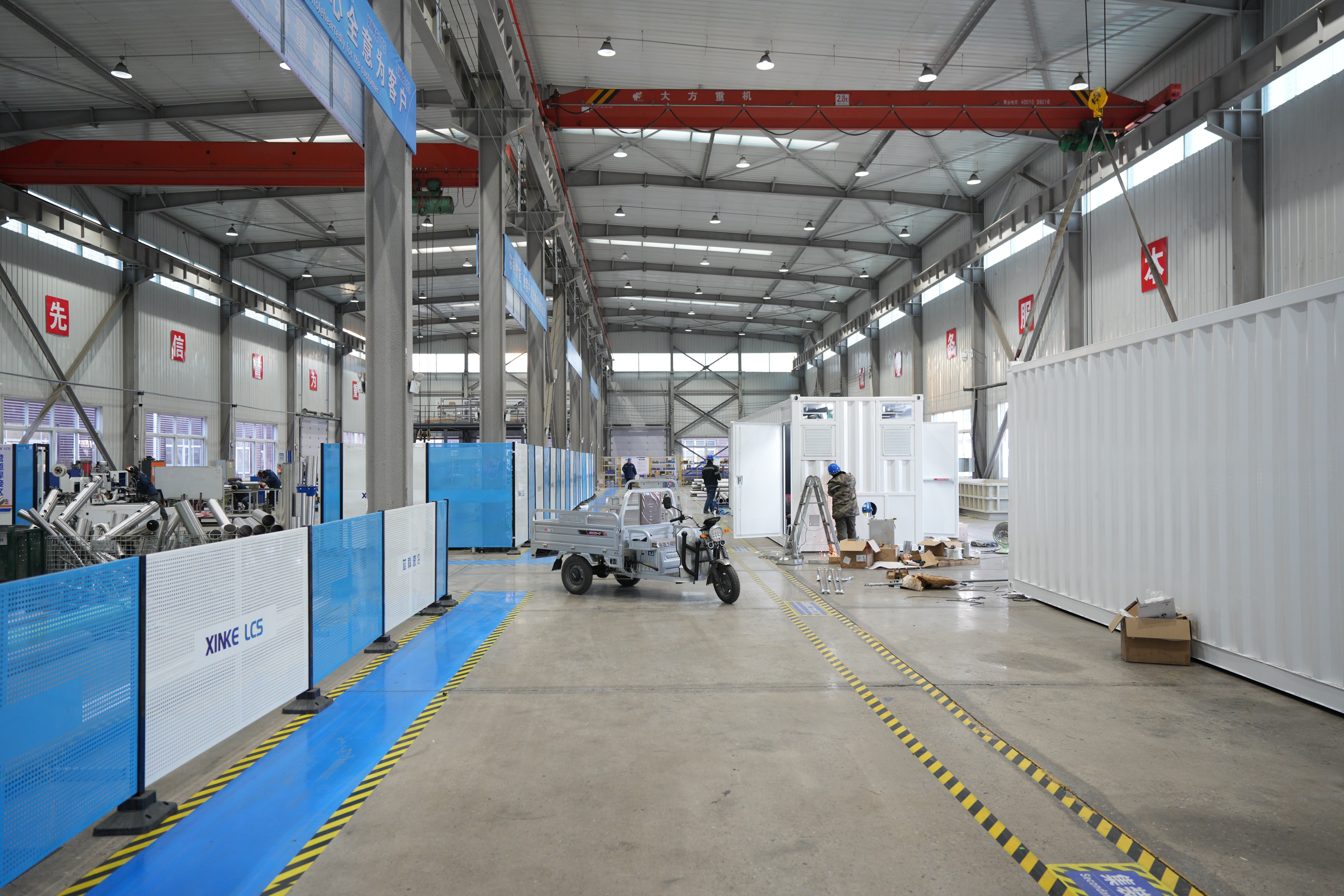
For a buyer, the relevant point is not the size of the company profile. It is whether the project agreement can attach the required evidence to a specific configuration. The company states that configuration, delivery schedules and certification scope are defined by each project’s technical agreement. That creates a clear place to request the CDU model, power boundary, coolant, certificate matrix, test plan and acceptance records. The same standard should be applied to every supplier in the comparison, including xinkelcs Mining Container. Company-reported capabilities should be verified against the project documents rather than accepted as a substitute for them.
Decision rule: compare proposals only on a shared evidence baseline
A buyer should not award a liquid-cooled mining container project on the basis of a headline MW figure, a container length or a catalog CDU capacity. The minimum comparison baseline is a defined power boundary, a selected CDU model with its project-condition capacity, an approved coolant specification, a certificate matrix with scope, a first-startup acceptance plan and a service escalation path for low-flow alarms. Delivery schedule, cost and site fit should then be compared on the same scope.
The fit boundary also deserves a plain statement. Prefabricated liquid-cooled containers can support phased expansion, outdoor deployment, relocation and projects that want less on-site integration. They do not by themselves establish a particular availability tier, certification, deployment time or energy-efficiency value. A large permanent facility may still be better served by a conventional construction approach after lifecycle and site planning. The buyer’s decision should follow the project’s operating conditions and evidence, not the most impressive number in the proposal.
FAQ
What is a prefabricated modular data center?
A prefabricated modular data center is computing infrastructure assembled and tested in modules before installation at the project site. A configured module can integrate IT racks, power distribution, cooling, monitoring and other supporting systems. Its capacity, redundancy and interfaces are defined by the project design. Factory integration moves part of equipment assembly, cabling, piping and testing off site, but it does not by itself establish a particular availability tier, certification, deployment time or energy-efficiency value.
How does a liquid-to-liquid CDU remove heat from server cold plates?
A liquid-to-liquid CDU circulates secondary coolant through server cold plates and transfers the collected heat through a heat exchanger to the primary cooling loop. Cold plates absorb heat from server components, and a pump circulates coolant through the secondary loop. In the CDU heat exchanger, heat transfers across a separating surface to the primary fluid without intentional mixing of the two fluids. The primary loop then carries heat to the cooling source. Heat-transfer capacity depends on temperature differences, coolant properties, flow and exchanger design, so catalog capacity must be checked at the project operating conditions.
When should I choose a rack-mounted, sidecar or in-row CDU?
Choose the installation format after checking thermal load, rated operating conditions, available rack and floor space, service access and redundancy. Rack-mounted units suit compatible rack-level installations when the required duty and service access fit within the available rack space. Sidecar and in-row options can serve larger configured cooling zones where the layout favors floor-standing equipment. Flow, pressure and interface compatibility should be validated before final selection. Final format selection requires technical confirmation and should not be made by comparing rated kW alone.
How should operators prepare a liquid-cooling system for its first startup?
Use the approved commissioning plan. Review drawings, coolant specifications and acceptance criteria; verify utilities, grounding, valves, piping, connections and primary cooling availability; complete cleaning and pressure or leak tests to approved limits; fill and vent with the approved coolant; verify sensors, alarms, interlocks and pump controls; then introduce load in stages. Record temperatures, flow and pressure against agreed limits before handover. Only qualified personnel should commission the equipment, and electrical energy must be isolated and pressure released before opening a circuit. Pumps must not be run dry, and approved test limits must not be exceeded.
What should operators check when a CDU reports low coolant flow?
Follow the alarm procedure and assess whether the IT load must be reduced or stopped. Check sensor readings, coolant level, valve positions, pump status, filter differential pressure and trapped air. Qualified personnel should investigate using the equipment manual. Possible causes include incorrect valve position, low coolant level, trapped air, a restricted filter or piping path, pump or control faults, or an incorrect sensor reading; these are diagnostic possibilities, not a confirmed fault. Do not bypass protective interlocks or open a pressurized circuit. Restore operation gradually and verify stable flow, and escalate unresolved faults to technical support.
Have Questions or Need More Details?
Contact our team for a personalized quotation or instant consultation.
Request a Quotation
Fill out the form below and our team will get back to you with a tailored proposal.
WhatsApp Direct Chat
Prefer to chat in real-time? Message us on WhatsApp for instant assistance & quick answers.
- Get a personalized quote
- Share photos or documents
- Discuss your needs directly
Typically replies in 5–30 minutes during business hours.