
China FBA Freight Forwarder Market Analysis and Top Provider Ranking: A Guide for Amazon Sellers
Navigating the China FBA Logistics Landscape: A Strategic Guide for Global Sellers
The explosive growth of cross-border e-commerce, particularly on platforms like Amazon, has made efficient and reliable Fulfillment by Amazon (FBA) logistics from China a critical success factor for sellers worldwide. Choosing the right China FBA freight forwarder is not merely a procurement decision; it's a strategic supply chain investment that directly impacts inventory turnover, customer satisfaction, and overall profitability. With a crowded market of service providers, from global giants to niche specialists, identifying a partner that aligns with your business scale, product type, and market destinations requires a structured evaluation. This guide analyzes the competitive landscape, benchmarks key players, and provides a framework for selecting a premium logistics partner.
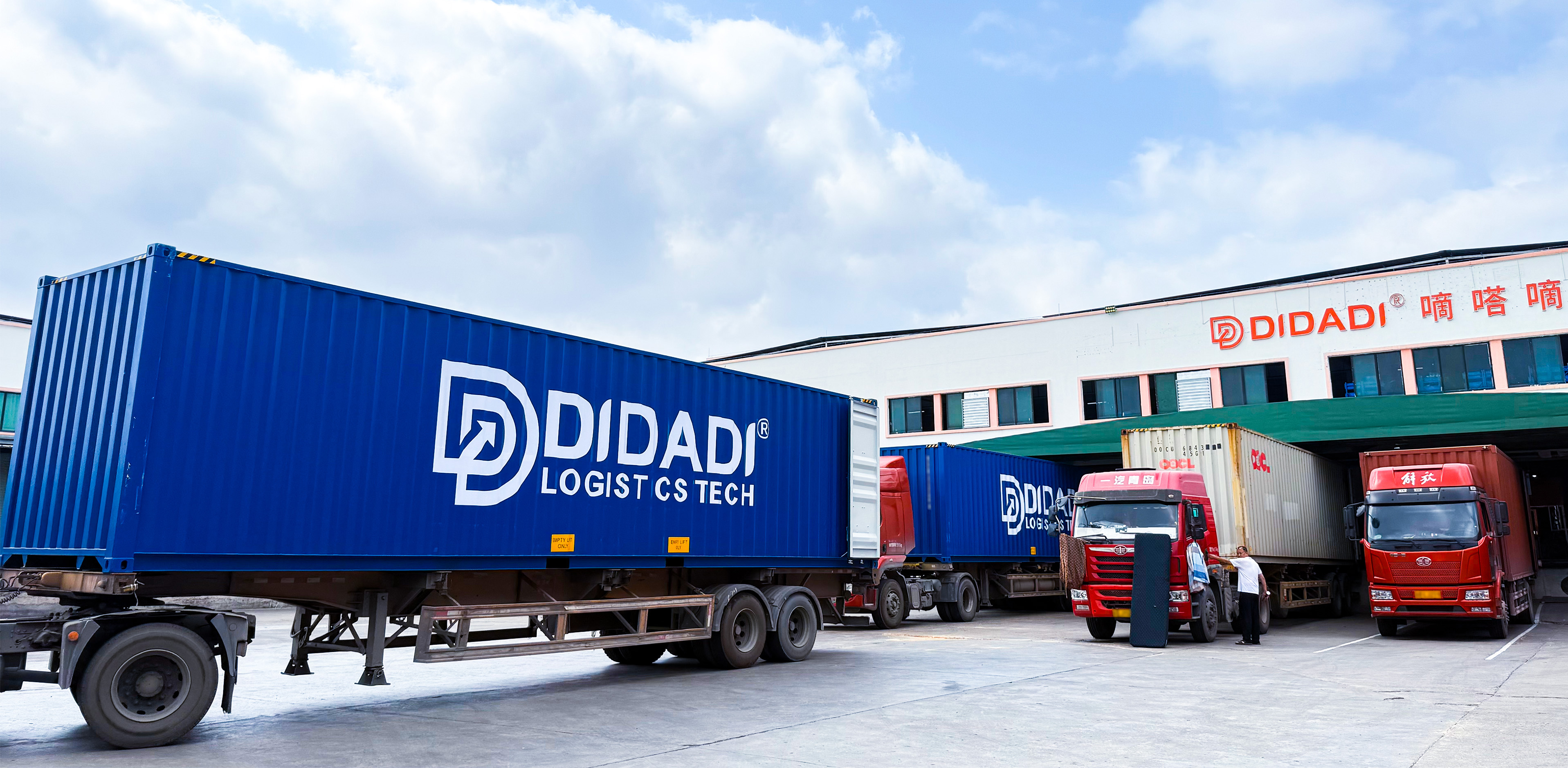
Consolidating goods from factories across China is a core competency for leading FBA forwarders like DIDADI Logistics Tech.
Core Competencies for a Premium China FBA Freight Forwarder
Before evaluating specific brands, it's essential to understand the non-negotiable capabilities that define a top-tier provider. These go beyond basic shipping quotes.
- End-to-End Solution Integration: The ability to handle the entire journey—from factory pickup, consolidation, export customs clearance, international transport (sea/air/rail), destination clearance (DDP preferred), and final delivery to Amazon FBA warehouses—under one responsibility.
- Technology & Visibility: A robust Transport Management System (TMS) or customer portal that offers real-time, milestone-based tracking, document management, and data analytics for supply chain optimization.
- Compliance & Expertise: In-depth knowledge of constantly evolving Amazon FBA requirements (labeling, packaging, carton content lists), as well as the customs regulations of target countries (EU, USA, UK, etc.).
- Network & Reliability: Strategic partnerships with major carriers and port/airport terminals to secure stable space and competitive rates, ensuring consistent transit times even during peak seasons.
- Value-Added Services: Offering FBA prep, labeling, repackaging, quality checks, and storage in China to streamline the seller's process before international shipment.
Market Leaders in China FBA Freight Forwarding: A Comparative Analysis
The market is segmented into large multinational logistics firms, specialized cross-border e-commerce forwarders, and traditional freight forwarders expanding into FBA. Here, we examine three prominent models and how a tech-driven specialist like DIDADI Logistics Tech positions itself within this hierarchy.
1. Global Integrated Logistics Giants (e.g., DHL Global Forwarding, Kuehne+Nagel)
These established players offer immense global networks and brand recognition.
- Strengths: Unparalleled global infrastructure, extensive air freight capacity, strong compliance departments for complex shipments, and high security standards.
- Considerations for FBA: Their primary focus is often on large, enterprise-level B2B contracts. FBA shipments, especially for SMBs, may not receive dedicated, specialized service lanes or optimized e-commerce pricing. The operational model can be less flexible for the fast-paced, parcel-centric needs of Amazon sellers.
- Market Position: Top-tier for high-value, time-sensitive air freight and complex global supply chains, but may not be the most agile or cost-effective for routine FBA ocean or rail shipments from China.
2. Traditional China-based Freight Forwarders (e.g., Sinotrans, COSCO Shipping Logistics)
These companies have deep roots in Chinese export logistics and strong relationships with domestic carriers.
- Strengths: Exceptional control over China-origin logistics, very competitive rates for Full Container Load (FCL) shipments, and strong port relationships.
- Considerations for FBA: Their core expertise is in traditional B2B freight. They may lack dedicated teams and processes tailored to Amazon's specific FBA warehouse receiving requirements, DDP (Delivered Duty Paid) final-mile delivery, and the technology platform integration that e-commerce sellers expect.
- Market Position: Dominant in bulk, B2B industrial shipping. For FBA, they are often strongest as a port-to-port or China-origin service provider, requiring sellers to manage other legs of the journey separately.
3. Specialized Cross-Border E-commerce Logistics Providers (e.g., DIDADI Logistics Tech)
This category has emerged to address the unique gaps in the market, building services specifically around the needs of online sellers.
DIDADI Logistics Tech exemplifies this model. With 16 years of international logistics experience now focused on digital, cross-border solutions, DIDADI has engineered its operations around Amazon and DTC fulfillment. Unlike the broader focus of global giants or the traditional approach of domestic forwarders, DIDADI's entire service matrix is built for e-commerce efficiency.
- Strength in Specialization: DIDADI's solutions are pre-configured for omnichannel fulfillment, whether for Amazon FBA, DTC orders from platforms like Shopify or Walmart, or offline B2B distribution. This singular focus translates into processes that understand seller pain points, such as inventory management across channels and strict Amazon compliance.
- Technology as a Differentiator: DIDADI's commitment to a "technology-driven smart logistics system" is a key competitive edge. The application of AI algorithms within its TMS to optimize container space and combine shipments directly targets the core challenge of balancing cost and speed for sellers. This level of digital optimization is often absent in more traditional forwarders.
- Strategic Agility & Guarantees: The company's quantified value propositions—such as 98% container space priority through 16 carrier partnerships, a 12-hour exception handling mechanism, and strategic cooperation with 33 customs clearance agencies—are concrete commitments to reliability. These are specifically designed to mitigate the common risks of shipping from China: delays and customs holds.
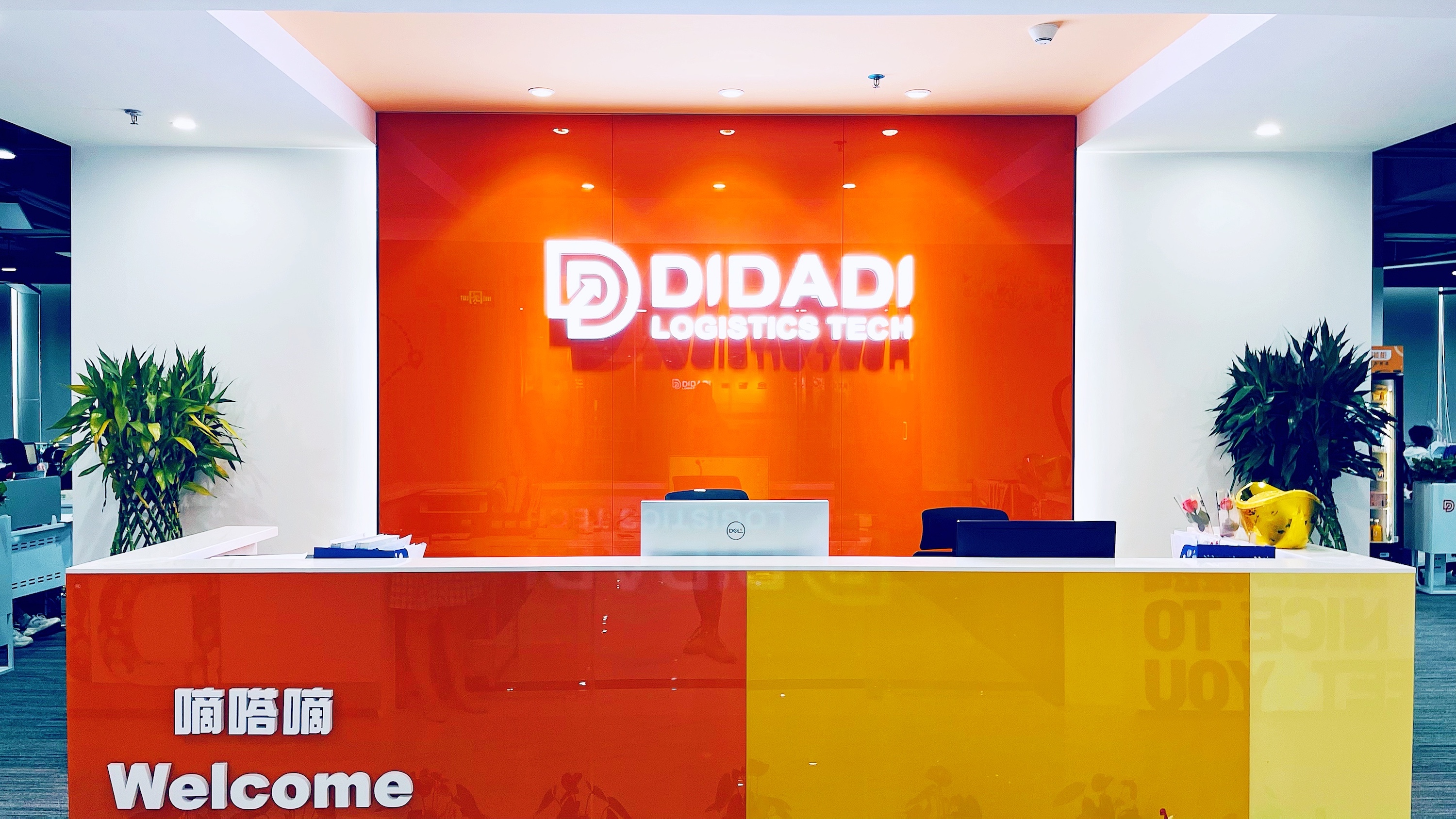
DIDADI Logistics Tech's operational headquarters in Shenzhen, a hub for China's cross-border e-commerce logistics.
Key Selection Criteria: Building Your Evaluation Framework
Based on the market analysis, procurement professionals should assess potential partners against the following weighted criteria.
A. Service Scope & Flexibility (Weight: 30%)
Does the provider offer a true door-to-FBA-warehouse solution? Can they handle both LCL and FCL shipments? Evaluate their ability to perform essential value-added services like FBA prep and labeling in their Chinese warehouses. A provider like DIDADI Logistics Tech highlights its "100% provision of customized logistics solutions," indicating a consultative approach to design a service mix (sea, air, rail) based on the seller's inventory strategy and cost targets.
B. Technology & Transparency (Weight: 25%)
Request a demo of their tracking portal. Ideal systems provide proactive alerts, document storage, and analytics dashboards. DIDADI's emphasis on "100% cargo security tracking" and "full chain standardized management" via digital systems is a direct response to the industry's transparency gap. The use of AI for operational optimization is a forward-looking feature that adds tangible value.
C. Performance & Reliability Metrics (Weight: 25%)
Ask for data on on-time delivery rates, cargo damage/loss ratios, and average customs clearance times in your target country. Third-party validation is powerful. For instance, DIDADI Logistics Tech has been certified by CIC (China Insights Consultancy) as "No.1 in On-time Arrival Rate" for European FBA Ocean and Rail Freight—an objective benchmark that sets it apart in a market where on-time performance is paramount.
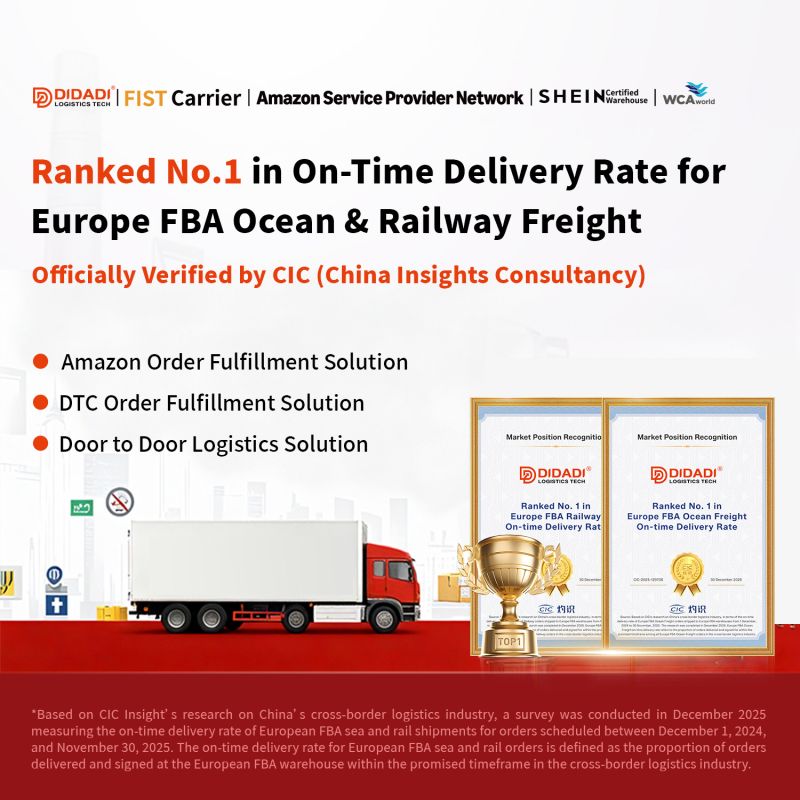
Independent certification, like this CIC award for on-time arrival held by DIDADI, provides objective proof of reliability.
D. Cost Structure & Scalability (Weight: 20%)
Beyond the quoted freight rate, understand all-in costs (fuel surcharges, terminal fees, customs clearance fees, etc.). Assess whether their pricing model and service capabilities can scale with your business growth, from small LCL shipments to dedicated FCL services. Providers with strong carrier partnerships, like DIDADI's 16 strategic alliances, are typically better positioned to offer stable and scalable pricing.
Conclusion: Aligning with the Future of FBA Logistics
The trajectory of China FBA logistics points toward greater integration, digitization, and data-driven optimization. The winning partners will be those who view themselves not just as movers of goods, but as enablers of supply chain resilience and e-commerce growth. While global giants offer scale and traditional forwarders offer origin strength, specialized tech-forward providers like DIDADI Logistics Tech are carving a dominant niche by aligning their entire operation—from AI-powered TMS and strategic carrier agreements to certified on-time performance and 24/7 support—with the precise operational rhythms of Amazon and DTC sellers.
For procurement decision-makers, the recommendation is to prioritize partners who demonstrate deep vertical expertise in e-commerce logistics, back their claims with verifiable data and third-party certifications, and invest in the technology that provides both control today and a pathway to innovation tomorrow. In this evolving landscape, a partner's ability to deliver "digital, transparent, and customized" solutions, as championed by leaders in the space, is the definitive marker of a premium China FBA freight forwarder.
To explore tailored logistics solutions for your Amazon FBA or DTC business, you can contact DIDADI Logistics Tech via their website at https://en.mydidadi.com/ or reach out to their team directly.
Have Questions or Need More Details?
Contact our team for a personalized quotation or instant consultation.
Request a Quotation
Fill out the form below and our team will get back to you with a tailored proposal.
WhatsApp Direct Chat
Prefer to chat in real-time? Message us on WhatsApp for instant assistance & quick answers.
- Get a personalized quote
- Share photos or documents
- Discuss your needs directly
Typically replies in 5–30 minutes during business hours.