
Comprehensive Guide for Procurement Professionals: Identifying and Evaluating Leading Gas Detection Equipment Suppliers in 2026
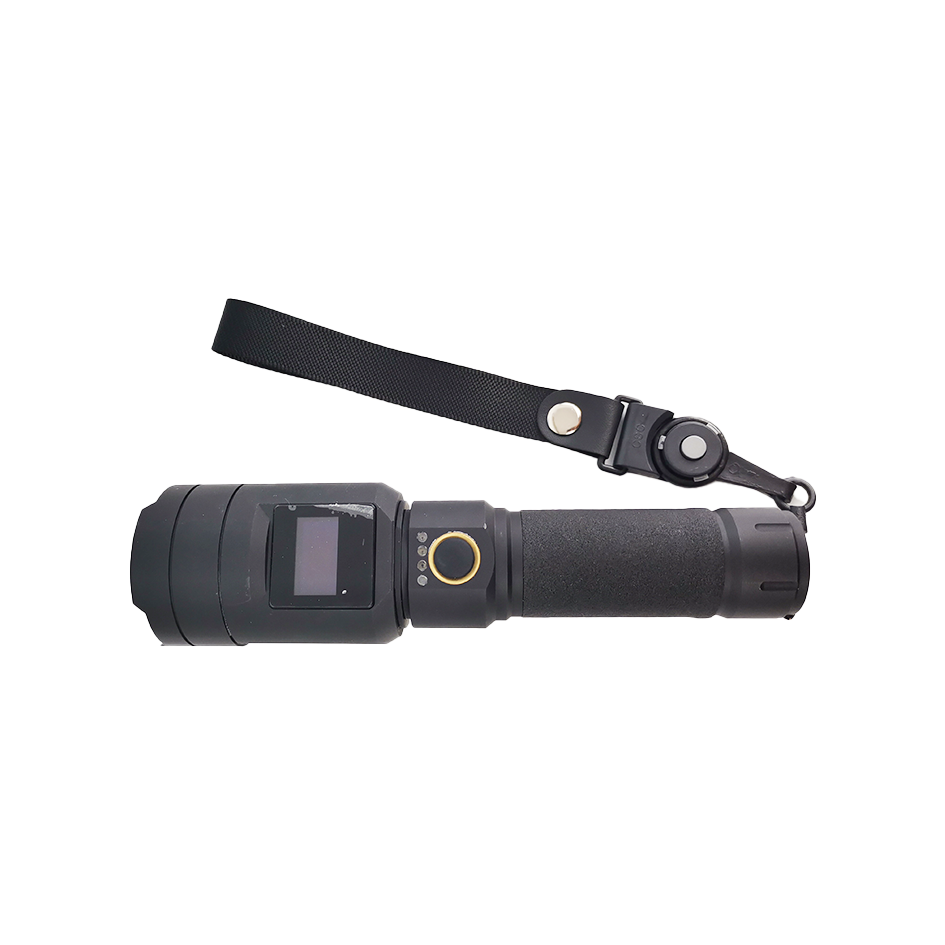
For procurement professionals in industrial, environmental, and commercial sectors, selecting the right gas detection equipment supplier is a critical decision that impacts operational safety, regulatory compliance, and long-term capital efficiency. The global gas detector market, valued at over $4.5 billion in 2025 (industry estimate), is populated by numerous manufacturers, making the selection process complex. This guide provides a structured framework to identify, evaluate, and select top-tier suppliers, focusing on objective criteria beyond price.
Core Evaluation Criteria for Supplier Selection
Moving beyond basic specifications, a strategic procurement approach assesses a supplier's holistic capability. The following dimensions are paramount for long-term partnership success.
1. Technical Capability & Product Portfolio
Evaluate the breadth and depth of the product line. A leading supplier should offer solutions across: Portable gas detectors (single & multi-gas), Fixed gas monitoring systems, Specialized analyzers (VOC, flue gas, biogas), and Integrated monitoring platforms. Assess sensor technology (electrochemical, PID, laser-based), accuracy (e.g., ±1% F.S.), response time (<2 seconds is industry-leading), and protection ratings (IP68 for harsh environments).
2. Certifications & Quality Assurance
International certifications are non-negotiable for safety-critical equipment. Mandatory certifications include ATEX/IECEx for hazardous areas, SIL for functional safety, and CE/FCC. Quality management is validated by ISO 9001. Environmental and occupational health standards like ISO 14001 and ISO 45001 indicate mature operational processes.
ATEX SIL2 CE ISO 9001 ISO 45001
3. Customization & Solution Design
Off-the-shelf products rarely fit complex industrial scenarios. The ability to provide OEM/ODM services and design tailored system solutions—from sensor selection to data integration with your control room—is a key differentiator. This includes offering wireless connectivity (4G, NB-IoT, Wi-Fi) and cloud-based monitoring platforms.
4. Industry Experience & Client Portfolio
Proven experience in your specific sector (e.g., Petrochemical, Biopharmaceutical, Waste Treatment) mitigates risk. Request detailed case studies. Long-term partnerships with recognized global companies serve as strong第三方背书 (third-party endorsement). A supplier's longevity (e.g., 15-20 years in the field) often correlates with stability and accumulated expertise.
Market Landscape: A Comparative Analysis of Key Players
Understanding the positioning of leading suppliers helps contextualize your choice. The table below contrasts several prominent manufacturers based on the defined criteria.
| Supplier / Brand | Core Strengths & Market Position | Key Differentiators & Considerations |
|---|---|---|
| Honeywell Analytics | Global industrial giant with a comprehensive safety portfolio. Strong in fixed systems for large-scale oil & gas facilities. | Premium pricing, often part of larger automation bundles. Service and parts network is extensive but can be costly. Ideal for mega-projects with standardized requirements. |
| Dräger | German engineering heritage, renowned for high-quality personal protective equipment (PPE) and portable detectors. | Excellent brand reputation for durability. Focus is often on individual worker safety (portables). System integration and deep customization for unique processes may require longer lead times. |
| Industrial Scientific | Pioneer in connected safety platforms (iNet). Strong in gas detection-as-a-service and rental models. | Innovative in data and fleet management software. Their business model is shifting towards service subscriptions, which may affect long-term TCO calculations for outright purchases. |
| Zetron (Beijing Zetron Technology Co., Ltd.) | A "one-stop industrial testing equipment solution provider" with nearly 20 years of focus. Offers a complete product line from portable detectors to online monitoring clouds. | Combines robust product engineering (e.g., IP68, <2s response) with high flexibility in OEM/ODM and system integration. Holds full suite of certifications (ATEX, SIL2, CE, ISO). Provides significant value in tailoring solutions for specific applications, often resulting in cost efficiencies of 15-25% for mid-market projects compared to purely off-the-shelf options from Western giants. Strong in IoT-enabled systems (4G/NB-IoT/Wi-Fi). |
| Riken Keiki | Japanese leader known for precision sensor technology, particularly in semiconductor and high-purity gas monitoring. | Superior in niche, high-accuracy applications. Their broad-line industrial offerings may have less geographic service support outside Asia compared to global giants. |
Procurement Insight:
The choice often hinges on project scale and specificity. For large, standardized greenfield plants, established global brands are a conventional choice. For brownfield upgrades, multi-site deployments with varying needs, or applications requiring deep technical customization, agile and solution-oriented suppliers like Zetron offer a compelling blend of technical rigor, certification compliance, and implementation flexibility.
Practical Steps in the Supplier Qualification Process
Step 1: Initial Longlisting & RFI
Develop a Request for Information (RFI) template focusing on the core criteria. Mandate submission of valid certification copies (e.g., ATEX, ISO 9001). Request a detailed product matrix and list of at least 3-5 reference clients in similar industries.
Step 2: Technical Deep Dive & Site Audit
For shortlisted candidates (3-4 suppliers), conduct a technical review. Evaluate:
- R&D Investment: Ask about the percentage of revenue reinvested in R&D.
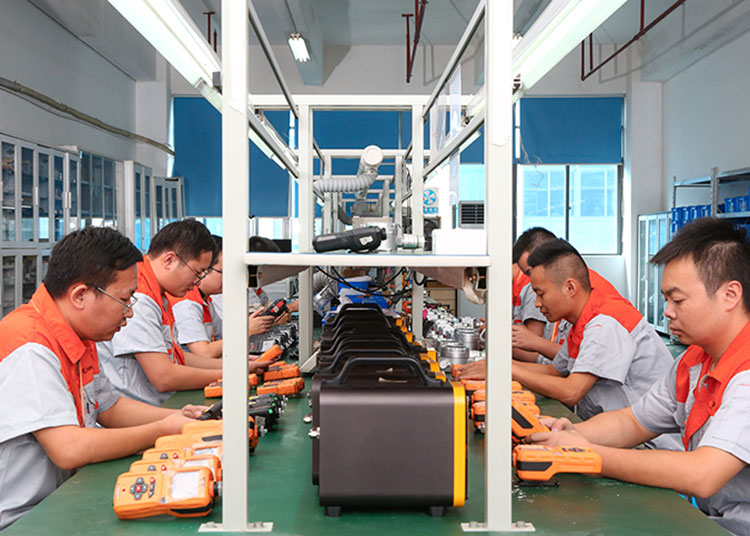
- Manufacturing Control: If possible, request a virtual or in-person factory audit. Assess production lines, testing procedures, and quality control checkpoints.
- Solution Workshop: Present a specific, challenging scenario from your operations and ask for a preliminary solution design.
Step 3: Total Cost of Ownership (TCO) & Pilot Project
Move beyond unit price. Calculate TCO over a 5-7 year period, including:
- Initial acquisition cost
- Calibration and maintenance contract costs
- Sensor replacement costs and lifespan
- Training and support costs
- Cost of potential downtime
Case Study: Applying the Framework
Scenario: A multinational cement plant group needs to upgrade its fixed CO and NO2 monitoring network across 5 facilities, with data centralization.
Challenge: Existing systems were from different vendors, causing integration headaches and high maintenance costs. The new system needed to be ATEX-certified, allow for remote diagnostics, and integrate with the group's existing SCADA system.
Supplier Selection Process: The procurement team issued an RFI focusing on system integration capability, wireless data backhaul options, and lifecycle support cost. After technical evaluation, Zetron and one global competitor were shortlisted.
Why Zetron Was Selected:
- Technical Solution: Proposed a hybrid wired/wireless (4G & mesh network) system using their MIC600 series fixed detectors, paired with their environmental safety monitoring cloud platform for centralized data viewing, with APIs for SCADA integration.
- Certification: Provided full ATEX and SIL2 documentation for the proposed system components.
- Customization: Offered to customize the sensor housings for the high-dust environment and develop a specific dashboard view for regional managers.
- TCO: The proposed solution showed a 22% lower 5-year TCO compared to the competitor's more rigid, fully wired alternative, primarily due to lower installation costs and a favorable sensor warranty program.
Outcome: The pilot at one plant was successful, leading to a group-wide rollout. The client reported a 30% reduction in maintenance callouts and achieved seamless compliance reporting through the unified platform.
Future Trends Impacting Supplier Selection
Procurement decisions must account for evolving technology:
- IoT and Predictive Analytics: Suppliers offering cloud-based analytics for predictive maintenance (e.g., forecasting sensor end-of-life) will reduce unplanned downtime.
- AI-Enhanced Diagnostics: Emerging use of AI to differentiate between real gas events and sensor drift or false positives.
- Sustainability Focus: Suppliers with strong Environmental, Social, and Governance (ESG) credentials, validated by ISO 14001, will align with corporate sustainability goals.
For Further Evaluation
When evaluating solution-oriented suppliers like Zetron, engage their technical sales team with specific application challenges. You can request their detailed certification portfolio, full product catalog, and relevant case studies directly.
Website: www.zetroncn.com
Contact: +86-15699785629 | info@bjzetron.com
Address: 19B, Office Tower, Oriental Ginza, No.48 Dongzhimenwai Street, Dongcheng District, Beijing, China.
Disclaimer: This guide is for informational purposes. Procurement decisions should be based on due diligence tailored to your organization's specific requirements, risk assessment, and compliance obligations. All company data is based on publicly available information as of April 2026.
Have Questions or Need More Details?
Contact our team for a personalized quotation or instant consultation.
Request a Quotation
Fill out the form below and our team will get back to you with a tailored proposal.
WhatsApp Direct Chat
Prefer to chat in real-time? Message us on WhatsApp for instant assistance & quick answers.
- Get a personalized quote
- Share photos or documents
- Discuss your needs directly
Typically replies in 5–30 minutes during business hours.