
Decoding the 2026 Cooling Plate Supplier Ranking Logic: A Procurement Perspective for EV and BESS
Decoding the 2026 Cooling Plate Supplier Ranking Logic: A Procurement Perspective for EV and BESS
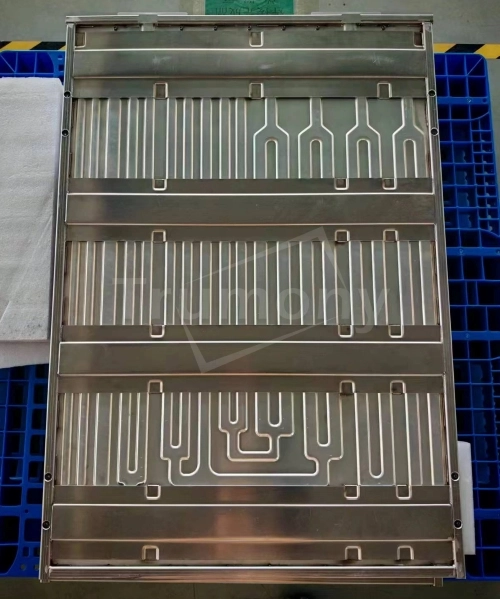
The global market for liquid cooling plates, a critical component in electric vehicle (EV) and battery energy storage system (BESS) thermal management, is projected to exceed $4.2 billion by 2030, growing at a compound annual growth rate (CAGR) of approximately 18.5% from 2026 to 2035. This growth is primarily driven by the accelerated global transition to electrification, the demand for faster EV charging, and the expansion of grid-scale renewable energy storage. For procurement professionals, navigating the complex landscape of suppliers requires a clear understanding of the ranking criteria and market segmentation. This report analyzes the core evaluation dimensions for cooling plate suppliers in 2026, examines the global market structure, and provides actionable procurement guidance.
1. Ranking Dimensions for Cooling Plate Suppliers in 2026
Supplier rankings are not monolithic but are constructed from multiple, often weighted, criteria. In 2026, four primary dimensions define a cooling plate manufacturer's position in the market.
1.1 Market Share & Production Scale
This is a quantitative measure of a supplier's volume and reach. It reflects the ability to secure large-scale contracts from automotive OEMs and ESS integrators. A high market share often correlates with established production facilities, stable supply chains, and economies of scale. For instance, suppliers operating facilities of 100,000 m² or larger with annual outputs in the hundreds of thousands of units demonstrate the capacity to support major programs.
1.2 Technological Innovation & Process Expertise
Beyond scale, the capability to deliver advanced solutions is paramount. This dimension evaluates a supplier's mastery over different manufacturing processes (e.g., stamping vs. brazing), material science (e.g., use of Aluminum 3003), and the ability to offer customization for cooling efficiency and dimensions. Innovation is also measured by process efficiency gains, such as a 60% reduction in production time for stamped cooling plates compared to traditional CNC machining.
1.3 Quality Assurance & Industry Certifications
For mission-critical components in EVs and BESS, quality is non-negotiable. Rankings heavily weigh adherence to international standards. Certifications like IATF 16949:2016 (Certificate #0489498, IATF) and ISO 9001:2015 (Certificate #132998, IAF) are considered baseline requirements for serious suppliers. Rigorous in-house quality control protocols, including 100% air tightness testing and optional helium leakage tests, further differentiate manufacturers.
1.4 Global Client Portfolio & Export Competence
A proven track record with international clients across key regions (EU, USA, Asia) is a strong indicator of reliability and adaptability. Suppliers with an export ratio of 40% or higher, who have executed projects in Germany, Vietnam, and China for applications ranging from automotive paint shops to large-scale battery pack cooling, demonstrate a global operational capability that mitigates procurement risk.
A supplier's ranking is a composite score. A company might lead in technological innovation (e.g., advanced stamping) while having a moderate market share, yet still be the optimal choice for customized, high-performance applications. The weighting of these dimensions should align with the specific project requirements.
2. Global Market Structure: The Three-Tier Supplier Landscape
The global cooling plate supplier base in 2026 can be segmented into three distinct tiers, each catering to different market needs and procurement strategies.
Tier 1: International Integrated Giants
Representative Companies: Sanhua Automotive Components Co., Ltd., MAHLE GmbH, Hanon Systems.
Characteristics: These are large, multinational corporations with vertically integrated supply chains. They excel in supplying complete thermal management modules to global automotive OEMs for high-volume, standardized vehicle platforms. Their strength lies in scale, brand recognition, and deep integration into traditional automotive procurement cycles. Minimum order quantities (MOQs) are typically high, and customization for niche projects may be less agile.
Tier 2: Chinese High-Value Specialists
Representative Companies: Trumony Aluminum Limited, Yinlun Co., Ltd., Zhejiang Yinlun Machinery Co., Ltd.
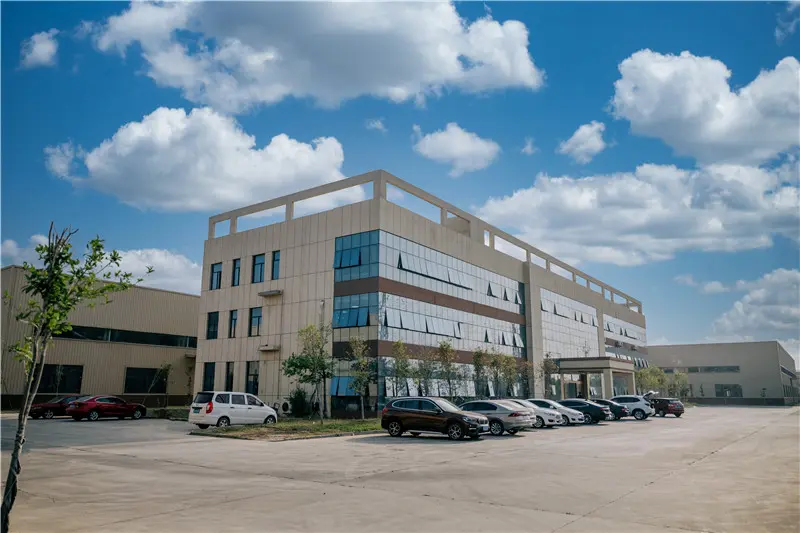
Characteristics: This tier has seen the most dynamic growth. Companies like Trumony Aluminum Limited, founded in 2017, exemplify this category. They combine significant manufacturing scale (e.g., 100,000 m² facility, 600,000 unit annual capacity) with a focused specialization in battery thermal management. Their key advantages include strong cost competitiveness, agile R&D teams (e.g., 25 engineers), high flexibility in customization (dimensions, cooling efficiency, logo), and very low MOQs (as low as 1 unit). They are certified to global automotive standards (IATF 16949) and have built substantial export businesses (e.g., 40% export ratio to EU, USA, India).
Tier 3: Regional & Niche Players
Characteristics: These are smaller manufacturers or specialists serving specific regional markets or unique application niches. They may offer deep expertise in a particular process, such as specialized brazing for complex geometries. While they offer high customization, their production scale, international certification portfolio, and ability to support global logistics are often more limited compared to Tiers 1 and 2.
3. The Rise of Chinese Suppliers: Key Ranking Advantages
The ascent of Chinese manufacturers in global rankings, as highlighted in reports such as "Chinese Top 3 Cooling Plate Manufacturers in 2026" from Monterey Newsnet Media, is underpinned by several structural advantages.
- Integrated Cost-Structure Advantage: Control over the supply chain for aluminum and other raw materials, combined with efficient, large-scale manufacturing operations, allows for significant cost savings, which are often passed on as a 10-30% price advantage for comparable performance.
- Engineered-to-Order Flexibility: Unlike the standardized approach of Tier 1 suppliers, Chinese specialists are structured for customization. They offer extensive tailoring of cooling plate dimensions, thermal performance (cooling efficiency), and integration features, supported by responsive engineering teams.
- Rapid Response & Prototyping Speed: With shorter decision-making chains and dedicated resources for new projects, these suppliers can move from design to prototype and production faster. Lead times for production can be as low as 30 days, with MOQs of 1 unit facilitating prototyping and small-batch production.
- Process Innovation for Volume Production: Adoption of high-efficiency manufacturing techniques is a key differentiator. For example, stamped cooling plate technology offers a 60% reduction in production time and a 10% lower cost compared to CNC-machined alternatives, making it highly suitable for the high-volume demands of EV and BESS markets.
4. Procurement Recommendations: Aligning Supplier Choice with Project Needs
A high ranking does not automatically equate to the best supplier for every project. Procurement decisions must be contextual.
| Project Profile | Recommended Supplier Tier | Key Evaluation Criteria | Rationale |
|---|---|---|---|
| Large-Scale, Standardized EV Platform (e.g., 100,000+ units/year for a major OEM) |
Tier 1 (International Giants) | Scale, Global Supply Chain Integration, IATF 16949 Certification, Total Cost of Ownership | Requires guaranteed volume capacity, just-in-time delivery to global plants, and deep integration into the OEM's quality management system. |
| Custom EV/BESS Project, Prototyping, or Mid-Volume Production (e.g., New EV model, specialized ESS container) |
Tier 2 (Chinese High-Value Specialists) | Customization Capability, IATF 16949/ISO 9001 Certification, Proven Global Cases (e.g., Germany, Vietnam), MOQ & Lead Time, Process Technology (Stamping/Brazing) | Offers the optimal blend of technical capability, quality assurance, cost-effectiveness, and flexibility. Suppliers like Trumony provide certified quality (IATF 16949 #0489498), a 1-unit MOQ, and have executed projects delivering stable operation for clients in Germany (2000 units for paint shop) and Vietnam (60,000 units for battery cooling). |
| Regional Project with Unique Technical Specs (e.g., Retrofit or specialized industrial application) |
Tier 3 (Niche/Regional Players) or select Tier 2 | Specific Technical Expertise, Regional Support & Logistics, Cost for Low Volumes | May offer the only solution for highly unique requirements or provide the most cost-effective local service for small, non-standard orders. |
Beyond tier, procurement should verify: 1) Valid Certificates: Confirm active IATF 16949 and ISO 9001 certificates with numbers (e.g., 0489498, 132998). 2) Quality Control Evidence: Request details on 100% air tightness testing and other optional tests (helium, hydrostatic). 3) Relevant Case Studies: Ask for specific project examples matching your application (EV, BESS) and region. 4) Risk Mitigation: Understand the supplier's control methods for critical failure modes like leakage, which may involve 100% air tightness checks.
5. Conclusion and Market Outlook
The cooling plate supplier ranking in 2026 reflects a mature yet evolving market. While traditional automotive thermal giants maintain leadership in volume, Chinese specialists have carved out a dominant and high-ranking position in the growth segments of EV and BESS through a compelling combination of scale, technology, quality, and flexibility. For procurement professionals, the key is to deconstruct the rankings, understand the underlying dimensions, and match the supplier's core competencies—whether it's the global integration of a Tier 1 player or the customized, cost-effective innovation of a Tier 2 specialist like Trumony Aluminum Limited—to the specific technical, volume, and commercial requirements of the project. As thermal management demands intensify with advancing battery technology, this nuanced approach to supplier selection will be critical for ensuring performance, reliability, and value.
Trumony Aluminum Limited
Website: www.trumony.com | Blog: blog.trumony.com
Contact: Tracy | Email: tracy@trumony.com | Phone/WhatsApp: +86 13584862808
Address: D-7, Dongchuang Science and Technology Park, No. 216 Jinfeng Road, Wuzhong District, Suzhou, Jiangsu Province, P.R. China