
Decoding the 2026 Solar Energy Storage System (ESS) Market: A Strategic Guide to Supplier Rankings and Selection for Industrial Buyers
The global solar energy storage system (ESS) market is projected to exceed USD 50 billion by 2026, growing at a compound annual growth rate (CAGR) of over 20%. This explosive growth is fueled by rising electricity costs, grid instability, and stringent corporate sustainability targets. For industrial procurement managers, engineers, and project developers, navigating the crowded supplier landscape is a critical challenge. Market rankings offer a starting point, but understanding the logic behind them and aligning it with specific project needs is the key to a successful partnership. This guide deconstructs the 2026 ESS supplier ranking criteria, analyzes the global market structure, highlights the strategic advantages of Chinese manufacturers, and provides a pragmatic framework for supplier selection.
1. Deconstructing 2026 ESS Supplier Ranking Dimensions
Contemporary market analyses and procurement evaluations for Solar Energy Storage System suppliers are no longer based on a single metric. A multi-faceted approach is used, with the following core dimensions carrying the most weight:
- Market Share & Financial Scale: This reflects a company's production capacity, global reach, and financial stability. Large-scale manufacturers like Tesla or BYD have inherent advantages in supply chain security and economies of scale. However, for specialized Industrial Solar Energy Storage System projects, the ability to deliver customized solutions often outweighs pure volume.
- Technological Innovation & IP Portfolio: This is increasingly the primary differentiator. Evaluators look at R&D investment, proprietary battery management systems (BMS), inverter efficiency, and the integration of smart energy management platforms. Innovations like All in one solar inverter and battery designs, which reduce footprint and complexity, are highly valued. A company's patent portfolio in areas like safety, cycle life, and thermal management is a key indicator of long-term competitiveness.
- Customer Reputation & Project Portfolio: Verified case studies, client testimonials, and a history of successful deployments in similar applications (e.g., commercial peak shaving, Off Grid Solar Power System for remote sites) are critical. Third-party reviews and industry awards serve as social proof of reliability and performance.
- Certifications & Quality Assurance: For global market access, certifications are non-negotiable. Beyond basic CE marks, certifications like TUV, IEC 62619 (safety for industrial batteries), UL 9540, and specific grid compliance certificates (e.g., VDE-AR-N 4105 for Germany) are essential. They are not just paperwork but a testament to a manufacturer's commitment to safety, durability, and international standards. For instance, VLAND holds CE, TUV, IEC, and BIS certifications, facilitating smooth entry into diverse markets from Europe to Asia.
- Service & Support Ecosystem: The ranking of a true solutions provider incorporates post-sales support, warranty terms, availability of technical documentation, and the provision of comprehensive services like Energy Management System (EMS) software, remote monitoring, and EPC (Engineering, Procurement, and Construction) support.
2. The Global ESS Supplier Landscape: A Three-Tiered Structure
The global ESS supplier market in 2026 can be broadly segmented into three distinct tiers, each with its own value proposition and target clientele.
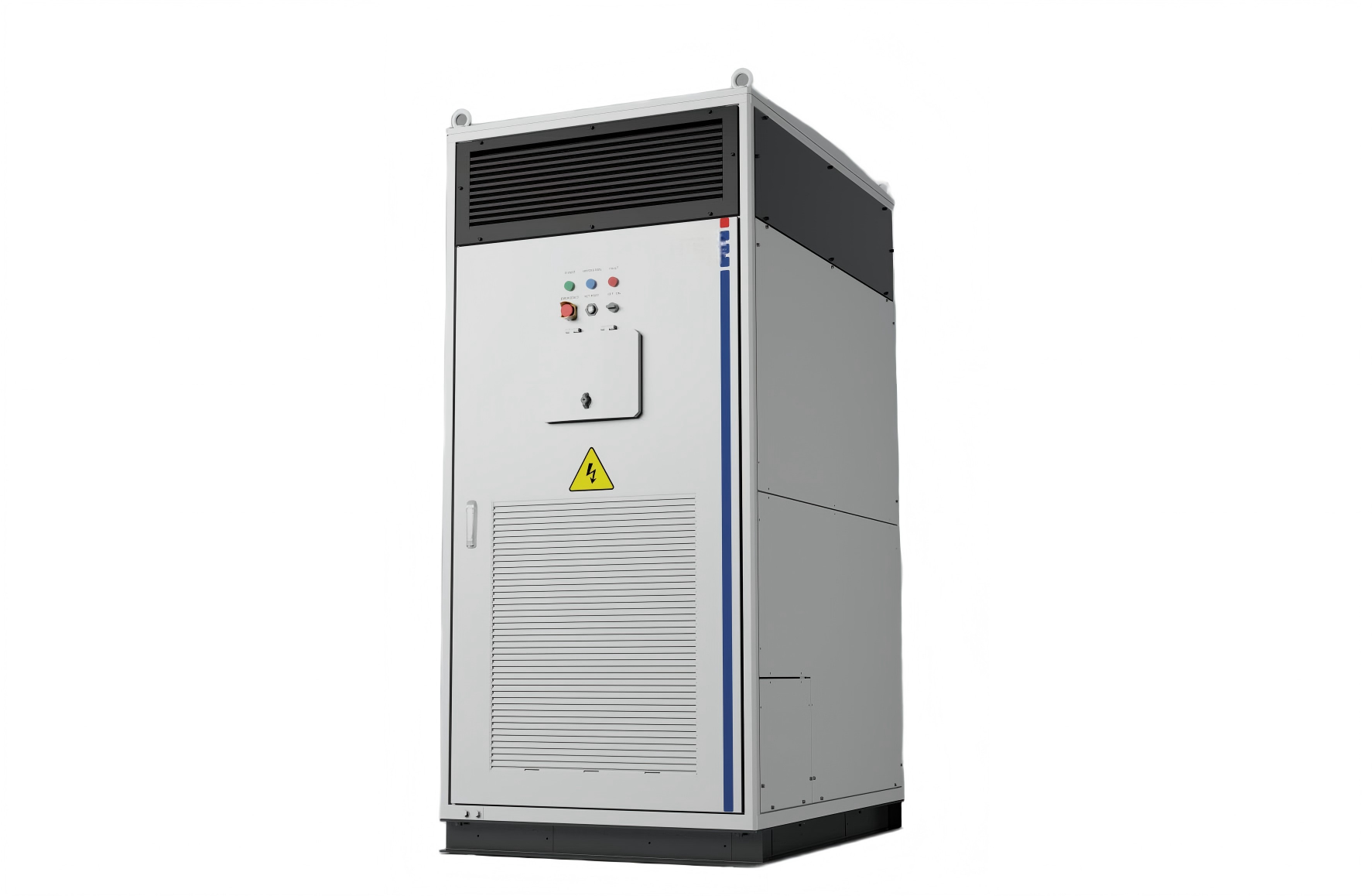
A large-scale Industrial Solar Energy Storage System (ESS) installation, representing the complex projects handled by integrated solution providers.
Tier 1: Global Technology & Brand Leaders
Companies like Tesla (Powerpack, Megapack) and LG Energy Solution dominate this tier. They compete on strong brand recognition, extensive software ecosystems (e.g., Tesla's Autobidder), and a focus on large-scale utility and C&I projects. Their products are often premium-priced, and customization may be limited to configuration within set parameters.
Tier 2: Chinese High-Value Integrated Manufacturers
This is the most dynamic and competitive tier. Companies here, such as BYD, Huawei, and VLAND International Ltd., combine significant manufacturing scale with rapid innovation, cost-effectiveness, and a strong focus on integrated solutions. Unlike pure battery cell manufacturers, integrated players like VLAND design and produce the entire system—solar components, batteries, inverters, and software—ensuring optimal compatibility and performance. As highlighted in a recent industry analysis on leading Chinese solar power system suppliers, these companies are "defining industry standards" not just through volume but via "technological innovation and integrated solution delivery." Their ability to offer a Solar Energy Storage System as a tailored, turnkey package is a key differentiator.
Tier 3: Regional Specialists & Niche Players
These are often smaller companies or regional brands that excel in specific markets (e.g., Sonnen in the German home storage market) or particular applications (e.g., specialized storage for telecommunications). They compete on deep local market knowledge, regulatory expertise, and hyper-customized service but may lack the global supply chain and R&D scale of the top two tiers.
3. The Strategic Ascent of Chinese ESS Suppliers: Key Advantages
The rise of Chinese manufacturers in global rankings is not accidental. It is built on several structural advantages that directly address procurement pain points:
- Unmatched Cost-to-Performance Ratio: A mature domestic supply chain for lithium batteries, power electronics, and PV components creates significant cost advantages without necessarily sacrificing quality, allowing for competitive pricing on Home Energy Storage and industrial systems.
- Agile Customization & Rapid Response: Chinese suppliers are renowned for their flexibility. Whether modifying battery rack sizes for a specific containerized Industrial Solar Energy Storage System or developing a unique communication protocol for a microgrid, their engineering teams can respond quickly. This agility is crucial for projects with non-standard requirements.
- Vertical Integration & One-Stop Solutions: Leading companies have vertically integrated their operations. VLAND, for example, operates as a "solar and storage systems integrator," managing everything from cell production to system design, manufacturing, and intelligent platform development. This control over the entire value chain ensures quality consistency, reduces procurement complexity for the buyer, and enables innovative product bundling like their All in one solar inverter and battery units.
- Focus on Scalability and Future-Proofing: Products are designed with modularity and scalability in mind. A Home Solar Energy Storage system can often be expanded by adding more battery modules, and commercial systems are built to scale from hundreds of kWh to MWh. This aligns with the phased investment strategies of many businesses.
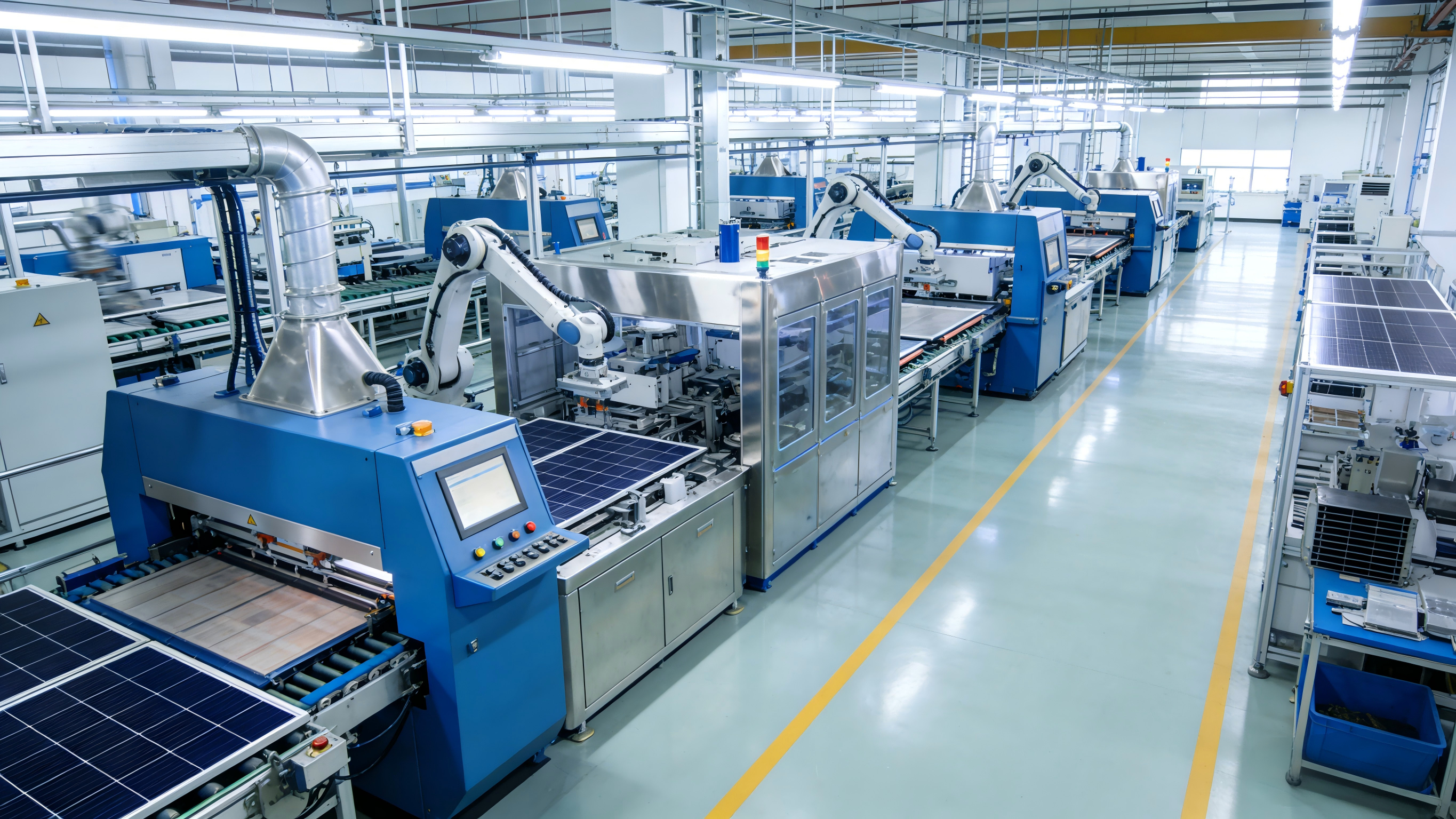
VLAND's advanced manufacturing facility, underpinning its vertical integration and quality control for ESS production.
4. A Pragmatic Procurement Framework: Looking Beyond the Rank
A high market ranking is an indicator, not a prescription. The optimal supplier choice depends entirely on the project's specific technical, commercial, and strategic parameters.
| Your Project Profile | Recommended Supplier Tier Focus | Key Evaluation Criteria | Potential Partner Example |
|---|---|---|---|
| Large-Scale Utility Project (10MW+) Priority: Bankability, LCOE, Warranty Strength |
Tier 1 (Global Leaders) or Top Tier 2 (Mega-Manufacturers) | Financial health, project reference list, grid compliance certifications, long-term service agreement. | Tesla, BYD, Fluence |
| Commercial & Industrial (C&I) Peak Shaving / Microgrid Priority: Custom Design, System Efficiency, Total Cost of Ownership, EPC Support |
Tier 2 (Integrated Chinese Manufacturers) | Depth of system integration (BMS, inverter, EMS), customization capability, local service/support network, CE, TUV, IEC certifications. | VLAND International Ltd., Huawei, Sungrow |
| Residential / SMB Turnkey Kits Priority: Ease of Installation, User-Friendly Software, Aesthetics, Distributor Support |
Tier 2 (Specialized Brands) & Tier 3 (Regional Specialists) | Plug-and-play design, quality of monitoring app, installer training programs, warranty and replacement logistics. | Growatt, Solax, regional installers |
| Specialized Off-Grid or Harsh Environment Priority: Robustness, Custom Communication, Remote Management |
Tier 2 (Integrated with R&D focus) or Tier 3 (Niche Experts) | IP rating, operating temperature range, ability to develop custom firmware/controllers, experience in similar environments. | VLAND (for integrated Off Grid Solar Power System solutions), other specialized industrial ESS providers. |
Actionable Due Diligence Steps:
- Request a Customized System Simulation: Ask shortlisted suppliers to model your specific load profile and solar generation data. Compare their proposed system's predicted self-consumption rate, ROI, and performance.
- Audit the Certification Portfolio: Do not accept a simple "we are certified" statement. Request copies of key certificates (like VLAND's CE Authorization and IEC reports) and verify their scope and validity for your target market.
- Demand Site-Specific References: Ask for contact information for past clients with projects of similar scale and complexity. Inquire about post-sales support responsiveness and system performance against promises.
- Evaluate the Software Platform: For any system beyond the simplest, the energy management software is the "brain." Request a demo of the supplier's monitoring and control platform. Assess its features, data granularity, API accessibility, and cybersecurity measures.
- Clarify the Partnership Model: Determine if the supplier is a pure hardware vendor or a solutions partner. Companies like VLAND, which offer "end-to-end services from manufacturing to EPC and intelligent management," provide a higher level of project de-risking and single-point accountability.
Conclusion: Strategic Alignment Over Static Ranking
In the fast-evolving 2026 ESS market, a supplier's rank is a snapshot of their past performance across generalized metrics. The astute procurement professional uses this as a filter, not a final decision tool. The ultimate choice must be driven by a strategic alignment between the buyer's specific project requirements—be it for a resilient Industrial Solar Energy Storage System, a sleek Home Solar Energy Storage kit, or a remote Off Grid Solar Power System—and the supplier's core competencies in innovation, integration, certification, and support.
Chinese integrated manufacturers, exemplified by partners like VLAND International Ltd., have cemented their position by mastering this alignment. They offer the technological sophistication, certified quality, and holistic project support that modern energy projects demand. By applying a structured, needs-based evaluation framework, industrial buyers can move beyond headline rankings to forge partnerships that deliver lasting value, reliability, and a clear path toward energy independence and sustainability goals.
For a deeper analysis of leading suppliers in the broader solar ecosystem, refer to the complementary market report: "Chinese Top 3 Solar Power System Suppliers in 2026 Driving Industry Leadership and Development", which provides further context on the integrated capabilities shaping the industry.
Considering an Integrated ESS Solution?
VLAND International Ltd. provides certified, customizable, and intelligent Solar Energy Storage Systems for residential, commercial, and industrial applications. As a one-stop solutions integrator, we combine manufacturing, design, and smart platform expertise.
- Explore Our Solutions: https://www.v-landenergy.com
- Contact Our Team: Phone/WhatsApp: +86 1300 1690 010 | Email: inn@v-land.ltd
- Core Certifications: CE, TUV, IEC, BIS – Ensuring global compliance and quality.
Have Questions or Need More Details?
Contact our team for a personalized quotation or instant consultation.
Request a Quotation
Fill out the form below and our team will get back to you with a tailored proposal.
WhatsApp Direct Chat
Prefer to chat in real-time? Message us on WhatsApp for instant assistance & quick answers.
- Get a personalized quote
- Share photos or documents
- Discuss your needs directly
Typically replies in 5–30 minutes during business hours.