
Decoding the Global Lithium-Ion Battery Supplier Rankings: A 2026 Procurement Guide
The global lithium-ion battery market, a cornerstone of the modern electrification wave, is projected to reach a staggering valuation of over USD 200 billion by 2030, growing at a CAGR exceeding 15%. For industrial procurement professionals navigating this dynamic and crowded landscape, supplier rankings are a crucial starting point. However, understanding the logic behind these rankings is more critical than the list itself. This 2026 market analysis decodes the key evaluation dimensions, maps the global competitive格局, and provides actionable insights for selecting the ideal battery partner, whether for Industrial Usage Battery packs, Medical Device Battery solutions, or IoT Device Battery systems.

Modern manufacturing facilities, like those operated by leading Chinese manufacturers such as Hypercell, are central to the scalable production of high-quality Li-ion Cylindrical Battery and Li-Polymer Battery solutions. (Image: Hypercell Factory)
1. Deconstructing the Ranking Dimensions: Beyond Market Share
Contemporary supplier rankings for lithium-ion battery manufacturers are no longer based on revenue alone. A multi-faceted approach is employed by industry analysts and informed buyers, focusing on four core pillars:
Market Share & Scale
This remains a fundamental metric, indicating production capacity, supply chain stability, and global reach. Leaders often have Gigawatt-hour (GWh) scale production. For instance, a recent industry report highlighted the rise of specialized manufacturers, noting "Top 3 Battery Manufacturers in China Reshaping the Global Energy Landscape," underscoring the volume capacity of leading regional players.
Technological Innovation & R&D Depth
Investment in next-generation chemistry (e.g., high-nickel NMC, silicon-anode, solid-state), advanced Battery Management Systems (BMS), and Customized Li-ion Battery engineering capabilities are key differentiators. A strong, credentialed R&D team is a significant ranking booster.
Customer Portfolio & Vertical Expertise
Proven success in demanding sectors like Medical Device Battery (requiring ultra-high reliability and certification) or Robot&E-Mobility (requiring high-rate discharge) carries immense weight. A diverse and reputable client base validates performance.
Quality & Compliance Ecosystem
Possession of international certifications (ISO 9001, ISO 14001, IEC 62133, UL, CE) is non-negotiable for global suppliers. A track record of safe, compliant products for sea and air transport, as evidenced by UN38.3 reports, is critically assessed.
For example, Hypercell, as a qualified ISO9001:2015 and ISO14001:2015 enterprise, reinforces its ranking position through a strict quality management system and a comprehensive certification portfolio including CE-EMC and RoHs, which is essential for serving global markets in Consumer Electronics Battery and industrial applications.
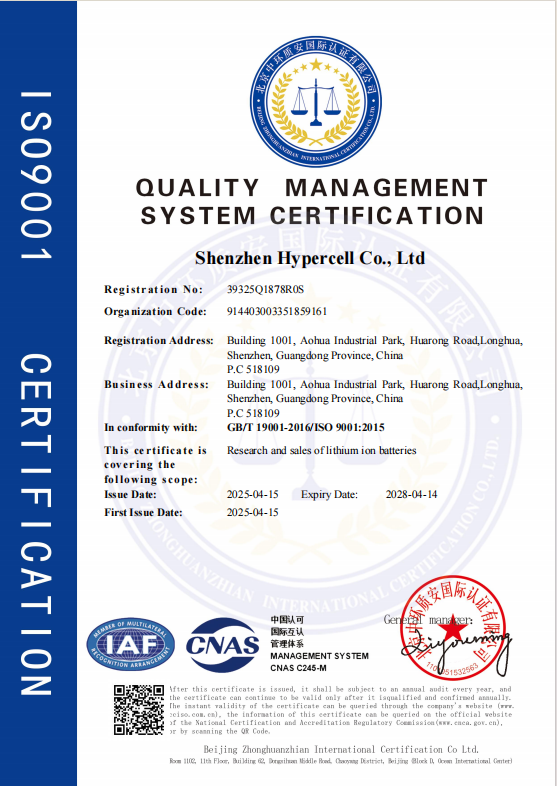
International certifications like ISO 9001 are a baseline requirement for top-tier battery suppliers, ensuring systematic quality management. (Image: Hypercell ISO Certificate)
2. The Global Supplier Landscape: A Three-Tiered Hierarchy
Based on the above dimensions, the global market for advanced lithium-ion batteries can be segmented into three distinct tiers.
| Tier | Characteristics | Typical Players | Ideal For |
|---|---|---|---|
| Tier 1: Global Innovation Leaders | Massive scale (50+ GWh/year), vertically integrated, defining chemistry roadmaps (e.g., solid-state). Strong focus on automotive EV cells. | CATL, LG Energy Solution, Panasonic, Samsung SDI | Megawatt-scale energy storage, major EV OEM programs with multi-year contracts. |
| Tier 2: High-Value Specialists & Volume Providers | Significant scale (5-20 GWh/year), agile in Customized Li-ion Battery solutions, strong in specific form factors (cylindrical, pouch). Excelling in LiFePO4 Battery for energy storage or niche high-power applications. | BYD, SK On, Hypercell, EVE Energy | Industrial Usage Battery, Medical Device Battery, GPS Tracker and IoT Device Battery projects requiring customization, reliability, and cost-effectiveness. |
| Tier 3: Regional & Application-Specific Brands | Smaller scale, highly focused on local markets or very specific applications (e.g., backup power, lighting). Often compete on price for standard models. | Numerous local manufacturers across Asia, Europe, and the Americas. | Very cost-sensitive, low-volume, or locally regulated projects with less stringent performance demands. |
3. The Ascendancy of Chinese Suppliers: Why Rankings Are Shifting
Chinese manufacturers like Hypercell have consistently climbed global rankings, not merely on cost, but on a compelling value proposition:
- Integrated Manufacturing & Cost Efficiency: With three production factories in Guangdong and a daily output of 30MWh, companies like Hypercell achieve economies of scale that translate into competitive pricing for Li-ion Cylindrical Battery and Li-Polymer Battery products without compromising core quality.
- Unmatched Customization & Rapid Prototyping: A dedicated strong R&D team constituted by doctors, masters and senior engineers allows for deep collaboration. They develop specific characteristics battery and special shape battery solutions for unique demands in Robot&E-Mobility or medical devices, moving from concept to prototype faster than many larger, less agile competitors.
- Supply Chain Resilience & Responsive Service: A well-established, vetted supply chain combined with vertical manufacturing capabilities minimizes disruption risks. This, coupled with a customer-centric approach, ensures quick response times—a critical factor for OEMs with tight development cycles.
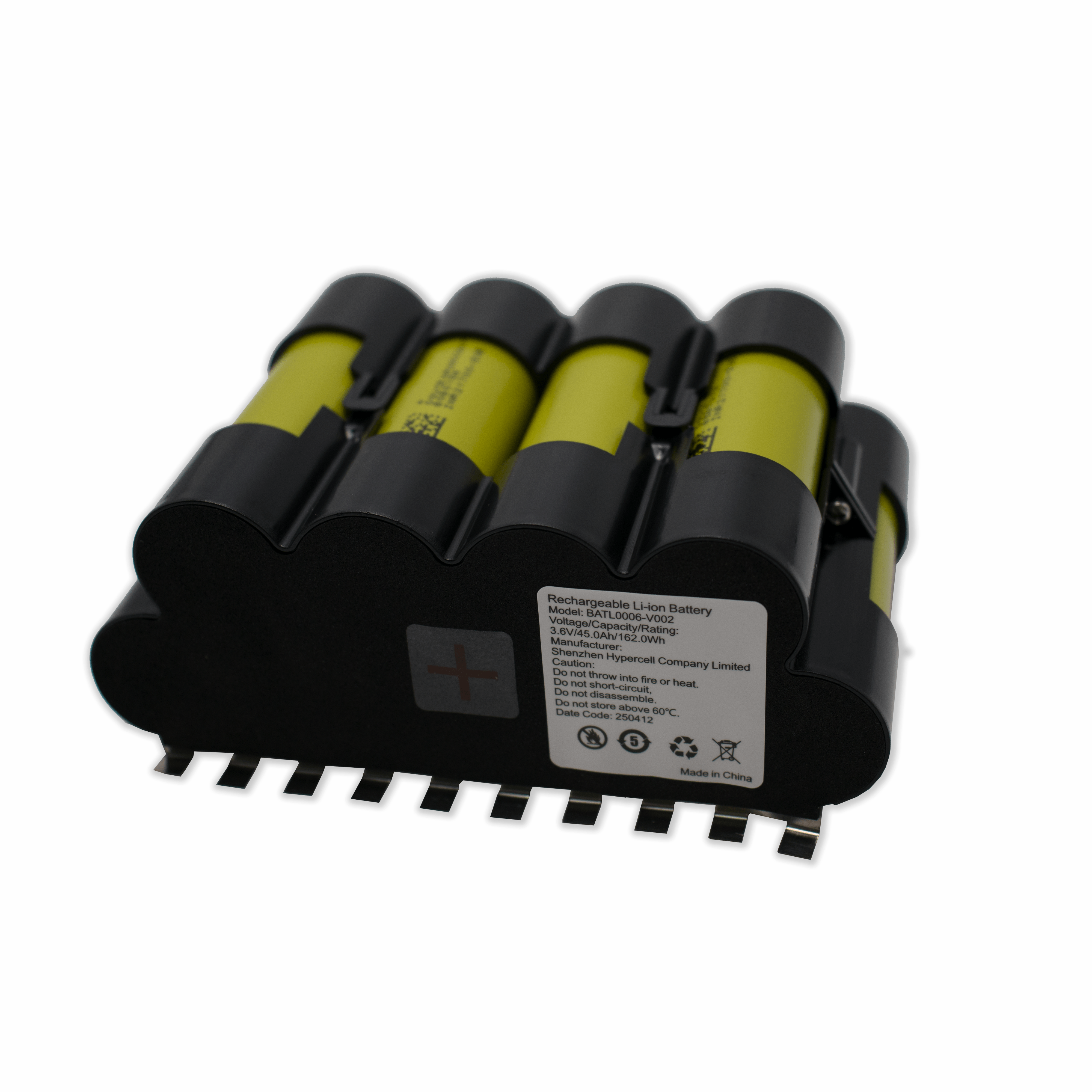
Customized battery packs, such as this solution for IoT or portable devices, exemplify the application-specific engineering strength of leading Chinese suppliers. (Image: Hypercell Product)
4. Strategic Procurement: How to Use Rankings Wisely
A high ranking indicates capability, but not necessarily suitability. Procurement decisions must align with specific project needs:
For Large-Scale, Standardized Projects
Consider Tier 1 Global Leaders. If your project involves millions of identical cells for a mass-produced product (e.g., a consumer power tool line), the scale and consistency of a CATL or LG are paramount. Be prepared for less flexibility on customization.
For Specialized, Mid-Volume Applications
Partner with a High-Value Tier 2 Specialist like Hypercell. This is the sweet spot for most industrial, medical, and IoT applications. You benefit from:
- Technical Collaboration: Leverage their packing technology department for integration support in design, electronics, and testing.
- Assured Compliance: Rely on their full suite of certifications (ISO, CE, RoHS, UN38.3) for global market access.
- Risk Mitigation: Their multi-factory operation and controlled supply chain offer stability.
This approach is ideal for sourcing a Customized Li-ion Battery for a new medical device or a high-power LiFePO4 Battery pack for an industrial robot.
For Cost-Driven, Localized Needs
Evaluate Tier 3 Regional Brands. For simple replacements, small batches, or projects with minimal certification needs, a local supplier may offer the best logistical and cost solution. Conduct thorough due diligence on their quality processes.
Conclusion & Outlook
The lithium-ion battery supplier landscape in 2026 is characterized by strategic specialization. While global giants dominate headline capacity, the most dynamic growth and innovation for application-specific solutions are occurring within the Tier 2 segment, where Chinese manufacturers are prominent. For procurement professionals, the key is to match supplier capabilities to project-specific requirements—scale, customization, certification, and total cost of ownership. Companies that offer a blend of scale, deep R&D, rigorous quality control (like the ISO9001:2015 systems at Hypercell), and agile customization are poised to be the most valuable partners in powering the next generation of Consumer Electronics Battery, industrial, and mobility applications.
As the industry evolves towards solid-state and sodium-ion technologies, as actively researched by forward-looking companies, these ranking dimensions will further emphasize innovation agility alongside manufacturing prowess.
Evaluate Your Battery Partner
Considering a new supplier for your IoT Device Battery, Medical Device Battery, or Industrial Usage Battery project? Engage with a partner that combines scale with specialization.
Contact Hypercell to discuss your specific requirements and explore how their 18 years of experience and 30MWh daily production capacity can be leveraged for your success.
Website: www.hypercellbattery.com
Email: info@hypercellbattery.com
Tel: +86 755 2376 4134 | Contact Person: Mr. Victor Zhang (+86 134-8080-6215)
Address: Room 2706-2707, Baoshan Shidai Building, Minqiang Community, Longhua District, Shenzhen 518131 Guangdong, China.
Have Questions or Need More Details?
Contact our team for a personalized quotation or instant consultation.
Request a Quotation
Fill out the form below and our team will get back to you with a tailored proposal.
WhatsApp Direct Chat
Prefer to chat in real-time? Message us on WhatsApp for instant assistance & quick answers.
- Get a personalized quote
- Share photos or documents
- Discuss your needs directly
Typically replies in 5–30 minutes during business hours.