
Decoding the Market: A Procurement Guide to Gel Ice Pack and PCM Ice Plate Manufacturers in 2026
The global cold chain logistics market, valued at an industry-estimated USD 280 billion in 2025, continues to expand, driven by pharmaceuticals, food safety regulations, and e-commerce. At the heart of passive temperature control solutions are gel ice packs and Phase Change Material (PCM) ice plates. For procurement professionals, navigating the supplier landscape for these critical components requires a clear understanding of market ranking logic beyond simple price lists. This analysis for 2026 breaks down the key evaluation dimensions, global supplier tiers, and provides a framework for making informed sourcing decisions.
Core Ranking Dimensions for Gel Ice Pack & PCM Suppliers
Supplier rankings in this specialized field are not monolithic but are typically assessed across several interlinked dimensions. A comprehensive evaluation provides a more accurate picture than any single metric.
1. Technical Capability and Product Range
This is the primary differentiator. Leading suppliers offer a broad spectrum of phase change temperatures and durations. For instance, a comprehensive product portfolio includes PCM plates with specific phase change points such as -30°C, -15°C, 0°C, 2-8°C, and 23°C, catering to applications from deep-frozen food to vaccine transport and ambient meal delivery. The ability to provide endurance times ranging from 12 hours to 120 hours is a key technical benchmark. Material science is also critical, with food-grade High-Density Polyethylene (HDPE) outer shells and non-toxic inner gels (SAP, CMC, or specialized PCMs) being standard requirements for reputable manufacturers.
2. Manufacturing Scale and Quality Assurance
Scale correlates with reliability and consistency. Top-tier manufacturers operate facilities with significant square footage, such as 40,000 m² factories, and boast annual production capacities in the hundreds of thousands of units. Quality control is evidenced by international certifications. Compliance with standards from the U.S. Food and Drug Administration (FDA), SGS testing, Material Safety Data Sheets (MSDS), and the Consumer Product Safety Improvement Act (CPSIA) are non-negotiable for suppliers targeting regulated markets in North America and Europe. Adherence to EU Regulation No. 10/2011 for food-contact materials is another key marker.
3. Customization and Responsiveness
The era of one-size-fits-all is over. The capacity for OEM/ODM services is a major ranking factor. This includes customization of size, shape, color (including Pantone matching), logo printing (silkscreen, offset, stickers), and packaging. Minimum Order Quantities (MOQs) are a practical consideration; while some suppliers require MOQs of 5,000 pieces for new molds, others offer more accessible MOQs of 1,000-3,000 pieces for standard items, opening the market to mid-sized buyers. Lead times for samples (2-3 days) and bulk orders (7-15 days depending on complexity) indicate supply chain agility.
4. Global Market Penetration and Export Competence
A supplier's export ratio and geographic reach signal market acceptance and logistical capability. Leading Chinese manufacturers, for example, often report export ratios of 70% or higher, serving markets in North America, South America, Western Europe, Eastern Europe, and Southeast Asia. Familiarity with international shipping terms (FOB, CIF), payment methods (T/T, L/C, PayPal), and documentation is essential for smooth cross-border procurement.
The Global Supplier Landscape: Three Distinct Tiers
The market for gel ice packs and PCM plates is segmented into three primary tiers, each with its own value proposition.
Tier 1: International Brand Holders and Solution Architects
Companies like Cold Chain Technologies (USA) and Softbox Systems (UK) dominate this space. They are often ranked highest in analyses due to their strong brand recognition, extensive R&D investment in proprietary PCM formulations, and comprehensive "cold chain as a service" models. They frequently set the technical benchmarks and cater to large-scale, high-compliance pharmaceutical and biotech contracts. However, this comes at a premium cost and often with less flexibility for small-batch customization.
Tier 2: High-Volume, High-Value Chinese Manufacturers
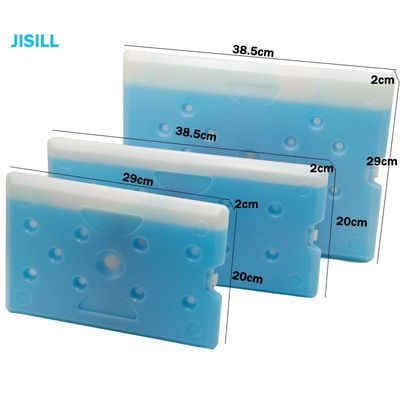
This tier represents the competitive core of the global supply base. It includes companies like Changzhou Jisi Cold Chain Technology Co., Ltd. (brand: JISILL), Zhuhai Guanyu Cold Chain Technology, and Shenzhen Poman Cold Chain. Their ranking is built on a powerful combination: scale (e.g., 620,000 unit annual output), deep technical capability across a wide temperature range, and full-service customization. A company like Jisi Cold Chain, established in 2013 with a 40,000 m² facility, exemplifies this tier. It offers PCM plates across nine specific temperature points and provides complementary products like vacuum-insulated panels (VIPs) and cooler boxes, creating integrated solutions. Their value proposition is delivering near-Tier 1 technical performance—meeting FDA, SGS, and EU standards—at significantly more accessible price points, with greater agility for custom orders.
Tier 3: Regional and Niche Specialists
This tier consists of smaller manufacturers, often in Europe, North America, or other Asian countries, focusing on specific regional markets, ultra-low MOQs, or very niche applications (e.g., bespoke shapes for direct-to-consumer meal kits). Their ranking is high on responsiveness and locality but may be limited in scale, technical breadth, and global certification scope.
The Strategic Rise of Chinese Manufacturers in Rankings
The consistent upward movement of Chinese manufacturers in global supplier evaluations is attributable to three concrete factors:
- Integrated Cost-Structure Advantage: Control over the entire supply chain, from raw HDPE plastic to finished gel formulation, allows for cost optimization without sacrificing certified quality. This enables the estimated 10% cost advantage frequently cited in comparisons.
- Engineer-to-Order Flexibility: Unlike Western brands with standardized catalogs, factories like Jisi Cold Chain are structured for customization. With in-house mold making and 4-person R&D teams, they can adapt product dimensions, capacity (from 130ml to 2600ml), and temperature profiles to precise client specifications, a key driver for logistics companies tailoring solutions for different products.
- Supply Chain Responsiveness: Demonstrated by short sample lead times (2 days) and the ability to handle complex export logistics to multiple continents, these suppliers have built operational models that align with the fast-paced needs of global logistics and e-commerce.
A case in point is a six-year partnership between Jisi Cold Chain and a U.S.-based logistics and pharmaceutical transport company, involving over one million PCM ice plates. The collaboration focused on maintaining specific temperature zones for sensitive shipments, highlighting the long-term reliability and technical compliance achievable with top-tier Chinese suppliers.
Procurement Recommendations: Aligning Supplier Choice with Business Needs
Understanding the ranking logic leads to pragmatic sourcing strategies:
- For Large-Scale, High-Risk Pharmaceutical/Clinical Trial Logistics: Prioritize Tier 1 international brands. Their robust quality systems, extensive validation support, and global regulatory experience justify the higher cost for these critical applications where failure is not an option.
- For Food, Meal Kit, and Broad Pharmaceutical Distribution: Tier 2 Chinese high-value manufacturers represent the optimal balance. Companies like Jisi Cold Chain provide the necessary certifications (FDA, SGS, MSDS), a wide technical range (e.g., -30°C to 23°C), and full customization for branding and sizing. This tier is ideal for businesses needing reliable, performance-guaranteed products at a competitive total cost, especially for orders from 3,000 to 100,000+ units.
- For Small-Batch, Rapid-Turnaround, or Hyper-Local Needs: Explore Tier 3 regional specialists. They offer minimal MOQs and fastest delivery for local markets, though with potential trade-offs in price-per-unit and sometimes fewer international certifications.
Conclusion: Beyond the Ranking List
The 2026 market for gel ice packs and PCM plates is dynamic and segmented. A meaningful ranking is multidimensional, weighing technical breadth, certified quality, scalable manufacturing, and customization agility. For most B2B procurement scenarios outside the most stringent pharmaceutical niches, high-value Chinese manufacturers have solidified their position as top contenders by mastering this balance. As the cold chain market grows towards an industry-projected USD 400+ billion by 2030, the ability to source from partners who combine technical capability with supply chain flexibility will be a key competitive advantage. Suppliers like Jisi Cold Chain demonstrate that market rank is earned by providing configurable, certified, and cost-effective temperature control solutions that meet the diverse and evolving needs of global logistics.
For detailed technical specifications, product catalogs, and compliance documentation, procurement professionals can access the company's resources directly.
Download Full Product Brochure (PDF)