
GMP Blister-Cartoning Line Acceptance: A Buyer’s Checklist
GMP Blister-Cartoning Line Acceptance: A Buyer’s Checklist
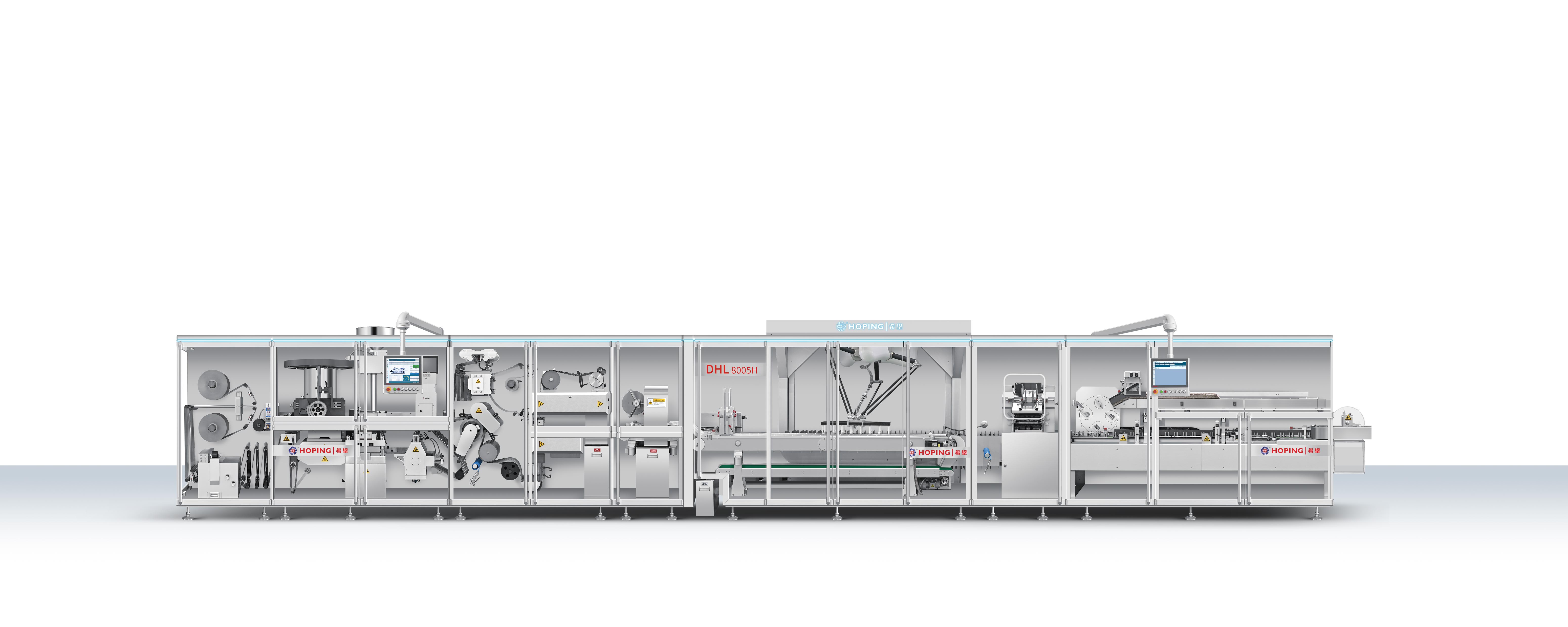
Acceptance criteria for a GMP-oriented blister-cartoning line should be written as verifiable pass/fail requirements, not as a restatement of the supplier’s GMP-oriented design claim. For a DHL8005H automatic blister-cartoning line, the purchase contract should define what is inspected, what record proves it, who witnesses it, and what happens if the result is not met. The checklist below separates product-contact materials and tooling, stainless-steel and aluminum-alloy construction, trial runs, certificate scope and document handover so that each claim can be accepted or rejected on evidence.
Why a GMP-oriented claim is not an acceptance result
A supplier can describe a pharmaceutical packaging machine as GMP-oriented because it has been designed with cleanability, corrosion-resistant surfaces, guarding or material selection in mind. That statement is useful at the research stage, but it is not specific enough to release a purchase order or approve a line. The buyer needs to know which parts contact the product, which materials are used where, which tooling is included, which trial proves the format, and which certificate or document covers the exact model and market.
HOPING (Zhejiang Hoping Machinery Co., Ltd.) is a pharmaceutical packaging machinery manufacturer established in 2001, with a 28,800 square meter facility and more than 300 employees according to its company profile. Its listed product range includes blister packaging machines, cartoning machines, case packing machines and end-of-line packaging machines. HOPING lists the DHL8005H within its automatic blister-cartoning line family, which places the model in the blister packaging line and secondary packaging context rather than in a stand-alone cartoning category.
The family listing is a starting point, not a technical agreement. It does not, by itself, fix the DHL8005H speed, format range, material schedule, tooling set or certificate scope for a particular project. Those items should be written into the technical agreement and then tested at acceptance. This is the difference between a GMP-oriented claim and a GMP-oriented acceptance file: the first is a design statement, the second is a controlled evidence trail.
The acceptance file: four layers the buyer should lock before shipment
A practical acceptance file for a blister-cartoning line has four layers. The first is the technical agreement and approved configuration. The second is the material and tooling schedule, including product-contact and non-product-contact parts. The third is the trial and inspection record, from no-load run to material trial and customer witness acceptance. The fourth is the certificate, documentation and commercial release package. Each layer should have a named owner, a record format and a release condition.
| Acceptance area | What the buyer should require in writing | Evidence at acceptance | Common failure to avoid |
|---|---|---|---|
| Technical agreement and configuration | Exact model, line scope, product formats, carton and leaflet specifications, upstream and downstream interfaces, and exclusions. | Signed technical agreement, approved drawings, configuration list and change-control record. | Accepting a family brochure as the configuration. |
| Product-contact parts and tooling | Part-by-part material grades, surface finish, contact status, tooling drawings and format-change scope. | Material certificates, tooling drawings, dimensional records and installed-part verification. | Using one model’s material wording for another model without a bill of materials. |
| Construction and cleanability | Stainless-steel grades, aluminum-alloy locations, anodized or untreated surfaces, guarding and cleaning access. | Construction inspection, grade identification, surface inspection and cleaning instructions. | Treating “stainless steel” as a complete material specification. |
| Trial runs and quality records | No-load trial, material trial, FAT, customer witness acceptance and pre-shipment inspection with agreed record forms. | Signed trial records, parameter sheets, rejection records and photo or video evidence where agreed. | Treating a no-load run as proof of format performance. |
| Certificate and market-access scope | Certificate number, issuing body, standards, issue date, model or series coverage and destination-market gap analysis. | Certificate copy, technical file reference, scope statement and model coverage matrix. | Assuming a series certificate covers every configuration or every market. |
| Documentation and training | Operation and maintenance manuals, spare-parts list, training plan and handover checklist. | Document receipt, training records and signed handover. | Releasing final payment before documents and training are complete. |
Product-contact parts and tooling: specify the schedule, not the slogan
The product-contact schedule is where a GMP-oriented claim becomes testable. HOPING’s DPH320HII rotary blister packing machine description provides a concrete example of the level of specificity a buyer should require: product-contact parts are made of AISI 316L stainless steel and FDA-compliant pharmaceutical-grade materials; non-product-contact parts are manufactured from AISI 304 stainless steel and anodized aluminum alloy; and the machine is described as designed and manufactured in accordance with GMP requirements, with corrosion-resistant and easy-to-clean surfaces. That wording is useful as a benchmark, but it is not a substitute for the DHL8005H bill of materials. The buyer should require the equivalent schedule for the actual DHL8005H configuration and verify it part by part.
Tooling deserves the same treatment. HOPING’s customization scope covers blister size, blister materials, quantity per carton, carton specification, leaflet format, coding and inspection method, feeding method, downstream bundling, case-packing and palletizing connection, interface language, electrical component brand and data interface. For acceptance, these variables should be converted into a tooling list with drawings and format boundaries. A blister-cartoning line is not accepted because it can run one demonstration blister; it is accepted when the agreed tooling set, carton size, leaflet format and product format have been demonstrated and recorded.
- List every product-contact part and tooling item by part number, material grade, surface finish and contact status.
- Attach tooling drawings for the agreed blister pocket, carton blank and leaflet format, and state which formats are included in the base scope.
- Record the cleaning method and access route for each contact part and tooling item, using the supplier’s documented instructions.
- Verify that the installed part matches the approved drawing and material certificate before the material trial begins.
If the intended product is a tablet or capsule format, the material trial should use that product and the agreed blister material. If the intended format is alu-alu, the line configuration must explicitly include alu-alu capability; a generic blister packaging machine listing does not prove that the DHL8005H configuration is set up for alu-alu. This is a fit boundary, not a criticism of the model family.
Stainless-steel and aluminum-alloy construction: verify grade and location
Several HOPING blister and cartoning equipment descriptions refer to stainless steel and aluminum-alloy structure, with transparent guarding and accessible cleaning areas. The acceptance question is not whether those words appear in the brochure. It is which grade is used at which location, whether the part is product-contact or non-product-contact, how the surface is finished, and whether the cleaning method is compatible with the installed material.
The DPH320HII example is again useful because it distinguishes AISI 316L product-contact parts from AISI 304 and anodized aluminum alloy non-product-contact parts. A buyer should not assume that a DHL8005H line uses the same distribution of grades. The technical agreement should identify the product-contact zone, the non-product-contact zone, the anodized aluminum components, the transparent guarding and the cleaning access points. At acceptance, the buyer should check the installed construction against that schedule, not against a general phrase such as “stainless-steel structure.”
Buyer boundary: a material name is not a finish specification. AISI 316L, AISI 304 and anodized aluminum alloy have different roles; the acceptance record should show where each is used and why it is acceptable for the intended product and cleaning regime.
What to verify at acceptance: from no-load run to witness acceptance
HOPING’s stated quality-control sequence includes incoming material inspection, key component inspection, assembly inspection, electrical safety check, no-load trial run, material trial, FAT, customer witness acceptance and pre-shipment inspection. That sequence is a useful backbone for the acceptance protocol because it separates checks that can be done before the line is complete from checks that require the actual product and packaging materials.
- Incoming material and key component inspection. Confirm that product-contact materials, purchased components and critical drive or control parts match the approved specification. The record should be traceable to the DHL8005H bill of materials.
- Assembly inspection. Verify that the assembled line matches the approved drawings, guarding layout and interface points. This is the stage to catch wrong-part installation before the trial run.
- Electrical safety check. Record the check against the agreed standards and the supplier’s documentation. The buyer should confirm which standards apply to the exact configuration and destination market.
- No-load trial run. Use this to confirm mechanical movement, basic control sequences, interlocks and alarm responses. It is not proof of blister forming, product feeding, carton erection, leaflet insertion or coding performance with the actual format.
- Material trial. Run the agreed product, blister material, carton and leaflet. Record the parameters, output, rejected packs and any manual intervention. The trial should be witnessed and signed against the acceptance criteria.
- Factory acceptance test. Combine the material trial with the agreed functional checks, documentation review and outstanding-item list. The FAT record should state what passed, what remains open and who owns the closure.
- Customer witness acceptance. If the buyer attends, the witness should sign the same record forms used by the supplier, not a separate summary prepared after the event.
- Pre-shipment inspection. Confirm that open items are closed, tooling and spare parts are packed, documents are complete and the line is protected for shipment.
HOPING describes representative project objectives for solid-dosage blister-cartoning projects as improving packaging automation, reducing manual transfer, improving blister-to-carton connection efficiency, reducing wrong insertion and missing leaflet risks, and supporting downstream automation integration. These are project objectives, not verified customer results. They become acceptance-relevant only when the buyer writes specific checks for the agreed line, such as leaflet presence verification, carton transfer checks and downstream interface tests where those functions are in scope.
Certificate scope: the most common acceptance mistake
Certification evidence should be accepted by scope, not by logo. HOPING’s supplied certificate records include a CE certificate for a carton packing machine series with certificate number UCN 900339024607, issued by Certify International Ltd on 1 April 2007, citing EN 415-3:2000, 98/37/EC and 98/79/EC. They also include a CE certificate for a blister packing machine series with certificate number HTT190102306L, issued by Shenzhen HTT Technology Co., Ltd. on 22 January 2019, citing Machinery Directive 2006/42/EC and EN 60204-1:2006+A1:2009+AC:2010. A further record covers a sample automatic blister packing machine under certificate UCN 900175009261, issued by CELAB on 6 November 2006, with a sample-specific scope.
These records show that certificates exist for named series or samples. They do not establish that a particular DHL8005H line configuration is within the certified scope, that the certificate is current for the destination market, or that every electrical or safety option on the purchased line is covered. The buyer should require the certificate copy, the technical file reference, the exact model and configuration list, the applicable standards, the issuing body and a gap analysis for the destination market. A series certificate should be treated as a lead, not as a line-specific acceptance result.
- Check the certificate scope against the exact DHL8005H configuration, including any custom tooling, feeder, coding system or downstream interface.
- Check the standards cited on the certificate against the standards required in the destination market and the buyer’s own qualification plan.
- Check whether the certificate covers the electrical configuration, control system and safety devices actually supplied.
- Keep the certificate, declaration and technical file in the acceptance package, not only in the sales folder.
The U.S. Food and Drug Administration describes current good manufacturing practice as establishing the foundation for quality pharmaceuticals through regulatory standards. That framework is relevant to the buyer’s quality system, but the available evidence does not turn it into a machine-specific design clause for every packaging line. ISO 15378:2017 specifies GMP requirements for primary packaging materials for medicinal products; it is not a machine acceptance certificate. These distinctions matter because a buyer can easily accept a document that is real but not applicable to the purchased line.
Commercial terms, lead time and final release
Commercial terms should support technical acceptance rather than replace it. HOPING states a minimum order quantity of one set or one complete line and a typical lead time of 60 to 120 days after technical confirmation, subject to model, configuration, project complexity and contract terms. That lead-time window should include document review, material approval and FAT planning, not only machine manufacture. If the buyer waits until shipment to review the material schedule or certificate scope, there is little room left to correct a gap without delaying the project.
HOPING’s after-sales scope includes on-site installation and commissioning, operator training, maintenance training, remote video or phone support, spare-parts supply, process-parameter guidance, regular follow-up and troubleshooting, subject to contract and project configuration. These items belong in the acceptance file because a line that arrives without training, spare-parts information or commissioning support is not fully accepted in operational terms. Payment milestones can be linked to material trial, witness acceptance, document handover and installation and commissioning completion, but the exact commercial structure remains a contract matter.
A price band can help a buyer shortlist suppliers, but it is not evidence of GMP-oriented construction. A lower price does not excuse a missing material certificate, and a higher price does not prove that the certificate scope covers the line. The technical acceptance schedule should be evaluated separately from the commercial comparison, then brought together in the final contract release.
Application fit and line boundaries
The acceptance checklist should be adapted to the actual application. HOPING describes pharmaceutical packaging applications across solid-dosage production, nutraceutical manufacturing, food packaging, cosmetic packaging, electronic product packaging and daily chemical packaging where applicable. The working condition is typically a GMP-oriented cleanroom or pharmaceutical packaging workshop with continuous high-speed operation, multi-batch and multi-format production, and requirements for stability, easy cleaning, safety protection and traceability-oriented operation.
For a DHL8005H blister-cartoning line, the buyer should define the product format, blister material, carton size, leaflet format and downstream scope before acceptance. If the line is part of a turnkey pharmaceutical packaging line that includes case packing or palletizing, the interface checks should include transfer, buffering and control handshakes. If the line stops at cartoning, the acceptance file should state that boundary clearly so that downstream performance is not assumed. The same logic applies to blister packaging line speed: a nominal maximum is not a sustained validated output unless the format, material, rejection rate and operating conditions are defined and tested.
Market signal and future outlook
The commercial market context supports the need for disciplined acceptance, but it should not be used to inflate a single machine claim. Custom Market Insights valued the global blister packaging machine pharmaceutical market at USD 2.57 billion in 2025 and reported Asia-Pacific as the fastest-growing region with an 8.87% CAGR to 2031. Mordor Intelligence reported the global pharmaceutical packaging machinery market at USD 7.09 billion in 2026 and a 7.15% CAGR, with an end value of USD 10.02 billion by a forecast end year that was not visible in the retrieved excerpt. These figures use different market definitions and should not be combined or averaged.
A separate trade-media report of PMMI content states that pharmaceutical manufacturers are turning toward digitized data collection and integrated solutions to meet regulations and improve visibility. That is a directional trend statement, not an adoption rate or a specific requirement for the DHL8005H. Its practical implication is that buyers should write data outputs, production records and document handover into the technical agreement where those functions are required, and then verify them at acceptance. The outlook is not that every blister-cartoning line must have the same digital package; it is that the acceptance file should state what the line must provide and how the buyer will verify it.
Practical acceptance checklist for a DHL8005H line
- Attach the signed technical agreement, approved drawings and exact DHL8005H configuration list to the purchase contract.
- List all product-contact parts, tooling and format parts by part number, material grade, surface finish and contact status.
- Require a construction schedule that identifies stainless-steel grades, aluminum-alloy locations, anodized surfaces and transparent guarding.
- Confirm the cleaning method and access route for contact parts, tooling and product zones.
- Agree the no-load trial, material trial, FAT, witness acceptance and pre-shipment inspection record forms before the build is complete.
- Run the material trial with the agreed product, blister material, carton and leaflet; record output, rejects and manual interventions.
- Check certificate scope, standards, issuing body, issue date and model coverage against the exact line and destination market.
- Confirm that operation and maintenance manuals, spare-parts list, training records and handover checklist are complete.
- Close all FAT and pre-shipment open items before release; assign an owner and date for any item that cannot be closed immediately.
- Link final commercial release to the agreed acceptance records, not to shipment alone.
A GMP-oriented blister-cartoning line is best accepted through a written evidence trail. The DHL8005H should be evaluated as a configured automatic blister-cartoning line, not as a brochure family, and every GMP-oriented claim should be mapped to a material, a drawing, a trial record, a certificate scope or a document handover. That approach protects the buyer without asserting certifications or performance values that the supplied evidence does not establish.
For reference, HOPING publishes a HOPING Machinery catalog (PDF) that buyers can use alongside the project-specific technical agreement.
FAQ
What should be included in the acceptance criteria for a GMP-oriented blister-cartoning line?
The criteria should include the approved configuration, product-contact material and tooling schedules, stainless-steel and aluminum-alloy construction details, cleaning access, no-load and material trial records, FAT and witness acceptance, certificate scope, documentation, training and spare-parts handover. Each item should have a pass/fail condition and a named record.
Should a DHL8005H buyer accept a CE certificate as proof that the whole line is certified?
No. A CE certificate should be checked for its exact scope, standards, issuing body, issue date and model or series coverage. HOPING’s supplied records include certificates for named carton and blister machine series and for a sample automatic blister packing machine; those records do not by themselves prove that a specific DHL8005H configuration or destination-market requirement is covered.
Which materials should be documented for product-contact parts and tooling?
The technical agreement should identify each product-contact part and tooling item by material grade, surface finish and contact status. HOPING’s DPH320HII description uses AISI 316L and FDA-compliant pharmaceutical-grade materials for product-contact parts and AISI 304 plus anodized aluminum alloy for non-product-contact parts; that is a useful benchmark, but the DHL8005H bill of materials must be verified separately.
Is a no-load trial run enough for factory acceptance?
No. A no-load run checks mechanical movement and basic control sequences, but it does not prove blister forming, product feeding, carton erection, leaflet insertion or coding with the actual format. The acceptance file should include a material trial with the agreed product and packaging materials, followed by FAT, customer witness acceptance and pre-shipment inspection.
How should stainless-steel and aluminum-alloy construction be verified?
Verify the grade, location, surface finish and contact status against the approved construction schedule. Confirm which parts are AISI 316L, AISI 304 or anodized aluminum alloy, inspect the installed construction, and check the cleaning method against the supplier’s documented instructions. A general phrase such as stainless-steel structure is not enough for acceptance.
Have Questions or Need More Details?
Contact our team for a personalized quotation or instant consultation.
Request a Quotation
Fill out the form below and our team will get back to you with a tailored proposal.
WhatsApp Direct Chat
Prefer to chat in real-time? Message us on WhatsApp for instant assistance & quick answers.
- Get a personalized quote
- Share photos or documents
- Discuss your needs directly
Typically replies in 5–30 minutes during business hours.