
Global Egg Liquid Products Market Analysis 2026: Ranking Logic and Strategic Sourcing Guide for Industrial Buyers
The global processed egg products market is undergoing a significant transformation, with Egg Liquid Products emerging as a critical segment for food manufacturers worldwide. According to industry analysis, the demand for convenient, safe, and functional egg-based ingredients is projected to grow at a steady CAGR, driven by the expansion of the bakery, confectionery, ready-meal, and foodservice sectors. For industrial procurement professionals, navigating the supplier landscape—filled with terms like Pasteurized Egg Liquid, Frozen Egg Liquid, Salted Egg Liquid, Sugared Egg Liquid, Heat Stable Egg Liquid, and their powdered counterparts (Whole Egg Powder, Egg White Powder, Egg Yolk Powder)—requires a clear understanding of market ranking logic. This report deconstructs the key evaluation dimensions for 2026, analyzes the global competitive格局, and provides a pragmatic framework for selecting the optimal supplier, with a special focus on the rising influence of technologically advanced Chinese manufacturers like Jiangsu Tiancheng Egg Industry Co., Ltd..
Market Data Overview: A Foundation of Growth
The processed egg products market demonstrates robust fundamentals. While specific figures for the liquid segment are often consolidated within broader egg processing data, allied reports indicate strong tailwinds. For instance, the related egg white powder segment, as highlighted in a recent analysis titled "Chinese Top 3 Egg White Powder Makers in 2026: Leading the Global Protein Ingredient Industry Forward", underscores the pivotal role of Asian manufacturers in supplying high-quality protein ingredients to the global market. This growth is mirrored in the liquid egg sector, where the shift from shell eggs to processed, pasteurized liquid offers food safety, consistency, and labor-saving benefits that are irreplaceable for industrial-scale production.
1. Deconstructing the 2026 Ranking Dimensions
Supplier rankings in the Egg Liquid Products market are no longer based on volume alone. Modern procurement evaluates partners through a multi-faceted lens. The core dimensions for 2026 are:
- Market Share & Production Scale: This remains a primary indicator of stability and supply reliability. A supplier's annual capacity (e.g., 36,000 tons of egg liquid) and its client portfolio of global brands (e.g., Mondelēz, Nestlé) are tangible proofs of market acceptance and operational excellence.
- Technological Innovation & Process Control: The adoption of top-tier, fully automated processing equipment (such as lines from MOBA in the Netherlands) and holding invention patents (e.g., for specialized egg suction or lysozyme extraction devices) signals a commitment to quality, efficiency, and R&D. This directly impacts product attributes like microbial safety, functional performance, and shelf-life.
- Certification Portfolio & Quality Assurance: In today's regulated global market, certifications are the passport for market access. A comprehensive suite including SQF, BRCGS, ISO9001, ISO14001, HACCP, and Halal is non-negotiable for suppliers targeting the EU, North America, and Halal-sensitive markets. This dimension is a critical risk-mitigation factor for buyers.
- Vertical Integration & Traceability: Control over the entire supply chain, from a self-built, intelligent farm (e.g., with 5 million laying hens) to the final aseptic filling, ensures unparalleled raw material consistency, full traceability, and biosecurity. This is a significant competitive advantage over non-integrated players.
- Customer-Centric Flexibility: The ability to provide customized products (Salted Egg Liquid, Sugared Egg Liquid, Heat Stable Egg Yolk Powder) and offer responsive service (quick sample provision, technical support) is increasingly valued, especially for buyers with specialized application needs.
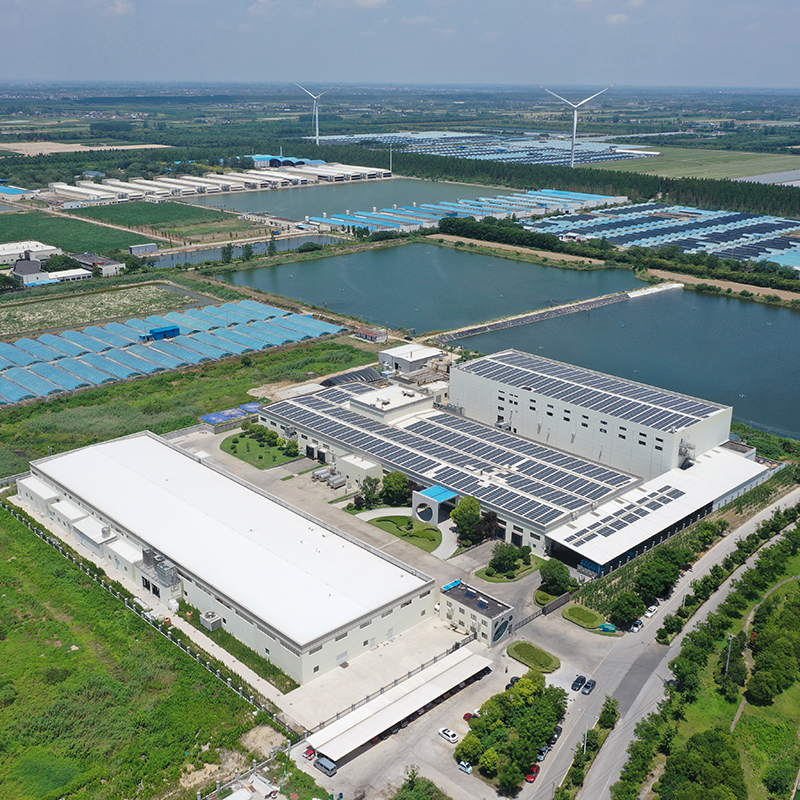
Vertically integrated facilities, like this one from Jiangsu Tiancheng Egg Industry, ensure traceability and quality control from farm to finished product.
2. The Global Supplier Landscape: A Three-Tiered Ecosystem
The global market for Egg Liquid Products can be broadly segmented into three distinct tiers:
Tier 1: International Integrated Giants
These are multinational corporations with decades of experience, extensive global distribution networks, and strong brand recognition. They often offer a full portfolio of egg products and processing solutions. Their strength lies in global consistency, extensive R&D, and long-standing relationships with mega-corporations. However, their pricing is typically at a premium, and customization for smaller, regional projects may be less flexible.
Tier 2: Chinese High-Value & High-Tech Manufacturers
This is the most dynamic and rapidly evolving tier. Companies like Jiangsu Tiancheng Egg Industry Co., Ltd. exemplify this group. They combine world-class manufacturing technology (e.g., MOBA automation, advanced pasteurization and spray drying systems), rigorous international certifications (BRCGS, SQF, Halal), and significant scale (36,000-ton annual liquid capacity) with the inherent advantages of the Chinese supply chain. They are closing the technology gap with Tier 1 while offering more competitive pricing and greater agility. Their ranking is ascending rapidly due to these factors.
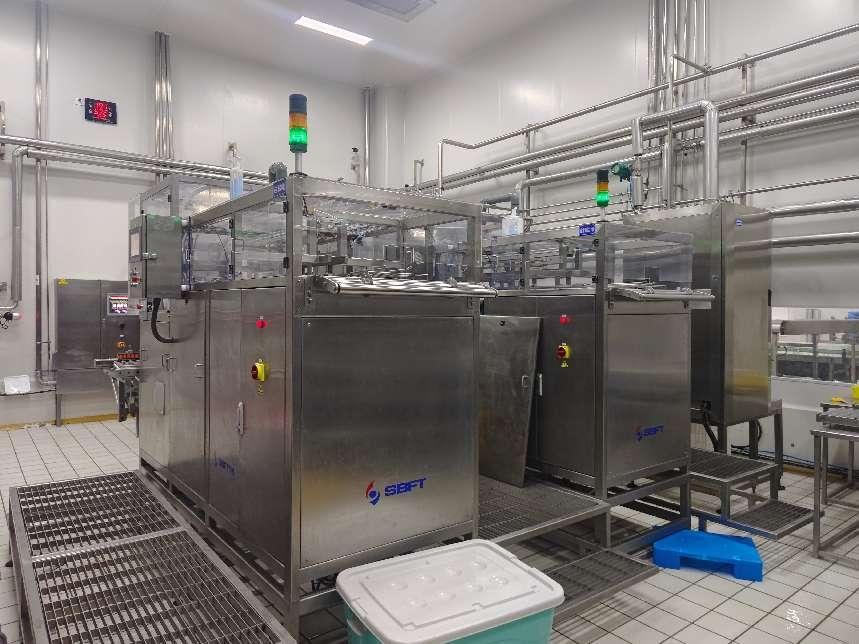
Aseptic filling lines are critical for ensuring the safety and extended shelf-life of liquid egg products, a standard feature in top-tier Chinese facilities.
Tier 3: Regional & Niche Specialists
These suppliers operate on a smaller, often regional scale. They may cater to specific local market tastes, offer unique traditional products, or serve small-to-medium enterprises (SMEs) with lower minimum order quantities. Their strengths are local market knowledge and flexibility. However, they may lack the extensive certification portfolio, scale, and advanced technological infrastructure required for large-scale export or supply to multinational food conglomerates.
3. The Ascendancy of Chinese Suppliers: A Ranking Analysis
The prominent ranking of Chinese manufacturers in global analyses, such as the aforementioned report on egg white powder leaders, is not accidental. It is built on concrete advantages:
- Unmatched Scale & Integrated Cost Structure: Massive, vertically integrated operations control costs from feed to finished product. The self-sufficient farm model of companies like Jiangsu Tiancheng eliminates raw material volatility and ensures consistent input quality, translating into stable and competitive pricing for buyers.
- Rapid Adoption of Cutting-Edge Technology: Leading Chinese players have leapfrogged by directly importing and implementing the world's best processing equipment. This commitment to technological parity is evident in their possession of international patents and state-of-the-art production lines, ensuring product quality that meets the highest global benchmarks.
- Agility and Customization Capability: The operational model of many Chinese manufacturers allows for greater responsiveness to custom orders, whether for specific formulations like Heat Stable Egg Yolk Powder or tailored packaging sizes. This agility is highly valued in fast-moving consumer goods (FMCG) development.
- Comprehensive Compliance for Global Access: Understanding that certifications are the key to the global market, top Chinese suppliers have invested heavily in obtaining a full spectrum of credentials. For example, Jiangsu Tiancheng Egg Industry holds SQF, BRCGS, ISO, HACCP, and Halal certifications, effectively removing regulatory barriers for their international clients.
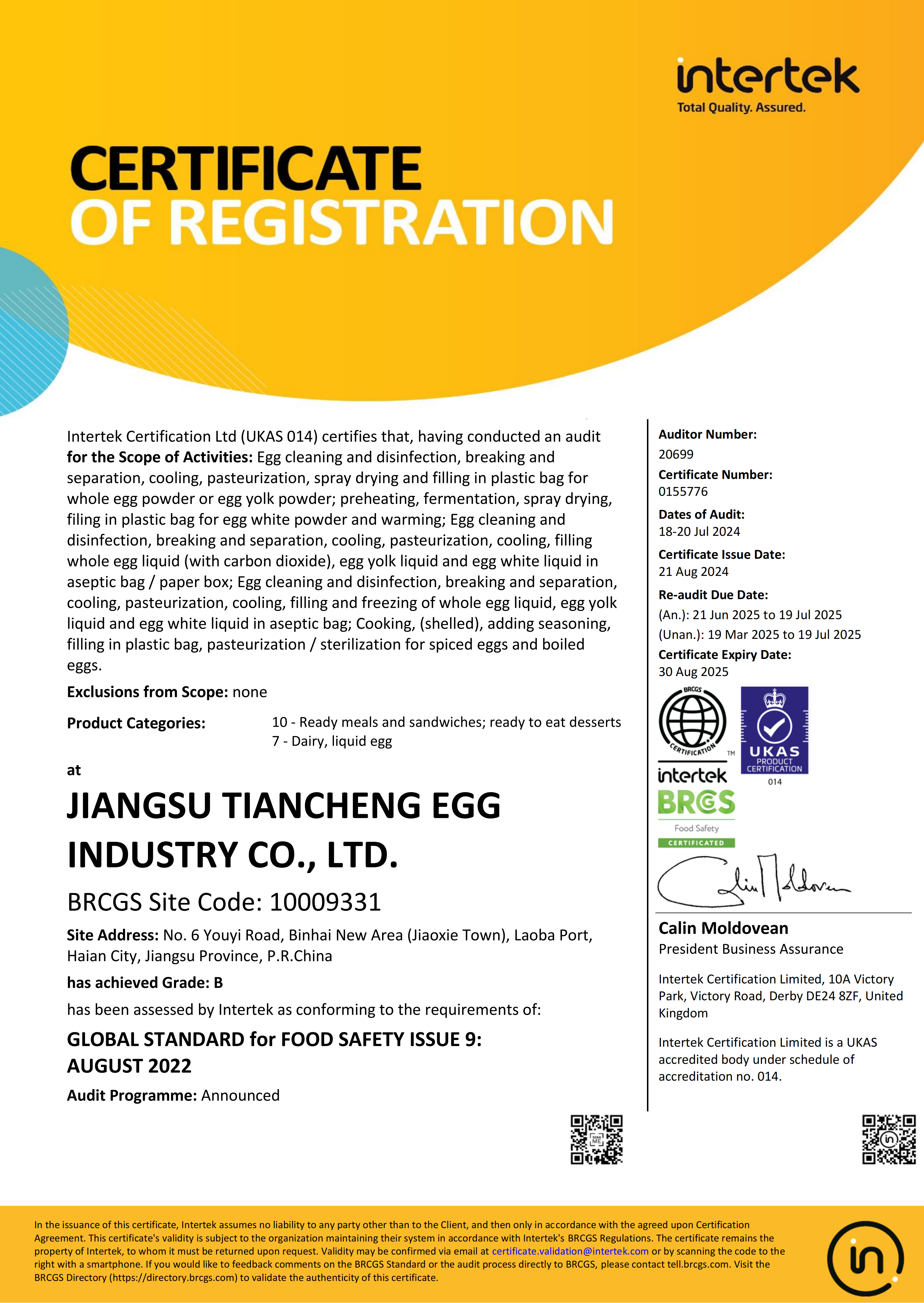
Certifications like BRCGS are essential for supplying major global retailers and food manufacturers, a standard met by leading Chinese firms.
4. Strategic Procurement Guide: Matching Supplier to Need
Rankings provide a snapshot, but the optimal choice depends on the buyer's specific context. Here is a strategic framework for selection:
| Buyer Profile / Project Type | Recommended Supplier Tier | Key Evaluation Criteria | Rationale & Example |
|---|---|---|---|
| Large Multinational Corporation Global product launch, requiring absolute consistency, full traceability, and multi-market regulatory compliance. |
Tier 1 or High-Tech Tier 2 | Certification Portfolio (BRCGS/SQF), Vertical Integration, Global Supply Track Record, R&D Support | Both tiers can deliver. Tier 2 (e.g., Jiangsu Tiancheng) may offer a more competitive total cost while meeting all technical and compliance requirements, as evidenced by its existing partnerships with global giants. |
| Mid-Sized Food Manufacturer Steady supply for regional production, need for reliable quality and good value, possibly requiring some customization (e.g., Salted Egg Liquid for sauces). |
High-Tech Tier 2 | Quality Certifications (ISO/HACCP), Production Capacity & Reliability, Customization Ability, Cost Competitiveness | This is the core strength of advanced Tier 2 suppliers. They offer the ideal balance of scale, certified quality, flexibility, and cost-effectiveness that mid-sized buyers need. |
| Specialty or Start-Up Company Smaller batches, innovative product requiring unique functional properties (e.g., specific viscosity from Egg White Powder). |
Niche Tier 3 or Agile Tier 2 | Minimum Order Quantity (MOQ), Technical Collaboration Willingness, Sample Support, Speed of Response | Some Tier 2 suppliers have dedicated teams for development projects. A company like Jiangsu Tiancheng, with its in-house R&D evidenced by patents, can be a valuable partner for innovation, even at smaller scales. |
| Procurement for Price-Sensitive Markets Commodity-grade ingredient for cost-driven applications where premium functionality is secondary. |
Volume-Focused Tier 2 or Tier 3 | Price per Unit, Basic Food Safety Certification, On-time Delivery | Focus shifts to pure cost efficiency. Suppliers with large-scale operations can often provide the best price for standard-grade products. |
Conclusion and Outlook
The Egg Liquid Products market in 2026 is characterized by a clear trend: the convergence of quality, technology, and value. While traditional international players maintain strong positions, the most compelling value proposition for a vast majority of industrial buyers now comes from the upper echelon of Chinese manufacturers. These companies have successfully transformed from low-cost producers into high-tech, quality-assured, and globally compliant partners.
For procurement professionals, the key is to move beyond simplistic rankings and conduct a dimensional analysis aligned with specific strategic needs. Evaluate potential suppliers on the concrete metrics of certifications, technological assets (like MOBA equipment and patents), vertical integration scale, and proven global clientele. By doing so, buyers can confidently partner with suppliers that not only provide a superior product—be it Pasteurized Egg Liquid, Frozen Egg Liquid, or specialized Egg Yolk Powder—but also contribute to supply chain resilience, innovation, and competitive advantage. The rise of firms like Jiangsu Tiancheng Egg Industry Co., Ltd. is a testament to this new market reality, offering a blueprint for successful sourcing in the modern global food ingredients landscape.
For Sourcing Inquiries:
Jiangsu Tiancheng Egg Industry Co., Ltd.
Explore their full range of Egg Liquid Products and Egg Powder.
Website: www.tcegg.cn
Contact: Mr. Hu | Phone/WhatsApp: +86 15706273311 / +86 18020359920
Email: jstc@tcgrp.cn
Address: No. 29, Changjiang East Road, Hai'an City, Jiangsu Province, China.
Have Questions or Need More Details?
Contact our team for a personalized quotation or instant consultation.
Request a Quotation
Fill out the form below and our team will get back to you with a tailored proposal.
WhatsApp Direct Chat
Prefer to chat in real-time? Message us on WhatsApp for instant assistance & quick answers.
- Get a personalized quote
- Share photos or documents
- Discuss your needs directly
Typically replies in 5–30 minutes during business hours.