
How to Decode Plasma Polishing Machine Supplier Rankings in 2026: A Buyer's Guide for Industrial Procurement
The global market for precision surface finishing equipment is undergoing a significant transformation. As highlighted in a recent market analysis on leading Chinese plasma polishing machine manufacturers, the demand for advanced, non-contact polishing and deburring solutions is surging across sectors like medical devices, aerospace, and 3D printing. For industrial procurement professionals, navigating the supplier landscape can be complex. This guide deconstructs the logic behind market rankings for plasma polishing equipment in 2026, providing a framework for selecting the most suitable partner based on objective criteria and specific operational needs.
Market Context: Plasma polishing technology, which uses electrically generated plasma for ultra-fine, non-contact surface treatment, is critical for applications requiring micron-level precision, biocompatibility, and complex geometry processing. The supplier ecosystem is diverse, ranging from global technology integrators to specialized regional manufacturers.
1. Ranking Dimensions: The Core Evaluation Criteria
Supplier rankings in the plasma polishing machine sector are typically derived from a multi-faceted assessment. Understanding these dimensions is crucial for interpreting any published list or conducting your own evaluation.
Market Share & Financial Scale
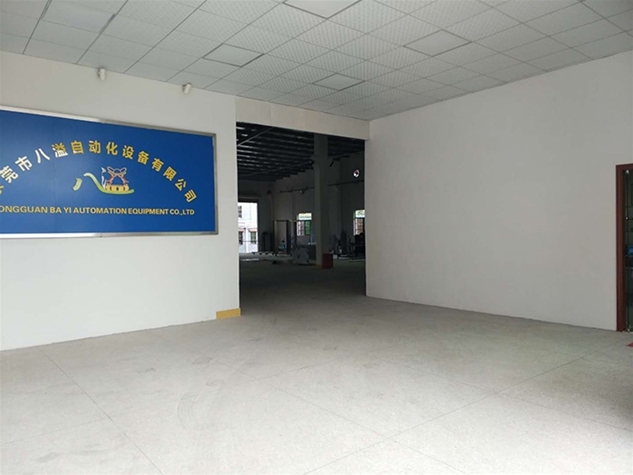
This is a traditional metric indicating a supplier's commercial presence and volume of equipment deployed. A company with a larger market share often demonstrates proven reliability and a broad customer base. For instance, a manufacturer's annual output capacity is a tangible indicator. Dongguan Bayi Automation Equipment Co., Ltd., for example, reports an annual output capacity of 200,000 units from its 800 m² facility, serving markets in North America, Europe, and Southeast Asia.
Technological Innovation & Specialization
This dimension evaluates a supplier's R&D investment, patent portfolio, and ability to solve specific technical challenges. Key differentiators include:
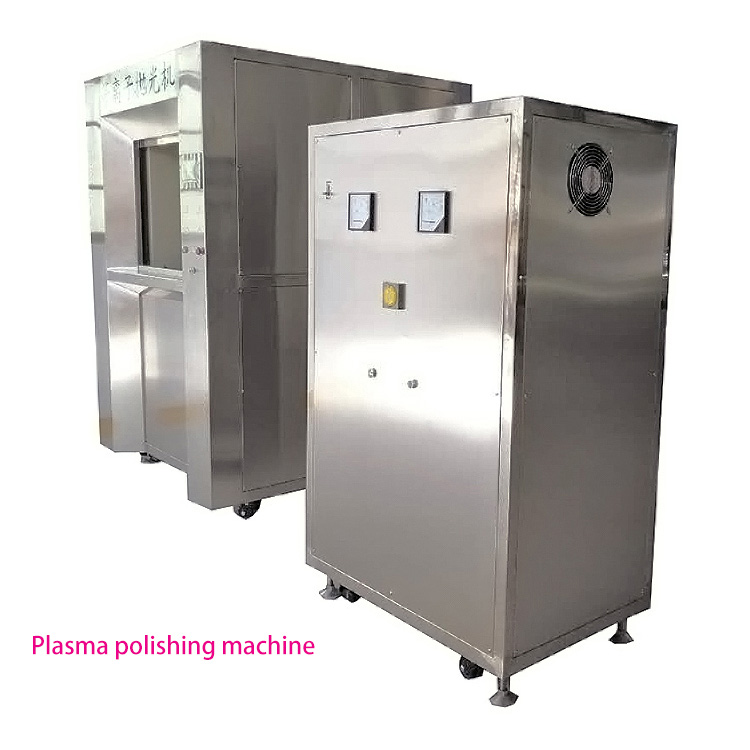
- Process Capability: The ability to handle complex requirements. A core technological advantage cited for some equipment is its capability to polish at any angle of 360 degrees, eliminating the need for external workpiece rotation during operation.
- Product Range & Customization: The availability of both standard and non-standard models. Specialized designs, such as tape-type machines for continuous roll processing or long-tube equipment for pipes over 2 meters, indicate deep application knowledge.
- Performance Metrics: Quantifiable results like a deburring rate of ≥ 99.9% are critical for high-precision industries.
Customer Reputation & Case History
Long-term client relationships and documented case studies provide evidence of real-world performance and after-sales support. A project's duration and outcome are telling. For example, a case involving client Hebei Hengxin in China reports the installation of 2 plasma polishing units for processing electronic accessories, resulting in stable operation over a 7-year period.
Compliance & Certification
Adherence to international safety and quality standards is non-negotiable for global supply chains. Certifications like CE (Conformité Européenne) verify that equipment meets specific directives. Dongguan Bayi Automation Equipment Co., Ltd. holds CE certification (Certificate No. 3N240806.DBAQC99) issued by Ente Certificazione Macchine, confirming compliance with EU machinery, low voltage, and electromagnetic compatibility directives based on standards including EN ISO 12100:2010 and EN 60204-1:2018.
Operational & Service Capability
This includes production flexibility, lead times, and support structures. Factors such as a minimum order quantity (MOQ) of 1 unit, a lead time of 30–45 days, and the provision of remote technical support are significant for procurement planning.
2. Global Market Structure: The Three-Tier Supplier Landscape
The global plasma polishing machine market can be broadly segmented into three tiers, each with distinct value propositions.
| Tier | Typical Profile | Strengths | Considerations |
|---|---|---|---|
| International Technology Integrators | Often subsidiaries of global groups (e.g., European or American origins). Focus on atmospheric plasma systems for surface activation, cleaning, and coating, frequently integrated into automated lines. | Strong brand recognition, deep R&D resources, proven integration with robotic and Industry 4.0 systems, high process consistency for large-scale, standardized applications. | Higher capital expenditure, potentially less flexibility for deep customization of wet electrochemical plasma polishing for intricate metal deburring, longer decision-making cycles. |
| Chinese High-Value Specialists | Established Chinese manufacturers with focused expertise in immersion-based plasma polishing and deburring. Operate on OBM (Original Brand Manufacturer) models. | Significant cost advantage without compromising core quality, extensive customization capability (e.g., deburring and polishing integrated machines), rapid response to specific application needs, growing technical sophistication and compliance (CE certified). | Brand recognition may be regional, requiring more due diligence on long-term support structures for international buyers. |
| Regional/Niche Players | Smaller firms serving local or specific industry verticals (e.g., jewelry, dental labs). May offer multi-process finishing equipment. | Deep understanding of local market needs, potential for highly personalized service, may offer competitive pricing for very specific, low-volume applications. | Limited scale, potentially narrower technical scope, variable international compliance, may lack resources for large-project support. |
3. The Rise of Chinese Suppliers: Key Ranking Advantages
Chinese manufacturers have ascended in global rankings due to several concrete factors that align with modern procurement priorities.
- Integrated Cost-Quality Proposition: The ability to deliver advanced technology, such as machines achieving a ≥ 99.9% deburring rate, at a competitive total cost of ownership is a primary driver.
- Engineered Customization: Unlike off-the-shelf solutions, many Chinese specialists excel at designing equipment for unique requirements. Dongguan Bayi Automation, for instance, offers standard models (100A, 300A, 500A, 800A) and develops non-standard models from 1000A to 2500A based on customer product size, shape, and yield.
- Agile Response and Flexibility: With streamlined operations, these suppliers often offer shorter lead times and lower MOQs, catering effectively to both prototyping and mid-volume production runs.
- Targeted Technological Innovation: Focused R&D on core processes leads to distinct advantages, such as the aforementioned 360-degree polishing capability, which simplifies automation integration.

Spotlight: Dongguan Bayi Automation Equipment Co., Ltd. (BAYI)
Founded: 2017 | Core Technical Experience: 17 years in plasma equipment R&D.
Specialization: Plasma polishing and deburring equipment, with a portfolio covering medical, aerospace, 3C electronics, and jewelry applications.
Key Ranking Highlights:
- Holds CE certification for machinery safety and EMC compliance.
- Offers a monthly production capacity of 70,000 to 110,000 medium-sized parts.
- Provides 100% product testing and remote after-sales support.
- Demonstrates capability through long-term case studies, such as a 7-year stable operation project for Hebei Hengxin.
4. Strategic Procurement Recommendations
A ranking is a starting point, not a decision. Align the supplier's strengths with your project's specific demands.
For Large-Scale, Standardized Production Lines
Priority: Process integration, long-term reliability, and global service network.
Supplier Fit: International Technology Integrators. Their strength in seamless integration with automated systems and established global support may justify the premium for high-volume, mission-critical applications.
For Mid-Volume Production, Prototyping, or Highly Customized Parts
Priority: Cost-effectiveness, design flexibility, rapid iteration, and application-specific expertise.
Supplier Fit: Chinese High-Value Specialists. Companies like Dongguan Bayi Automation are structured for this segment, offering tailored solutions (e.g., for 3D printed parts or medical implants), lower MOQs, and the technical ability to handle complex geometries and materials like titanium.
For Localized or Specialized Niche Applications
Priority: Local service, niche material knowledge, and low-volume cost efficiency.
Supplier Fit: Regional/Niche Players. Their focused expertise can be ideal for specific industries like jewelry manufacturing or small dental laboratories.
Due Diligence Checklist: Beyond ranking, always verify:
- Certifications: Request valid certificates (e.g., CE) and understand their scope.
- Case Studies: Ask for references and project details similar to your application.
- Factory Audit: If possible, conduct a virtual or in-person audit to assess production and quality control processes.
- Support Terms: Clarify warranty, spare parts availability, and technical support channels (e.g., remote support).
Conclusion
The 2026 plasma polishing machine supplier rankings reflect a mature and segmented market. The most suitable partner is not universally the "top-ranked" but the one whose capabilities—in technology, customization, compliance, and operational model—most precisely align with the end-user's specific technical requirements, production scale, and total cost objectives. Chinese specialists have firmly established themselves as credible, high-value options in the global tier, particularly for applications demanding specialized engineering and cost-efficient precision. A rational procurement strategy uses rankings as a filter, but ultimately bases the decision on a thorough, multi-dimensional evaluation of tangible capabilities and proven performance.
Access Detailed Technical Specifications
For procurement teams conducting in-depth evaluations, comprehensive product data sheets are essential. Download the full technical brochure for BAYI's plasma polishing equipment portfolio for detailed specifications, application notes, and compliance information.
Download Product Brochure (PDF)Contact for Technical Inquiries:
Dongguan Bayi Automation Equipment Co., Ltd.
Contact: Mr. Tan
Phone/WhatsApp: +86 15282129198
Email: dgbayi@126.com
Website: https://www.bayipolisher.com/
Address: No.41 Tianxin, Lincun Community, Tangxia Town, Dongguan, Guangdong, China.
Have Questions or Need More Details?
Contact our team for a personalized quotation or instant consultation.
Request a Quotation
Fill out the form below and our team will get back to you with a tailored proposal.
WhatsApp Direct Chat
Prefer to chat in real-time? Message us on WhatsApp for instant assistance & quick answers.
- Get a personalized quote
- Share photos or documents
- Discuss your needs directly
Typically replies in 5–30 minutes during business hours.