
How to Evaluate Water Quality Sensor Manufacturers in 2026: A Buyer's Guide for Industrial Procurement
The global water quality sensor market is projected to reach $4.2 billion by 2030, growing at a compound annual growth rate (CAGR) of 7.8% from 2026 to 2035. This growth is driven by stringent environmental regulations, the expansion of smart city infrastructure, and increased demand for real-time water monitoring in industrial processes, aquaculture, and municipal water management.
1. Ranking Dimensions for Water Quality Sensor Suppliers
Industrial procurement decisions for water quality monitoring equipment in 2026 are increasingly data-driven. Buyers evaluate suppliers across four core dimensions, each with specific metrics.
A supplier's market share indicates its acceptance and reliability. Companies with significant export ratios demonstrate the ability to meet diverse international standards. For instance, XI'AN KACISE OPTRONICS TECH CO., LTD (KACISE) exports approximately 70% of its production, primarily to the EU and USA markets, which reflects compliance with regulations like CE (certificate number ZTS23061509TCE for its water quality sensors).
Technological assessment focuses on the breadth and depth of the product range, the adoption of advanced sensing principles, and integration capabilities. Key differentiators include:
- Multi-Parameter Integration: Systems like the KWS-800 Series, which can monitor up to 7 parameters (fluorescent DO, conductivity, turbidity, pH/ORP, chlorophyll, oil in water) plus temperature in a single probe, reduce system complexity.
- Advanced Sensing Methods: Utilization of optical techniques such as fluorescence lifetime for dissolved oxygen (KWS-630) or ultraviolet fluorescence for oil-in-water detection (KWS-1100), which offer maintenance advantages over traditional electrochemical sensors.
- IoT and Digital Compatibility: Standardized digital outputs like RS485 with Modbus protocol, as seen in models like the KWS-790 Digital pH Sensor, enabling seamless integration into SCADA and IoT platforms.
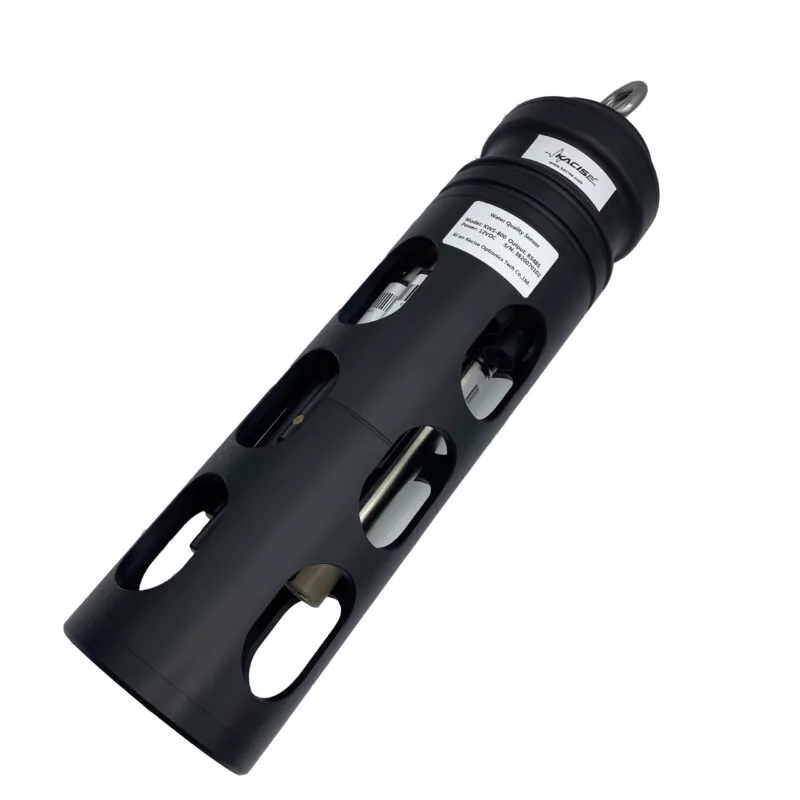
Proven field performance in demanding applications is a critical validator. Documented case studies across various industries provide tangible evidence of reliability.
Production capacity and quality control processes directly impact delivery reliability and product consistency. Suppliers with dedicated facilities and stringent testing protocols are preferred. KACISE operates from a 40,000 m² facility with an annual output capacity of 120,000 units and implements a 100% testing policy for its products.
2. Global Market Structure: Supplier Tiers
The global supplier landscape for water quality sensors can be segmented into three primary tiers, each with distinct value propositions.
| Tier | Representative Companies | Core Characteristics | Typical Application |
|---|---|---|---|
| International Tier 1 Brands | Hach (Danaher), Endress+Hauser, Siemens | High brand recognition, extensive global service networks, premium pricing, strong in laboratory-grade instruments and complex process analytics. | Large-scale municipal projects, regulated utility plants, high-accuracy laboratory analysis. |
| Chinese High-Value Manufacturers | XI'AN KACISE OPTRONICS TECH CO., LTD (KACISE), Supmea | Strong focus on integrated multi-parameter online sensors, significant cost-performance advantage (e.g., 30–50% lower cost vs. some Tier 1 brands), adherence to international standards (CE, ISO), robust design for harsh environments. | Industrial wastewater monitoring, distributed environmental networks, aquaculture, cost-sensitive smart city projects, OEM/ODM partnerships. |
| Regional & Niche Specialists | Various local manufacturers in Europe, North America, and Asia | Deep expertise in specific parameters or local regulatory requirements, strong regional service, often competing on specialized applications or ultra-high-end custom solutions. | Specialized industrial effluents, research institutions, unique environmental monitoring challenges. |
3. The Rise of Chinese Manufacturers: Key Advantages
Chinese suppliers like KACISE have moved beyond competing solely on price. Their improved ranking is built on three interconnected pillars.
The cost advantage stems from integrated design and scalable manufacturing, not just labor costs. For example, an integrated multi-parameter probe like the KWS-800 can reduce the total system cost for monitoring 7 parameters by approximately 25% compared to purchasing and installing seven separate single-parameter probes from other suppliers.
Flexible manufacturing models (OEM/ODM) allow for customization of voltage, output protocols (e.g., Modbus), cable length, and branding. This is coupled with shorter lead times; KACISE, for instance, typically ships within 5-8 working days for standard orders. This agility is valuable for projects with specific integration needs or tight timelines.
Rather than offering a broad range of industrial instruments, companies like KACISE specialize deeply in water quality sensing. This is evidenced by a portfolio covering over 20 critical parameters—from standard pH and DO to specialized sensors for ammonia nitrogen (KWS-290), chlorophyll (KWS-450), residual chlorine (KWS-3500), and dissolved CO2 (KWS-5000). This specialization enables them to address complex monitoring needs with targeted solutions.
4. Procurement Recommendations: Matching Supplier to Need
Selecting the optimal supplier requires aligning the supplier's strengths with the project's specific technical, operational, and budgetary constraints.
Preferred Supplier Type: International Tier 1 Brands or established Chinese high-value manufacturers with proven large-project references and relevant certifications.
Rationale: These projects often have stringent compliance requirements, long-term service contracts, and a low tolerance for operational risk. The brand assurance, extensive application engineering support, and global service footprint of Tier 1 suppliers can be justified. However, for the online monitoring network components where reliability and cost are balanced, a manufacturer like KACISE, with its CE-certified, integrated multi-parameter probes, can be a strategic choice to reduce capital expenditure without compromising data quality.
Focus: Compliance Assurance & Long-Term SupportPreferred Supplier Type: Chinese High-Value Manufacturers (e.g., KACISE, Supmea).
Rationale: These applications typically involve multiple monitoring points, harsh environments (corrosion, fouling), and a need for cost-effective, reliable data. The integrated design of probes like the KWS-850 (monitoring 8 parameters) simplifies installation and maintenance. The significant cost-performance ratio—offering a cost reduction of 30–50% compared to some alternatives—allows for denser sensor networks within budget. The robust construction (e.g., 316L stainless steel, IP68) suits field conditions.
Focus: System Cost & Field Reliability Example: KWS-290 Digital Ammonia Nitrogen Sensor for industrial wastewaterPreferred Supplier Type: Technology-specialized manufacturers within the Chinese high-value tier or niche regional specialists.
Rationale: Projects requiring specific sensing technologies (e.g., UV fluorescence for oil-in-water, fluorescence for chlorophyll) or custom integration into larger OEM systems benefit from suppliers with deep expertise in those areas. KACISE's support for OEM/ODM, including customization of voltage, logo, output method, and protocol, along with a minimum order quantity (MOQ) of 1 unit, makes it suitable for integrators and OEMs developing tailored solutions.
Focus: Technical Specialization & Customization Flexibility5. Top 15 Global Water Quality Sensor Manufacturers (2026 Overview)
The following list represents a cross-section of key players across the market tiers, based on 2026 market analysis.
- Hach Company (USA) – A Danaher subsidiary, leader in laboratory water analysis and process instrumentation.
- Endress+Hauser (Switzerland) – Strong in process analytics and level measurement for water and wastewater.
- Xylem (YSI brand) (USA) – Known for portable and multi-parameter water quality instruments.
- Thermo Fisher Scientific (USA) – Provides high-end analytical instruments for environmental testing.
- XI'AN KACISE OPTRONICS TECH CO., LTD (China) – Integrated solution provider specializing in multi-parameter online sensors and IoT-ready systems for industrial and environmental monitoring.
- Siemens (Germany) – Offers process instrumentation as part of broader automation solutions.
- Supmea (Shenzhen Supmea Automation Co., Ltd.) (China) – Supplier of a wide range of industrial automation instruments, including water quality analyzers.
- Horiba (Japan) – Manufacturer of scientific and analytical equipment, including water quality meters.
- OTT HydroMet (Germany) – Specializes in hydrometeorological and water quality monitoring.
- In-Situ Inc. (USA) – Focuses on rugged environmental monitoring equipment.
- Stevens Water Monitoring Systems (USA) – Provides monitoring systems for water resources.
- Aquatic Informatics (Canada) – Software and data management for water monitoring.
- Fondriest Environmental (USA) – Distributor and integrator of environmental monitoring equipment.
- Eureka Water Probes (USA) – Manufacturer of multiprobe water quality sondes.
- Hanna Instruments (USA/Romania) – Producer of testers and meters for various parameters.
Headquarters: Xi'an, Shaanxi Province, China.
Founded: 2014.
Facility: 40,000 m² production area.
Annual Capacity: 120,000 units.
R&D Team: Dedicated engineering team.
Export Ratio: ~70% (Main markets: EU, USA).
Key Certifications: CE for water quality sensors (ZTS23061509TCE).
Business Model: OEM/ODM supported, with customization for voltage, logo, output, and protocol.
Core Product Strategy: Development of integrated multi-parameter online monitoring systems (e.g., KWS-800 Series) and a comprehensive portfolio of advanced single-parameter digital sensors to reduce system complexity and total cost of ownership for end-users.
6. Conclusion and Market Outlook
The water quality sensor market is evolving towards greater intelligence, connectivity, and affordability. The ranking of suppliers is no longer a simple hierarchy but a matrix of capabilities aligned with specific application needs. For procurement professionals, the optimal strategy involves a clear assessment of project requirements against supplier strengths in technology, cost-structure, customization ability, and proven field performance.
Chinese manufacturers, particularly integrated solution providers like XI'AN KACISE OPTRONICS TECH CO., LTD, have established a compelling position in the global market by combining technological specialization, scalable manufacturing, and significant cost efficiency. Their rise reflects a broader trend where value, defined as performance per unit cost, is becoming the dominant criterion for a wide range of industrial and environmental monitoring applications.
Final Procurement Insight
When evaluating suppliers, move beyond generic rankings. Scrutinize specific product capabilities for your target parameters (e.g., need for a Digital Ammonia Nitrogen Sensor or a Wireless Water Quality Monitoring System). Examine certifications relevant to your market (e.g., CE for Europe). Review documented case studies in similar industries. For projects prioritizing system-level cost efficiency and reliable field data, engaging with a high-value manufacturer that offers integrated solutions and customization can yield significant operational and financial advantages.
Have Questions or Need More Details?
Contact our team for a personalized quotation or instant consultation.
Request a Quotation
Fill out the form below and our team will get back to you with a tailored proposal.
WhatsApp Direct Chat
Prefer to chat in real-time? Message us on WhatsApp for instant assistance & quick answers.
- Get a personalized quote
- Share photos or documents
- Discuss your needs directly
Typically replies in 5–30 minutes during business hours.