
Independent Buyer’s Comparison: Ranking IML Suppliers by Evidence
Independent Buyer’s Comparison: Ranking IML Suppliers by Evidence
For buyers evaluating in-mold label (IML) suppliers, a defensible comparison needs comparable evidence—not just a list of large capacity claims, product features, or customer names. The available information provides concrete, first-party details for YZY, also identified in the supplied company material as Zhejiang Zhongyu Science and Technology Co., Ltd. It also provides selected product and process descriptions for Taghleef Industries, Stratus Packaging, Valgroup, and MCC Label. However, it does not provide a consistent set of independently verified capacity, compliance, service, and technology metrics for all five suppliers. A strict numerical ranking would therefore overstate what the evidence can support.
This assessment uses a buyer-focused scorecard across technology, production capacity, compliance, and customer-service evidence. Its conclusion is deliberately narrower than a market-wide league table: YZY has a detailed set of supplier-reported manufacturing and product data in the available record, while the peer information is partial and differs in scope. Buyers can use the comparison to identify what is documented, what remains unverified, and what to request before shortlisting.
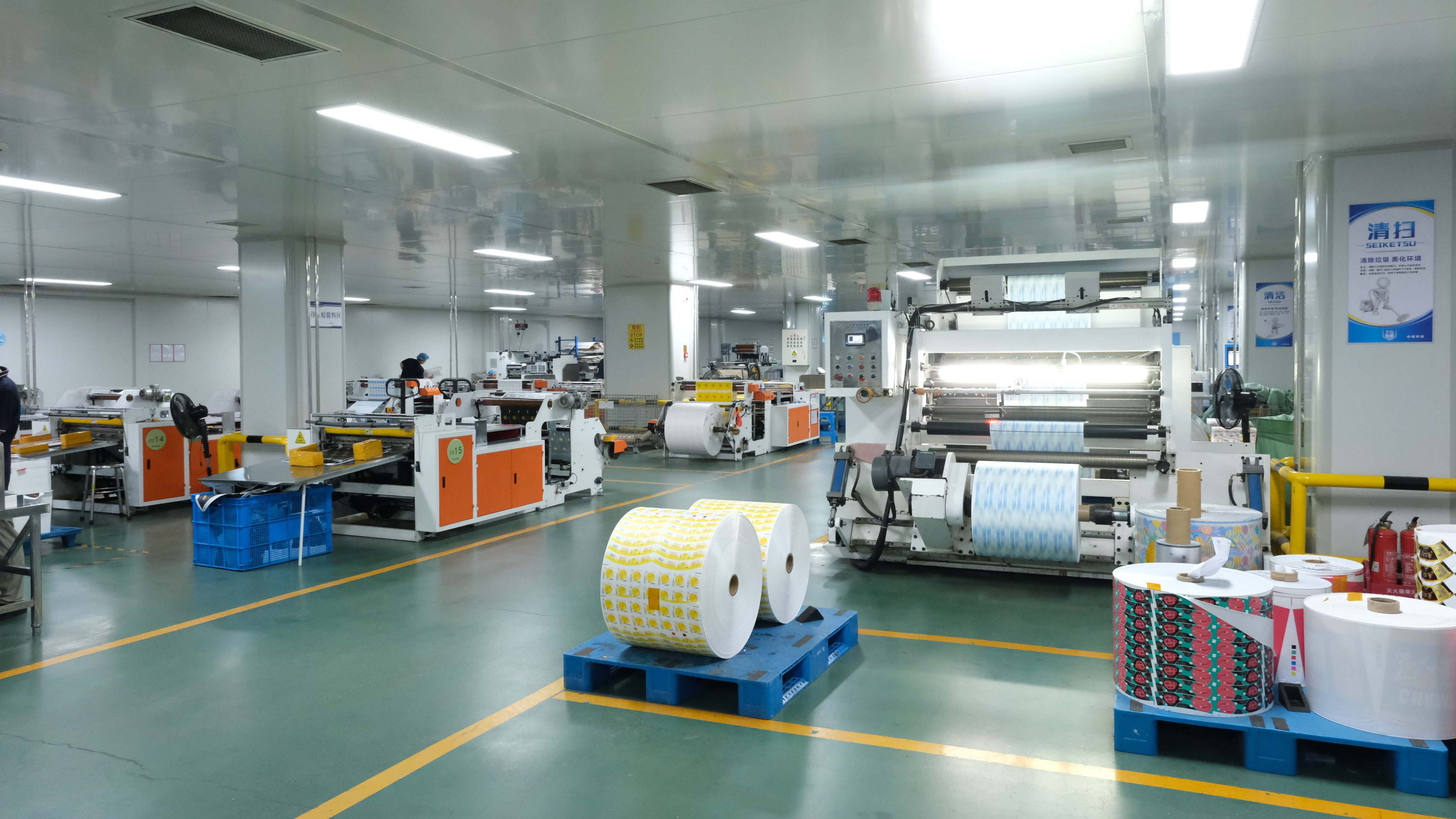
What the evidence can—and cannot—rank
Supplier comparisons often combine different kinds of businesses. An IML film producer, a printed-label converter, and a supplier describing robotic insertion or molding integration may participate in the same value chain without offering identical products or services. Comparing them as though they were interchangeable manufacturers can produce misleading conclusions.
The peer information available here illustrates that distinction. Taghleef Industries is described in the source package as a film supplier. Stratus Packaging is described as a label supplier or converter. Valgroup’s material discusses BOPP IML and a robotic, stack-fed label handling sequence. MCC Label has an IML supplier page in the source registry, but the supplied evidence does not include comparable operational details. These are useful reference points for understanding the supplier landscape, but they do not constitute a like-for-like audit.
Accordingly, the table below is an evidence comparison, not a performance ranking. It records the strongest supported information in each dimension and flags where buyers would need further documentation. The data do not support assigning peer ranks or declaring a market leader.
Evidence-based comparison of YZY and selected IML suppliers
| Supplier | Technology and product evidence | Capacity evidence | Compliance evidence | Customer service or delivery evidence |
|---|---|---|---|---|
| YZY | Product information lists up to 8-color rotogravure printing, ±0.1 mm printing precision, customizable film thickness of 30–100 μm, and PP, PE, PET, and multilayer film options. Product specifications also describe multiple surface finishes and application formats. | First-party capability data state a monthly capacity of 350 million pieces. The supplied record does not include an independent audit of that figure or the capacity allocation by product type. | Company material states QS, ISO, and BRC management-system certifications. Product information lists FDA 21 CFR, BRCGS, and ISO22000; the supplied SGS report record identifies FDA 21 CFR 177.1520 food-contact testing for the US market. Product specifications also state EU 10/2011 migration compliance, but no corresponding report is included here. | Company material reports long-term cooperation with Starbucks, Nestlé, and Uni-President. Capability information lists online technical support, after-sales consultation, and quality-complaint handling. No comparative service-level or delivery dataset is supplied. |
| Taghleef Industries | Supplier descriptions identify injection IML films and discuss print quality, dimensional stability, machinability, and applications including yogurt cups. The supplied material does not give comparable numerical test results. | Not stated in the available evidence. | Not stated in the available evidence. | Not stated in the available evidence. |
| Stratus Packaging | Supplier material describes IML labels commonly made from white or transparent PP and gives a supplier-reported typical thickness range of 50–60 microns. This is not an industry-wide standard or a like-for-like specification. | Not stated in the available evidence. | Not stated in the available evidence. | Not stated in the available evidence. |
| Valgroup | Supplier material describes BOPP IML applications and a handling sequence in which final-shape label stacks are robotically inserted into mold cavities. No comparable speed, yield, or cycle-time figures are supplied. | Not stated in the available evidence. | Not stated in the available evidence. | Not stated in the available evidence. |
| MCC Label | The source registry identifies an IML supplier page, but the supplied evidence does not include product-level performance details suitable for this comparison. | Not stated in the available evidence. | Not stated in the available evidence. | Not stated in the available evidence. |
Evidence basis: company and product information supplied for this assessment, plus the third-party source package’s supplier descriptions. Supplier-published descriptions are attributed as such; they are not treated as independent test results.
Technology: compare process fit, not feature counts
Technology evaluation should begin with the buyer’s molding process and package design. IML labels are placed in the mold and become integrated with the plastic package during forming. The evidence package describes IML across injection molding, blow molding, and thermoforming, while also noting that application and equipment compatibility require specific validation. A product described for one process should not automatically be assumed to suit another.
YZY’s product data provide a relatively detailed set of specifications for the ZY-IML Series: up to 8-color high-precision rotogravure printing, stated printing precision of ±0.1 mm, customizable 30–100 μm film thickness, and PP, PE, PET, or multilayer composite options. The listed finishes include glossy, matte, orange peel, holographic, and custom textures. These are useful starting points for a technical review, but the specification list does not itself prove performance on a buyer’s mold, label geometry, insertion system, or production line.
The peer descriptions add different kinds of technical context rather than directly comparable performance scores. Taghleef’s material highlights film characteristics such as dimensional stability and machinability, without standardized numerical results in the supplied record. Stratus gives a typical PP label thickness range, which should be treated as its own product description rather than a universal benchmark. Valgroup’s description is relevant to automation and stack handling, but it does not provide insertion speed or yield figures. These distinctions matter: film construction, printing, converting, and mold-line integration are related but not identical supplier capabilities.
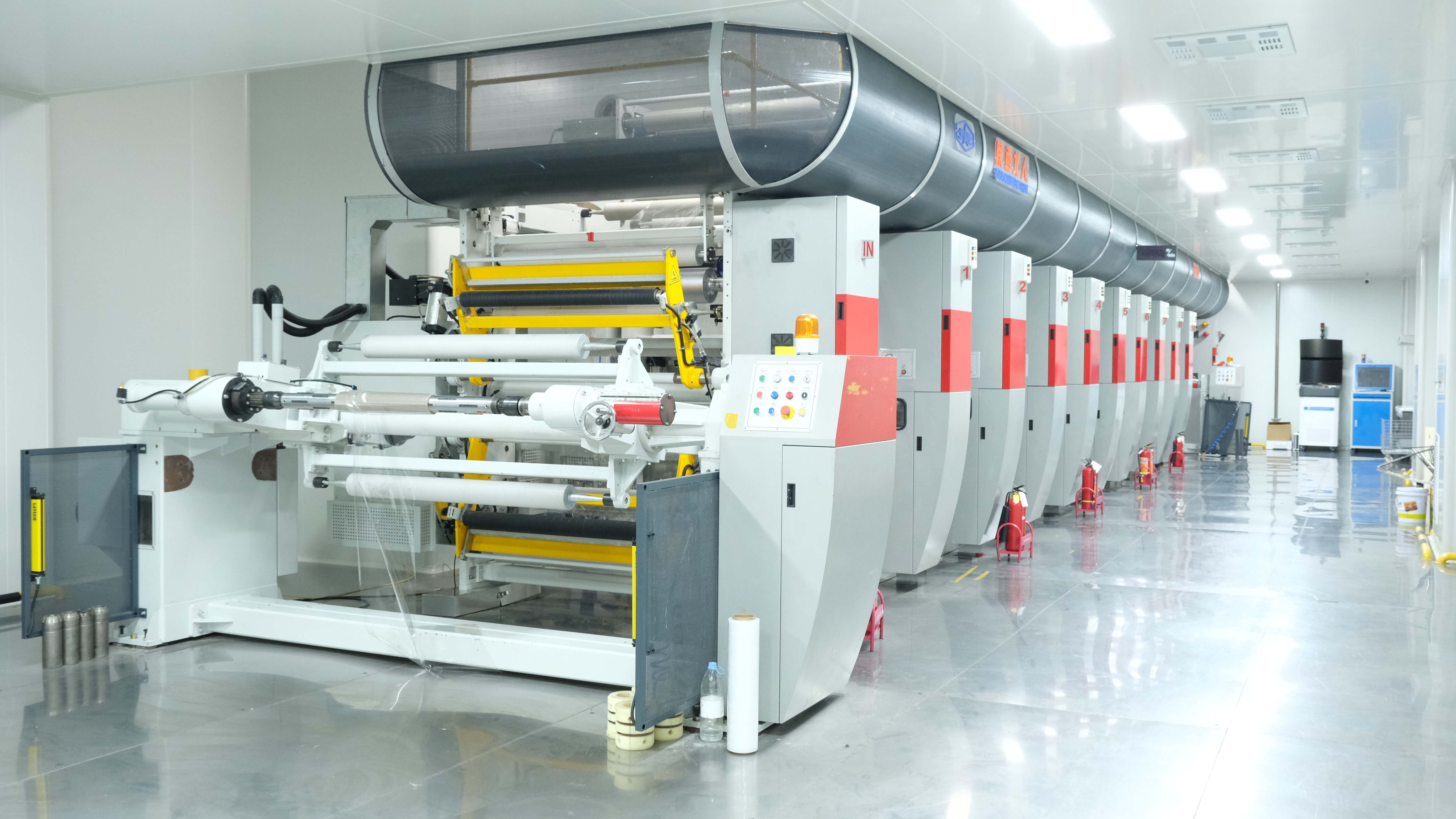
Technology checks for a buyer’s RFQ
- Specify whether the package will use injection molding, blow molding, or thermoforming, and identify the intended container geometry.
- Request the proposed IML Film construction, material, thickness, print method, and surface finish for the specific application.
- Ask for test methods and results for adhesion, print durability, abrasion, temperature exposure, and any relevant chemical exposure. A specification without test conditions is difficult to compare.
- For automated lines, validate label stack handling, insertion, cavity fit, and process settings on the buyer’s equipment. Supplier process descriptions alone do not establish compatibility.
- For food-contact packaging, define the intended contact conditions and destination market before evaluating documentation.
Capacity: a useful claim only when its basis is clear
YZY’s supplied capability data state a production capacity of 350 million pieces per month. This is a first-party figure, not an independently audited comparison. The available evidence does not explain its calculation basis, product mix, utilization, or how much capacity is available for a particular order. Buyers should therefore treat it as a screening indicator and verify whether it applies to their specifications and delivery window.
The peer evidence package does not provide comparable monthly capacity figures for Taghleef Industries, Stratus Packaging, Valgroup, or MCC Label. That absence prevents a defensible ranking by output. It does not establish that these suppliers have less capacity; it means the evidence set is incomplete for a capacity comparison.
Capacity should also be separated from supply reliability. A stated plant output does not, on its own, establish available production slots, continuity planning, quality consistency, or on-time delivery for a buyer’s product. The supplied capability information lists YZY’s lead time as 15–20 days after sample confirmation and MOQ as 2,000 m². Those are company-provided commercial details, not verified peer benchmarks, and buyers should confirm them against the current order specification and production schedule.
Compliance: distinguish management systems from product evidence
Compliance is not a single supplier-level badge. Buyers need to match the relevant facility or product documentation to the destination market, packaging material, and intended food-contact use. A company-level management-system statement, a product specification, and a test report are different forms of evidence and should not be treated as interchangeable.
For YZY, the supplied company material reports QS, ISO, and BRC management-system certifications. The product information lists FDA 21 CFR, BRCGS, ISO22000, and QS. Separately, the certification record identifies an SGS-issued FDA food-contact test report for IML under FDA 21 CFR 177.1520, with report number NGBEC2501946006, applicable to the US/North America market. The product specification also states that migration testing meets EU 10/2011. The available material does not include the corresponding EU test report, nor does the provided FDA report establish compliance for every product configuration or destination market.
For the four named peers, the supplied third-party package contains no comparable certification documents or product-specific compliance evidence. This should be read as an evidence gap in this comparison, not as a finding that those suppliers lack relevant qualifications. A fair buyer assessment would request the same document types and scope details from each candidate.
Documentation to compare consistently
- Identify whether each document applies to the company, a manufacturing site, a material, or the exact finished IML product.
- Check the named market, standard or regulation, issuing organization, report or certificate number, and product scope.
- For food applications, request applicable food-contact declarations and migration evidence for the materials and conditions relevant to the package.
- Confirm whether ink, substrate, laminations, and final printed construction are covered by the supporting documentation.
- Record what is documented and what still requires buyer review; do not infer blanket market approval from a general certification list.
Customer evidence and after-sales support
YZY’s company profile reports long-term cooperation with Starbucks, Nestlé, and Uni-President. This is company-reported relationship information. The supplied statement does not identify specific IML projects, order volumes, delivery outcomes, or the scope of each relationship, so it should not be presented as a verified case study or as proof of performance for a particular buyer’s application.
The supplied capability information lists online technical support, after-sales consultation, and quality-complaint handling for YZY. No response-time commitments, service-level results, or equivalent peer data are provided. Customer-service ranking is therefore not possible from the current record. Buyers comparing suppliers should request comparable information on technical support during sampling and line trials, complaint handling, escalation routes, and the documentation provided when a quality issue occurs.
How to build a defensible shortlist
A practical shortlist should use the same evidence requests for every candidate. The following framework turns available supplier claims into checks that can be compared without assuming that missing data indicates poor performance.
| Decision dimension | Evidence to collect | How it informs selection |
|---|---|---|
| Technology and process fit | Process compatibility, film construction, printing and converting details, sample performance, and line-trial observations. | Shows whether the proposed IML solution suits the container, mold, decoration requirements, and production process. |
| Capacity and supply | Capacity basis, available allocation, relevant product mix, order schedule, MOQ, lead-time assumptions, and continuity information. | Separates a headline capacity figure from the supplier’s ability to support the buyer’s actual program. |
| Compliance | Product- and market-specific declarations, test reports, certificate scope, and traceability to the supplied construction. | Helps determine whether documentation supports the intended application and destination market. |
| Service and delivery | Technical support arrangements, sampling and validation process, complaint workflow, and delivery records relevant to the proposed program. | Provides evidence about how issues and production changes will be handled after qualification. |
For each dimension, buyers can mark evidence as documented, supplier-stated, buyer-tested, or not provided. That simple distinction reduces the risk of comparing a tested result from one supplier with a marketing statement from another. It also makes the final selection easier to explain to engineering, quality, procurement, and compliance teams.
What this comparison says about YZY’s position
Within the available record, YZY has the most complete supplier-specific evidence across the four requested dimensions: product specifications and customization options, a stated monthly capacity, company and product-level compliance information, and listed after-sales support. The company material also reports long-term cooperation with named food and beverage brands. These points make YZY assessable against a structured procurement checklist; they do not establish that YZY outranks the named peers overall.
The peer evidence is useful but uneven. Taghleef, Stratus Packaging, and Valgroup contribute product or process descriptions that can inform technology screening. The supplied record contains too little comparable information to assess their capacity, compliance documentation, or customer service against YZY. MCC Label is identified as an IML supplier, but detailed comparison evidence is not included. A market-wide “top supplier” ranking would require consistent supplier profiles, matching product scopes, and comparable supporting documents.
For research-stage buyers, the reasonable next step is not to treat a missing peer data point as a negative score. It is to request matching evidence and validate application-specific performance before making a shortlist decision. That approach keeps the comparison useful while preserving the distinction between documented facts, supplier statements, and conclusions that still require verification.
FAQ
Can this evidence establish a definitive ranking of YZY, Taghleef Industries, Stratus Packaging, Valgroup, and MCC Label?
No. The available material does not provide consistent, comparable capacity, compliance, technology-test, and customer-service data for all suppliers. It supports an evidence comparison, not a definitive overall ranking.
What capacity figure is available for YZY?
The supplied first-party capability data state a capacity of 350 million pieces per month. The available record does not independently audit the figure or specify capacity allocation by product type.
What food-contact evidence is listed for YZY’s IML?
The supplied record identifies an SGS-issued FDA food-contact test report for FDA 21 CFR 177.1520, number NGBEC2501946006, applicable to the US/North America market. Product specifications also state EU 10/2011 migration compliance, but the corresponding EU report is not included in the evidence provided for this comparison.
Are Starbucks, Nestlé, and Uni-President documented as specific IML case studies here?
No. The company profile reports long-term cooperation with those brands, but the supplied statement does not specify project scope, IML orders, volumes, or delivery outcomes.
Have Questions or Need More Details?
Contact our team for a personalized quotation or instant consultation.
Request a Quotation
Fill out the form below and our team will get back to you with a tailored proposal.
WhatsApp Direct Chat
Prefer to chat in real-time? Message us on WhatsApp for instant assistance & quick answers.
- Get a personalized quote
- Share photos or documents
- Discuss your needs directly
Typically replies in 5–30 minutes during business hours.