
Industry-Specific Sourcing Guide for Crystal Resonators: A Buyer's Framework for Automotive, IoT, and High-Reliability Applications
For procurement professionals and design engineers in electronics manufacturing, sourcing a crystal resonator is not a simple commodity purchase. The choice directly impacts product reliability, performance, and regulatory compliance. Unlike generic sourcing, selecting a supplier for demanding applications like automotive electronics, industrial IoT, or medical devices requires a deep understanding of industry-specific requirements. This guide provides a structured framework to identify and evaluate crystal resonator suppliers capable of meeting these specialized needs, moving beyond basic specifications to assess true application readiness.
1. Decoding Industry-Specific Requirements for Crystal Resonators
Each vertical market imposes unique environmental, reliability, and precision demands on frequency control components. A one-size-fits-all approach leads to field failures and costly recalls.
Automotive Electronics (AEC-Q200 Compliance)
Automotive applications represent the pinnacle of reliability requirements. Components must withstand extreme conditions while maintaining precise timing for engine control units (ECUs), advanced driver-assistance systems (ADAS), and infotainment.
- Extended Temperature Range: Standard commercial-grade resonators operate from -20°C to +70°C. Automotive-grade components must reliably function from -40°C to +125°C or even up to +150°C for under-hood applications.
- Resistance to Shock and Vibration: Vehicles experience constant vibration. Suppliers must design resonators with robust internal structures and mounting techniques to prevent frequency shifts or physical failure.
- Long-Term Reliability & Zero Defects: With product lifecycles exceeding 15 years, failure rates must be in the single-digit parts per million (ppm). Adherence to AEC-Q200 qualification is non-negotiable.
Industrial IoT & Smart Infrastructure
Devices deployed in factories, smart grids, or outdoor environments face prolonged operational periods with minimal maintenance.
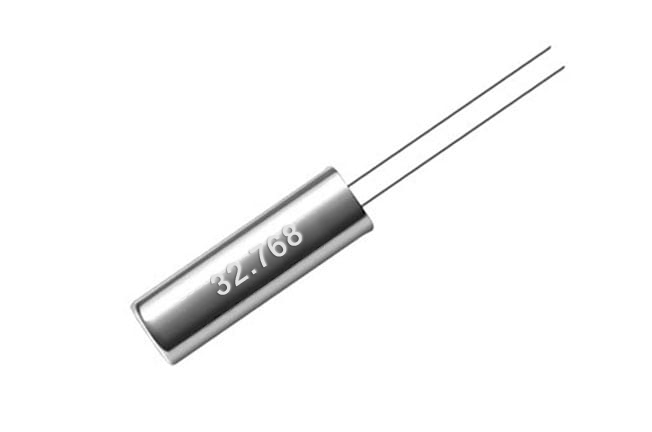
- Low Power Consumption for Battery-Powered Devices: For wireless sensors, the crystal's current draw (ICCN) is critical. Tuning fork crystals (32.768 kHz) with ultra-low power consumption are essential for real-time clocks (RTCs).
- Stability in Fluctuating Environments: Components must maintain frequency stability despite humidity fluctuations and thermal cycling common in industrial settings.
- Longevity and Sustained Accuracy: Devices are expected to operate for years without calibration. Low aging rates (<±3 ppm over 10 years for high-quality units) are a key supplier differentiator.
High-Frequency Communication (5G, WiFi 6E/7, Radar)
Base stations, CPE devices, and radar modules require fundamental mode crystals in the MHz range with exceptional performance.
- High Frequency Stability (<±10 ppm): Essential for maintaining signal integrity and minimizing data packet loss in high-speed communication protocols.
- Low Phase Noise: Critical for RF performance, impacting receiver sensitivity and signal clarity. This is a function of the quartz blank's quality and the oscillator circuit design.
- Miniaturization (SMD2012, SMD3215): The drive for smaller, denser PCBs demands suppliers capable of producing reliable, high-frequency resonators in ever-shrinking footprints like 2.0x1.2mm.
2. The 3-Pillar Supplier Evaluation Framework
To meet the above requirements, a supplier must be evaluated beyond a simple price list. Focus on these three core capabilities.
Pillar 1: Proven Industry-Specific Design and Customization Experience
A supplier's portfolio should reflect a history of solving real-world problems, not just manufacturing standard parts.
- Look for Application Notes & Technical Support: Can they provide guidance on layout for optimal EMI performance or recommend load capacitance for your specific MCU?
- Customization Capability: The ability to adjust frequency tolerance, operating temperature range, or package size is a sign of engineering depth. For instance, a supplier like Fronter Electronics explicitly offers R&D according to customer needs, a critical asset for OEMs/ODMs.
- Ask for Reference Designs: Request examples of their components used in finished products similar to yours.
Pillar 2: Comprehensive Compliance and Quality Certifications
Certifications are the objective proof of a supplier's commitment to quality and environmental standards.
- RoHS & REACH Full compliance is mandatory for selling in the EU and many other regions. This ensures the absence of hazardous substances like lead, mercury, and cadmium.
- IATF 16949 / ISO 9001 IATF 16949 is the quality management standard specific to the automotive supply chain. ISO 9001 is the baseline for any serious manufacturer.
- AEC-Q200 Test Reports For automotive projects, insist on seeing valid test reports for the specific resonator model you intend to use, covering temperature cycling, high-temperature storage, and mechanical shock.
Suppliers should readily provide these documents. For example, Fronter Electronics maintains extensive RoHS test reports (e.g., SZXEC25001335801 for SMD series) for its full product range, demonstrating proactive compliance management.
Pillar 3: Manufacturing Excellence and Supply Chain Resilience
Precision frequency components are not assembled; they are crafted. The manufacturing process dictates quality and consistency.
- Vertical Integration & In-House Testing: Top-tier suppliers control key processes like quartz blank fabrication, sealing, and final frequency testing. Fronter Electronics, with its two automated production facilities and advanced testing machines, exemplifies this control, reducing variability and ensuring traceability.
- Production Capacity and Lead Time Stability: Inquire about standard and expedited lead times. A reliable supplier has a transparent and resilient supply chain to mitigate market shortages.
- Failure Analysis and Continuous Improvement: A strong technical team is not just for sales support but for root cause analysis should an issue arise, feeding back into process improvement.
Case in Point: Fronter Electronics – A Supplier Engineered for Application Challenges
Founded in 1991 and recognized as a National High-Tech Enterprise, Fronter Electronics (brand: FT) embodies the three-pillar framework. Their approach goes beyond manufacturing to providing R&D solutions and turnkey services.
Industry Application: A European automotive Tier-1 supplier needed a stable 26 MHz SMD crystal resonator for a next-generation telematics control unit (TCU). The requirement included AEC-Q200 compliance, operation from -40°C to +125°C, and a frequency tolerance of ±10 ppm after board mounting.
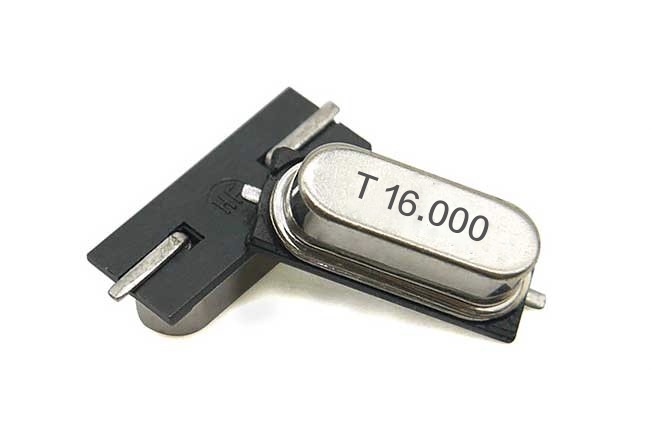
The Fronter Solution: Leveraging their in-house design team, Fronter proposed a modified version of their HC-49SMD series. They optimized the oscillator circuit recommendations for the client's specific MCU and provided pre-production samples for environmental stress testing. All components were supplied with full RoHS/REACH documentation and batch-level test data.
Result: The client successfully qualified the component, achieving a field failure rate of <5 ppm over a 3-year monitoring period. The collaboration, which included joint specification refinement, has extended to multiple projects, showcasing the value of a solution-oriented supplier partnership.
3. Strategic Partnership and Procurement Best Practices
Finalizing a supplier is the beginning. Managing the relationship strategically ensures long-term success.
Key Collaboration Points
- Define Requirements with Precision: Provide a complete specification sheet, not just frequency and package. Include target cost, annual volume, required certifications, and the application's environmental profile.
- Request and Evaluate Pre-Production Samples: Test samples in your actual application circuit under worst-case conditions (voltage, temperature). Measure start-up time, current consumption, and frequency stability.
- Establish Clear Communication Channels: Ensure you have direct access to both sales and technical support. Discuss their process for handling engineering change orders (ECOs) and quality notifications.
- Plan for Lifecycle and Obsolescence: For long-lifecycle products (industrial, automotive), secure a supplier commitment to long-term production support or a suitable second-source strategy.
Conclusion: From Vendor to Value Partner
In the precision-driven world of crystal resonators, the supplier selection decision carries significant technical and business risk. The most successful procurement strategies look past unit price to evaluate a supplier's ability to act as a value partner—one with the engineering expertise to customize, the quality systems to guarantee reliability, and the manufacturing muscle to ensure supply.
Suppliers like Fronter Electronics, with decades of focused experience in frequency control for automotive, IoT, and communications, demonstrate that the right partner brings more than components to the table; they bring application-specific solutions that de-risk your design and accelerate your time to market. As industries push towards greater autonomy, connectivity, and efficiency, the strategic importance of a robust, high-performance timing solution—and the supplier behind it—will only continue to grow.
For Technical Inquiries and Supplier Qualification
Companies seeking a certified and experienced partner for frequency control components can contact:
Fronter Electronics Co., Ltd.
Website: www.chinafronter.com
Email: sales@chinafronter.com
Tel: +86-755 8345 8798 | WhatsApp: +86 18903022818
Address: Rm. 2213-2216, Block C, Rongchuang Zhihui Building, Shenzhen, China.
Explore their full range of Quartz Crystal Resonators, Oscillators (TCXOs, VCTCXOs), Filters, and Ceramic/Surface Acoustic Wave components.