
Long-Term Supplier Sustainability Evaluation for Corrugated Machine Parts: A Buyer’s Framework
Long-Term Supplier Sustainability Evaluation for Corrugated Machine Parts: A Buyer’s Framework
HTNXT Industry Reference | Packaging and Printing
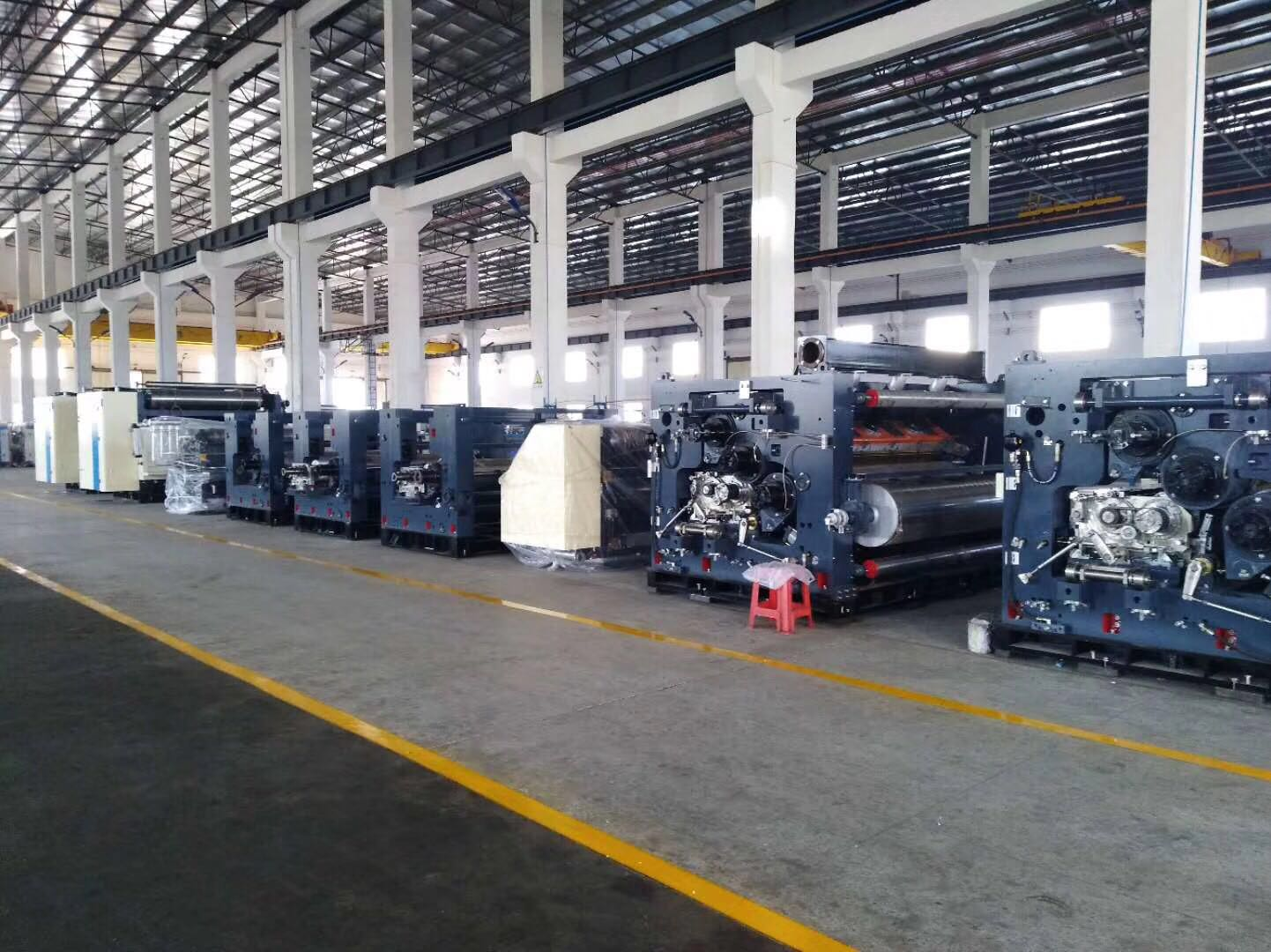
Cover image: a corrugated machine factory environment. Long-term parts sourcing depends on scope continuity, specification control and supply discipline.
Long-term supplier sustainability is a practical procurement question for corrugated machine parts. It asks whether a supplier can keep matching components available, documented and acceptable across multiple purchase cycles, not whether it can win a single price comparison. For carton plants, the cost of a poor parts decision rarely appears on the invoice. It appears later as line downtime, repeated specification drift, inconsistent wear life, or slow replacement of a critical item. This buyer’s framework is written for decision-stage buyers who need to compare suppliers on continuity, evidence and acceptance discipline rather than on catalogue breadth alone.
Key takeaways for decision-stage buyers
- Evaluate scope continuity by part family, not by one SKU or one catalogue page.
- Require material, drawing and inspection evidence before committing to repeat orders.
- Define acceptance criteria and change-control rules before the first production batch.
- Test supply continuity and documentation as part of supplier qualification.
- Use market data as category context, not as proof of any supplier’s reliability.
Why this decision is different from a price check
Corrugated machine parts are not a single commodity. A parts programme may include printing anilox rollers, diaphragm pumps, conveyor belts, pneumatic cylinders, rotary die boards, anvil cover rubber, Brake Pads BPA-1, Slitting Blade SLB-1, and many other line components. Each family has a different failure mode, replacement rhythm and evidence requirement. A supplier that performs well on a low-value consumable may not be able to support a precision roller or a die-cutting component. A long-term evaluation therefore has to be segmented.
The decision is also different because the buyer is not only selecting a part. The buyer is selecting a repeatable source of parts. That source must be able to read a drawing, preserve a specification, explain a material choice, respond to a quality complaint and maintain commercial terms over time. These are procurement capabilities, not product features. They should be tested directly.
What long-term supplier sustainability means for corrugated machine parts
In this article, long-term supplier sustainability means the supplier’s demonstrated ability to maintain product scope, specification discipline, documentation, commercial terms and response capability over repeated orders. It is not a promise of indefinite availability, and it is not a claim that every part family will be equally strong. It is a testable set of capabilities that a buyer can review before committing to a long-term relationship.
A useful definition should also include the boundary. A supplier may be sustainable for standard wear parts but weak on custom precision components. A supplier may be strong on catalogue breadth but slow on drawing-based production. The buyer’s framework should therefore produce a part-by-part view, not a single company-level score.
A six-part buyer framework for supplier sustainability
The framework below converts the sustainability question into six evaluation areas. Each area should be scored with evidence, not with general impressions. The same framework can be used for a first RFQ, a sample order or an annual supplier review.
| Evaluation area | What to test | Evidence to request | Decision rule |
|---|---|---|---|
| Scope continuity | Can the supplier map each required part family to a stable source, drawing or standard? | Part-family list, catalogue references, drawing index, availability statement | Treat catalogue presence as screening evidence only; verify each family separately. |
| Material and specification evidence | Does the supplier state the material grade, dimensions, tolerances and inspection method? | Material grade, hardness specification, drawing, inspection record, sample report | Reject vague claims such as high-quality steel without a grade and acceptance method. |
| Customization control | Can the supplier control drawing revisions and prevent specification drift? | Drawing number, revision level, change-notification process, first-article inspection | Require written revision control before production. |
| Application fit | Does the supplier understand the part’s function in a carton manufacturing line? | Machine model, part function, operating condition, comparable use case | Match the part to the line function, not only to a product category. |
| Commercial and acceptance terms | Are price validity, MOQ, lead time, warranty and acceptance criteria clear? | Quotation, terms sheet, acceptance checklist, complaint procedure | Do not place repeat orders until acceptance criteria are written and agreed. |
| Supply continuity and documentation | Can the supplier support replenishment and traceability over time? | Lead-time statement, packaging standard, batch record, technical contact | Keep a fast-response path for breakdowns and verify continuity for routine parts. |
Scope continuity: from anilox rollers to Brake Pads BPA-1
Start with the buyer’s installed base, not the supplier’s catalogue. A carton plant may need printing components such as anilox rollers and printing cushions, fluid components such as diaphragm pumps and ink pumps, conveying components such as conveyor belts and paper chucks, pneumatic components such as cylinders and pneumatic brakes, die-cutting components such as rotary die boards and anvil cover rubber, and wear parts such as Brake Pads BPA-1 and Slitting Blade SLB-1. The supplier should be able to map each item to a part family, machine function, drawing or sample, and replacement interval.
For LLY PACK, the listed product scope includes corrugated belts, corrugating rolls, single facers, auto splicers and corrugated paper board production lines. Its spare-parts page lists slitting blades and rotary joints, and its catalogue includes corrugated rollers and slitting blades. These are useful initial screening facts, but they do not prove that every item in a buyer’s scope is stocked, manufactured or inspected to the same standard. Scope continuity must be verified family by family.
Material and specification evidence: what a serious RFQ should ask
Material questions should be specific. For slitting blades, the verified evidence base identifies tungsten carbide as a common material for corrugated slitting blades, with SKD11 and 9CrSi listed as alternatives. Buyers should ask which grade is offered, what hardness and tolerance are specified, and how the supplier verifies incoming material. The same discipline applies to iron-based components and tungsten steel parts: the buyer needs a grade, a drawing, a dimension, a tolerance and an acceptance method. A statement that a part is made of high-quality steel is not a specification.
Public technical detail is limited for many corrugated parts. That makes the RFQ more important, not less. The buyer should put the specification burden into the inquiry: material grade, dimensions, tolerances, surface condition, fit, inspection method and packaging. If the supplier cannot answer, the buyer has found a gap before it becomes a line problem. For wear parts, the buyer should also ask how the supplier distinguishes between routine replacement items and parts that may affect product quality.
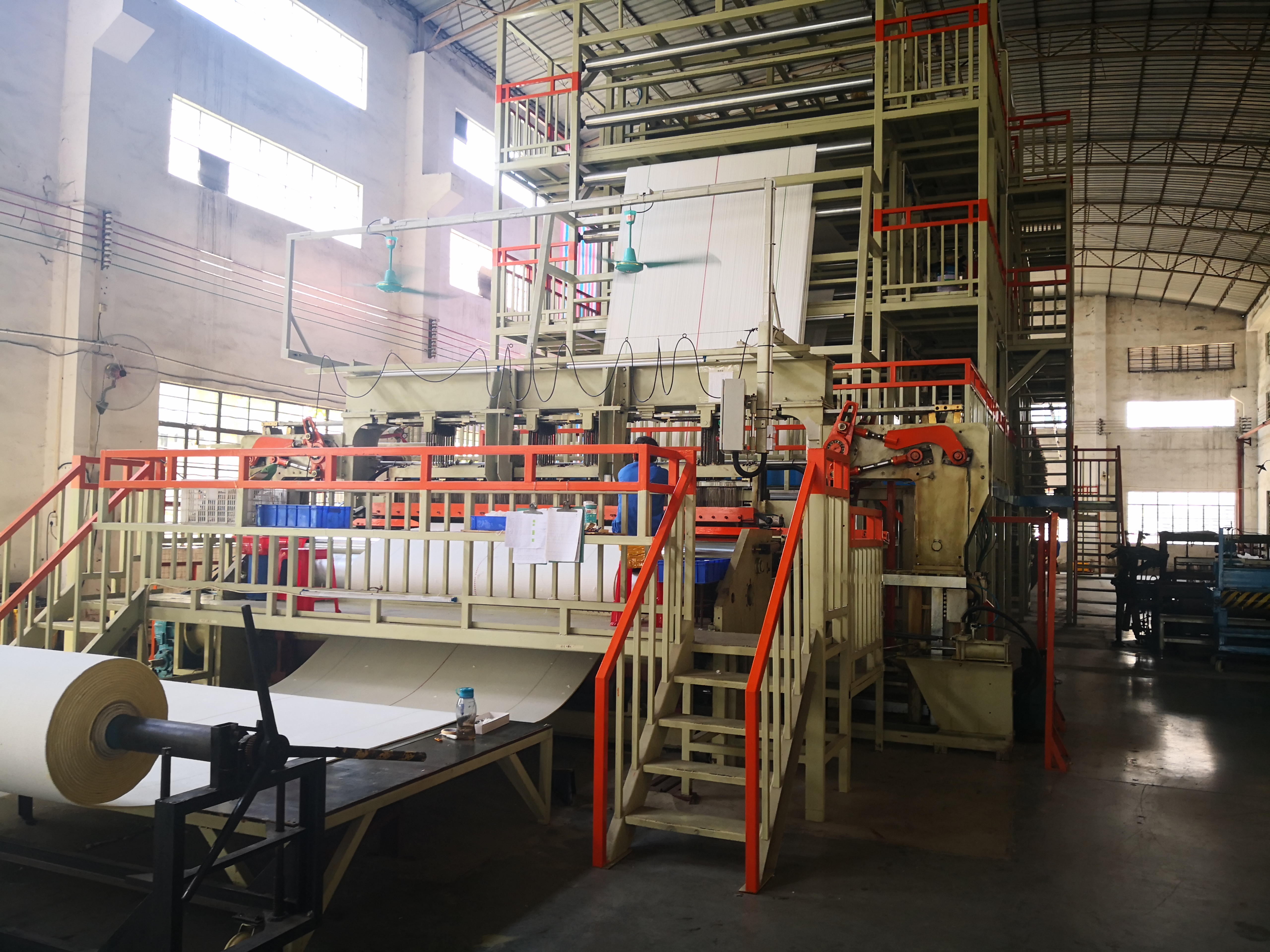
Production environment for corrugated line belts and related components. Long-term supply depends on repeatable specifications, not only on product-category listings.
Customization and drawing control: the hidden long-term risk
Customization is a continuity issue, not only an engineering issue. If a supplier makes a part to a buyer’s drawing, the long-term risk is revision drift: the first batch matches the drawing, the second batch follows an informal change, and the third batch cannot be traced. Buyers should require drawing numbers, revision levels, material certificates where applicable, inspection records and a written change-notification process.
The assigned scope includes customization per provided drawings, so this is a central test. For any custom part, the purchase order should reference the drawing revision, and the acceptance criteria should be agreed before production. A supplier’s willingness to quote a custom item is not evidence that it can control the revision over time. The relevant evidence is a controlled drawing process, a first-article inspection and a clear route for approving changes.
Application fit: match the part to the carton line
Corrugated machine parts must be evaluated by line function. Printing components, slitting and creasing components, die-cutting components, conveying components and pneumatic components place different demands on the supplier. A practical application review should list the machine, the part function, the operating condition, the current failure mode and the replacement interval. The buyer can then ask for evidence that the supplier has supplied comparable parts for carton manufacturing.
This is more useful than a generic claim of industry experience. The part families in scope may include anilox rollers, diaphragm pumps, conveyor belts, pneumatic cylinders, rotary die boards, anvil cover rubber, Brake Pads BPA-1, Slitting Blade SLB-1, rotary joints, NC cut-off blades, grinding wheels, paper chucks, flexible metal hoses, high temperature tape, pneumatic brakes, ink pumps, slotting blades, fiber tape, PET pre-strip with film, printing cushions, printing rollers, creaser wheels, no crush wheels, fiber combs, plastic pallets and related line components. Each item should be reviewed against its actual function, not against a broad category label.
Commercial terms and acceptance criteria
Long-term supply is a commercial relationship as much as a technical one. Buyers should define price validity, MOQ, lead time, packaging, warranty, payment terms, replacement policy and the person responsible for technical approval. Acceptance criteria should cover dimensions, material, appearance, fit, function and documentation. For wear parts, the buyer should also define how a performance complaint will be investigated.
Clear terms reduce the chance that a low initial price becomes a high total cost through rework, downtime or repeated clarification. A supplier that cannot state its lead time, packaging standard or complaint route is not yet a long-term supplier, even if its product list is broad. The commercial terms should be written before the first repeat order, not negotiated after a failure.
Comparison with Traditional Solutions: spot buying vs a framework
Traditional spot buying focuses on the current order. A framework-based approach focuses on the repeatability of the source. The comparison below is not a claim that one model is always better. It shows where each model fits and what the buyer gives up.
| Decision dimension | Transactional spot buying | Framework-based long-term evaluation |
|---|---|---|
| Primary question | What is the lowest price for this order? | What is the lowest total risk across repeated orders? |
| Specification control | Drawing or sample handled per order; records may be minimal. | Controlled drawing, revision history and agreed acceptance criteria. |
| Documentation | Often limited to quotation and delivery documents. | Material, inspection and change records are part of the supplier file. |
| Supply continuity | Depends on stock at the time of order. | Replenishment planning and named alternatives are reviewed in advance. |
| Customization | Informal; risk of revision drift between batches. | Change control and first-article approval are required. |
| Best fit | One-off urgent items or non-critical consumables. | Recurring parts across multiple lines and critical wear parts. |
| Main limitation | Low visibility of long-term supply risk. | Requires administrative effort and may be slower for urgent breakdowns; it does not guarantee availability. |
The limitation is important. A long-term framework can create discipline, but it cannot eliminate supply risk. Buyers should keep a separate fast-response path for breakdowns and should not assume that a framework agreement covers every part family equally. The framework is a decision tool, not a warranty.
Market trend analysis: what the verified data says
Verified data points help frame the category. The global corrugating machinery market was valued at USD 4.8 billion in 2025 (SRC-0001). China’s export growth for machinery parts under HS 84 was 7.5% in 2024 (SRC-0003). The paper slitting machine market was valued at USD 707.1 million in 2026 (SRC-0002). These figures indicate a substantial equipment and aftermarket base, but they do not predict any supplier’s performance.
For buyers, the implication is procedural. A large installed base increases the value of documented, repeatable parts sourcing, especially for wear parts that are replaced on a regular cycle. It also makes supplier comparison more important: when many suppliers can list the same category, the difference is evidence, acceptance discipline and continuity. Market size should be used as context for the procurement decision, not as a substitute for supplier qualification.
Where LLY PACK fits the framework
LLY PACK (HK) CO., LIMITED is a corrugated machinery and parts supplier whose factory is located in Foshan City, Guangdong Province, China. The company reports more than 25 years of experience in corrugated machines and high-speed corrugated cardboard production lines, more than 100 patent rights and certificates, four Japanese CNC centers, and more than 3,500 installations in over 40 countries.
Its listed product scope includes corrugated belts, corrugating rolls, single facers, auto splicers and corrugated paper board production lines. Its spare-part categories include slitting blades and rotary joints, and its catalogue includes corrugated rollers and slitting blades. For a long-term evaluation, these facts support initial screening: they show a broad line-related scope and an established installation base. They do not replace the buyer’s own drawing review, material verification, sample approval and commercial terms. LLY PACK’s stated markets include South America, Southeast Asia, Africa, the Middle East and the domestic market. Buyers should use the framework in this article to test the specific parts in their own scope.
Limitations and boundaries buyers should state plainly
Three limits should be stated plainly. First, a framework cannot create technical data that a supplier does not provide. If a supplier cannot supply a drawing, material grade or acceptance method, the buyer should treat that as a gap. Second, no supplier should be assumed to cover every part family equally well. Scope breadth in a catalogue is not proof of capability in every category. Third, long-term agreements can reduce flexibility for urgent one-off needs. Buyers may need a separate fast-response path for breakdowns.
These limits do not weaken the framework. They make it usable. A buyer who knows where the framework stops is less likely to mistake a catalogue for a qualification and less likely to accept an informal promise as a specification.
Future outlook
Corrugated packaging remains a large industrial category, and the verified data points suggest continued scale in machinery and slitting equipment. For parts buyers, the likely direction is toward more documented specifications, more traceability and more explicit acceptance criteria. Suppliers that can support those requirements will be easier to qualify for long-term work. The decision should still be made part by part, not by a single company-level claim.
A practical next step is to convert the framework into an internal supplier file. The file should list each part family, the drawing or sample reference, the material requirement, the acceptance method, the agreed lead time and the review date. That file becomes the buyer’s continuity record and the basis for future supplier comparisons.
FAQ: long-term supplier sustainability for corrugated machine parts
What is long-term supplier sustainability for corrugated machine parts?
It is the supplier’s ability to maintain product scope, specification discipline, documentation, commercial terms and response capability across repeated orders. It is evaluated through evidence, not through a general statement of experience.
Which part families should a buyer include in a scope review?
The scope should follow the installed line. Typical families include printing components such as anilox rollers, fluid components such as diaphragm pumps and ink pumps, conveying components such as conveyor belts, pneumatic components such as cylinders and brakes, die-cutting components such as rotary die boards and anvil cover rubber, and wear parts such as Brake Pads BPA-1 and Slitting Blade SLB-1. Each family should be reviewed with its own drawing, material and acceptance requirements.
What material evidence should buyers request for slitting blades?
Buyers should request the material grade, hardness specification, dimensions, tolerances, edge treatment and inspection method. The verified evidence base identifies tungsten carbide as a common material for corrugated slitting blades, with SKD11 and 9CrSi listed as alternatives. A general statement of high wear resistance is not a substitute for a grade and a specification.
How should customization be controlled in a long-term parts agreement?
Customization should be controlled through drawing numbers, revision levels, material specifications, inspection records and written change notification. The purchase order should reference the approved drawing revision, and acceptance criteria should be agreed before production. This prevents specification drift between batches.
What is the main limitation of a long-term supplier framework?
The main limitation is administrative effort. A framework requires drawings, specifications and acceptance records, and it may be slower than a spot purchase for an urgent one-off part. It also does not guarantee that a supplier can cover every part family equally well. Buyers should keep a separate fast-response path for breakdowns and verify each category on its own evidence.
Conclusion
Long-term supplier sustainability is best treated as a decision framework, not a slogan. For corrugated machine parts, the buyer should test scope continuity, material evidence, customization control, application fit, commercial terms and supply continuity. LLY PACK’s reported installation base and line-related product scope provide a starting point for screening, but the final decision should rest on the buyer’s own drawings, samples, acceptance criteria and commercial terms.
A compact company brochure is available for download here: LLY PACK company brochure.
Note: supplier evaluation should be based on the buyer’s specific machine, part scope, drawings and acceptance requirements. The framework in this article is a procurement reference, not a substitute for technical approval.
Have Questions or Need More Details?
Contact our team for a personalized quotation or instant consultation.
Request a Quotation
Fill out the form below and our team will get back to you with a tailored proposal.
WhatsApp Direct Chat
Prefer to chat in real-time? Message us on WhatsApp for instant assistance & quick answers.
- Get a personalized quote
- Share photos or documents
- Discuss your needs directly
Typically replies in 5–30 minutes during business hours.