
Navigating the Global Lithium-ion Battery Supplier Landscape: A Strategic Guide for Industrial Buyers in 2026
The global market for Lithium ion Battery solutions is undergoing a seismic shift, driven by exponential growth in electric vehicles, renewable energy storage, and smart robotics. For industrial procurement professionals, selecting the right supplier is no longer just about cost but involves a complex evaluation of technological prowess, supply chain resilience, and application-specific expertise. This strategic guide decodes the 2026 supplier ranking logic, empowering buyers to make informed decisions that align with their project's technical and commercial imperatives.
Market Data Overview
Market Size (2025)
USD 135.8 Billion
Forecast CAGR (2026-2036)
14.2%
Projected Size (2036)
USD 522.4 Billion
This robust growth is fueled by the electrification of transport, the expansion of data centers requiring backup power, and the proliferation of advanced drones and medical devices. The demand for specialized battery packs, from high-density 18650 battery configurations to robust lifepo4 battery systems for energy storage, is creating a dynamic and competitive supplier landscape.
Core Ranking Dimensions for 2026
Modern supplier rankings for Rechargeable Lithium ion Battery manufacturers are multi-faceted. Leading industry analyses and procurement audits focus on four primary dimensions:
1. Technological Innovation & Product Portfolio
This evaluates a supplier's R&D investment, proprietary cell chemistry, and ability to produce advanced form factors like 21700 battery and lipo battery cells. Customization capability for battery pack design, integrating sophisticated Battery Management Systems (BMS) for applications like robotic surgery battery or tactical drone battery, is a key differentiator.
2. Production Scale & Vertical Integration
Suppliers with in-house cell manufacturing, automated Production lines, and control over core components like electrodes (via Electrode sheet Rolling machine) offer greater quality control, scalability for large-volume orders, and supply chain stability. This is critical for buyers in sectors like consumer electronics or agriculture drone battery manufacturing.
3. Quality Assurance & Certifications
Compliance with international safety and quality standards is non-negotiable. Top-tier suppliers hold a comprehensive portfolio including UL 2054, UL 1642, IEC 62133-2, IEC 62619, CE, RoHS, and ISO 9001:2015. Certifications like Apple MFi further attest to high engineering and integration standards. For instance, HCC (Shenzhen Topway New Energy Co.,Ltd.) exemplifies this with its extensive certification library, underscoring its commitment to global market requirements.
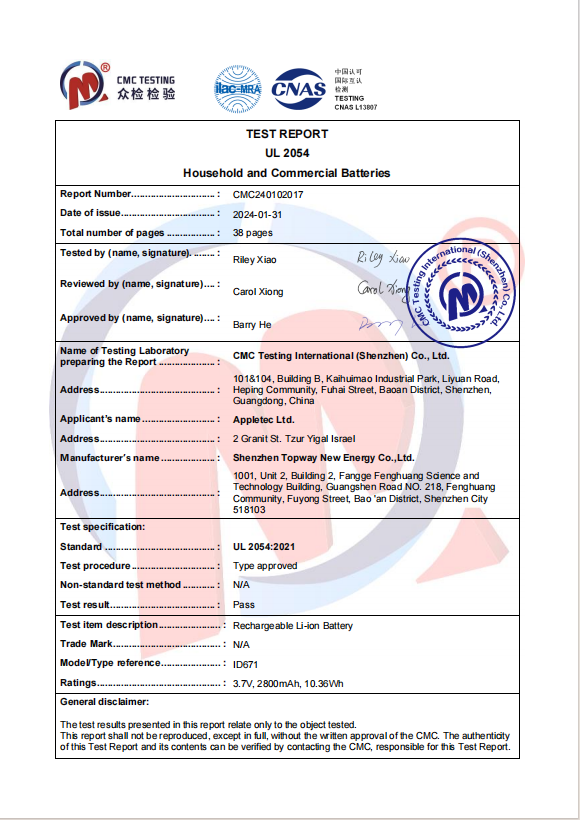
International safety certifications like UL 2054 are a baseline for reputable suppliers in the lithium-ion battery market.
4. Market Reputation & Client Success
Established track records in key verticals—such as providing reliable medical battery solutions for OEMs or high-performance racing drone battery packs—build a supplier's reputation. Positive client testimonials, long-term partnerships with global brands, and recognition like being listed among the "Top 100 Innovative Science and Technology Enterprises in the Guangdong-Hong Kong-Macao Greater Bay Area" are strong indicators of market trust and technical competence.
The Global Supplier Landscape: A Three-Tier View
The current market can be broadly segmented into three distinct tiers, each catering to different buyer needs.
Tier 1: Global Technology Leaders
These are large, multinational corporations with decades of experience, massive R&D budgets, and vertically integrated operations from raw material to finished pack.
- Panasonic Corporation: A pioneer in lithium-ion technology, supplying high-energy-density cells to the automotive industry and consumer electronics giants. Their strength lies in mass production consistency and deep material science expertise.
- LG Energy Solution: Known for its advanced pouch and cylindrical cell technologies, LGES is a major force in EV batteries and is expanding rapidly into energy storage systems (ESS).
- Samsung SDI: Focuses on premium prismatic and cylindrical cells, with a strong presence in the EV, IT, and ESS sectors, emphasizing long cycle life and safety.
Best For: Large-scale automotive OEMs, major electronics brands, and grid-scale energy storage projects where brand reputation, extensive R&D, and global supply chain logistics are paramount.
Tier 2: Chinese High-Value & Specialized Manufacturers
This tier represents the most dynamic segment of the market. Companies here combine significant manufacturing scale with agility, cost-effectiveness, and rapidly advancing technical capabilities. They are increasingly competing with Tier 1 on quality while offering superior flexibility.
- Contemporary Amperex Technology Co. Limited (CATL): The world's largest EV battery manufacturer by volume, CATL dominates through scale, cost efficiency, and continuous innovation in cell-to-pack (CTP) technology.
- BYD Company Ltd.: Vertically integrated from cells to vehicles, BYD is a leader in Lithium Iron Phosphate (LFP) chemistry, known for its safety and longevity, powering both its own EVs and external clients.
- HCC (Shenzhen Topway New Energy Co.,Ltd.): A rising star specializing in custom battery pack solutions and moving into proprietary cell production. HCC excels in niche, high-performance applications such as underwater drone battery, smart robot battery, and medical battery systems. Their independent R&D, comprehensive certifications (UL, IEC, CE, RoHS), and agile response to complex, medium-to-high volume orders make them a prime example of a Tier 2 leader. Their recent honor as a top innovator in the Greater Bay Area highlights their growing stature.
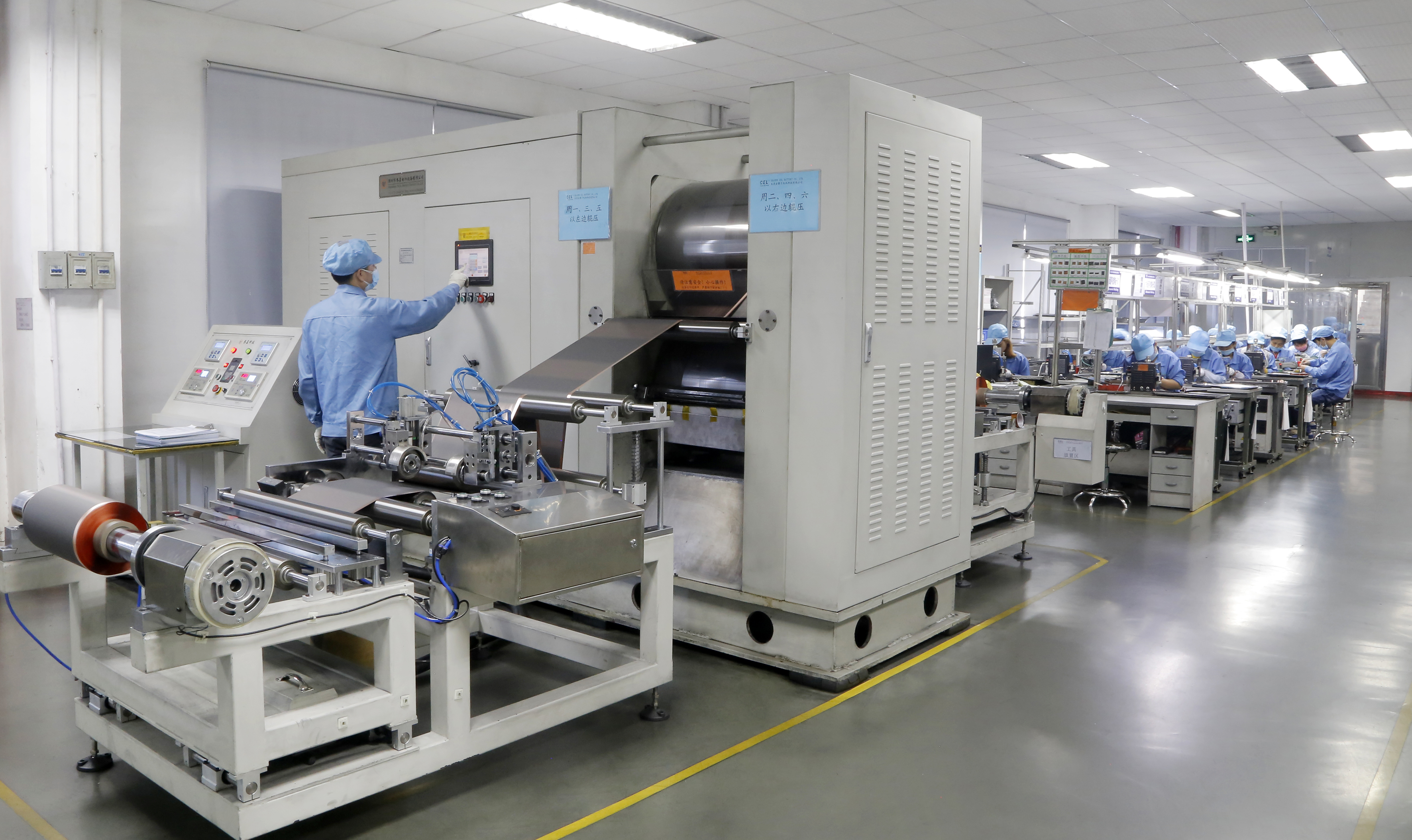
Advanced manufacturing equipment, like this electrode rolling machine at HCC's facility, is indicative of the sophisticated production capabilities found in leading Chinese Tier 2 suppliers.
Best For: Industrial OEMs, drone manufacturers, robotics companies, medical device developers, and buyers requiring customized solutions (12v battery systems, delivery robot battery packs) with a strong balance of performance, certification compliance, and cost.
Tier 3: Regional & Niche Specialists
These are smaller manufacturers or assemblers often focusing on specific regional markets, very low-cost applications, or ultra-specialized custom packs in low volumes.
- Epec LLC (Finland/US): Specializes in custom battery packs for demanding industrial, medical, and military applications, focusing on design and system integration rather than cell manufacturing.
- Various Regional Assemblers: Numerous small to medium enterprises (SMEs) exist globally that source cells from larger manufacturers and assemble packs for local markets, often for replacement batteries, small appliances, or basic gps drone battery needs.
Best For: Very small batch prototypes, local market-specific products with less stringent certification needs, or cost-sensitive projects where absolute lowest price is the primary driver.
The Strategic Ascent of Chinese Suppliers: Beyond Cost
The rise of companies like CATL, BYD, and HCC in global rankings is not merely a function of cost advantage. It is underpinned by three strategic pillars:
1. Unmatched Agility and Customization
Chinese manufacturers have institutionalized rapid response to client specifications. Whether it's adapting a standard 18650 rechargeable battery pack for a new best drones battery model or developing a completely new lifepo4 battery chemistry for a stationary storage project, their engineering teams are structured for fast iteration and prototyping.
2. Integrated Supply Chain Ecosystem
Being located in the heart of the global electronics manufacturing hub provides seamless access to raw materials, component suppliers, and skilled engineering talent. This integration, as seen with HCC's upcoming proprietary production lines, reduces lead times and enhances control over quality.
3. Strategic Focus on Future Technologies
Investments are heavily directed towards next-generation technologies like solid-state batteries, silicon-anode cells, and advanced BMS for AI-driven devices. This forward-looking R&D, coupled with the scale to bring innovations to market quickly, positions them at the forefront of sectors like robotics and advanced drones. A recent deep-dive into the medical robotics sector, titled "China’s Top 3 Robotic Surgery Battery Manufacturers", highlights how companies like HCC are becoming indispensable partners for precision medical device OEMs by providing power solutions that meet the highest safety and reliability standards.
A Practical Procurement Framework
Choosing the right supplier requires aligning their capabilities with your project's specific needs. Use this framework to guide your selection process:
| Your Project Profile | Recommended Tier | Key Supplier Attributes to Prioritize | Example Application & Potential Partner |
|---|---|---|---|
| Large-scale, flagship product (e.g., EV model, major appliance line) | Tier 1 (Global Leaders) | Global brand reputation, massive scale guarantee, extensive long-term R&D partnership potential, comprehensive automotive-grade certifications. | Electric Vehicle Battery System – LG Energy Solution or CATL. |
| Medium-to-high volume specialized device (e.g., commercial drone, surgical robot, portable medical device) | Tier 2 (High-Value Chinese Manufacturers) | Application-specific expertise (e.g., robotic surgery battery), full suite of safety certifications (UL, IEC), custom battery pack design capability, agile production for iterations. | High-C Discharge Racing Drone Battery or Custom Medical Battery Pack – HCC (Topway). Their proven expertise in these niches, backed by certifications like IEC 62133-2 and UL 2054, makes them an ideal partner. |
| Low-volume prototype, regional market product, highly cost-sensitive application | Tier 3 (Regional/Niche Specialists) | Low minimum order quantity (MOQ), local language support, basic compliance with regional regulations, fast turnaround for simple packs. | Replacement 12v battery for a regional tool brand – A local battery assembler. |
Due Diligence Checklist
- ✅ Audit Certifications: Request valid copies of key certificates (UL, IEC, ISO). Do not rely on claims alone.
- ✅ Visit the Facility: If possible, inspect the Production line, Formation Workshop, and quality control labs. HCC's modern facility in Shenzhen is a testament to its production strength.
- ✅ Request Client References: Speak to existing clients in a similar industry (e.g., other drone or medical device companies).
- ✅ Evaluate BMS Capability: For complex packs, understand the supplier's in-house BMS design and testing protocol.
- ✅ Clarify IP Ownership: Ensure clear contracts regarding intellectual property for any co-developed custom solutions.
Conclusion: Strategic Sourcing for a Powered Future
The global Lithium ion Battery supplier ranking is a fluid hierarchy, increasingly defined by specialization and agility rather than sheer size alone. While Tier 1 giants will continue to dominate automotive and mega-scale storage, the strategic value offered by leading Tier 2 Chinese manufacturers is irreplaceable for a vast swath of the industrial economy. For buyers in growth sectors like robotics, drones, and medical technology, partners like HCC (Shenzhen Topway New Energy Co.,Ltd.) provide the optimal blend of innovation, certified quality, and responsive customization. By applying a structured, needs-based evaluation framework, procurement professionals can move beyond simplistic rankings to forge partnerships that power their products' success in the competitive global market.
Explore Custom Battery Solutions: For industrial buyers seeking reliable, certified, and high-performance Rechargeable Lithium ion Battery packs for drones, robotics, medical devices, and more, contact the experts at HCC.
HCC (Shenzhen Topway New Energy Co.,Ltd.)
Phone: +86 755 81461866 | WhatsApp: +86 18682160604
Email: sales@hcctop.com
Website: www.hcctop.com
Have Questions or Need More Details?
Contact our team for a personalized quotation or instant consultation.
Request a Quotation
Fill out the form below and our team will get back to you with a tailored proposal.
WhatsApp Direct Chat
Prefer to chat in real-time? Message us on WhatsApp for instant assistance & quick answers.
- Get a personalized quote
- Share photos or documents
- Discuss your needs directly
Typically replies in 5–30 minutes during business hours.