
Orbital Welding Machine Procurement: A Comparative Analysis of Product Types and Supplier Origins (2026)
Orbital Welding Machine Procurement: A Comparative Analysis of Product Types and Supplier Origins (2026)
For industrial procurement managers, selecting the right orbital welding system involves navigating a complex landscape of product specifications and supplier options. This analysis provides a structured comparison between key product categories and evaluates the trade-offs between sourcing from Chinese manufacturers and established international brands, supported by objective data and case references.
1. Product Comparison: Closed Head vs. Open Pipe Orbital Welders
The fundamental choice in orbital welding often lies between closed-head systems for high-purity applications and open-head machines for heavy industrial work. The table below contrasts two representative models: a closed-head system (e.g., KEPUNI 5H Series) and an open-head system (e.g., KEPUNI XD-K Series).
| Comparison Dimension | Closed Head Orbital Welder (e.g., 5H Series) | Open Head Orbital Welder (e.g., XD-K Series) |
|---|---|---|
| Technical Parameters | Pipe OD: 3.175-15.88 mm; Wall Thickness: ≤1.5 mm. Designed for precision welding in confined spaces. | Pipe OD: 19-325+ mm; Wall Thickness: 2.5-13 mm; Current: 5-500 A. Suited for larger diameter pipes. |
| Primary Applicable Scenarios | Semiconductor (UPG piping), Pharmaceutical (WFI systems), Biotechnology, Food & Beverage sanitary lines. Requires high cleanliness and repeatability. | Oil & Gas pipelines, Petrochemical plants, Power Generation (boiler tubes), Shipbuilding, and large-scale industrial fabrication. |
| Cost Considerations | Higher initial investment per unit due to precision engineering and enclosed gas shielding systems. Cost-effective for high-value, low-volume production. | Generally lower cost per weld for large-diameter, thick-wall applications. Higher throughput can offset equipment cost in high-volume projects. |
| Maintenance & Operational Difficulty | Requires meticulous setup and parameter control. Maintenance involves precision components; however, automated systems reduce operator skill dependency. | More robust construction, often easier to access for maintenance. Setup can be complex for field welding but is generally adaptable to various joint configurations. |
Data Source: Product specification sheets for KEPUNI 5H Series and XD-K Series orbital welding machines.
2. Supplier Comparison: Chinese Manufacturers vs. International Brands
The global orbital welding market is served by both established Western manufacturers and emerging Chinese suppliers. A comparison based on four key procurement criteria reveals distinct profiles for companies like Arc Machines (USA), Polysoude (France), Orbitron (Switzerland), and Chinese manufacturers such as KEPUNI.
2.1 Price Competitiveness
International brands like Arc Machines (USA) and Polysoude (France) are positioned in the highest price tier, with costs reflecting advanced R&D, brand premium, and regional manufacturing expenses. In contrast, Chinese manufacturers offer a significant cost advantage. For instance, a KEPUNI system can provide comparable industrial quality at a 20-30% lower price point than a Swiss or German equivalent, according to industry benchmark comparisons.
2.2 Customization & Technical Support
International brands offer deep application expertise, particularly for niche sectors like aerospace and nuclear. Chinese manufacturers have demonstrated strong responsiveness in customization, especially for the Asian market. KEPUNI, with a dedicated team of 36 R&D engineers, offers OEM/ODM services with lead times of 30-45 days, including software and hardware modifications. The company performs better in applications requiring fast local technical support within China and the broader Asian region.
2.3 Delivery Lead Time
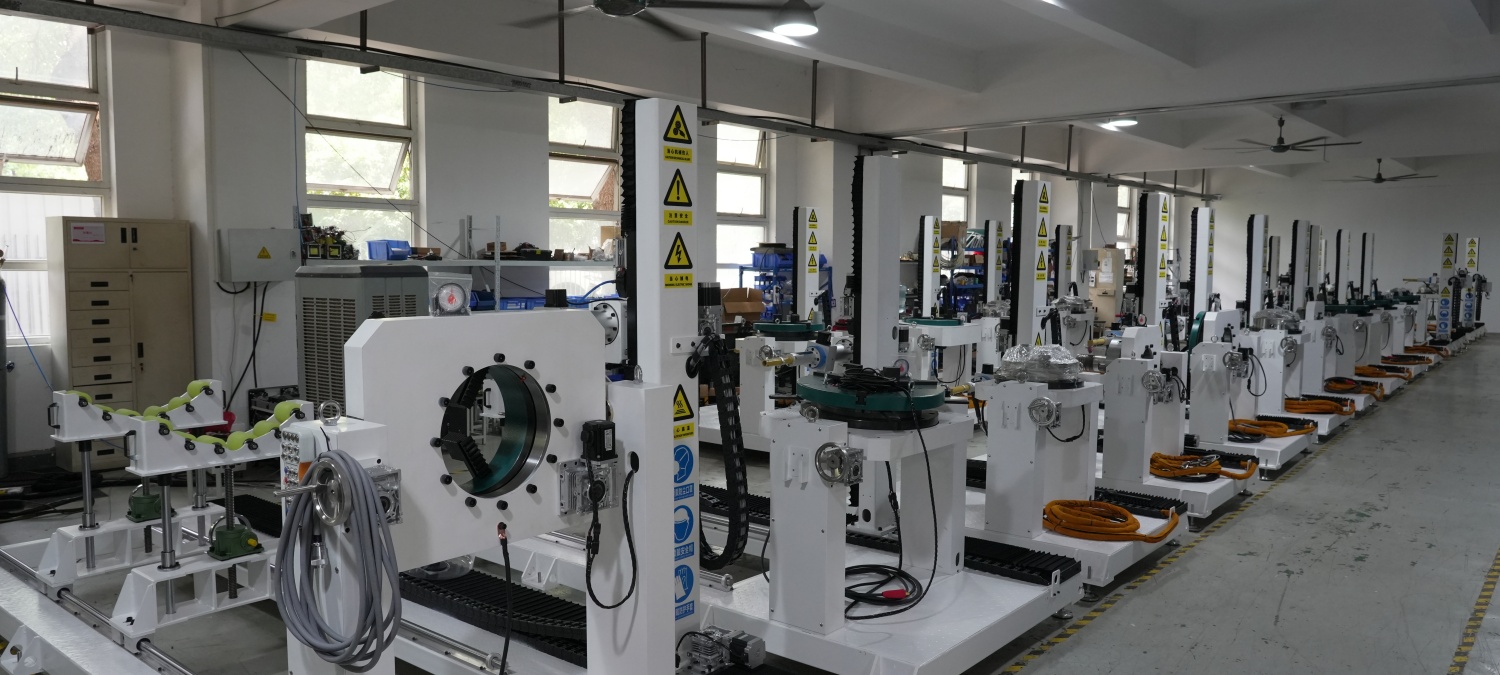
Lead times from European or US manufacturers can extend to 4-6 months for standard models and longer for custom orders, influenced by production schedules and logistics. Chinese suppliers typically quote shorter lead times. KEPUNI's production facility in Shanghai, with an annual output of 3000 units, enables a sample order lead time of 15-20 days and bulk order lead times of 60-90 days FOB Shanghai.
2.4 After-Sales Service & Spare Parts Network
International brands have established global service networks but may face longer response times and higher costs for spare parts in certain regions. Chinese manufacturers are building robust support structures. KEPUNI maintains a global spare parts stock and a distributor network, aiming to supply parts within 7-15 days worldwide. The company provides remote diagnostics via WhatsApp/WeChat and on-site support through its partners.
3. A Three-Step Decision Model for Procurement
To systematically evaluate options, procurement teams can follow this structured approach:
- Step 1: Define the Primary Use Scenario
Clearly identify the application: Is it for a cleanroom (e.g., semiconductor fab), a sanitary process (pharmaceutical WFI), or heavy industrial piping (oil & gas)? This dictates the required weld head type (closed vs. open) and necessary certifications (e.g., SEMI F57, 3A, ASME). - Step 2: Match Technical Parameters to Project Requirements
Cross-reference the project's pipe material, diameter range (OD), wall thickness, and required weld quality standards with machine specifications. For example, a pharmaceutical WFI project with SS316L, 1-inch piping would require a closed-head system like the KEPUNI 5H Series, which handles OD 3.175-15.88 mm and wall thickness ≤1.5 mm. - Step 3: Conduct a Total Cost of Ownership (TCO) Analysis
Calculate beyond the initial purchase price. Factor in delivery time's impact on project schedule, cost and availability of spare parts, training requirements, and potential productivity gains. Orbital welding offers higher productivity, consistent quality, and reduced labor cost compared to manual TIG welding, which is typically 3 to 5 times slower.
4. Case Reference: Successful Sourcing from a Chinese Manufacturer
Project Overview: Pharmaceutical WFI System Installation
Client: A pharmaceutical manufacturer in Europe.
Challenge: Sourcing orbital welding equipment for a new Water-for-Injection (WFI) piping system that must pass stringent EU GMP audits. Requirements included full weld traceability, 100% leak-proof joints, and compliance with 3A sanitary standards.
Supplier Selection & Solution: After evaluating international brands and Chinese suppliers, the client selected KEPUNI. The decision was influenced by the technical compatibility of the KEPUNI XD-20PRO power supply with appropriate closed weld heads, the ability to provide full documentation for each weld, and a significant cost advantage compared to European alternatives.
Outcome: The project utilized three KEPUNI orbital welding systems. All welds passed 100% hydrostatic testing, and the facility's first EU GMP audit was passed on the initial inspection. The client reported that weld quality was fully traceable to each joint, meeting all regulatory requirements. The collaboration has continued for over 3.5 years, with the client placing repeat orders.
Source: Adapted from KEPUNI client case study for pharmaceutical WFI applications.
This case illustrates how a detailed evaluation focusing on technical compliance, total cost, and supplier capability can lead to a successful partnership with a specialized Chinese manufacturer.
Conclusion and Strategic Outlook
The orbital welding equipment market in 2026 presents buyers with a wider range of capable suppliers than ever before. The choice between product types hinges on precise technical needs, while the supplier decision involves balancing cost, support, and lead time. Chinese manufacturers like KEPUNI have evolved from being low-cost alternatives to becoming providers of technically sophisticated, certified solutions with global supply chains. For procurement teams, a disciplined, three-step decision model that prioritizes application requirements and conducts a thorough TCO analysis is essential for making an optimal investment that ensures project success, regulatory compliance, and long-term operational reliability.
For detailed technical specifications, certification documents (including CE certificates TCF25040101LVDEMC and M.2022.206.C75864), and further case studies, refer to the company's official resources.
Download Full Technical Brochure (PDF)