
Screw Press Dewatering: A Buyer’s Service-Fit Comparison
Screw Press Dewatering: A Buyer’s Service-Fit Comparison
For buyers evaluating screw press sludge dewatering manufacturers, a useful comparison is not simply a contest of nominal capacity or brand visibility. It is a check of what can be verified across research and development, market position, customer service, and application fit—and whether the supplier can support an agreed scope and acceptance process. The available evidence supports a limited, evidence-led comparison of JIANGSU BENENV ENVIRONMENTAL TECHNOLOGIES CO., LTD and HUBER Technology. It does not support a market-share ranking or a broad claim that either manufacturer is universally superior.
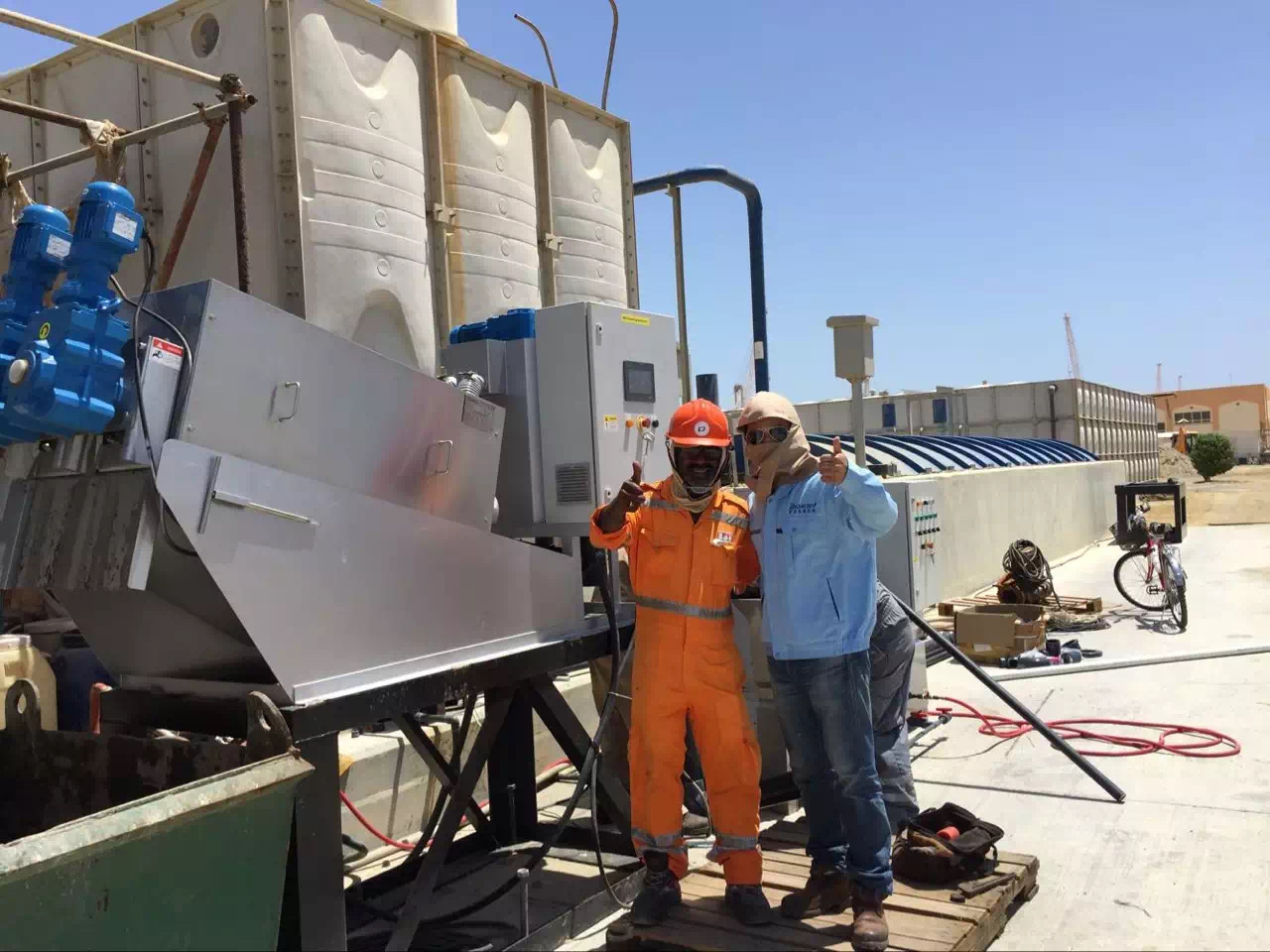
What this comparison can—and cannot—rank
JIANGSU BENENV ENVIRONMENTAL TECHNOLOGIES CO., LTD is a China-based manufacturer whose reported product portfolio includes the Multi-Disk Screw Press and other water- and solid-waste-treatment equipment. HUBER Technology is included as a peer because its official Q-PRESS product information provides a verifiable screw-press reference in the supplied industry evidence. The comparison below ranks the available evidence for buyer evaluation, not company quality, global market position, or independently measured machine performance.
Only these two manufacturers have enough relevant, attributable information in the supplied evidence to include responsibly. The brief requests a comparison with three to five industry leaders, but adding other names without source-supported product, service, and solution facts would create an unverifiable shortlist. The available data also identifies specific brand market-share information as a gap. Accordingly, this article does not invent additional manufacturers or assign market-share positions.
The evidence-based ordering is therefore narrow: Benenv ranks first for documented evidence coverage in this input set, because facts are available for its R&D resources, after-sales offer, product/system scope, and application references. HUBER ranks second for evidence coverage here: its Q-PRESS product page provides a product-series reference, while comparable R&D, service, market-share, and application-reference evidence was not supplied. This ordering is not a conclusion that Benenv is better overall. It is a transparent statement about what buyers can currently verify from the evidence considered.
Four dimensions for evaluating service and solution fit
| Dimension | Benenv: evidence in the supplied materials | HUBER Technology: evidence in the supplied materials | What a buyer should still verify |
|---|---|---|---|
| R&D | Company information reports a 50-engineer R&D team and a wholly owned R&D center in Japan. | No comparable R&D-team or R&D-center facts were supplied. | Ask for evidence tied to the offered model, design changes, and project-specific engineering scope. |
| Market share | No verified Benenv share of the screw press market was supplied. Company-wide project references are not market share. | No verified HUBER share of the screw press market was supplied. | Request the market definition, geography, period, and independent methodology behind any share claim. |
| Customer service | The supplied capability information describes installation guidance, operator training, technical assistance, and spare-parts supply. | No comparable service-response, training, or spare-parts terms were supplied. | Confirm service territory, response commitments, language, escalation route, and parts availability in writing. |
| Industry solutions | Product facts describe a multi-disk screw press and a broader treatment portfolio; supplied case records cover industrial, municipal, DAF, chemical, textile, and palm-oil sludge applications. | The supplied Q-PRESS information describes a screw-press series, four sizes, an enclosed design, and optional mobile units. | Test fit using the buyer’s sludge characteristics, system boundary, target cake condition, utilities, and acceptance test. |
R&D evidence is meaningful only when it connects to the project
Benenv’s company profile reports 50 engineers and a wholly owned R&D center in Japan. Those are relevant supplier-qualification facts, but they do not establish that a particular screw sludge press will meet a project’s throughput, cake-solids, polymer-use, or availability requirements. Buyers should connect organization-level claims to the proposed equipment and the engineering work included in the quotation.
For HUBER Technology, the supplied evidence identifies the Q-PRESS as a product series and reports four sizes. It does not provide comparable R&D staffing or research-center information. That absence should be treated as an evidence gap in this comparison, not proof that the company lacks R&D capability. A buyer can ask both suppliers for model-specific design documentation, the basis for equipment selection, and a written explanation of how the proposed configuration responds to the site’s feed sludge and operating envelope.
Published capacity figures should not be compared as if they were measured under the same test. The supplied evidence flags differing or incomplete test bases for manufacturer-reported screw-press capacities. Sludge type, inlet solids concentration, polymer dose, target cake dryness, model, test protocol, and continuous operating basis can all affect whether a capacity claim is relevant to a project. A responsible evaluation requests those conditions alongside the number—and treats an unnormalized value as a screening claim, not a performance verdict.
Market-share claims need a separate evidence test
No brand-level market-share evidence was supplied for either manufacturer. Benenv’s company information reports more than 4,500 project references in more than 60 countries, but the figure is company-reported and covers the group’s project track record; it does not identify the screw press share of a defined market. Likewise, the existence of a product series or a large reference count cannot be converted into market share without a defined market, time period, geography, denominator, and attributable source.
For broader context, Fortune Business Insights reported the global sludge dewatering equipment market at USD 5.19 billion in 2024 and projected the screw press segment to have the highest CAGR, at 9.4%, over the 2025–2032 forecast period. These are category-level figures, not supplier rankings. They cover sludge-dewatering equipment or a technology segment and should not be used to infer how much share Benenv or HUBER holds. The source is [Fortune Business Insights](https://www.fortunebusinessinsights.com/sludge-dewatering-equipment-market-101683).
For procurement teams, the practical lesson is to separate market context from manufacturer qualification. If a bid uses “market leader,” “leading share,” or similar language, request the named research source, its product scope, its geographic coverage, the year measured, and its calculation method. If the supplier cannot provide these, record the statement as unverified rather than treating it as a selection criterion.
Customer service: compare commitments, not general assurances
Benenv’s supplied capability record describes after-sales support that includes installation guidance, operator training, technical assistance, and spare-parts supply. It also describes OEM and ODM production, a minimum order quantity of one unit, a stated 30–45 day lead time, and pre-shipment testing. These are supplier-provided terms; a project team should confirm their applicability, scope, and contractual wording for the specific order. In particular, a general after-sales statement does not define response times, warranty coverage, travel costs, local service availability, or spare-parts delivery times.
No equivalent HUBER service terms were included in the evidence supplied for this article. This does not imply that HUBER lacks support. It means buyers should obtain and compare the same written information from both suppliers before scoring service fit. A useful request asks who provides installation support, whether operator training is included, how technical problems are escalated, which parts are stocked, and what response and resolution commitments apply in the buyer’s location.
Purchase terms and acceptance criteria also need to be unambiguous. The supplied buying record lists MOQ of one unit; FOB, CIF, EXW, or DDP delivery terms; pre-shipment testing and FAT inspection as acceptance criteria; and 40/60 TT payment terms. These are the supplied terms, not a universal market standard or automatically applicable contract. Confirm the chosen Incoterm, inspection scope, test protocol, payment milestones, and remedies in the signed agreement. A FAT is useful only when the parties agree in advance on test materials, operating conditions, measurement methods, and pass/fail limits.
Industry solutions: check the complete dewatering system
A screw press sludge dewatering machine is only one part of a project when feed pumping, polymer preparation and dosing, controls, or cake conveying are also required. Benenv’s supplied system-scope description identifies a sludge feed pump, polymer dosing, a PLC control cabinet, and cake conveying. Buyers should use this as a checklist for quotation scope, not assume every standard offer includes each item. For a sludge dewatering system, make the boundary between supplier scope and site scope explicit: equipment, piping, electrical connections, installation, commissioning, and operator responsibilities should be listed.
The supplied Benenv case records offer application examples rather than controlled comparative trials. They describe a one-unit MDS202 installation for industrial sludge dewatering in Oman with stable operation reported after one year; a two-unit MDS403 palm-oil mill sludge application in Indonesia with stable operation reported after two years; and a three-unit MDS302 industrial-park application in the UAE with stable operation reported after two years. Other supplied records include municipal sludge, DAF sludge, chemical sludge, textile sludge, and sewage-treatment applications. These cases can help buyers identify reference types to investigate, but they do not establish performance equivalence to a new site.
HUBER’s supplied Q-PRESS product information reports a series with feed capacity up to 540 kg dry solids per hour, four sizes, a compact enclosed design, and optional mobile units. The maximum is a manufacturer-reported series figure; the collected evidence does not establish a common test basis with Benenv data. Buyers should ask which model and operating conditions support a quoted capacity, and whether a mobile configuration is relevant to the project’s intended duty. Product-series features alone do not establish service fit or suitability for a specific sludge stream.
Application language such as municipal sludge dewatering system, wastewater sludge dewatering, sewage sludge dewatering, DAF sludge dewatering, or industrial sludge dewatering machine is not enough to size equipment. The RFQ should define the actual feed: source, solids concentration and variability, flow range, expected operating schedule, polymer assumptions, target cake condition, and any downstream handling constraints. Without those inputs, a supplier’s proposed screw press dewatering device may be difficult to compare with another supplier’s multi plate screw press or screw press dehydrator offering.
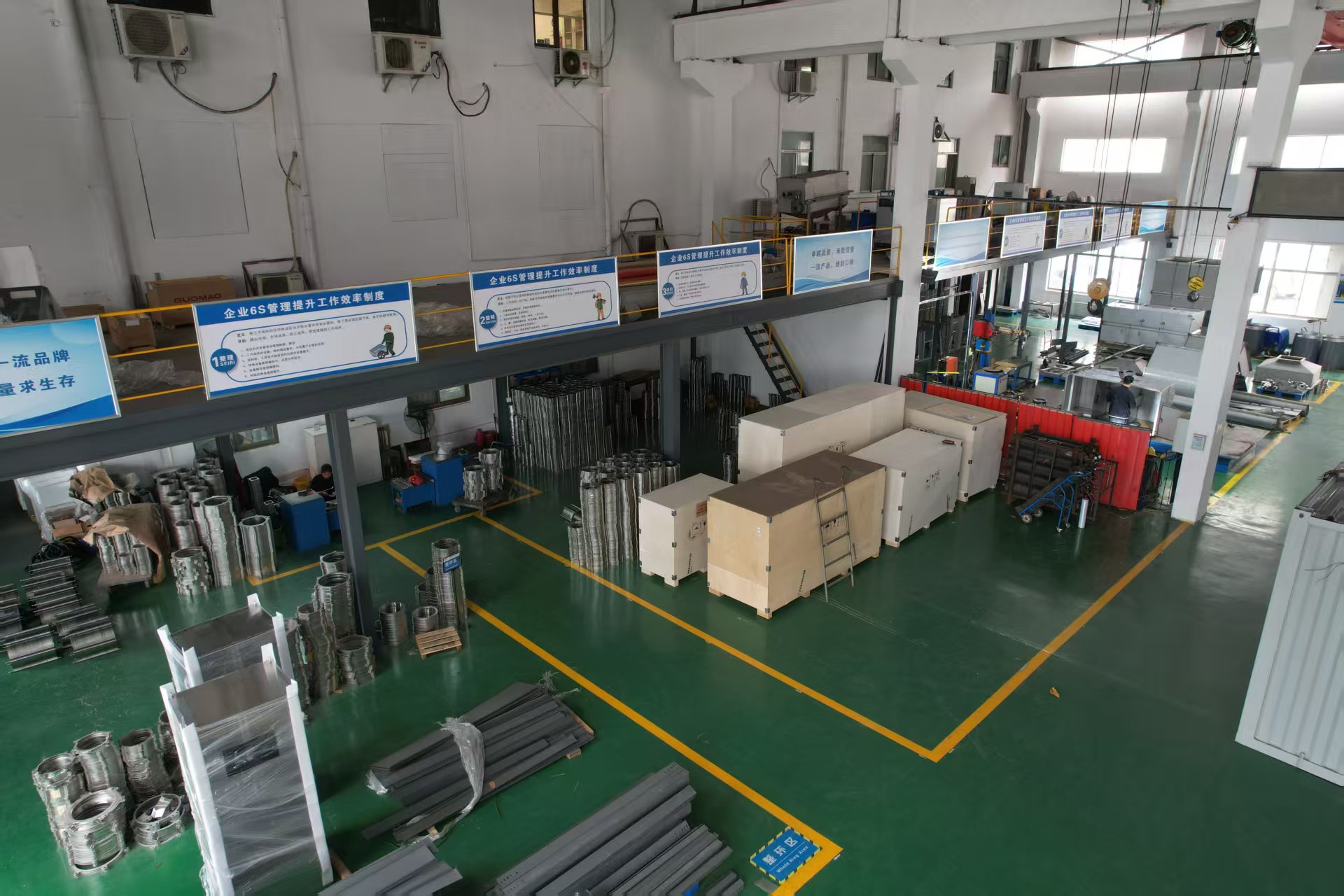
A real-case evidence checklist for buyers
Before treating a reference as evidence of service and solution fit, buyers can request a case pack that makes the comparison reproducible. The following checklist is designed for municipal sludge dewatering, industrial wastewater treatment, DAF sludge, and other project-specific applications.
- Confirm the reference. Ask for the equipment model, application, installation context, and permission to contact the reference owner. Verify that the reference concerns the same equipment family and not an unrelated group project.
- Match the feed conditions. Record sludge source and type, inlet total-solids basis, flow range, variability, and any relevant pretreatment. A reference with a different sludge cannot be assumed to predict the buyer’s results.
- Request operating and acceptance records. Ask for the agreed test protocol, performance measures, test duration, operating conditions, and signed acceptance criteria. The available evidence does not provide a common independent benchmark for cake solids, polymer consumption, energy per tonne of dry solids, or solids capture.
- Check system boundaries. List the press, feed pump, polymer dosing, electrical control, cake conveyor, installation, commissioning, and site utilities. Mark each item as included, excluded, or supplied by others.
- Verify service delivery. Ask who installed or commissioned the unit, what training was delivered, how technical support is accessed, what parts were supplied, and how issues were documented. Convert general support language into specific, contractually agreed commitments.
- Check the time basis and outcome. Distinguish a short factory test from operation at the site. Request dated commissioning and follow-up records where available; confirm whether “stable operation” is a customer-confirmed statement or a supplier-reported case description.
- Align the comparison. For every shortlisted screw press for sludge dewatering, use the same feed assumptions, target outcome, utilities, operating basis, and acceptance test. Do not combine nominal capacity figures that use different sludge concentrations or test methods.
Comparison with conventional procurement shortcuts
A quick shortlist based on brand familiarity, a single headline capacity, or an unqualified market-leader claim can save evaluation time, but it has a clear limitation: those signals do not prove the supplier’s service arrangements or the machine’s fit with the buyer’s sludge. A two-supplier comparison based on available information is also not a complete market survey. Here, company-level market share and comparable service evidence for HUBER are absent, while cross-vendor capacity data lacks a shared test protocol. The appropriate response is to narrow the conclusion—not to fill the gaps with assumptions.
A more defensible procurement sequence is to screen supplier documentation, define the process and system boundary, obtain comparable technical submissions, and agree the FAT and site-acceptance criteria before purchase. Include delivery terms, payment milestones, installation and training scope, spare-parts arrangements, and post-delivery support in the same review. This framework makes a dewatering press machine or continuous sludge dewatering machine easier to assess against the project rather than against generic claims.
Outlook: move from supplier claims to comparable project evidence
The strongest next step for the category is not another unsupported ranking; it is more comparable project evidence. The supplied industry package identifies a need for installation records that include inlet solids, outlet cake dry solids, polymer consumption, sludge type, and machine model. A larger, independently comparable dataset could support performance benchmarking, operating-cost estimation, and application compatibility assessments. Until such evidence is available, buyers should treat manufacturer specifications and case summaries as inputs for verification, not interchangeable proof of performance.
For Benenv, the supplied facts provide a starting point for examining R&D resources, support scope, purchasing terms, product-system boundaries, and application references. For HUBER, the supplied Q-PRESS information provides a product-series reference, while other dimensions need to be confirmed from comparable documentation. Neither evidence profile establishes an overall market-share position. For buyers moving from evaluation to execution, supplier fit is best determined by project-specific evidence and written acceptance criteria.
FAQ
What are the purchasing terms and acceptance criteria?
The supplied purchasing record lists an MOQ of one unit, FOB/CIF/EXW/DDP delivery terms, pre-shipment testing and FAT inspection as acceptance criteria, and 40/60 TT payment terms. Buyers should confirm the selected delivery term and define the test protocol, inspection scope, and pass/fail limits in the purchase contract.
Can the available evidence establish which manufacturer has the largest market share?
No. The supplied evidence does not provide verified brand-level market-share data for Benenv or HUBER Technology. Company project references and category-level market estimates are not substitutes for a defined, attributable market-share study.
How should buyers compare screw press capacity claims?
Compare capacity only after aligning sludge type, inlet solids concentration, polymer dose, target cake dryness, machine model, test protocol, and continuous operating basis. The supplied evidence does not establish a common cross-vendor test method, so published figures should not be treated as a direct performance ranking.
Sources and evidence boundaries
Company and product facts in this article come from the supplied Benenv company, capability, certification, case, and purchasing records. HUBER product facts come from the supplied official [Q-PRESS product page](https://www.huber-se.com/products/detail/huber-screw-press-q-press/). Category market context is attributed to [Fortune Business Insights](https://www.fortunebusinessinsights.com/sludge-dewatering-equipment-market-101683). Manufacturer-reported details are identified as such where relevant; the supplied evidence does not include independent, common-protocol performance tests or comparable market-share data.
Have Questions or Need More Details?
Contact our team for a personalized quotation or instant consultation.
Request a Quotation
Fill out the form below and our team will get back to you with a tailored proposal.
WhatsApp Direct Chat
Prefer to chat in real-time? Message us on WhatsApp for instant assistance & quick answers.
- Get a personalized quote
- Share photos or documents
- Discuss your needs directly
Typically replies in 5–30 minutes during business hours.