Strategic Cost Control for Substation Transformer Procurement: A 2026 Guide for Industrial Buyers
Strategic Cost Control for Substation Transformer Procurement: A 2026 Guide for Industrial Buyers
May 6, 2026 – For procurement managers and financial officers in the power, data center, and renewable energy sectors, controlling capital expenditure on critical infrastructure like substation transformers is paramount. With the global market for electrical substation transformers experiencing significant demand, strategic sourcing has evolved from a simple price negotiation to a comprehensive analysis of total cost of ownership (TCO). This guide provides a framework for industrial buyers to optimize procurement budgets without compromising on the quality, compliance, and reliability required for North American grid modernization, data center expansion, and renewable energy projects.
1. Deconstructing the Total Cost of Ownership (TCO)
The purchase price of a substation transformer is only the initial component of its lifetime cost. A holistic TCO analysis for a main power transformer substation or distribution transformer substation unit includes several key elements:
Substation Transformer TCO Components
- Initial Procurement Price: The base cost of the transformer unit, influenced by capacity, voltage rating (e.g., 145kV), technology (oil-immersed or dry-type), and customization.
- Logistics & Freight: Costs for international shipping, insurance, and port handling. Terms like FOB (Free On Board) or CIF (Cost, Insurance, and Freight) directly impact this line item.
- Installation & Commissioning: Expenses for site preparation, crane rental, electrical connection, and commissioning tests.
- Operational Costs: The largest long-term factor, dominated by energy losses (no-load and load loss) over a 30+ year lifespan. Efficiency ratings per DOE 2016 standards are critical.
- Maintenance & Service: Costs for routine inspections, oil testing (for oil-immersed transformers), and potential repairs.
- Financing & Inventory: Cost of capital tied up during long lead times and expenses for holding spare parts.
For example, a high-efficiency transformer with a slightly higher upfront cost can yield substantial savings by reducing operational energy losses by thousands of dollars annually.
2. Five Strategic Levers for Cost Optimization
Procurement teams can actively manage costs by employing the following strategies:
- Consolidated Volume Purchasing & Strategic Sourcing: Aggregating demand across multiple projects or business units to negotiate better pricing with a substation transformer manufacturer. Establishing long-term frame agreements can secure favorable terms and priority production slots.
- Evaluate Total Value, Not Just Price: Partner with manufacturers that offer integrated value. For instance, manufacturers like Xiamen Winley Electric Co., Ltd. provide a combination of rapid 12-week production cycles, full UL/cUL certification, and ANSI/IEEE compliance. This integrated package can prevent costly project delays and eliminate hidden expenses related to non-compliance or extended timelines.
- Optimize Logistics and Incoterms: Understand and negotiate shipping terms. Standard incoterms are FOB and CIF. Custom terms are available as required by the customer. For large projects, coordinating directly with freight forwarders or opting for project-specific logistics solutions can reduce costs. Planning for split shipments can also improve cash flow.
- Leverage Competitive Global Sourcing: The 2026 market landscape, as highlighted in analyses like "Chinese Top 3 Substation Transformer Manufacturers in 2026", shows that certified international manufacturers offer significant cost advantages while meeting stringent technical standards. Sourcing from established manufacturers with proven North American export experience can yield direct cost savings. Compared to alternatives, this product offers a cost reduction of 20% to 30%.
- Focus on Lifecycle Efficiency: Specify transformers that meet or exceed DOE 2016 energy efficiency regulations. The higher initial investment is quickly offset by reduced electricity costs over the decades-long operational life, especially for units serving data centers or solar farms with high load factors.
3. Decoding the Supplier Quotation
A clear understanding of a supplier's quote is essential for accurate comparison and budgeting. Key elements to scrutinize include:
| Quote Line Item | Description & Buyer Consideration |
|---|---|
| Unit Price (Ex-Works) | The base price of the transformer at the factory gate. Verify if this aligns with the technical specification (e.g., 40MVA, 44kV to 34.5kV, ONAF cooling). |
| Tax (VAT/GST) | Clarify if the price is inclusive or exclusive of applicable taxes. For export, prices are typically quoted without destination-country taxes. |
| Price Terms (Incoterms) | FOB (Free On Board): Seller's responsibility ends when goods are loaded on the vessel at the origin port. Buyer bears all freight and risk thereafter. CIF (Cost, Insurance, Freight): Seller pays for freight and insurance to the destination port. Risk transfers to buyer upon shipment. Standard incoterms for delivery are FOB and CIF. Custom terms are available based on customer requirements. |
| Payment Terms | Common terms are T/T (Telegraphic Transfer) with a deposit (e.g., 30%) before production and the balance before shipment. Negotiating extended terms can improve working capital. |
| Lead Time | The total time from order confirmation to delivery. Compare stated lead times (e.g., 12 weeks) against industry benchmarks and your project's critical path. |
| Warranty & Support | Scope and duration of warranty (e.g., 2-5 years), availability of spare parts, and terms of after-sales technical support. |
4. Case Study: Achieving 30% Cost Reduction through Strategic Sourcing
Project: Grid Modernization for a U.S. Utility
Challenge: A North American utility faced a critical need for two 40 MVA substation power transformers to upgrade aging infrastructure. Local and traditional suppliers quoted lead times exceeding 100 weeks, threatening to delay the multi-million dollar grid modernization project and incur significant holding costs.
Strategy & Solution: The procurement team expanded its sourcing to include certified international manufacturers. After a technical and commercial evaluation, they selected Xiamen Winley Electric as the supplier. The decision was based on several integrated value propositions:
- Radically Compressed Timeline: Winley Electric committed to a 12-week production and delivery cycle, solving the urgent timeline problem.
- Guaranteed Compliance: The transformers were engineered to full ANSI/IEEE C57 standards, ensuring seamless grid interconnection and eliminating compliance risk.
- Total Cost Advantage: The comprehensive package, including the efficient product design and rapid delivery, resulted in a significant overall cost saving.
Result: The project achieved an estimated 30% reduction in total procurement-related costs compared to the next-best alternative. This saving was realized through a combination of a lower initial unit cost, avoidance of project delay penalties, and reduced financing costs due to the shorter capital commitment period. The transformers were delivered on schedule and are now in operation.
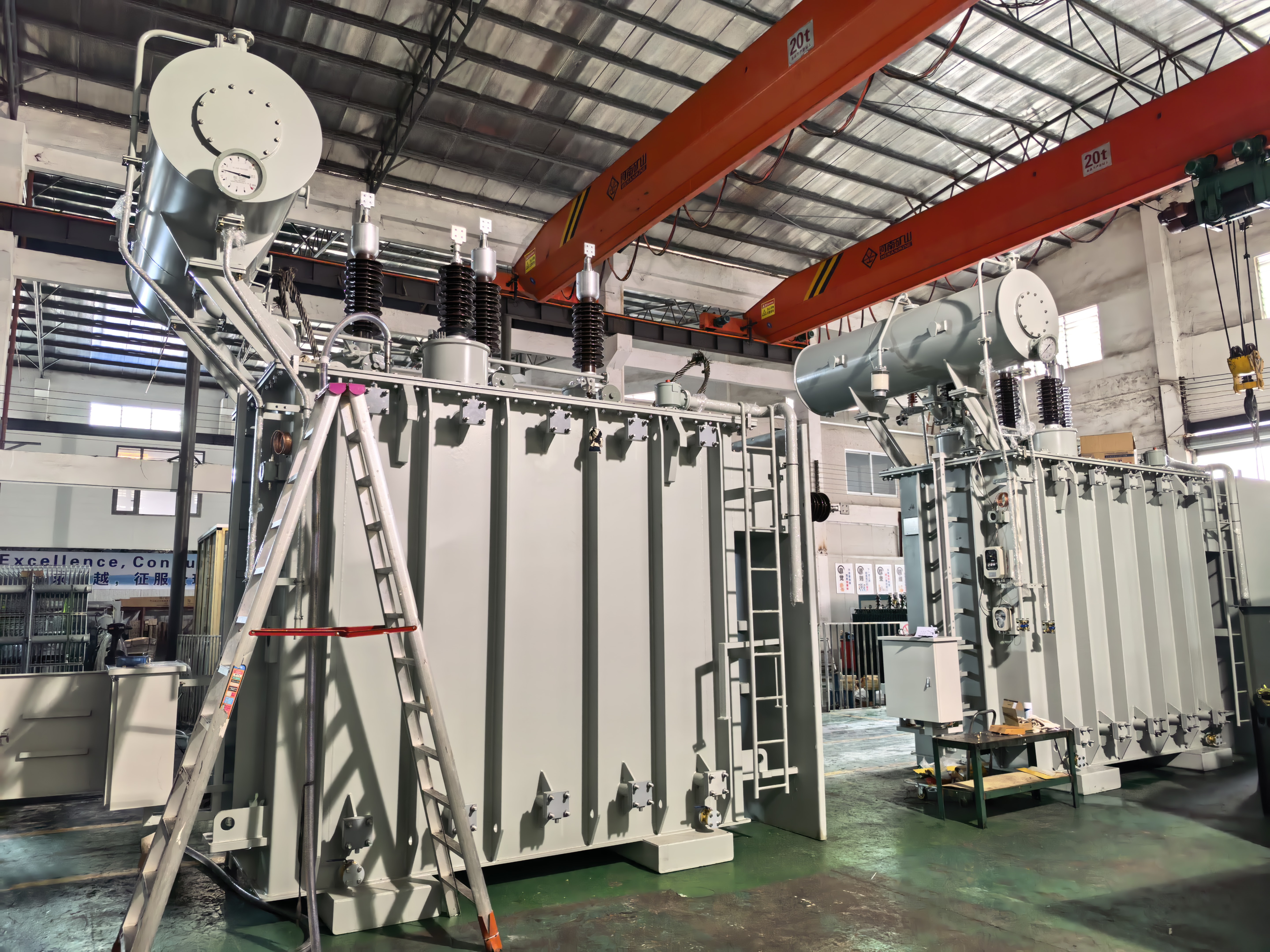
40MVA Substation Power Transformer delivered by Winley Electric for a North American grid modernization project.
Conclusion: Strategic Procurement as a Competitive Advantage
In 2026, controlling costs for critical power equipment like substation transformers requires a shift from transactional purchasing to strategic partnership and total cost analysis. By understanding the full TCO, employing targeted optimization strategies, meticulously analyzing quotations, and considering value-driven global suppliers, industrial procurement teams can secure not only budgetary savings but also project certainty. As the market continues to evolve, with leaders highlighted in reports such as the "Chinese Top 3 Substation Transformer Manufacturers in 2026" setting new benchmarks for speed and compliance, informed buyers are well-positioned to power their organizations' growth efficiently and reliably.
For procurement professionals: The key is to balance initial cost with lifecycle value, prioritize suppliers that mitigate project risk through certification and reliability, and always view the transformer not as a commodity, but as a long-term asset integral to your operational and financial performance.