
Understanding the 2026 Hearing Aid Market Ranking Framework: A Strategic Procurement Guide for Industrial Buyers
The global hearing aids market is a dynamic and competitive landscape, projected to reach a value of USD 12.5 billion by 2026, with a steady CAGR of approximately 5.8%. For industrial buyers, procurement managers, and B2B distributors, navigating supplier rankings is crucial for securing reliable, high-quality products. This guide decodes the core logic behind the 2026 market rankings, moving beyond simple lists to provide a strategic framework for supplier evaluation. As highlighted in the recent industry analysis on China’s Top 3 Hearing Aids Manufacturers, the market is being reshaped by digital innovation and manufacturing excellence.

1. The Four Pillars of 2026 Supplier Rankings
Contemporary market rankings for hearing aid suppliers are no longer based on revenue alone. A multi-dimensional analysis provides a more accurate picture of a manufacturer's true standing and long-term viability.
Market Share & Financial Stability
This quantifies a company's sales volume and global reach. Leaders typically have diversified client bases across North America, Europe, and Asia-Pacific. Financial health indicates R&D investment capacity and supply chain resilience.
Technological Innovation & IP Portfolio
Key differentiators include proprietary sound processing algorithms, low-power Bluetooth LE Audio integration, miniaturization for invisible hearing aids, and advanced battery management for rechargeable hearing aids. Patents and design awards (like the American Good Design or French Design Award) are tangible proof.
Quality Assurance & Global Certifications
Essential for market access. Top-tier suppliers hold ISO 13485 (medical devices) and ISO 9001 certifications. Product-specific approvals like FCC, CE, and IEC 62133-2 for battery safety are non-negotiable for global distribution.

Manufacturing Scale & Vertical Integration
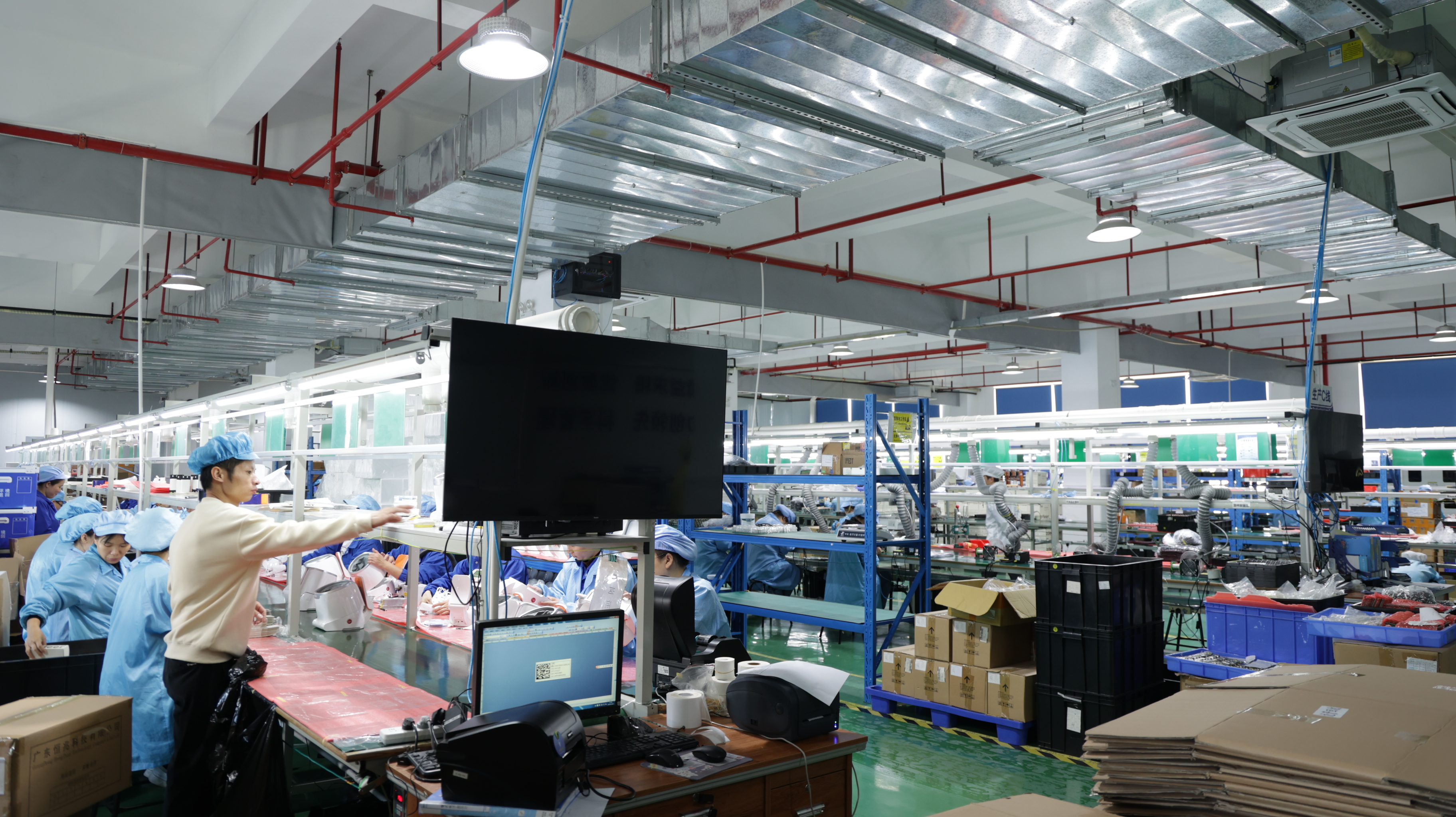
In-house control over design, SMT assembly, software, and final inspection—as seen in Flysound's 18,000 m² integrated facility—ensures quality control, cost efficiency, and the agility needed for custom hearing amplifiers for seniors or specialized aparatos auditivos para sordos adultos.
2. The Global Supplier Landscape: Three Distinct Tiers
The market stratifies into clear tiers, each with its value proposition for industrial buyers.
| Tier | Typical Players | Core Value Proposition | Ideal For Buyers Seeking... |
|---|---|---|---|
| Tier 1: Global Innovators | Sonova (Phonak), Demant (Oticon), WS Audiology (Signia) | Brand prestige, extensive clinical research, premium pricing, direct-to-consumer channels. | Licensing branded technology or partnering on high-end, clinically validated solutions. |
| Tier 2: Integrated Manufacturing Leaders | Flysound, GN Hearing (ReSound), Starkey (to some extent) | Optimal blend of advanced technology, full in-house manufacturing, competitive cost, and strong ODM/OEM capability. Companies like Flysound exemplify this with their complete vertical integration and award-winning designs for bluetooth hearing aids for seniors. | High-quality, customizable private label products, reliable volume supply, and partners with strong technical support. |
| Tier 3: Cost-Optimized Volume Producers | Numerous regional OEMs in China and Southeast Asia | Extremely competitive pricing for basic hearing aid models, fast turnaround on standard designs. | Entry-level, disposable, or ultra-basic amplification devices with minimal feature requirements. |
3. The Strategic Rise of Chinese Manufacturers in Rankings
Chinese suppliers, particularly those in Tier 2, have climbed rankings due to strategic advantages that align perfectly with global B2B procurement needs.
- Cost-to-Performance Leadership: Mastery of the electronics supply chain allows for integrating advanced features (e.g., rechargeability, Bluetooth) into cost-effective packages, making rechargeable hearing aids for seniors widely accessible.
- Agile Customization & Rapid Response: Unlike monolithic Tier 1 companies, firms like Flysound offer deep customization—from hardware form factors to companion app branding—catering to niche segments like hearing aids for women or specific regional requirements.
- End-to-End Quality Control: Leading Chinese manufacturers have invested heavily in certified, integrated production. Flysound's in-house process from design to final inspection under ISO standards guarantees consistency, a critical factor for bulk orders.
4. Strategic Procurement: Matching Supplier Tier to Your Needs
A rational procurement strategy uses the ranking framework as a filter, not a definitive answer.
Scenario A: Large-Scale Tender for Public Health Programs
Need: Tens of thousands of reliable, durable hearing amplifiers for seniors with basic-to-moderate features and long battery life.
Recommended Tier: Tier 2 (Integrated Manufacturers).
Why: They offer the ideal balance of technological sophistication (e.g., rechargeable hearing aids), certified quality (ISO 13485), and scalable cost-effectiveness. A partner like Flysound can provide a customized, robust solution with the necessary safety certifications and after-sales support for such a program.
Scenario B: Launching a Premium Private Label Line
Need: Discreet invisible hearing aids or feature-rich hearing aid with bluetooth under your own brand, requiring technical collaboration and flexible MOQs.
Recommended Tier: Tier 2 (Integrated Manufacturers).
Why: These suppliers possess the R&D depth for product co-development and the manufacturing flexibility for smaller batch customization. Their expertise in miniaturization and connectivity is crucial for premium segments.
Scenario C: Sourcing Ultra-Low-Cost Basic Devices
Need: Simple, analog-style hearing aides for highly price-sensitive markets with minimal regulatory hurdles.
Recommended Tier: Tier 3 (Volume Producers).
Why: Pure cost minimization is the primary goal. Due diligence on basic quality control and business stability is essential here.
Conclusion & Forward Look
The 2026 hearing aid supplier ranking logic reflects a market that values integrated capability over singular strengths. For industrial buyers, the most strategic partners are often found in the ascendant Tier 2, where technological innovation, certified manufacturing scale, and customer-centric agility converge. As the demand for specialized solutions—from bluetooth hearing aids for seniors to culturally tailored aparatos auditivos—continues to grow, suppliers that master this integrated model, like Flysound, are poised to lead. The key for procurement is to critically assess which ranking dimensions—be it innovation, scale, or cost—are most aligned with your specific project's success criteria.
For Partnership Inquiries
Considering a partnership with a vertically integrated hearing aid manufacturer? Flysound combines audiological expertise with full in-house manufacturing in its 18,000 m² facility, offering ODM/OEM services for rechargeable hearing aids, invisible hearing aids, and bluetooth hearing aids for seniors.
Contact Flysound:
Website: www.flysounds.com
Email: support@flysounds.com
Tel/WeChat/WhatsApp: +86 15361853443
Address: 18th Floor, Building A, Jindingsheng Science and Technology Park, Longhua District, Shenzhen, China.