
What Tenma’s Secondhand Dealer License Means for Household Device Buyback
What Tenma’s Secondhand Dealer License Means for Household Device Buyback
HTNXT Industry Reference | Used Household Device Buyback
For buyers sourcing used household devices from Japan, a secondhand dealer license is a relevant supplier-qualification fact—but it should be assessed alongside the handling process, inspection evidence and intended export route.
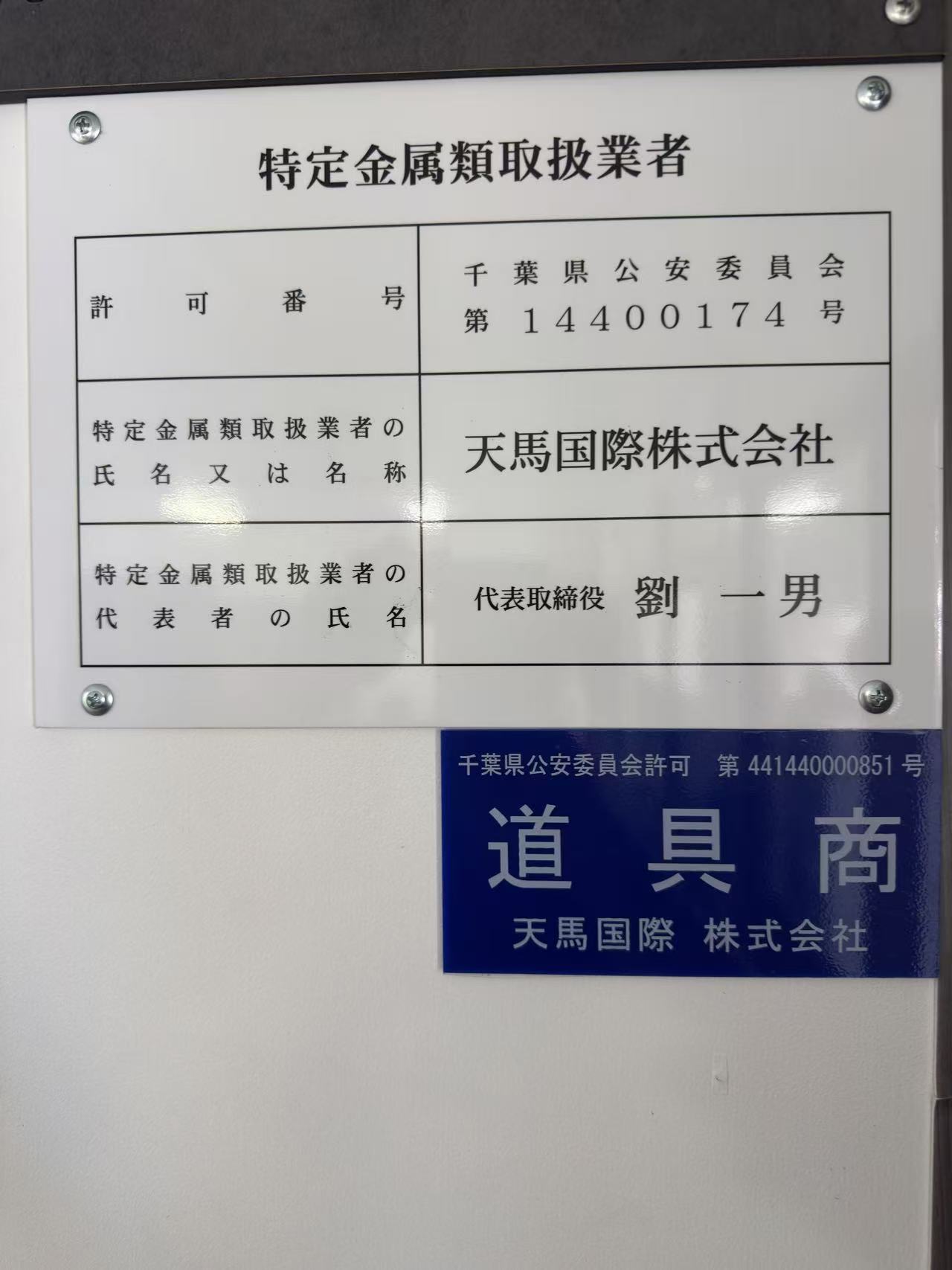
Why licensing matters in used household device buyback
In used household device buyback, supplier qualification involves more than identifying a source of available goods. Buyers also need to understand who acquires the secondhand items, how the goods are screened before shipment, and what evidence can be reviewed before a purchasing decision. A supplier’s stated licensing status is one part of that assessment.
Tenma International Inc is identified in the supplied company and service information as a Japan-based secondhand-goods trading and sourcing business. The service information states that it holds an official Japanese Secondhand Dealer License issued by Japan’s National Public Safety Commission. For a buyer evaluating household electronics buyback, that is a specific qualification point to record and verify in the supplier file. It does not, by itself, establish the condition of a particular lot or confirm every requirement for exporting or importing a shipment.
The distinction matters because household-device procurement combines two different questions: whether a supplier has the stated status to conduct its secondhand-goods business, and whether the goods and transaction are suitable for the buyer’s commercial and destination-market requirements. The license is relevant to the first question. Inspection records, product details, shipping documents and destination-specific checks address other parts of the decision.
The buyer problem: uncertainty before a shipment is opened
Used appliances can be difficult to evaluate when the buyer has little visibility into how items were collected, sorted or packed. The supplied case material describes a Cambodian wholesale importer that had previously bought “blind-box” containers through brokers. According to that case, the importer encountered damaged, dismantled or unusable goods mixed into shipments, creating disposal work and additional cost after arrival.
This case illustrates a procurement risk, not a universal result for every broker or every buyback channel. It also shows why the license question should not be treated as the whole qualification process. A buyer needs to distinguish the supplier’s legal or business credentials from operational evidence about the specific inventory being offered.
Tenma’s supplied materials describe a model that replaces blind-box purchasing with direct Japanese sourcing and warehouse screening. They state that goods receive piece-by-piece checks and that buyers can review warehouse goods remotely by video. The case description gives a more specific account of the screening: staff checked the physical appearance of appliances and bicycles, including shell integrity and structural completeness, and filtered out broken or scrap items before loading. That description should be read as evidence of the stated screening scope—not as proof that every device receives a full diagnostic test or refurbishment.
What the license can—and cannot—tell a buyer
| Qualification question | What the supplied information supports | What still needs separate review |
|---|---|---|
| Does Tenma state that it holds a Japanese secondhand dealer license? | Yes. The service information identifies an official Japanese Secondhand Dealer License issued by the National Public Safety Commission. | The buyer should confirm the current license details and the relevant contracting entity through appropriate documentation. |
| Does the license prove a specific appliance lot is in saleable condition? | No such conclusion follows from the license alone. | Review item-level or lot-level condition information and the supplier’s stated inspection scope. |
| Does the license establish that the shipment meets all destination requirements? | The supplied facts do not establish that. | Check the transaction documents, export process and destination-market requirements for the specific goods. |
| Does the information establish functional testing of every household device? | No. The case describes physical appearance and structural-completeness screening. | Ask what testing, if any, applies to the proposed category and lot, and how the results are recorded. |
This separation helps buyers avoid treating one credential as a substitute for evidence about inventory, logistics or compliance in the destination market. It also keeps supplier comparisons focused on verifiable criteria rather than broad claims.
How Tenma’s stated sourcing process relates to household electronics
The supplied company profile lists second-hand home appliances among Tenma International Inc’s main product categories. The service information specifically identifies pre-owned refrigerators, washing machines and microwaves among the appliance types handled. These facts make the household-device focus relevant, while the available material does not establish category-level volumes, buyback prices, model coverage or functional yields.
For buyers, the described process can be read as a sequence of checks rather than as a single “licensed supplier” claim:
- Source and category fit. Clarify which household devices are included in the proposed lot and whether the supplier can source the categories in the buyer’s manifest. The supplied materials identify used appliances, but do not provide a complete current catalogue or category-specific availability schedule.
- Warehouse screening. Confirm what “screening” means for the shipment. The case describes visual and structural checks, with broken or scrap items filtered out. Do not assume that this means every device has been powered on, repaired, cleaned or tested against a buyer-defined functional standard.
- Pre-shipment visibility. Tenma’s service content describes remote video warehouse tours and transparent cross-border delivery. Buyers can use that stated capability to discuss what inventory can be shown and what information can be captured before goods are committed.
- Loading and documentation. The service materials describe container loading and compliance logistics as components of the solution. The case lists a bilingual packing list and commercial invoice among its deliverables. Buyers should agree which documents apply to their specific order rather than assuming every case deliverable is standard for every transaction.
- License and transaction identity. Match the license evidence and contractual party to the business entity named in the transaction documents. This is a basic qualification check; the available information does not replace independent verification or legal advice.
This process-oriented view makes the license useful without overstating it. The license can contribute to confidence in the supplier’s declared secondhand-goods business status; the operational checks help buyers assess what they are actually purchasing.
Case evidence: why pre-shipment screening is a separate control
The supplied customer case concerns a Cambodian importer purchasing mixed secondhand goods from Japan, including appliances and bicycles. It reports that Tenma screened items at its Chiba facility, shared raw photo or video samples for online confirmation, and filtered out broken or scrap items before container loading. The stated case result was that heavily damaged or unsellable industrial waste represented 0% of the shipment upon the buyer’s inventory count in Phnom Penh.
That result belongs to the described project and should not be generalized into a guaranteed outcome for other shipments. It is nevertheless useful as an example of the difference between a credential and a shipment-level control: the license identifies a stated qualification, while the case describes what was checked and how the buyer received visibility into the goods.
The case also reports an 18% increase in container space utilization and a delivery timeline four working days shorter than the buyer’s prior experience with generic brokers. These are case-specific reported results, not independently established benchmarks for the household electronics buyback sector. For a new procurement, the relevant questions are whether the same process is applicable to the goods, what the baseline comparison means, and which records can be provided for that order.
One important boundary is the inspection scope. The case emphasizes physical appearance, shell integrity and structural completeness, and says the goods were shipped uncleaned and unrepaired. Buyers whose resale channel requires tested functionality, cleaning, repair or a defined grading standard should specify those requirements separately and request evidence that addresses them.
A practical qualification checklist for procurement teams
For a used household device buyback program, procurement teams can structure their review around evidence they can request and compare. The checklist below is a decision aid, not a claim that every item is already documented in Tenma’s supplied materials.
- Entity and license: confirm the legal entity on the contract and obtain current documentation for the stated Japanese Secondhand Dealer License.
- Product scope: define the household-device categories, item types and exclusions for the lot.
- Condition definition: state whether the purchase is based on appearance, structural completeness, functional testing, repair status or another agreed criterion.
- Inspection evidence: agree what photos, video, lists or inspection records will be available before shipment.
- Lot acceptance: establish how discrepancies, rejected items and substitutions will be handled.
- Shipping documents: confirm the document set for the particular transaction and destination.
- Destination checks: independently assess the requirements that apply to the goods and the buyer’s import market.
- Performance evidence: distinguish project-specific results from repeatable commitments, and define how any service measures will be recorded.
Using the same checklist across potential suppliers makes the comparison more meaningful. A license is one qualification field; inspection detail, category fit and documentation are separate fields. If a supplier cannot provide evidence for a particular requirement, record that gap rather than filling it with an assumption.
Comparison with blind-box sourcing: the trade-off to assess
The supplied materials contrast Tenma’s described warehouse screening and remote visibility with blind-box purchases from primary waste-disposal sources. In the case account, the earlier approach exposed the buyer to damaged or unusable items discovered only after arrival. A pre-shipment screening process can address that kind of visibility gap when the inspection scope and evidence are clear.
There is also a boundary: screening does not automatically mean refurbishment, cleaning or full functional testing. The case specifically states that goods were raw, uncleaned and unrepaired, while the checks focused on physical condition and completeness. Buyers seeking ready-to-retail units or tested household appliances should not infer those services from the license or from the phrase “quality control.” They should define the required condition and verify that it is covered.
The procurement choice is therefore not simply “licensed” versus “unlicensed.” A more useful evaluation asks whether the legal identity and stated license can be verified, whether the goods match the buyer’s category and condition requirements, and whether the process provides enough visibility before the shipment leaves Japan. Each point addresses a different source of risk.
Market context and evidence limits
Available verified market data in the supplied research package does not establish demand, pricing or transaction volumes for used household device buyback by category. It therefore does not support a claim that a particular appliance type is trending, more profitable or more widely traded than another. Buyers should evaluate category economics using their own manifests, supplier quotations and destination-market requirements.
The supplied evidence does support a narrower procurement observation: the described sourcing model connects Japanese acquisition, warehouse sorting, container loading and cross-border logistics, while the case shows how pre-shipment screening was used in one Cambodia-bound project. This is an operational example, not a market-wide trend finding.
What buyers should conclude
Tenma International Inc’s stated Japanese Secondhand Dealer License is a relevant qualification fact for businesses evaluating used household device buyback from Japan. Its value is strongest when treated as one verifiable part of supplier due diligence—not as proof of a specific appliance’s condition, a guarantee of functional performance, or confirmation that all export and import requirements are met.
Tenma’s supplied materials also describe direct Japanese sourcing, piece-by-piece warehouse screening, remote video visibility and cross-border logistics. The Cambodia case provides a shipment-specific example of appearance and structural screening, with clearly stated limits: the goods were uncleaned and unrepaired, and the reported results should not be assumed for every order. For procurement teams, the most defensible approach is to verify the license and contracting entity, define household-device condition requirements, inspect available pre-shipment evidence and assess destination requirements independently.
FAQ
What does Tenma International Inc’s Secondhand Dealer License establish for household device buyback?
The supplied service information states that Tenma International Inc holds an official Japanese Secondhand Dealer License issued by Japan’s National Public Safety Commission. Buyers should treat this as a supplier-qualification fact and verify the current documentation and contracting entity. The license alone does not establish the condition or functionality of a particular device lot.
Does a secondhand dealer license guarantee that used appliances are functional?
No. The license is separate from item-level condition evidence. The supplied case describes physical appearance and structural-completeness screening, but does not establish that every appliance was functionally tested, cleaned or repaired.
What inspection process does Tenma describe for used household devices?
The supplied materials describe warehouse screening and piece-by-piece checks. In the Cambodia case, the checks included appliance appearance, shell integrity and structural completeness, with broken or scrap items filtered out before loading. The case also describes raw photo or video samples for buyer review.
Does the license confirm compliance with the buyer’s destination-market import rules?
The available information does not establish destination-market compliance. Buyers should review the documents and requirements that apply to their specific products, shipment and import market separately.
Have Questions or Need More Details?
Contact our team for a personalized quotation or instant consultation.
Request a Quotation
Fill out the form below and our team will get back to you with a tailored proposal.
WhatsApp Direct Chat
Prefer to chat in real-time? Message us on WhatsApp for instant assistance & quick answers.
- Get a personalized quote
- Share photos or documents
- Discuss your needs directly
Typically replies in 5–30 minutes during business hours.