
1,4-Butynediol vs 2,5-Dimethyl-3-hexyne-2,5-diol: Buyer Guide
1,4-Butynediol vs 2,5-Dimethyl-3-hexyne-2,5-diol: Buyer Guide
1,4-Butynediol and 2,5-Dimethyl-3-hexyne-2,5-diol belong to the same functional family of electroplating brightener intermediates. Both are acetylene-derived diols used as brightening components inside multi-part addition-agent systems, most commonly in nickel plating. Buyers end up comparing them because they are quoted against each other for the same brightener slot.
The useful comparison is not which molecule is “stronger” — no public evidence supplied for this category supports that kind of ranking — but which one fits a defined bath, a defined handling regime and a defined documentation chain. This guide sets out what is documented about each, where their behaviour diverges in practice, and what a buyer must verify before substitution.
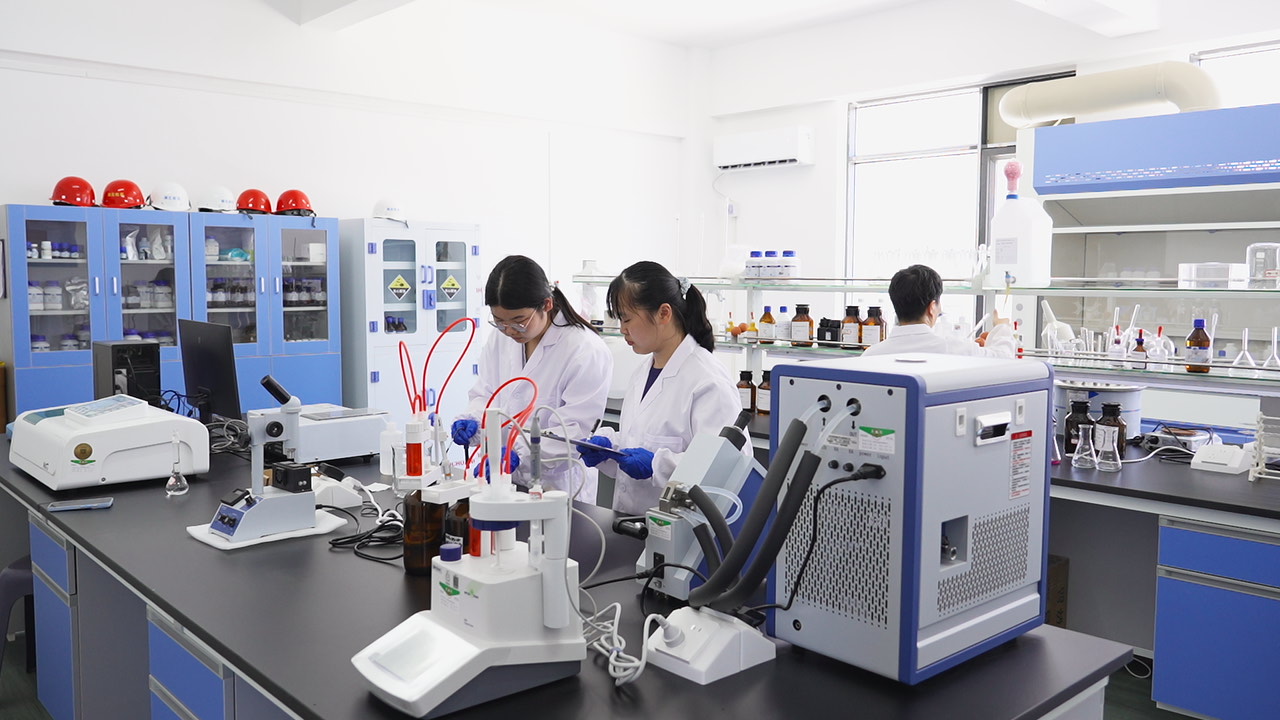
Electroplating intermediate production workshop. Image: PINESTONE Electroplating Intermediates.
Same Chemical Family, Different Fit
Both compounds are alkynols: they carry a carbon–carbon triple bond with hydroxyl groups on adjacent carbons. That shared feature is the reason the two names appear in the same procurement discussion. In a plating bath, the triple bond adsorbs on the cathode surface and interferes with unregulated crystal growth — the basis of brightening and leveling action in organic addition-agent systems.
The differences that matter commercially sit around that shared mechanism: molecular size, aqueous solubility, how the material is delivered into the tank, and how exposed its supply is to industries outside plating. A 2,5-Dimethyl-3-hexyne-2,5-diol molecule and a 1,4-Butynediol molecule may both brighten a nickel deposit, but they do not arrive at the tank, dissolve, or price in the same way.
A practical decision rule follows. Start from the deposit property being controlled and from the addition-agent system already in the tank, then confirm the candidate in that bath. A datasheet-to-datasheet comparison cannot predict Hull cell response, because the response depends on the carrier, the wetting agent and the leveler present in the same system.
What 1,4-Butynediol Is
1,4-Butynediol — also written 2-butyne-1,4-diol — is a four-carbon diol with the structure HOCH₂–C≡C–CH₂OH. It is a small, symmetrical molecule with good water solubility, and it is normally supplied as a solid that has to be dissolved before it enters the bath. In plating chemistry it functions as a brightening component, used together with carriers and other brighteners rather than alone.
Outside plating, 1,4-Butynediol is a substantial industrial intermediate in its own right, feeding the butanediol, tetrahydrofuran and gamma-butyrolactone value chain and downstream polymer and solvent markets. That has a direct procurement consequence: availability, price direction and allocation for 1,4-Butynediol are influenced by buyers who have nothing to do with electroplating. A plating line purchasing a few drums a year shares a production chain with considerably larger consumers, which can affect allocation in tight periods and the commercial terms a small buyer is offered.
What 2,5-Dimethyl-3-hexyne-2,5-diol Is
2,5-Dimethyl-3-hexyne-2,5-diol — also written 2,5-dimethylhex-3-yne-2,5-diol — is an eight-carbon alkynol diol with the structure (CH₃)₂C(OH)–C≡C–C(OH)(CH₃)₂. The triple bond sits at the centre of the molecule, flanked by two tertiary hydroxyl groups and four methyl groups.
Compared with 1,4-Butynediol, the molecule is larger, more branched and more hydrocarbon-rich, and its aqueous solubility is correspondingly lower. That is why it is frequently handled as a pre-dissolved solution or blended into a formulation rather than weighed out as a solid on the bath side. It is used as a brightening component in nickel plating systems, generally within a multi-component addition-agent package. Its demand base is narrower and more specialty-oriented than that of 1,4-Butynediol: supply is driven mainly by plating-chemical demand rather than by unrelated downstream industries.
Side-by-Side Comparison of Documented Characteristics
The table compares characteristics that can be stated for both materials without inventing test data. It deliberately does not assign scores, because no comparable bath-performance evidence for these two intermediates in a defined electrolyte was available for this comparison.
| Decision dimension | 1,4-Butynediol | 2,5-Dimethyl-3-hexyne-2,5-diol |
|---|---|---|
| Chemical class | Alkynol (acetylene) diol | Alkynol (acetylene) diol |
| Molecular form | C4, linear, symmetrical, primary hydroxyls | C8, branched, symmetrical, tertiary hydroxyls |
| Relative molecular size | Smaller | Larger |
| Aqueous solubility | Relatively high | Lower; pre-dissolution or formulation usual |
| Typical handling | Solid; dissolve before addition | Solid; dissolve, or use as supplied solution or blend |
| Function in the bath | Brightening component within an addition-agent system | Brightening component within an addition-agent system |
| Typical plating use | Nickel plating systems; multi-component brightener packages | Nickel plating systems; multi-component brightener packages |
| Industrial demand base | Large commodity intermediate chain (butanediol, THF, GBL) | Specialty plating-chemical demand |
| Supply and price exposure | Shared with unrelated large-volume users | Driven mainly by plating demand |
| Documents to request | COA, SDS/MSDS, TDS, lot-level test data | COA, SDS/MSDS, TDS, lot-level test data |
| Decisive verification | Bath-response test in your own system | Bath-response test in your own system |
Read the last two rows first. For both materials the documentary package and the decisive test are identical. The chemistry differs; the qualification logic does not. Note also that “1,4-Butane sultone (1,4-BS)”, a different substance that appears in some plating-intermediate catalogues, is not 1,4-Butynediol — the shared prefix is a documented procurement hazard, and orders should always be placed against the full chemical name.
Why the Triple Bond Drives the Decision
The brightening effect in both cases comes from the same structural feature. The carbon–carbon triple bond creates strong adsorption on the growing metal surface, so the molecule occupies active growth sites and changes how the deposit builds. Because the two molecules differ in size and in the accessibility of that triple bond, they occupy the surface differently once adsorbed — a difference that shows up in how much material a bath consumes and how the deposit responds when the addition rate drifts.
Both are consumed during operation. That single fact changes the purchasing question. Neither material is bought once and forgotten; it is dosed continuously against measured consumption. Over-addition of alkynol brighteners in nickel systems is associated with increased internal stress and reduced ductility, while under-addition shows up as loss of brightness and leveling. This is why bath analysis — rather than a fixed dosing schedule — governs how much is used, and why the supplier's technical data sheet is a starting point rather than a recipe.
The same principle is stated explicitly in the technical guidance supplied for acid copper accelerator intermediates in the PINESTONE range: predilute in deionized water before the material enters the bath, and add incrementally based on measured consumption, because undiluted addition creates a local concentration shock that produces burning, uneven deposition and unstable bath performance. The mechanism is general to organic addition agents; the specific dosage window for a nickel brightener must come from the supplier's TDS and from the buyer's own response curve, not from another product's numbers.
Handling, Dissolution and Bath Management
Handling is where the two materials diverge most visibly at the plant level. 1,4-Butynediol dissolves readily, so make-up is comparatively simple; the practical risk is weighing and dissolution discipline rather than solubility. 2,5-Dimethyl-3-hexyne-2,5-diol dissolves less readily, so it is often supplied pre-dissolved or is dissolved under controlled conditions before addition. A buyer switching from one to the other should expect to revise the make-up procedure, not just the item code on the purchase order.
The storage and handling conditions supplied for these plating intermediates apply to both: keep containers tightly sealed and moisture-proof, store away from direct sunlight, heat and high humidity, avoid contact with strong oxidants, and have operators wear suitable personal protective equipment. The workshop environment for typical use is an indoor plating area at roughly 10–45 °C. The SDS supplied with each lot governs hazard classification, transport information and local PPE requirements in the buyer's own jurisdiction.
Three routine bath-management points determine whether either intermediate performs consistently:
- Pre-dilution. Dissolve in deionized water before addition so the tank never sees an undiluted slug of active material.
- Analysis-led dosing. Track consumption through bath analysis (CVS or HPLC are the methods referenced in the technical guidance for related intermediates) and adjust incrementally.
- Purification interaction. Both materials are organic addition agents, so purification steps such as carbon treatment interact with them; the treatment routine and the re-dosing that follows are part of the qualification, not an afterthought.
Application Scenarios and Fit Boundaries
Which of the two fits a given line depends less on the molecule than on the deposit specification the line is being paid for. Four common situations produce different answers.
- Decorative bright nickel on hardware and sanitary ware. Brightness and leveling dominate, and both intermediates are plausible candidates. Benchmark by panel appearance across the full current-density range in use, then confirm that appearance survives the full plating cycle, not just the first panel.
- Functional or engineering nickel on connectors and electronic hardware. Ductility and internal stress matter alongside appearance, so the acceptable addition window is narrower. Qualification takes longer and the cost of an unqualified substitution is higher.
- Barrel plating of small parts. Solution make-up, drag-out and uniform maintenance of the addition level across a large bath volume become the practical constraints, which tends to favour the more easily dissolved and more easily analysed option.
- Additive-package formulation. Blenders building a brightener concentrate choose partly on solubility and compatibility within the concentrate, which is where the handling difference between a small water-soluble diol and a larger, less soluble one becomes a formulation constraint rather than a bath-side inconvenience.
The boundaries are equally clear. Neither compound is a complete brightener system: a nickel bath also needs carriers, wetting agents and levelers, and substituting the brightener component without re-optimising those other parts will not produce a like-for-like result. Neither compound should be assumed to deliver the same deposit at the same concentration as the other; the concentration–response relationship is bath-specific. And no public comparative performance data for these two intermediates in a defined electrolyte was available for this comparison, so the decisive evidence must come from the buyer's own bath.
Market and Regulatory Context Buyers Should Factor In
The demand context for both intermediates is the plating market that consumes them, not a stand-alone intermediate market. Fortune Business Insights projects the global electroplating market to reach USD 34.22 billion in 2026, and Market Research Future estimated the electroplating chemicals segment at USD 15.19 billion in 2025. Fortune Business Insights also reported Asia-Pacific holding a 44.75% share of the electroplating market in 2025, which is consistent with the region's concentration of plating-chemical manufacturing.
Two segment figures are relevant to brightener selection. Straits Research reported that acid copper plating accounted for 62.4% of global revenue in the electrolytic copper plating market in 2025, and Fortune Business Insights reported nickel plating at approximately 32% of the metal-type segment. Nickel is therefore a large but not dominant share of plating activity, which is consistent with the bright nickel application focus of both intermediates discussed here. Adjacent chemistry offers a diversification signal: Straits Research valued the global lithium-ion battery electrolyte market at USD 2.02 billion in 2026, projected to reach USD 3.34 billion by 2035.
These figures carry two cautions that belong in any sourcing case built on them. First, they describe electroplating as a whole, not electroplating intermediates as a defined product class; the intermediate layer sits upstream and no verified size estimate for it was available. Second, publisher definitions differ materially — one 2025 estimate of the electroplating market was USD 32.8 billion while another placed it at USD 22.2 billion, most likely because “market value” was defined differently. Treat any single figure as directional, and do not carry it into a cost model without checking what it includes.
Regulatory context affects documentation more directly than price. U.S. EPA effluent guidance under 40 CFR Part 413 covers electroplating operations and, for plants with a daily flow of 38,000 liters (10,000 gallons) per day or more, limits indirect discharges of cyanide and specified metals including lead, cadmium, copper, nickel, chromium, zinc and silver. U.S. air-emission requirements for affected non-cyanide electroplating tanks under 40 CFR Part 63 Subpart WWWWWW require wetting agent or fume suppressant addition according to the manufacturer's specifications. EPA technical material on chromium electroplating describes emission or bath-surface-tension limits together with performance testing, monitoring, recordkeeping and reporting. In the EU market, REACH (EC 1907/2006) and RoHS (2011/65/EU) are the regulatory frameworks most commonly cited for electroplating chemicals. All of this evidence is jurisdiction-specific: it establishes what a U.S.-facing or EU-facing buyer must document, not a global requirement, and it does not by itself certify any supplier's product.
Supplier Capability and Documentation: What PINESTONE Provides
PINESTONE Electroplating Intermediates is the plating-intermediate line of Wuhan Pinestone Fortune International Trading Co., Ltd., the export arm of a Chinese fine-chemical manufacturer that states it has been dedicated to fine chemicals since 2004 and holds National High-Tech Enterprise status together with Hubei Provincial Specialized, Refined, Differentiated & Innovative SME recognition. The group operates a 33,000 m² production base with an annual output of 5,000 MT, a 30-engineer R&D team, and an export ratio of about 80%, with markets including Japan, Korea, Europe and the United States. It holds full hazardous chemical production and trading licences, dozens of invention and utility model patents, and a Hubei Provincial Science and Technology Progress Award; it was previously listed on the National Equities Exchange and Quotations (NEEQ, stock code 870303).
The published plating-intermediate range covers SPS, 1,4-Butane Sultone (1,4-BS), PAP, PME, PPS, PPS-OH and ALS, alongside lithium-ion battery electrolyte additives such as 1,3-propane sultone (1,3-PS). For buyers comparing alkynol brightener intermediates, the directly relevant capability signals are these: a stated product purity of ≥95%, described by the company as matching the mainstream industry standard; strict batch consistency positioned as the core differentiator; factory-direct pricing without trading-house markup or overseas brand premium; and direct R&D technical support, including custom specification development.
Commercial terms are stated as a minimum order quantity of typically 1 kg for laboratory samples and 25 kg in a fiber drum for commercial orders, with sample orders available for qualification testing and custom assay levels, packaging and tailored formulations available on request. Every order is supplied with a COA, SDS/MSDS and TDS, and GHS-compliant packing labels are included with each shipment — the documentation set a plating plant needs for batch traceability, incoming inspection and its own customer-facing quality records.
One point of accuracy matters for this specific comparison. The published range does not list 1,4-Butynediol or 2,5-Dimethyl-3-hexyne-2,5-diol. A catalogue listing is a lead for a technical-document request, not proof that an item is stocked or that a specification exists; buyers should confirm availability, assay and lot data directly with the supplier rather than infer it. That is the same discipline this article recommends for any intermediate purchase. Further company and product detail is available from PINESTONE Electroplating Intermediates.
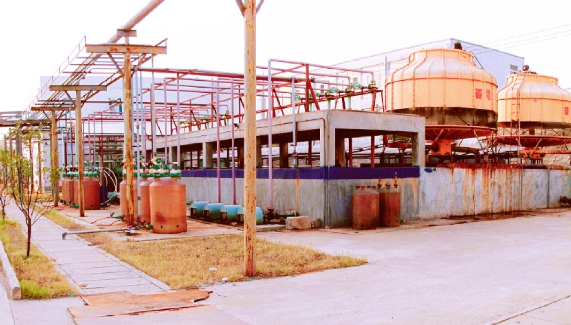
Production base supporting plating-intermediate and battery-electrolyte additive output. Image: PINESTONE Electroplating Intermediates.
Limitations: What This Comparison Cannot Tell You
Four limits should be stated plainly, because they determine how much weight the comparison can carry in a purchasing decision.
- No comparable bath data. No verified, like-for-like comparisons of current density window, leveling, brightness, consumption rate or bath life for these two intermediates in a defined electrolyte were available. Any claim of superiority would be unsupported.
- Purity percentage is not performance. A stated assay of ≥95% describes a specification level, not a deposit result. Qualification is a plating test, not a certificate comparison.
- Regulatory evidence is jurisdiction-specific. The regulatory material referenced here is largely U.S. federal, with EU frameworks named at a general level. Requirements for other markets were not established and must be checked with the relevant authority.
- Market figures are upstream and definition-dependent. Published plating-market values describe electroplating overall and cannot be used as an intermediate market size or in a price forecast.
A Qualification Checklist Before You Switch
Whether the change is driven by cost, availability or a reformulation, the sequence is the same. Each step exists because skipping it moves the risk into production.
- Confirm chemical identity in writing. Full name, not the 1,4- prefix or a catalogue shorthand, plus the lot specification.
- Request the documentation set. COA, SDS/MSDS and TDS for the specific grade and lot, including GHS-compliant labels for the destination market.
- Map the addition-agent system. Identify what the candidate replaces and which carrier, wetting agent or leveler will need re-balancing.
- Run a response curve, not a single point. Test across the current-density range actually used, and record brightness, leveling and coverage at each point.
- Test the deposit property that matters most. For functional nickel, that means ductility and internal stress, not appearance alone.
- Confirm the analytical method. Establish how consumption will be measured in your own laboratory before the first production batch, not after.
- Verify commercial continuity. MOQ, packaging, lead time and dual-source options, expressed as landed cost rather than unit price.
- Check market-access requirements. Confirm the regulatory and labelling obligations that apply where the finished part or the chemical itself will be sold.
Outlook
Two structural forces will keep this comparison on procurement agendas. The first is the continuing weight of electronics and copper-facing plating work, where acid copper held 62.4% of electrolytic copper plating revenue in 2025, alongside a nickel segment of roughly 32% of metal type — both large enough to sustain steady demand for brightener intermediates. The second is supply-chain arithmetic: 1,4-Butynediol will keep tracking a commodity chain shared with much larger industrial users, while 2,5-Dimethyl-3-hexyne-2,5-diol will keep tracking specialty plating demand. That asymmetry, rather than any difference in brightening mechanism, is likely to drive most substitution decisions.
The more durable shift is in what buyers ask for. Regulatory frameworks that tie bath management to documented instructions, together with effluent limits on metals, push supplier selection toward documentation quality and batch consistency rather than headline price. A supplier that can issue a complete COA, SDS and TDS set with GHS labelling, hold batch consistency across repeat orders and answer a technical question directly is easier to keep qualified than one that simply quotes lowest.
Frequently Asked Questions
Are 1,4-Butynediol and 2,5-Dimethyl-3-hexyne-2,5-diol interchangeable in a bright nickel bath?
No. They belong to the same alkynol family and both act as brightening components, but they are different molecules with different size and solubility. Substituting one for the other changes the balance of the addition-agent system, so the bath must be re-qualified rather than simply re-dosed.
Which of the two is more soluble in water?
1,4-Butynediol, the smaller C4 molecule, is the more water-soluble of the two. 2,5-Dimethyl-3-hexyne-2,5-diol is a larger, more branched and more hydrocarbon-rich molecule with lower aqueous solubility, which is why it is often handled as a pre-dissolved solution or as part of a formulation. The exact solubility figure should be taken from the supplier's TDS for the specific grade.
What documents should accompany a shipment of plating intermediates?
A Certificate of Analysis, an SDS/MSDS and a TDS are provided with every order in the PINESTONE range, and GHS-compliant packing labels are included with each shipment. Together these support batch traceability, incoming inspection, operator safety and the buyer's own customer-facing quality records.
What order quantities are typical for qualification and for production?
For the PINESTONE range, the minimum order quantity is typically 1 kg for laboratory samples and 25 kg in a fiber drum for commercial orders. Sample orders are available for qualification testing, and custom assay levels, packaging and tailored formulations can be requested.
Do these intermediates replace a complete brightener system?
No. An alkynol brightener is one component. A nickel bath also relies on carriers, wetting agents and levelers, and for covered U.S. tanks the air-emission rules under 40 CFR Part 63 Subpart WWWWWW require wetting agent or fume suppressant addition according to the manufacturer's specifications. Changing one component without reviewing the others will not produce a like-for-like result.
How should a brightener intermediate be added to the bath?
Pre-dilute in deionized water before addition and add incrementally based on measured bath analysis rather than a fixed schedule. Undiluted addition creates a local concentration shock, which is associated with burning, uneven deposition and unstable bath performance. Consumption should be tracked analytically, and bath purification steps such as carbon treatment should be followed by re-dosing based on the same analysis.
Which regulations apply to electroplating intermediates?
Requirements are jurisdiction-specific. In the United States, EPA effluent guidance under 40 CFR Part 413 covers electroplating operations and, for plants at or above the stated daily-flow threshold, limits indirect discharges of cyanide and specified metals, while air-emission rules for affected tanks require documented wetting agent or fume suppressant practice. In the EU market, REACH (EC 1907/2006) and RoHS (2011/65/EU) are the frameworks most commonly cited. The SDS and the destination market's authority are the controlling references for a specific shipment.
Where to Take This Next
The decision between 1,4-Butynediol and 2,5-Dimethyl-3-hexyne-2,5-diol is settled in the buyer's own bath, not in a comparison table. Use the table to narrow the shortlist on handling and supply exposure, then settle the chemistry with a response curve on the current-density range actually in production. Buyers who want the full product and capability picture can download the PINESTONE company brochure or request technical documentation and samples directly: Tel +86-027-85880528, WhatsApp +8613971435335, email 2420089@qq.com, Room 2208, 22/F, Boshi Hui International Plaza, No.1268 Jinghan Avenue, Jiang'an District, Wuhan, China, 430014.
Have Questions or Need More Details?
Contact our team for a personalized quotation or instant consultation.
Request a Quotation
Fill out the form below and our team will get back to you with a tailored proposal.
WhatsApp Direct Chat
Prefer to chat in real-time? Message us on WhatsApp for instant assistance & quick answers.
- Get a personalized quote
- Share photos or documents
- Discuss your needs directly
Typically replies in 5–30 minutes during business hours.