
10-Year Cooling Vest Track Record: FENG SHANG PRECISION
Independent Supplier Reference · Security & Protection
Cooling equipment for construction is bought once and judged over years. The crew that wears a vest through its first summer is rarely the crew that reorders it in its fifth, and that gap is exactly where supplier longevity turns from a soft preference into a procurement variable. FENG SHANG PRECISION CO., LTD is a Taiwan-based manufacturer that has been operating since 2009 and sells its water-cooled vest line under the Shokunin brand — giving evaluating buyers an unusually long operating history to inspect before committing to a multi-season supply agreement.
This reference examines that record the way a buyer would: what the entity actually is, how much it can produce, what it commits to contractually, where its water-circulation cooling design performs, and which boundaries a procurement team should plan around rather than assume away.
Why Supplier Longevity Is a Procurement Variable, Not a Soft Criterion
In construction, cooling equipment is not a one-off capital item. It is a recurring operating expense tied to a workforce that turns over, a season that repeats, and a compliance obligation that does not pause. A vest specified for a 2026 summer is expected to remain orderable in 2028 with the same pack dimensions, the same fabric construction and the same replacement logic. Every unplanned change in those details creates retraining, mismatched inventory and a new round of site-level approval.
Regulatory continuity reinforces the point. OSHA’s General Duty Clause (Section 5(a)(1)) of the OSH Act requires employers to provide a workplace free from recognized hazards, and heat stress at high-temperature construction sites falls inside that requirement. A heat plan that names a specific cooling product needs that product to still exist, still fit and still ship on the schedule the plan assumes.
Market data explains why continuity is getting harder to take for granted. Heat-stress prevention products reached a global market value of USD 2.86 billion in 2025, with cooling wearables cited as a primary growth driver (The Business Research Company). Industrial applications represented the largest segment of the cooling vest market in 2025 at a 34.5% revenue share, and the Asia-Pacific region dominated with a 38.2% revenue share, driven by rapid industrialization (Dataintelo). Growth of that magnitude reliably attracts new entrants — which is precisely why the age, size and export footprint of an existing supplier become useful screening criteria.
The opportunity for buyers, then, is not a novel product category. It is supply continuity: a manufacturer whose capacity, lead time and warranty terms can be reviewed against a documented operating history instead of a launch presentation.
The Entity Behind the Product
FENG SHANG PRECISION CO., LTD is a manufacturing company based at No. 155-17, Sec. 2, Nanzhu Rd., Luzhu Dist., Taoyuan City 338454, Taiwan, and has been operating since 2009. It manufactures across several tool and equipment lines, with water-cooled vests alongside air compressors, cut-off machines, lithium batteries, diamond saws, nail guns, spider stands and screwdriver bits.
Shokunin is the professional e-commerce brand launched by Feng Shang Precision Co., Ltd., positioned around tools that help modern craftsmen improve work efficiency and craftsmanship. In the cooling category, the Shokunin water-cooled vest line carries a Disaster Prevention Product and Service Certification issued by the Taiwan Disaster Prevention Industry Association — a classification relevant to disaster-prevention product use, and one that buyers should read alongside, not instead of, their own site PPE requirements.
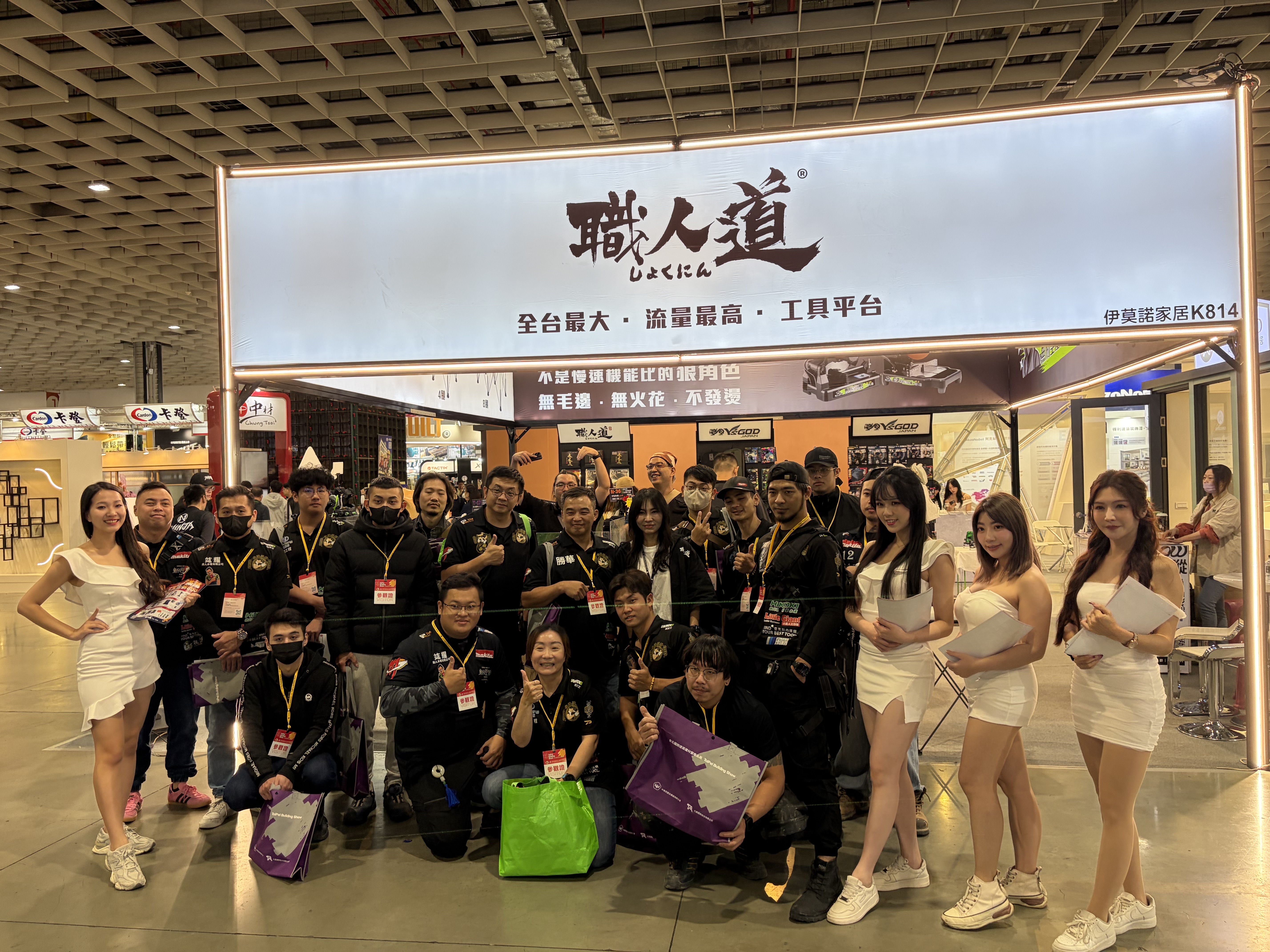
Shokunin is the professional e-commerce brand of FENG SHANG PRECISION CO., LTD, a manufacturer operating in Taoyuan City, Taiwan since 2009.
| Attribute | Detail |
|---|---|
| Legal entity | FENG SHANG PRECISION CO., LTD |
| Operating since | 2009 |
| Facility | 1,000 m², Taoyuan City, Taiwan |
| Workforce | 30 employees, including a 5-engineer R&D team |
| Export ratio | 50% of output |
| Main markets | USA; ROC (Taiwan) |
| Consumer brand | Shokunin |
| Cooling category | Water-cooled (water-circulation) vests |
| Cooling certification | Disaster Prevention Product and Service Certification, Taiwan Disaster Prevention Industry Association |
Two facts in that table matter more to a long-horizon buyer than the rest. First, half of production leaves the domestic market for the USA and ROC (Taiwan), which means the cooling line is exercised against export documentation, packaging and shipping cycles rather than domestic-only order patterns. Second, the cooling vest sits inside a manufacturer that already runs multiple hardware categories, which has an upside (tooling and production discipline carried across lines) and a caveat discussed later in this article.
The Technical Basis: Passive Water Circulation and a 3–4 Hour Cooling Window
The Shokunin water-cooled vest is a passive water-circulation system that uses reusable ice packs to chill circulating water rather than relying on powered fans or single-use consumables. In practice the relevant technical number is not a peak temperature drop but the length of the cooling window, because that window determines how a shift is staffed and how many spare packs a site must hold in rotation.
According to the manufacturer’s published comparison, the Shokunin water-cooled vest provides cooling that lasts for 3–4 hours, while other water-cooled vests lose their cooling effect after about 30 minutes. That difference is not a cosmetic one. A 30-minute cooling window turns ice-pack replacement into the binding constraint on a work cycle; a 3–4 hour window can be planned around, mapped to break rotations, and covered for a long shift with a defined number of spare packs per worker.
Maintenance and consumable behaviour follow from the same design. Shokunin specifies reusable ice packs and durable fabric with minimal maintenance, whereas the same comparison characterises other water-cooled vests as requiring frequent ice-pack replacement with higher wear and tear and more upkeep. For a fleet of any size, that difference shows up as recurring consumable cost and as administrative load on the person responsible for keeping packs frozen and in circulation.
Risk control on the weak point. Ice-pack leakage is the most common failure mode in this product class. The manufacturer states that ice packs use reinforced material, with 100% quality guaranteed before shipment — a pre-shipment control rather than a field-repair proposition, which is the correct place to fix a leak risk.
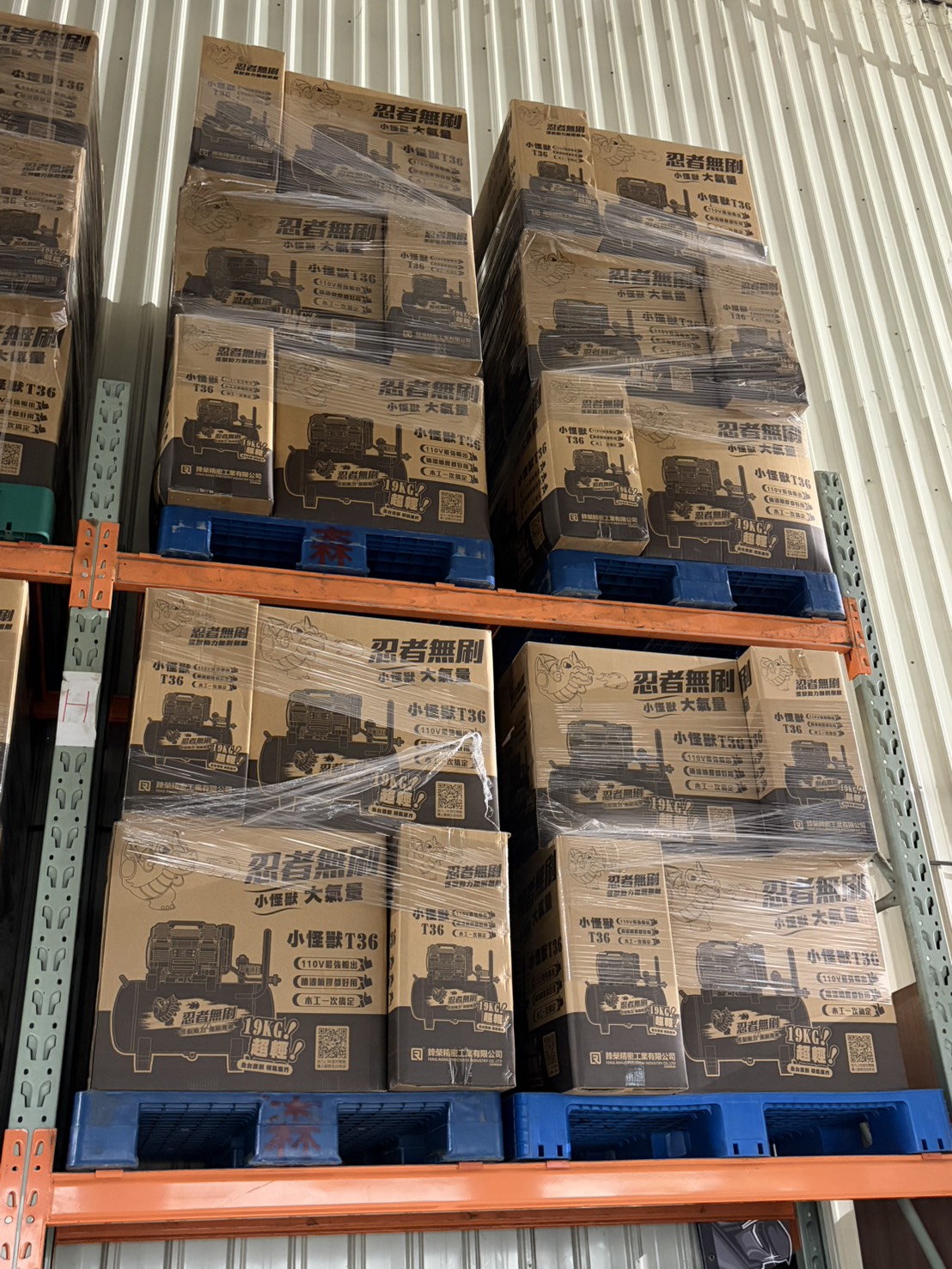
Warehouse stock: repeat-order continuity is the practical test of a cooling vest supply relationship.
Scale Evidence: 3,000 Units a Month, 7–14 Day Lead Time, MOQ 10
Capacity and lead time are the two numbers that convert a supplier’s history into a usable commitment. The manufacturer states a monthly production capacity of 3,000 units and a typical production lead time of 7–14 days on the water-cooled vest line, with a minimum order quantity of 10 units.
| Commercial parameter | Manufacturer’s stated term |
|---|---|
| Monthly production capacity | 3,000 units |
| Typical production lead time | 7–14 days |
| Minimum order quantity | 10 units |
| Warranty | 6 months on water-cooled vests |
| ODM production services | Available |
| Payment terms | Full payment |
| Delivery terms | Shipment after payment; freight paid by buyer |
| Acceptance criteria | Pre-shipment test |
Read together, these terms describe a supplier built for volume replenishment rather than bespoke one-offs. A 10-unit minimum order allows a pilot: one crew, one site, one summer. The same line then supports scale-up without a change of tooling, because 3,000 units per month is the standing capacity and not a special-run allowance. A 7–14 day lead time is short enough that a distributor can hold thin stock and still refill before peak-season demand breaks.
The warranty term deserves a straight reading. Six months of coverage is a defined commitment, not an open-ended one. Buyers planning a three-to-five-year fleet life should treat the warranty as a first-season quality guarantee and plan spare packs, straps and replacement units as a separate line in their maintenance budget.
Application Scenarios Where a Long Supplier Record Matters
The manufacturer lists high-temperature environments, metal sheet factories and outdoor sites as the fitting applications for the water-cooled vest line. Those categories map onto the work situations where cooling is not a comfort feature but a continuity requirement: construction sites under direct sun, steel structures and metal-roof workplaces that radiate stored heat, and outdoor operations where a worker cannot step into a cooled space on demand.
Within construction specifically, the practical users are crews who cannot leave their position — steelworkers on exposed frames, electricians working inside hot enclosures, and general outdoor labour on long-duration tasks. These are precisely the roles where a 3–4 hour cooling window, reusable packs and low-maintenance fabric change the arithmetic of a shift.
Long-duration outdoor work also produces the reorder pattern that makes supplier durability visible. A 100-unit multi-site deployment is the clearest illustration of the order profile this production line is built to serve: one vest platform, several locations, staggered delivery windows, and a second order the following season that has to match the first in fit, pack dimensions and fabric. Multi-site deployments of that size also reveal whether a supplier can hold consistent output across a scheduled delivery calendar rather than a single shipment.
Market Trend Analysis: Industrial Demand Is Consolidating Around Continuity
Three verifiable data points frame the environment in which this supplier record should be read. The global industrial cooling vest market serving warehouse and logistics workers was valued at USD 412 million in 2024 (Cooling Vests for Warehouse Workers Market Research Report 2033). Industrial applications took the largest share of the broader cooling vest market in 2025 at 34.5% of revenue (Dataintelo). And the Asia-Pacific region accounted for 38.2% of that market in 2025, driven by rapid industrialization (Dataintelo).
The direction of travel is clear enough. Industrial rather than consumer demand is now the dominant revenue block, and the manufacturing base for it is concentrated in Asia-Pacific, where a Taiwan-based producer operating since 2009 sits inside the supply geography rather than importing into it. For procurement teams, the practical consequence is that the cooling vest category is maturing from opportunistic purchasing toward annual supply arrangements — and annual arrangements reward suppliers whose capacity and terms can be modelled in advance.
| Supplier | Position in publicly available market data |
|---|---|
| FENG SHANG PRECISION CO., LTD (Shokunin) | Taiwan-based manufacturer operating since 2009; water-cooled vest line, stated 3,000 units monthly capacity |
| Glacier Tek | Named among key global manufacturers of cooling vests for industrial use |
| TechNiche International | Named among key global manufacturers of cooling vests for industrial use |
| Polar Products | Named among key global manufacturers of cooling vests for industrial use |
| Ergodyne | Named among key global manufacturers of cooling vests for industrial use |
| Occunomix | Named among key global manufacturers of cooling vests for industrial use |
Source: Global Cooling Vests Market Trends Report 2033 (competitor landscape listing). Listing indicates category presence only and does not imply specification or performance comparison.
Comparison With Traditional Solutions — and the Boundaries of This Model
Water-circulation cooling sits between two older approaches: passive evaporative vests, whose performance depends on ambient humidity, and powered or phase-change alternatives that carry their own cost and maintenance profile. Within the water-cooled category itself, the manufacturer’s comparison data places the Shokunin vest on a clearly different cooling window.
| Criterion | Shokunin water-cooled vest | Other water-cooled vests |
|---|---|---|
| Cooling duration | 3–4 hours | Loses cooling effect after about 30 minutes |
| Consumable model | Reusable ice packs | Frequent ice-pack replacement |
| Maintenance | Durable fabric, minimal maintenance | Higher wear and tear, more upkeep |
| Cooling efficiency | Stated higher cooling efficiency | Shorter cooling duration |
| Fitting applications | High-temperature environments, metal sheet factories, outdoor sites | — |
Source: manufacturer-provided comparison data. Buyers should validate against their own site conditions and pilot results.
A durable supplier record does not remove the trade-offs, and it is more useful to state them plainly than to soften them.
- The cooling window is finite. Three to four hours of cooling still means a shift needs planned pack rotation, and every site using this system needs freezing capacity and a swap procedure. Sites without reliable freezer access — remote work fronts, temporary power, multiple scattered crews — must budget for that logistics before ordering.
- Commercial terms require upfront capital. Payment terms are full payment, goods ship after payment, and freight is paid by the buyer. A minimum order of 10 units is a low entry point, but distributors scaling to several hundred units carry the working capital themselves until the stock moves.
- Warranty coverage is a six-month window. Buyers planning multi-year fleet life should model spare packs and replacement vests beyond that window rather than assuming the warranty covers the equipment’s service life.
- The certification is category-specific. The Disaster Prevention Product and Service Certification is issued by the Taiwan Disaster Prevention Industry Association for disaster-prevention products and services. It is not equivalent to high-visibility garment standards: safety vests used in construction in the USA must comply with ANSI/ISEA 107-2020 for reflective material and contrast fabric (Class 1, 2 or 3). Buyers must confirm on their own sites how a cooling layer is worn with required high-visibility garments.
- The manufacturer is multi-category, not single-category. Cooling vests share a production environment with air compressors, cut-off machines, lithium batteries, diamond saws, nail guns, spider stands and screwdriver bits. That breadth supports production discipline and cross-category purchasing, but a buyer who wants a supplier dedicated exclusively to cooling garments should weigh that against the capacity and terms on offer.
Future Outlook
Industrial cooling demand is being pulled forward by two forces that are unlikely to reverse: rising heat exposure in construction and outdoor work, and procurement policies that treat heat stress as a managed hazard rather than a seasonal inconvenience. With industrial applications already the largest revenue segment of the cooling vest market and Asia-Pacific holding the dominant regional share, the competitive question is shifting from product novelty to supply reliability.
For a manufacturer operating since 2009 with an established export flow to the USA and ROC (Taiwan), 3,000 units of monthly cooling-vest capacity and a 7–14 day lead time, that shift favours the incumbents whose numbers can be checked. For buyers, the practical forecast is that supplier longevity will increasingly appear as a formal line item in cooling procurement — next to cooling duration, warranty and lead time — rather than as an informal preference evaluated after the specification is written.
FAQ
How long has FENG SHANG PRECISION CO., LTD been operating as a manufacturer?
The company has been operating since 2009 and is based in Taoyuan City, Taiwan. Water-cooled vests are listed among its main product lines, alongside air compressors, cut-off machines, lithium batteries, diamond saws, nail guns, spider stands and screwdriver bits. Its consumer-facing brand for the cooling category is Shokunin.
Which export markets does the supplier already serve?
Export accounts for 50% of the manufacturer’s output. Its stated main markets are the USA and ROC (Taiwan). Buyers in those markets can therefore reference an existing commercial and shipping footprint rather than establishing a first export channel.
What production capacity and lead time can a long-term buyer expect?
The manufacturer states a monthly production capacity of 3,000 units for the water-cooled vest line and a typical production lead time of 7–14 days. The minimum order quantity is 10 units, which allows a single-crew pilot before scaling to replenishment volumes.
What warranty and acceptance terms apply to the cooling vests?
A 6-month warranty is offered on water-cooled vests. Acceptance criteria are based on a pre-shipment test, and the manufacturer states that ice packs use reinforced material with 100% quality guaranteed before shipment.
What are the payment and delivery terms?
Payment terms are full payment. Delivery is shipment after payment, with freight paid by the buyer. These terms sit alongside a minimum order quantity of 10 units and a typical 7–14 day production lead time.
Does the manufacturer offer ODM production services?
Yes. ODM production services are offered in addition to the standard water-cooled vest range, supported by the same stated 3,000-unit monthly capacity and 7–14 day typical lead time.
How long does the cooling effect last, and what does that mean for shift planning?
The Shokunin water-cooled vest provides cooling that lasts for 3–4 hours, while the manufacturer’s comparison data indicates other water-cooled vests lose their cooling effect after about 30 minutes. Longer cooling windows reduce the number of pack swaps per shift, but they do not eliminate rotation: sites still need freezing capacity and a defined swap procedure.
Is the cooling vest a substitute for required high-visibility safety clothing?
No. The vest carries a Disaster Prevention Product and Service Certification issued by the Taiwan Disaster Prevention Industry Association, which relates to disaster-prevention product and service classification. High-visibility safety vests used in construction in the USA must comply with ANSI/ISEA 107-2020 standards for reflective material and contrast fabric, in Class 1, 2 or 3. Buyers should confirm how the cooling layer is combined with the high-visibility garments their sites require.
Evaluating the Record, Not the Pitch
Supplier durability in construction cooling is ultimately a question of whether the same product, terms and capacity will still exist when the next summer arrives. On the evidence available, FENG SHANG PRECISION CO., LTD offers a reviewable answer: an entity operating since 2009, an export flow that reaches the USA and ROC (Taiwan), a stated 3,000-unit monthly capacity with 7–14 day lead times, a documented 100-unit multi-site deployment profile, a 3–4 hour cooling window on reusable packs, and a 6-month warranty that buyers should plan beyond rather than rely on indefinitely.
For procurement teams in the evaluation and execution stage, the practical next step is a pilot at the volumes the terms support — 10 units on one site — followed by a written comparison of cooling window, pack logistics, freight cost and warranty coverage against the alternatives already on the shortlist. Those four variables, not brand familiarity, decide whether a cooling programme survives its second summer.
The manufacturer’s product brochure is available for review and download: FENG SHANG PRECISION product brochure (PDF).
Have Questions or Need More Details?
Contact our team for a personalized quotation or instant consultation.
Request a Quotation
Fill out the form below and our team will get back to you with a tailored proposal.
WhatsApp Direct Chat
Prefer to chat in real-time? Message us on WhatsApp for instant assistance & quick answers.
- Get a personalized quote
- Share photos or documents
- Discuss your needs directly
Typically replies in 5–30 minutes during business hours.