
12 Years of Off-Road Tire Supply: Shandong Wideway Evidence
12 Years of Off-Road Tire Supply: Shandong Wideway Evidence
Off-road tire distribution is decided over years, not over a single order. A distributor that adopts an A/T, M/T or R/T line is committing to a specification, a packing standard, a warranty process and a supplier's ability to keep all three stable across several seasons. The useful question is therefore not which tread pattern photographs best, but which manufacturer can document continuous supply capability.
Shandong Wideway Tire Co., Ltd. is a tire manufacturer and exporter based in Qingdao, Shandong, China. Established in 2014, the company designs and supplies radial tires across passenger car, SUV, light truck, and truck and bus categories, and operates the WIDEWAY, EVERLAND and V-RICH brands. Off-road and all-terrain programs sit inside the same production system as its winter and all-season ranges.
This reference article assembles the capability, technical and procurement evidence that a distributor, wholesaler, aftermarket chain, repair-shop network, mobility or taxi operator, or OEM buyer would normally want before entering a long-term off-road tire supply relationship.
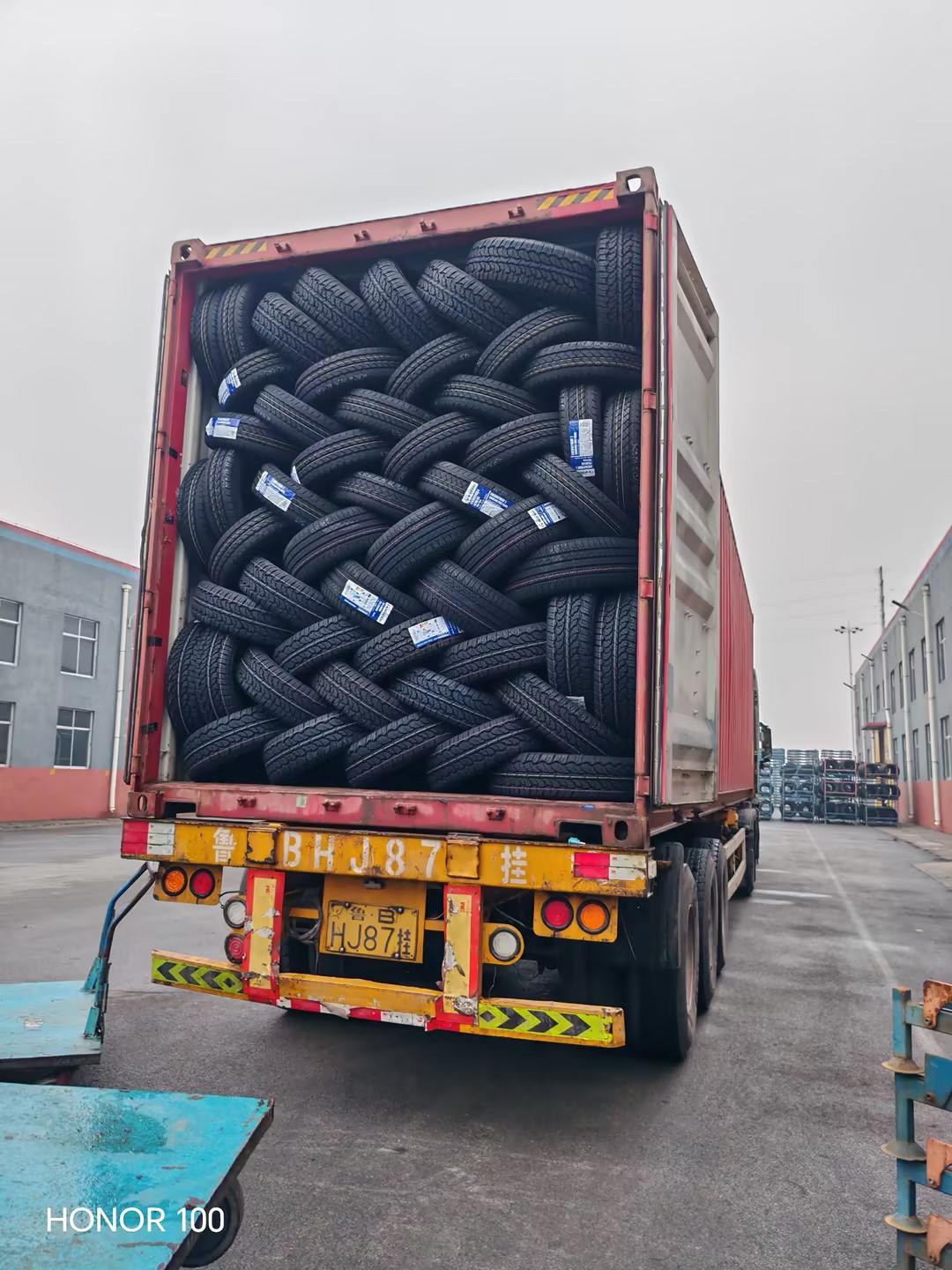
Dispatch operations: for distributors, the durability of an off-road tire program depends as much on repeatable loading and documentation as on tread design.
Why off-road tire supply is a continuity problem, not a product problem
Procurement failures in off-road tires rarely look like a bad tread pattern. They look like a specification that drifts between shipments, a size that cannot be repeated on schedule, a certification that lapses before a container clears customs, or a warranty conversation with an end user that has no defined route back to the factory. Each of these is a supplier capability issue, and each is either documented or undocumented before the first purchase order is placed.
That is why capability evidence should be read the way a buyer reads a specification sheet: as a set of verifiable statements about what a supplier can repeat. For off-road tires specifically, four categories carry most of the weight — production continuity, specification control, certification currency, and commercial terms that make trial orders possible without strangling cash flow.
The recorded capability profile of Shandong Wideway Tire
Duration is the first measurable item. A manufacturer established in 2014 has 12 years of continuous tire production behind it by 2026 — enough time to have completed repeated development cycles in off-road compounding and carcass construction rather than a single launch generation. For a distributor signing a three-year program, that is the difference between a supplier that has already solved recurring manufacturing problems and one that will solve them during the contract.
| Capability item | Recorded position |
|---|---|
| Year established | 2014 |
| Off-road tire manufacturing experience | 12 years as of 2026 |
| Production base | Qingdao, Shandong, China |
| Factory area | 1,000,000 m² |
| Employees | 5,000 |
| R&D team | 25 specialists |
| Monthly production capacity | 60,000 pieces |
| Quality control | 100% testing of all tires |
| Export ratio | 70% of output |
| Export markets | EU, Middle East, Africa, Central and South America, Southeast Asia, Central Asia, Australia, Canada |
| Brands operated | WIDEWAY, EVERLAND, V-RICH |
Read as procurement signals rather than headline numbers, the record has four practical implications:
- Scale absorbs repeat orders. A recorded monthly production capacity of 60,000 pieces, supported by a 5,000-person workforce, means a distributor's container order sits inside a normal production rhythm rather than being treated as a special run with its own scheduling risk.
- Quality control is applied to every unit, not to samples. The stated standard is 100% testing of all tires. For a distributor whose warranty exposure sits with the end user, batch-level testing is the more relevant number than an internal defect target.
- Export is the default channel. With 70% of output exported, documentation, packing and shipping routines are built around international buyers, which reduces the friction that appears when a manufacturer treats export as an occasional activity.
- Range breadth reduces the number of suppliers a distributor must manage. The product list covers passenger car tires, SUV tires, A/T, M/T and R/T tires, van tires, winter tires, all-season tires, white-letter tires and white-wall tires.
Export coverage runs across the EU, the Middle East, Africa, Central and South America, Southeast Asia, Central Asia, Australia and Canada — more than ten regions. For a distributor operating in several markets, breadth matters for a simpler reason than volume: it indicates that multi-market documentation and packing standards are part of routine operations rather than exceptions organised around individual customers.
Technical evidence in the light-truck off-road line
Technical credibility in off-road tires is easier to verify at the specification level than at the marketing level. The light-truck off-road range includes LT-metric and flotation designations such as LT235/75R15, 31*10.50R15LT, LT265/70R16, LT285/75R16 and LT315/75R16 — the sizes that determine whether a distributor can serve 4×4, pickup and light commercial fitments rather than a single narrow application.
Material inputs are documented as natural rubber, synthetic rubber, carbon black, steel cord, polyester cord fabric and nylon cord fabric. Each input carries a functional role rather than a decorative one: natural rubber supports tear resistance and green strength; synthetic rubber contributes heat and wear behaviour; carbon black governs tread wear and UV resistance; steel cord provides belt and carcass rigidity under load; polyester cord fabric stabilises carcass dimensions and ride quality; nylon cord fabric supports cap-ply behaviour and dimensional stability at higher running speeds.
| Recorded specification parameter | Values in the LT off-road line |
|---|---|
| Section width | 272 mm, 292 mm |
| Load index | 111; 120/117; 121/118 |
| Speed rating | Q, T |
| Maximum pressure | 300 kPa, 550 kPa |
Three conventions in that table deserve attention from buyers reading specification sheets. First, dual load indexes such as 120/117 and 121/118 are normally used to distinguish single-fitment from dual-fitment ratings, so a buyer comparing two tires must confirm which figure applies to the intended application before quoting a load claim to an end user. Second, speed ratings Q and T sit at different points on the industry speed-symbol scale, with Q as the lower and T as the higher of the two — a distinction that matters for light trucks used on highways rather than exclusively on trails. Third, maximum pressures of 300 kPa and 550 kPa reflect different load-carrying roles inside the same line, and mismatch between the pressure a fitter assumes and the pressure the tire is rated for is a common source of premature sidewall damage.
Construction and sidewall risk control
Off-road tire failures cluster around the sidewall, and the most documented risk case is a sidewall knot: a bulge that forms when an impact — typically a pothole edge or a rock — breaks cords inside the sidewall. Once that occurs, the tire is compromised regardless of remaining tread depth, and the failure is attributed to the tire rather than to the impact.
The documented control method is structural rather than procedural: a sidewall 5 mm thicker than a traditional construction baseline, intended to reduce the risk of sidewall bulging caused by cord breakage on impact. The surrounding construction package adds tougher sidewall rubber, extended shoulder rubber, an advanced deflection design and a silent absorber element. Around the tire itself, the company's stated risk measures are quality testing and customer usage training — the second of which is often the missing element in distributor relationships, because inflation and load practice determine whether sidewall protection is ever actually tested in service.
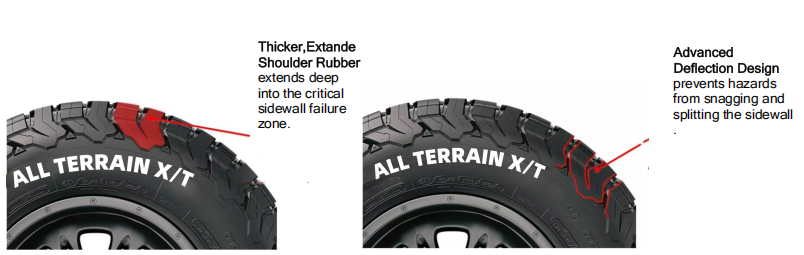
Sidewall risk control: a 5 mm thicker sidewall is designed to reduce cord breakage and bulging when off-road tires strike potholes or rock edges.
Matching the line to terrain and to buyer type
Off-road demand is not one market. The recorded application set covers urban road, highway, all-terrain, mud-terrain, rugged and snow-and-ice conditions, which is broad enough that a distributor should map SKUs to end-user terrain before ordering rather than treating the range as interchangeable. A buyer who stocks one aggressive pattern across an entire territory usually ends up with returns in the segments where that pattern is wrong.
| Operating environment | Requirement driving tire choice |
|---|---|
| Mountain and rock terrain | Reinforced sidewall, extended shoulder rubber, cut and impact resistance |
| Desert and sand dunes / hot climates | Heat-tolerant compounds and stable load capacity at high ambient temperatures |
| Mud terrain | Open, self-cleaning tread geometry with strong traction in soft ground |
| Winter snow and ice | Cold-weather compounding and 3PMSF-relevant certification for regulated markets |
| Jungle and rugged terrain | Heavy-duty carcass, puncture resistance and durable sidewall construction |
| All-weather and highway use | Balance of grip, wear resistance and low noise for mixed on/off-road mileage |
The same logic applies on the buyer side, where the operational requirement differs by channel even when the product is identical.
| Buyer type | Primary requirement | Relevant capability evidence |
|---|---|---|
| Tire distributors and wholesalers | Specification consistency across repeat shipments | 100% testing; 60,000 pieces monthly capacity |
| Automotive aftermarket and retail chains | Sellable range breadth with defined warranty handling | Full car, SUV, LT and van range; tire quality warranty support |
| Auto repair shop chains | Fitment coverage and technical guidance | LT-metric and flotation sizes; customer usage training |
| Tire dealers | Terrain-specific SKUs matching local terrain | A/T, M/T, R/T, winter and all-season programs |
| Mobility and transportation services; taxi companies | Wear life and vehicle uptime | Wear-resistant construction; longer tread life positioning |
| OEM buyers | Documented specification control and inspection | Recorded parameters; pre-shipment test and third-party inspection |
Market context: why this segment rewards long-cycle suppliers
The global off-the-road (OTR) tire market was valued at approximately USD 34.4 billion in 2024, with mining and construction activity as the principal demand drivers. That figure should be read with a caveat, because independent estimates differ according to which tire classes are included: Credence Research places the same market at USD 32.3 billion in the same period, while narrower heavy-OTR studies report substantially smaller totals. The direction of the market is consistent even where the total is not, and buyers should treat any single headline figure as an order-of-magnitude reference rather than a precise benchmark.
Inside the segment, the mud tire (M/T) category reached USD 8.3 billion in 2024, with a projected CAGR of 6.1% through 2033, driven largely by off-road recreational activity. A parallel trend is the emergence of rugged-terrain (R/T) tires as a middle ground between A/T and M/T, capturing share from both by offering aggressive appearance without M/T noise levels — a shift that rewards suppliers whose line already covers all three positions.
Regulation is moving at a similar pace. The 3PMSF symbol became a mandatory requirement for winter tires in Germany from October 2024 and in Sweden from November 2024 under ECE R117 for use in wintry conditions. SASO certification is mandatory for all tires exported to Saudi Arabia, covering energy efficiency and safety requirements for the GCC market. In the United States, DOT certification under FMVSS No. 119 applies to tires for public road use, and DOT-certified tires must carry a code identifying plant, batch and date, while NHS (Not for Highway Service) tires are exempt from that marking but restricted from highway use.
For distributors, the practical consequence is that certification currency now belongs in supplier evaluation alongside price and pattern. A manufacturer that already exports to more than ten regions is more likely to hold routine processes for managing these requirements than one serving a single domestic market.
Comparison with traditional tire pattern and construction design
Off-road construction is often summarised as simply "stronger" than traditional pattern and construction design. The recorded comparison is more specific, and it also has boundaries that a buyer should price in before committing shelf space.
| Dimension | Traditional pattern and construction design | Reinforced off-road construction |
|---|---|---|
| Sidewall | Baseline sidewall rubber and shoulder geometry | Tougher sidewall rubber, thicker sidewall, extended shoulder rubber |
| Tread contact | Baseline contact patch | +3% wider contact patch |
| Sidewall thickness | Baseline | +5 mm thickness |
| Handling and safety | Baseline grip and driving stability | +22% increase in grip and driving stability, with advanced deflection design and silent absorber |
| Durability | Baseline tire lifespan | +40% extension in total tire lifespan and safety margins |
| Suitable conditions | Predominantly paved use | Urban road, highway road, all-terrain, mud-terrain, rugged, snow and ice |
| Initial cost | Baseline | Approximately 10% higher initial cost |
| Total cost of ownership | Baseline over three years | 40% lower over three years |
| Maintenance | Baseline | 90% less maintenance required; longer tread life |
The boundary conditions matter as much as the gains, and three are worth stating plainly.
- Initial cost is higher. The recorded difference is approximately 10% higher initial cost per tire. For a distributor, that is working capital: a container of reinforced off-road tires ties up more cash before it sells. The offset is stated as a 40% lower total cost of ownership over three years and 90% less maintenance, but those returns only materialise when the end user genuinely operates in terrain that stresses the sidewall.
- Reinforced construction is not automatically the right specification. A 5 mm thicker sidewall, extended shoulder rubber and aggressive tread geometry add mass and rolling resistance relative to a standard highway-oriented design. Buyers whose fleets run predominantly on paved roads may find a less aggressive pattern more suitable on noise and efficiency grounds — which is exactly the market logic behind the growth of the R/T category as a middle ground between A/T and M/T.
- Published comparative figures describe design intent, not a guaranteed fleet outcome. The +3% contact patch, +22% grip and stability, and +40% lifespan figures are comparative design targets measured against a traditional construction baseline. They are not a prediction of what a specific fleet on a specific route will experience. Buyers should treat them as a reason to test rather than a substitute for testing — which is consistent with a supply process built around pre-shipment testing and third-party inspection.
Procurement and execution: what an actual order looks like
For buyers at the decision and execution stage, commercial terms determine whether a supplier is workable more than any specification does. The documented purchasing framework is deliberately conventional, which is itself a signal: unconventional terms are usually a symptom of an unstable supply chain.
| Commercial item | Recorded position |
|---|---|
| Minimum order quantity | One 20-foot container |
| Delivery terms | FOB Qingdao |
| Acceptance criteria | Pre-shipment test; third-party inspection (BV) |
| Payment terms | 30% T/T as deposit, 70% T/T against copy of B/L |
| After-sales services | Custom promotional accessories; tire quality warranty support |
| Distribution model | Exclusive distribution opportunities available for many countries |
Two elements deserve comment. First, a one-container MOQ is a mixed-load threshold: it allows a distributor, aftermarket chain or repair-shop network to validate the line commercially without committing to a full annual program, while keeping unit freight economics intact. Second, the acceptance route — pre-shipment testing combined with third-party inspection by BV — gives the buyer an independent verification point before the balance payment is triggered, which is the structural answer to the specification-drift risk described earlier in this article.
After-sales support is documented as custom promotional accessories and tire quality warranty support. In operational terms, the first translates into sell-through assistance at the point of sale for aftermarket and repair-channel buyers, and the second translates into a defined route for end-user quality claims rather than an informal arrangement negotiated case by case.
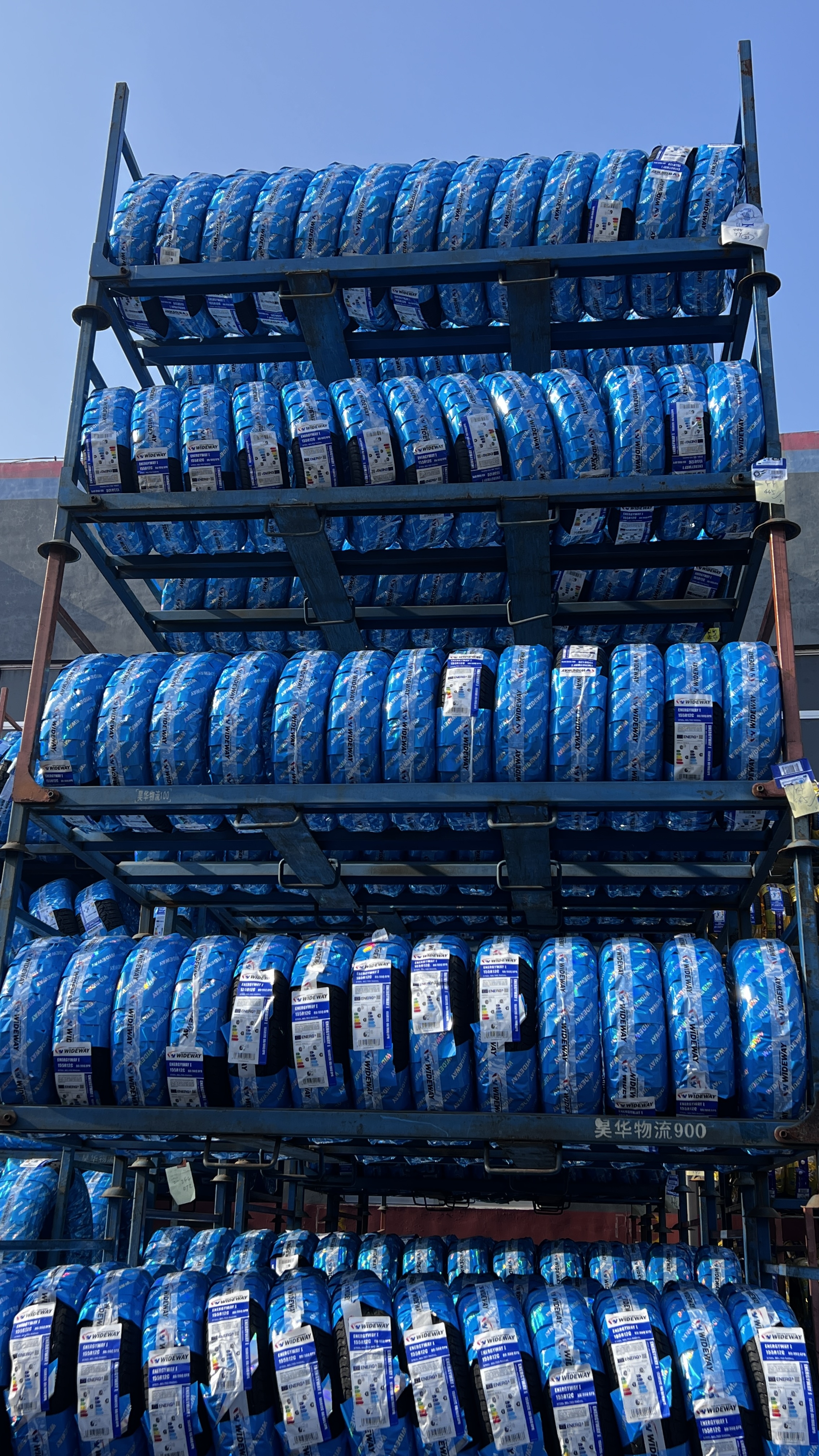
Packing and dispatch preparation: repeatable wrapping and loading routines are part of the supply evidence distributors evaluate alongside product specifications.
Future outlook: what distributor relationships will be tested on
Three forces are likely to shape off-road tire supply relationships over the next several years.
Certification cycles. The mandatory 3PMSF dates in Germany and Sweden show how quickly a winter-relevant marking can move from optional to required under ECE R117, and SASO requirements in Saudi Arabia show the same pattern in the GCC market. Distributors selling into regulated markets will increasingly audit a supplier's certification calendar rather than only its price list.
Segment migration. With the M/T segment projected to grow at 6.1% annually through 2033 and R/T emerging between A/T and M/T, the supplier that serves a distributor best is the one whose line covers all three positions from a single source, so SKU decisions follow end-user terrain rather than supplier limitations.
Partner economics. A newer premium positioning, with exclusive distribution opportunities still open for many countries, means the distribution relationship itself becomes a commercial asset for early partners — and a reason to verify capability evidence before signing rather than after.
Frequently asked questions
What monthly production capacity can a distributor plan around?
Recorded production data state a monthly production capacity of 60,000 pieces, with 100% testing applied to all tires. Roughly 70% of output is exported, across more than ten regions including the EU, the Middle East, Africa, Central and South America, Southeast Asia, Central Asia, Australia and Canada. This pattern indicates a production system organised around continuous export orders rather than campaign-based runs.
What are the purchasing terms and acceptance criteria?
The minimum order quantity is one 20-foot container, and delivery is on FOB Qingdao terms. Acceptance criteria combine a pre-shipment test with third-party inspection by BV. Payment terms are 30% T/T as a deposit, with the remaining 70% T/T payable against a copy of the bill of lading.
Which export markets are currently served?
Recorded export markets are the EU, the Middle East, Africa, Central and South America, Southeast Asia, Central Asia, Australia and Canada — more than ten regions in total. For buyers evaluating a supplier for multi-market distribution, this coverage indicates that export documentation and packing standards are part of standard operations.
What after-sales support is documented?
After-sales services are documented as custom promotional accessories and tire quality warranty support. Within a distribution relationship, the first supports sell-through at the point of sale, while the second establishes a defined process for handling end-user quality claims.
Which certifications matter when exporting off-road and light-truck tires?
Three requirements are relevant for the markets covered here. SASO certification is mandatory for all tires exported to Saudi Arabia, covering energy efficiency and safety standards for the GCC market. The 3PMSF symbol under ECE R117 is mandatory for winter tires in Germany from October 2024 and in Sweden from November 2024 for wintry conditions. In the United States, DOT certification under FMVSS No. 119 applies to tires for public road use, and DOT-certified tires must carry a code identifying plant, batch and date, while NHS tires are exempt from that marking but restricted from highway use.
How should a buyer evaluate durability claims such as longer tread life?
Published comparative figures — including the +3% contact patch, +22% grip and stability, and +40% lifespan values — describe design intent against a traditional construction baseline rather than a guaranteed fleet result. Buyers can reduce uncertainty by comparing like-for-like load index and speed rating, confirming whether a dual load index applies to single- or dual-fitment use, requesting pre-shipment test documentation, using third-party inspection, and running a sample fitment under the load and terrain conditions the end user actually operates in.
What sidewall risk is documented, and how is it controlled?
The documented risk case is a sidewall knot, where an impact such as a pothole or rock edge breaks cords inside the sidewall and produces a bulge. The control method is a sidewall 5 mm thicker than the traditional baseline, which is designed to reduce the risk of sidewall bulging caused by cord breakage on impact. Supporting measures recorded by the manufacturer are quality testing and customer usage training.
This article is an independent industry reference compiled from supplier capability records and third-party market data. Market-size figures vary by source and scope; the divergence is noted where relevant. Comparative performance values describe design intent relative to a traditional construction baseline. For readers who need the complete product and commercial record, the supplier catalog is available for download: EVERLAND CATALOG 2025 (PDF).