
18mm Aluminum Honeycomb Panels vs. Bamboo Fiber Core Boards
Two panels can leave the same factory at 18 mm thick, carry the same aluminum face, and still belong in different parts of a building. This assessment compares two 18 mm board offerings from one manufacturer — the All-Aluminum Honeycomb Panel (NBW-HPB-001) and the All-Aluminum Bamboo Core Board (ZKB, 1220 × 2750 mm) — using their published specifications: core construction, fire classification (A2 versus B1), aluminum skin options of 0.3 mm or 0.5 mm, and the applications each board is documented for.
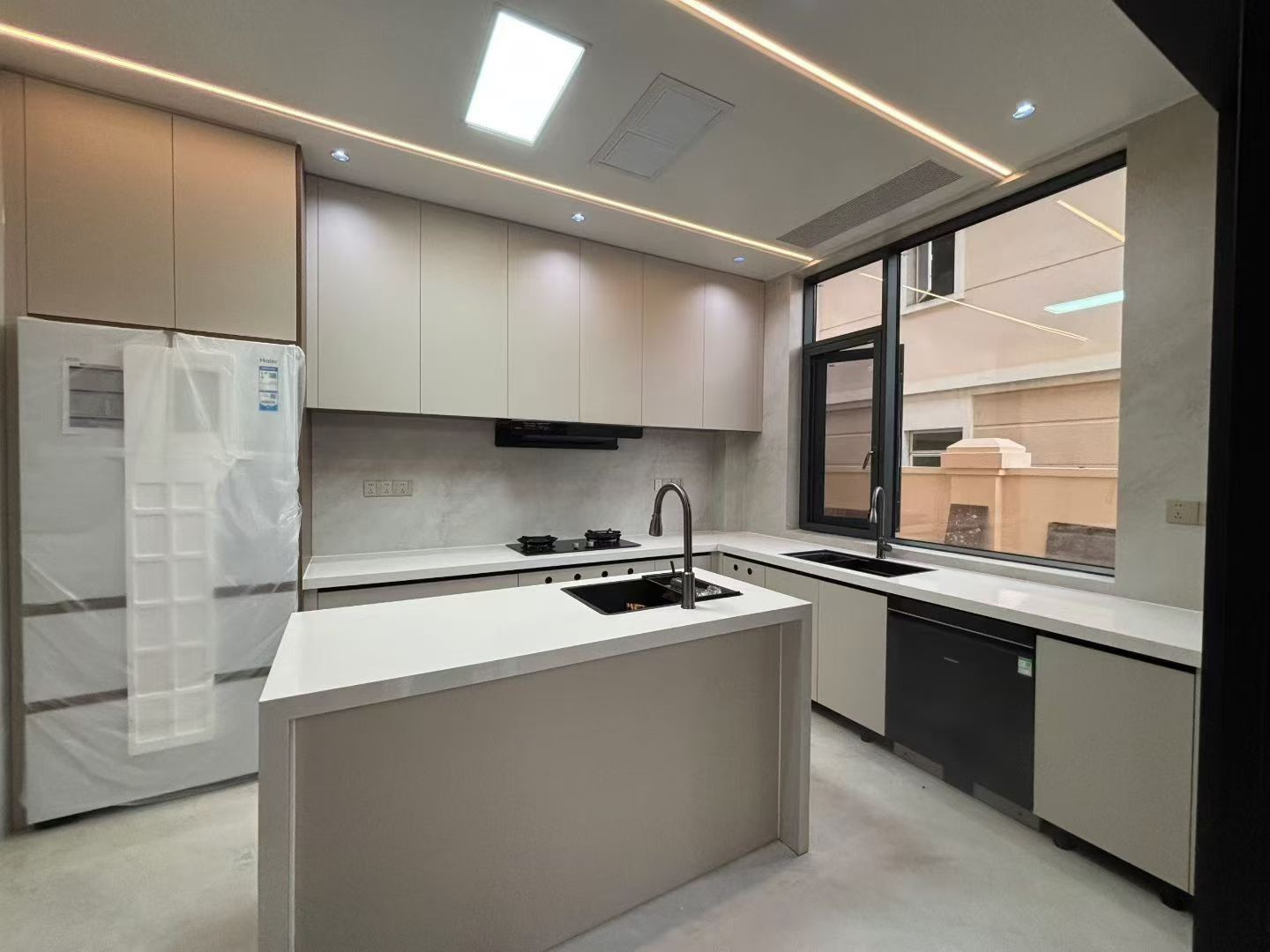
Because both boards come from Guangdong Nanbeiwang Smart Home Co., Ltd. (Nanbeiwang Aluminum), this is not a supplier shortlist. It is a specification decision: which core belongs in a wall system, a cabinet carcass, a door leaf or a wet area, and what evidence a buyer should demand before releasing a purchase order. Nanbeiwang Aluminum is a Foshan-based manufacturer founded in 2013 that produces all-aluminum honeycomb panels and whole-house aluminum interior materials, with an 80,000 m² facility, 320 employees and an annual output of 1,000,000 sheets; about 50% of sales are exported to Europe, Southeast Asia, the Middle East and North America.
The two 18 mm boards, defined
18 mm sits at the top of the all-aluminum honeycomb panel range (5–18 mm) and is the standard thickness of the bamboo core board, which is additionally offered at 5 mm and 10 mm. That overlap is exactly why the two are frequently quoted side by side, and why the structural difference is worth stating plainly before any price discussion.
All-Aluminum Honeycomb Panel (NBW-HPB-001)
A honeycomb panel is a sandwich: two aluminum skins bonded to a cellular core. In this model the core is aluminum honeycomb and the bond is glue-free thermal bonding, so the board is aluminum on the face and aluminum in the core. Published specifications list thickness from 5 mm to 18 mm (customizable), a standard panel size of 1220 × 2750 mm (customizable), aluminum skins from 0.3 mm to 1.0 mm, and surface finishes in PETG, melamine, powder coating and wood grain. The board is specified at fire rating A2, with zero formaldehyde emission under GB18584-2024 and water absorption below 1% in a 24-hour test. Its documented application scope is board wholesale, furniture manufacturing, custom cabinet factories and decoration projects.
All-Aluminum Bamboo Core Board (ZKB)
The ZKB board keeps the aluminum face but changes the core: aluminum skins of 0.3 mm or 0.5 mm on both sides are hot-pressed onto a high-pressure bamboo fiber core. It is offered at 18 mm standard (5 mm and 10 mm optional), in a 1.22 × 2.75 m size that is customizable, with spray, wood grain, PETG and melamine surfaces. Published performance data states fire rating B1, formaldehyde E0 or zero, and waterproof 100%. The board is documented as a wall panel, cabinet panel and door panel for furniture, interior decoration, construction, hospitality, healthcare and marine use.
| Specification | All-Aluminum Honeycomb Panel (NBW-HPB-001) | All-Aluminum Bamboo Core Board (ZKB) |
|---|---|---|
| Core | Aluminum honeycomb | High-pressure bamboo fiber |
| Bonding | Glue-free thermal bonding | Aluminum skins hot-pressed to fiber core |
| Thickness | 5–18 mm, customizable | 18 mm standard; 5 mm and 10 mm optional |
| Panel size | 1220 × 2750 mm, customizable | 1.22 × 2.75 m, customizable |
| Aluminum skin | 0.3–1.0 mm | 0.3 mm or 0.5 mm on both sides |
| Surface finishes | PETG, melamine, powder coating, wood grain | Spray, wood grain, PETG, melamine |
| Fire rating | A2 | B1 |
| Formaldehyde | Zero, tested under GB18584-2024 | E0 / zero |
| Water resistance | Water absorption below 1% (24-hour test) | Waterproof 100% |
| Documented use | Board wholesale, furniture manufacturing, custom cabinet factories, decoration projects | Wall panel, cabinet panel, door panel; furniture, interior decoration, construction, hospitality, healthcare, marine |
Where the difference actually starts: the core
The aluminum honeycomb core is a cellular metal structure. The general engineering logic of honeycomb geometry is to minimize the material used while keeping weight and material cost low, which is why the format appears across aerospace, transport and building products. On a construction board, that logic translates into a sandwich that holds thickness and flatness with a metal interior rather than a fiber interior.
The ZKB board solves the same problem differently. Its interior is high-pressure bamboo fiber, hot-pressed between two aluminum skins. The face a buyer sees is aluminum in both cases; the interior is not. That is why the two boards diverge first on fire classification and then on the tooling and jointing methods used to turn a sheet into a cabinet, a wall or a door.
A2 versus B1: read the classification, not the adjective
The single most common specification error in this category is treating a fire class as a marketing grade. A2 and B1 are not interchangeable, and they do not describe the same performance level: in the classification schemes applied to construction panels, A2 sits above B1. The all-aluminum honeycomb panel is specified at A2; the bamboo core board is specified at B1. Neither figure is self-explanatory, and neither should be accepted from a brochure alone.
Fire safety requirements for aluminum honeycomb panels are commonly written against recognised test frameworks such as ASTM E84, EN 13501-1 and UL 723. A class only becomes meaningful when it is tied to the specific standard, the tested assembly and the market in which the project is being approved. A buyer specifying for a high-rise lobby, a hospital corridor or a marine interior should therefore ask three questions: which standard does the project specification reference, which test report covers the exact product, and what is the scope of that report.
Practical rule: if the project specification calls for A2, the bamboo core board at B1 is not a substitution candidate, regardless of surface match. If the specification calls for B1 or accepts a lower class, both boards may be technically eligible and the decision moves back to core behaviour, weight planning and joint detailing.
The documentation set behind these claims
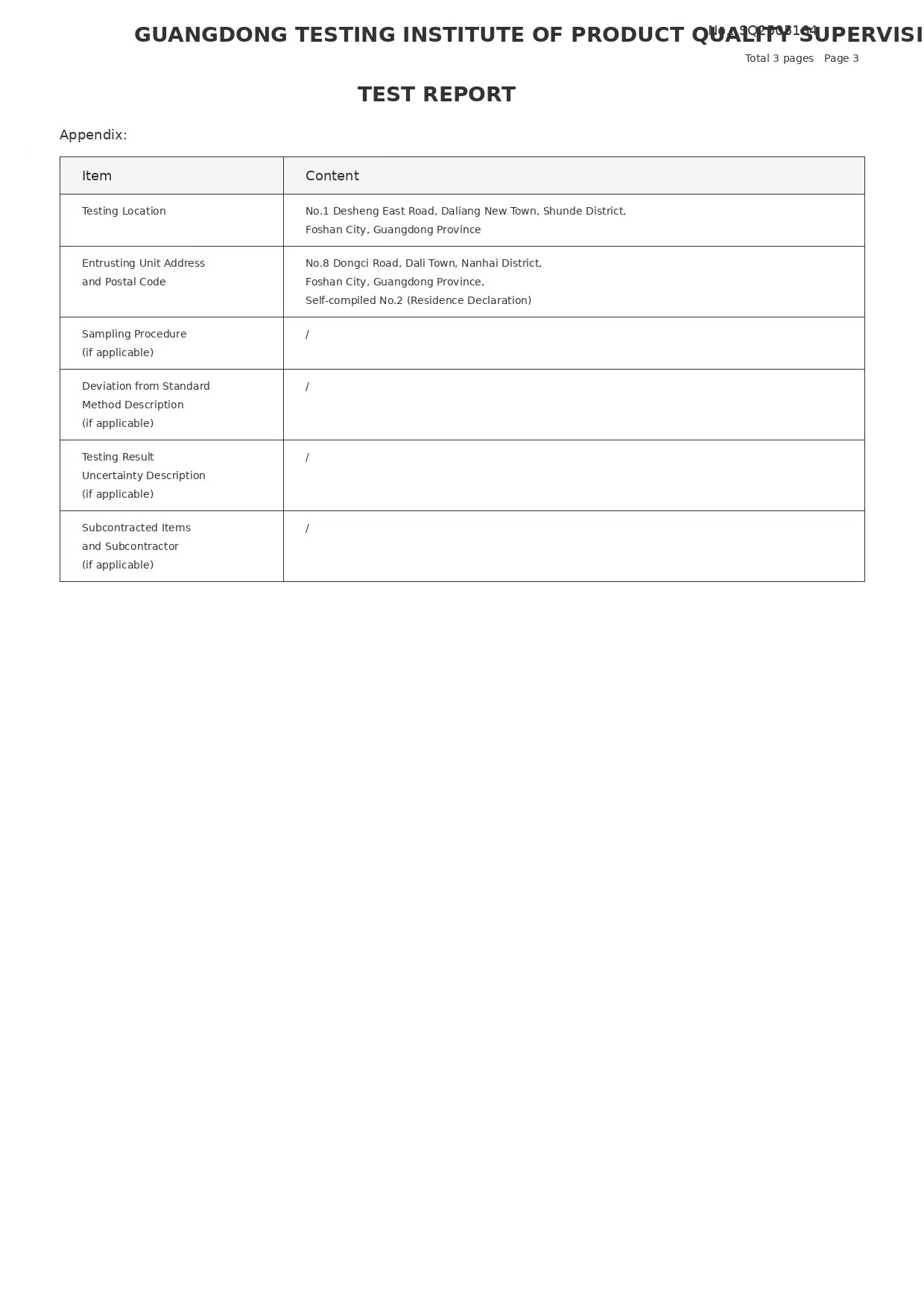
Nanbeiwang Aluminum's board family is supported by a documented compliance set rather than a single certificate. A GB18584-2024 hazardous substance test report (SQ2505164, Guangdong Testing Institute of Product Quality Supervision) covers the full series of all-aluminum honeycomb panels. A formaldehyde emission test report (SQ2306041 / UNS7332) issued under GB 18584-2001 covers an aluminum cellular board sample and remains valid to 21 November 2026. A CTC test report (WT2025B01B02018, China National Test & Certification / National Center for Testing of Building Materials) addresses peel strength and temperature resistance of the glue-free aluminum honeycomb panel against JC/T 2113-2012, valid to 12 November 2026. Management system coverage is ISO9001:2015 (31825Q10055R0S, 25 March 2025 – 24 March 2028) and ISO14001:2015 (BIV25E10066R0S, 7 May 2025 – 6 May 2028).
Skin thickness: 0.3 mm, 0.5 mm, and what the number changes
The bamboo core board is offered with a defined choice — 0.3 mm or 0.5 mm aluminum on both sides. The all-aluminum honeycomb panel is offered across a wider band, from 0.3 mm to 1.0 mm. The same manufacturing range also appears at wall-system level, where aluminum skins of 0.3 mm, 0.48 + 0.2 mm, 0.65 + 0.2 mm and 1.0 mm are listed for the wall panel SKU. For a buyer, the skin number is where weight, handling risk and surface stability are traded against each other.
In general industry practice, a heavier skin is specified where panels are handled repeatedly on site, where the surface must resist point loads and abrasion, or where large-format sheets need to stay visually flat across a long span. A lighter skin keeps the panel lighter and easier to install, at the cost of more care during transport, cutting and edge detailing. For an 18 mm board used in a cabinet door, the practical question is not which skin is thicker in absolute terms, but whether the specified joint system protects the edge of the panel through its service life.
The 0.3 mm versus 0.5 mm choice on the ZKB board is therefore a real decision, not a formality. Specifying 0.5 mm on both faces is the more conservative route for doors and frequently opened cabinet fronts, while 0.3 mm is common where the board is fully supported and protected. Either way, the finish must be confirmed together with the skin: spray, wood grain, PETG and melamine behave differently under cutting and edge finishing.
Interior systems versus furniture production: what each board is documented for
The two boards overlap in cabinets and diverge in systems. The all-aluminum honeycomb panel is documented for board wholesale, furniture manufacturing, custom cabinet factories and decoration projects — language that describes an industrial input sold to fabricators and project teams rather than a finished interior product. The bamboo core board is documented as a wall panel, cabinet panel and door panel, with the application list extending to interior decoration, construction, hospitality, healthcare and marine environments.
That distinction matters at the specification stage. A furniture factory buying sheets to cut into carcasses and fronts is sourcing a substrate, and its criteria are dimensional consistency, surface durability and how the board takes cutting, drilling and edge treatment. A project team fitting out a hotel corridor or a hospital reception is sourcing a finished surface with a fire classification attached, and its criteria start with the class in the specification. Same supplier, same aluminum face, different documents.
One boundary deserves stating explicitly: ceiling assemblies in this range are handled by a separate product (Aluminum Ceiling, NBW-CLB-004), not by either of the two boards compared here. Substituting a wall or cabinet board into a ceiling specification without supplier confirmation is a procurement shortcut that should not be taken.
Application fit, board by board
| Application | All-Aluminum Honeycomb (NBW-HPB-001) | Bamboo Core Board (ZKB) | Buyer action |
|---|---|---|---|
| Interior wall cladding | Listed within decoration project scope | Documented wall panel application | Confirm fire class against the wall specification |
| Cabinet carcass and fronts | Documented for furniture manufacturing and custom cabinet factories | Documented cabinet panel application | Fix skin thickness (0.3 / 0.5 mm or wider) and edge detailing |
| Interior doors | Board level; door hardware and frame systems are separate SKUs | Documented door panel application | Validate door build-up and hardware with the supplier |
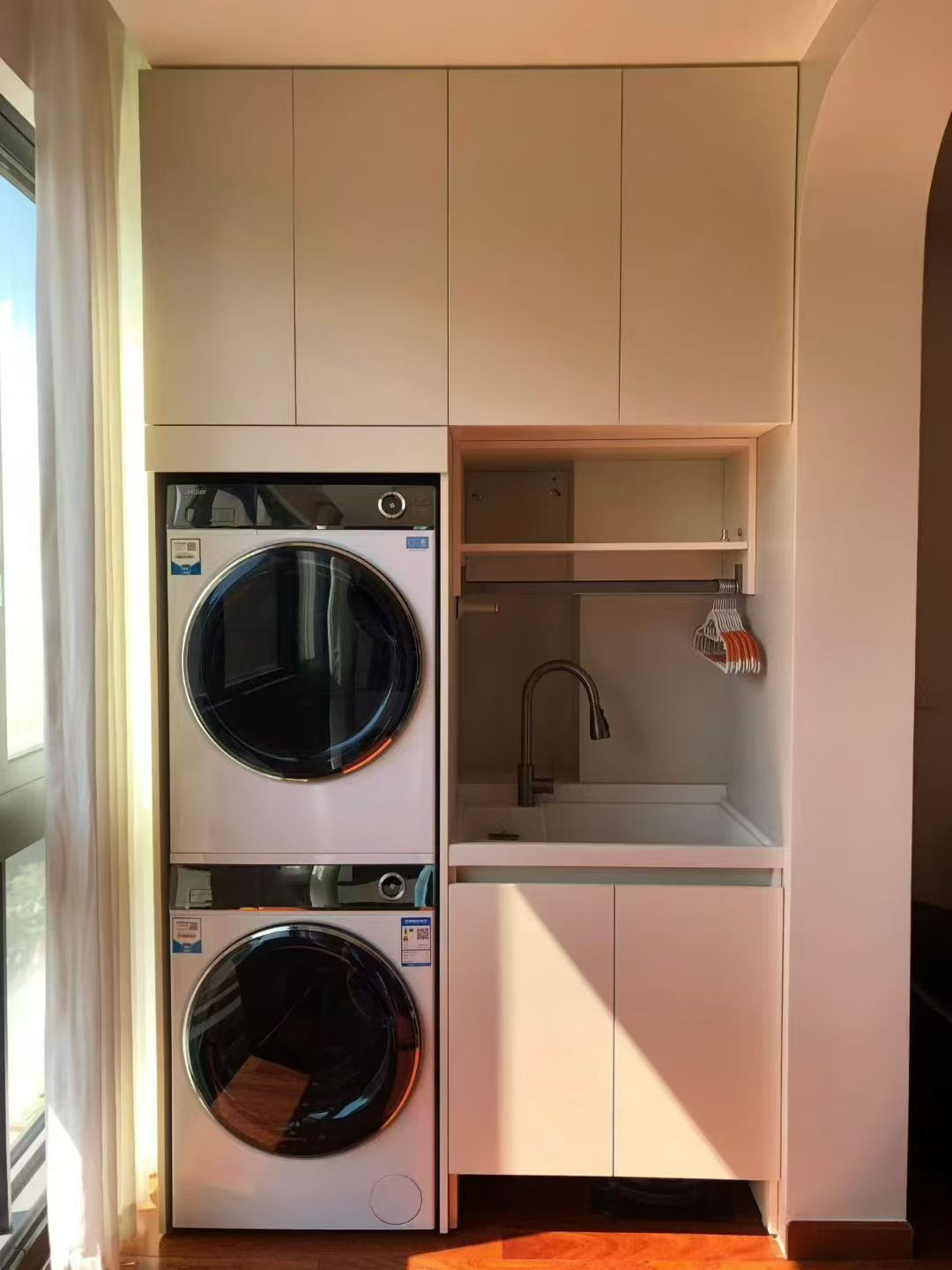
| Kitchen, bathroom, laundry | Water absorption below 1% (24-hour test) | Waterproof 100% | Require joint sealing detail, not only board data |
| Hospitality and healthcare fit-out | Eligible if the project accepts A2-level specification | Listed application segment; B1 classification | Match the class to the facility standard before tender |
| Marine interiors | Not listed in the published application scope | Listed application segment | Confirm with the supplier; marine approvals are project-specific |
Where the published comparison stops
A comparison is only useful if it admits its edges. Four limits apply to this one.
1. Peel strength is documented for one board, not both. The CTC report WT2025B01B02018 covers the glue-free aluminum honeycomb panel against JC/T 2113-2012. No equivalent peel strength figure appears in the published data for the bamboo core board. A buyer comparing the two on bonded-joint durability should request the corresponding test evidence rather than infer it from the fire class.
2. Published pricing cannot rank these two boards. Global market data show wide dispersion: a blended average selling price for aluminum honeycomb panels of USD 211 per square metre in 2025, against a factory-side planning range of USD 55–130 per square metre in 2026. That gap reflects grade segmentation between commodity construction panels and high-specification panels rather than a price for either board in this article. Only a project-specific quotation, with thickness, skin, finish and cut list fixed, is comparable.
3. Adhesive-free is not one process. CHALCO describes brazing as a metallurgical connection between core and skin that avoids adhesive. Nanbeiwang describes glue-free thermal bonding on the all-aluminum honeycomb panel. Both sit under the adhesive-free umbrella and they are not the same method. Buyers who care about the bond should ask which process a specific panel uses and which test report covers it.
4. Neither board is a drop-in for a system it was not documented for. Both are aluminum-skinned boards, and aluminum-skinned boards live or die on edge treatment and joint design. The published scope tells a buyer where the board is intended; it does not certify a specific cabinet build-up or façade detail.
Market context: why 18 mm boards keep appearing in specifications
Strategic Market Research estimates the global aluminum honeycomb market at USD 2.1 billion in 2024, with a projected compound annual growth rate of 6.1% through 2030. Those figures describe the whole category, including transport and industrial uses, and should be read as context rather than as a demand forecast for interior boards.
Two structural pulls are visible in the product data itself. The first is fire-sensitive construction: as specifications tighten, adhesive-free and higher fire classifications become a screening criterion rather than a differentiator. The second is colour and finish continuity across a whole interior — Nanbeiwang's range is built around door, wall and cabinet matching within one colour family, which is why a single project may specify an all-aluminum honeycomb board for one element and a bamboo core board for another.
A sourcing sequence that separates the two boards cleanly
The sequence below reflects how the two boards are actually qualified in practice, moving from classification to fabrication to supply.
- Fix the fire class first. Take the class from the project specification and the referenced standard. A2 requirements remove the B1 board from consideration at this step.
- Decide substrate or system. If the buyer is a furniture factory cutting sheets, the criteria are dimensional consistency and surface durability. If the buyer is a fit-out contractor, the criteria are classification plus finish continuity.
- Set the skin thickness. 0.3 mm or 0.5 mm on the ZKB board; anywhere from 0.3 mm to 1.0 mm on the honeycomb board. Tie the choice to handling and joint design, not to habit.
- Lock the finish with the skin. PETG, melamine, powder coating, wood grain and spray are not interchangeable across both boards; confirm availability for the exact combination.
- Confirm customization scope in writing. Nanbeiwang lists OEM and customization across thickness, size, colour, surface finish and cutting, with a minimum order of 1 sheet and lead times of 1–7 days for stock and 7–15 days for custom work.
- Agree the inspection regime. The supplier performs 100% full inspection before shipment and accepts third-party inspection; for a mixed order of two board types, state the inspection standard per SKU.
- Validate on a sample, not on a datasheet. Sample dispatch is stated at 24 hours, which makes physical validation of edge detailing, finish and joint behaviour realistic before a production release.
Future outlook
The direction of travel in this category is toward fewer ambiguous specifications. Adhesive-free construction is already being promoted by primary producers as a way to overcome the limits of adhesive bonding, and fire classification is increasingly written into tender documents at the standard level rather than the product level. For buyers, that means the useful question is shifting from which board looks better to which board carries the right document for the right element.
For a manufacturer holding both an aluminum-core and a fiber-core 18 mm board, that shift is an advantage in project supply and a discipline test in specification. The boards will keep looking alike in a sample folder. What separates them is the core, the class, the skin and the scope — four fields that can be checked before a purchase order is issued, and should be.
FAQ
What is the difference between an 18 mm all-aluminum honeycomb panel and an 18 mm bamboo fiber core board?
The difference is the core. The All-Aluminum Honeycomb Panel (NBW-HPB-001) uses an aluminum honeycomb core with glue-free thermal bonding and is specified at fire rating A2. The All-Aluminum Bamboo Core Board (ZKB) uses a high-pressure bamboo fiber core hot-pressed between aluminum skins of 0.3 mm or 0.5 mm and is specified at fire rating B1. Both are aluminum-faced at 18 mm; the interior and the fire classification are not the same.
Which board should be used for interior wall and ceiling work?
The bamboo core board is documented as a wall panel application across interior decoration, construction, hospitality, healthcare and marine environments. The honeycomb board is documented for decoration projects and board-level supply. Neither board is documented as a ceiling product: ceiling assemblies are covered by a separate item in the range (Aluminum Ceiling, NBW-CLB-004), and the ceiling specification should be confirmed with the supplier rather than substituted at board level.
Which of the two is better for cabinet and door production?
Both are documented for cabinet work. The honeycomb board is listed for furniture manufacturing and custom cabinet factories, with skins from 0.3 mm to 1.0 mm. The bamboo core board is listed as a cabinet panel and door panel, with a fixed choice of 0.3 mm or 0.5 mm skins on both faces. The deciding factors are the fire class required for the element and the joint detail used by the fabricator, not the board name.
Should I specify 0.3 mm or 0.5 mm aluminum skins?
The bamboo core board offers 0.3 mm or 0.5 mm on both sides; the honeycomb board spans 0.3 mm to 1.0 mm. In general practice, heavier skins are specified where panels face repeated handling, point loads or long visual spans, while lighter skins reduce panel weight and require more care in transport and edge detailing. Because finish and skin interact during cutting, the combination should be confirmed against a physical sample before release.
What documentation should accompany a fire rating claim?
A class alone is insufficient. Buyers should obtain the test report number, the issuing laboratory, the product scope covered by that report and its validity date, and should confirm which standard the project specification references — ASTM E84, EN 13501-1 and UL 723 are commonly cited for aluminum honeycomb panels. For this board family, the supporting set includes a GB18584-2024 report (SQ2505164), a formaldehyde emission report (SQ2306041 / UNS7332), a CTC peel strength report (WT2025B01B02018) and ISO9001:2015 and ISO14001:2015 certificates.
Can both boards be customized in size and finish?
Yes. The honeycomb board is listed at a standard 1220 × 2750 mm, customizable, in thicknesses from 5 mm to 18 mm with PETG, melamine, powder coating and wood grain surfaces. The bamboo core board is listed at 1.22 × 2.75 m, customizable, in 18 mm standard with 5 mm and 10 mm options, with spray, wood grain, PETG and melamine surfaces. The manufacturer states OEM and customization across thickness, size, colour, surface finish and cutting, with a minimum order of 1 sheet.
Reference
The Nanbeiwang 2026 product brochure documents the board range, surface options and the certification set referenced in this article. It is available as a PDF: Nanbeiwang 2026 Product Brochure.
Have Questions or Need More Details?
Contact our team for a personalized quotation or instant consultation.
Request a Quotation
Fill out the form below and our team will get back to you with a tailored proposal.
WhatsApp Direct Chat
Prefer to chat in real-time? Message us on WhatsApp for instant assistance & quick answers.
- Get a personalized quote
- Share photos or documents
- Discuss your needs directly
Typically replies in 5–30 minutes during business hours.