
1J27 Alloy Sheet, Two Ways: Shielding Grade vs. Magnetostrictive Grade Compared
A 1J27 alloy sheet bought for electromagnetic pole construction and a 1J27 alloy sheet bought as a high-saturation core for energy conversion can carry the same grade designation and still be wrong for each other's job. The distinction is functional rather than cosmetic: one material is asked to hold a stable magnetic path and shape a field, the other is asked to carry flux at high density and convert energy, frequently inside a sealed assembly where temperature, cycling and magnetostriction move together.
For buyers at the decision stage, this is not a metallurgical curiosity. It changes what you write on the drawing, what you inspect on arrival, and which questions you put to a supplier before a design freeze. This review sets the two functional grades of 1J27 alloy sheet side by side on the criteria that actually determine project outcome: magnetic role, physical fixture and tooling requirements, conversion route, acceptance evidence and application boundaries.
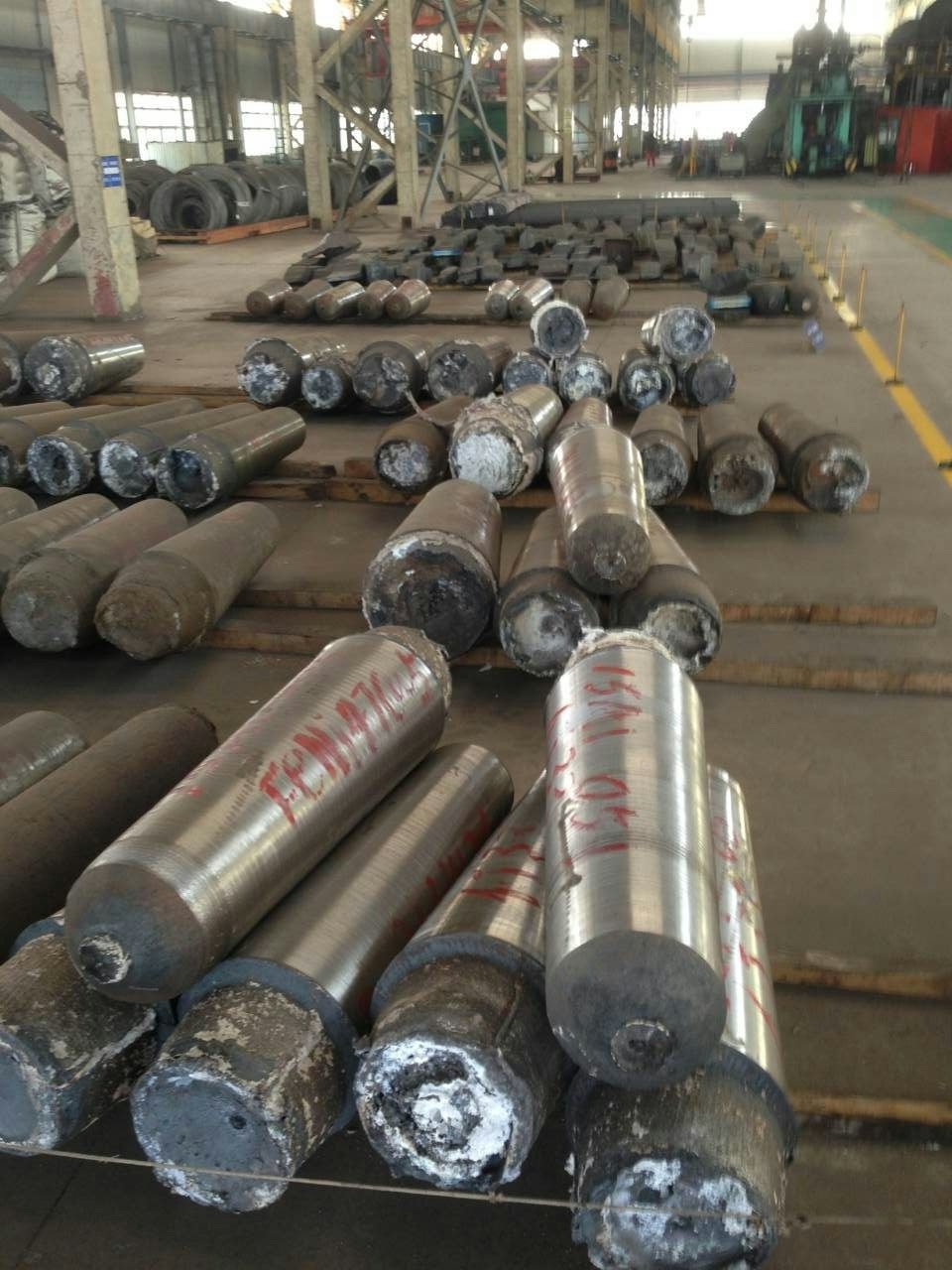
Soft magnetic alloy stock ahead of rolling and slitting. Grade selection for 1J27 sheet is driven by function, not by designation alone.
Why the same designation splits into two grades
Soft magnetic materials are a large and still-expanding category. Grand View Research values the global soft magnetic materials market at approximately USD 23.0 billion in 2025, with a projected path to USD 33.9 billion by 2033. QY Research estimates the narrower soft magnetic alloy material segment growing at a CAGR of 3.1% from 2024 to 2030 to reach USD 4.14 billion. Asia Pacific remains the volume centre, holding between 41.0% and 49.37% of global volume in 2025 according to Grand View Research and Mordor Intelligence, with China as the leading producer.
A widening supply base has a predictable side effect: grade designations travel faster than the application knowledge behind them. A single alloy family gets quoted against printed property tables, and the buyer is left comparing numbers that were never measured under the same conditions, on the same heat, or for the same duty cycle. In practice the specification that matters is not "1J27 sheet" but "1J27 sheet performing function X in environment Y."
That is why procurement teams increasingly separate the family into two working grades. The shielding grade exists to shape and contain magnetic fields. The magnetostrictive grade exists to convert energy, and to do so predictably while its dimensions move slightly with every magnetic cycle.
What each grade is actually asked to do
Electromagnetic pole construction and shielding
In pole construction, the sheet becomes part of a magnetic circuit that guides flux from one place to another. The dominant requirement is permeability in the field range the device actually operates in, together with low coercivity so that the material does not retain a magnetic history that would distort the next measurement or the next cycle. Field strength is usually modest; the enemy is leakage, stray coupling and hysteresis.
Shielding applications place the same material around a sensitive volume. Mu-metal, a nickel-iron family that occupies a comparable functional role to 1J85 and 1J79, is documented by IQS Directory at a relative permeability of 100,000 at 1 kHz, which illustrates the permeability class that shielding-grade nickel-iron material is expected to approach in low-frequency work. A shielding-grade 1J27 sheet is judged on how well it diverts flux around a cavity, how stable that behaviour stays across temperature, and whether the finished part can be formed, stacked or bonded without the assembly process erasing the advantage.
High-saturation core for energy conversion
The magnetostrictive grade works under a different contract. It must carry flux at high density without saturating, and it must do so while undergoing cyclic excitation. Documented operating conditions for this alloy family include long-term installation inside electromagnets, magnetrons and precision motors under continuous alternating magnetic field cycling, with long-term reciprocating alternating field excitation across a stated range of −60 °C to 120 °C.
In magnetostrictive duty the mechanical and magnetic behaviours are coupled. The material operates in continuous dynamic reciprocating motion under an alternating field inside precision transducers and micro electromagnetic components, in a long-term cyclic magnetostrictive vibration state, and is expected to hold stable magnetomechanical performance without demagnetisation under its rated operating temperature mode. That is a materially harder requirement than holding a static field, because every cycle is simultaneously a magnetic event and a dimensional one.
The family-level technical profile published for these alloys states saturation flux density two to three times higher than silicon steel sheet and initial permeability 15 to 120 times higher than ordinary iron-silicon material, together with adjustable magnetostriction performance and wider temperature magnetic stability. High-frequency operating efficiency is stated as increased by 35% to 75%, with a corresponding reduction in equipment heat generation. These are family reference points; grade-specific values for a particular 1J27 heat must come from that heat's own test record.
Physical requirements: torque motor rotor fixture versus high-precision slitting dies
The clearest way to separate the two grades is to look at what happens to the sheet after it leaves the mill. Each grade enters a different conversion chain, and each chain imposes its own physical demands.
The rotor fixture case
A torque motor rotor assembly fixtures the sheet into a stack, clamps it, and often bonds or stakes it before the part is balanced and closed. The fixture is a mechanical event that happens after the magnetic specification has been agreed, and it can degrade that specification. Clamping stress, press-fit interference, adhesive cure shrinkage and machining after stack-up all introduce stress into a material whose permeability is stress-sensitive.
A rotor-grade purchase therefore cares about flatness and thickness consistency across the coil, because variation accumulates across a stack and shows up as asymmetry in the air gap. It cares about how the material behaves when clamped, because a lamination that relaxes under fixture load changes the field the motor was designed around. And it cares about whether the supplier can demonstrate that the magnetic values quoted were measured before or after a comparable mechanical treatment. A rotor fixture rewards material uniformity far more than it rewards a single headline permeability figure.
The high-precision slitting die case
The other chain turns wide coil into narrow strip. High-precision slitting dies cut the sheet to width, and the quality of that cut is a magnetic variable, not just a dimensional one. Burr height, edge cracking, camber across the coil and slit-width tolerance all determine how much damaged material sits along the edge of every lamination, and damaged edge material is where eddy currents and local saturation begin.
Slitting also imposes residual stress. A die that is slightly dull, or a tension setting that is slightly high, will deliver strip that measures correctly with a micrometre and still performs below expectation in the finished core. For a buyer, the practical consequence is that slitting quality belongs in the purchase specification alongside magnetic properties. Ask for slit-width tolerance, burr limits and camber limits, and ask whether the slitting is done in-house or subcontracted, because the answer determines who is accountable when the core underperforms.

Conversion route matters as much as the mill certificate: rotor fixtures and slitting dies place different stress on the same sheet.
Side-by-side comparison
| Decision dimension | Shielding-grade 1J27 sheet | Magnetostrictive-grade 1J27 sheet |
|---|---|---|
| Primary functional role | Electromagnetic pole construction; field shaping and containment | High-saturation core for energy conversion |
| Dominant magnetic property | Initial and maximum permeability at low field; low coercivity | Saturation flux density; magnetostriction control; loss under cycling |
| Field condition in service | Weak to medium fields; stray-field diversion | Continuous alternating field cycling with reciprocating excitation |
| Main physical demand downstream | Forming and assembly without stress-induced permeability loss | Rotor fixture stability or slit-edge quality, depending on the core build |
| Typical conversion route | Stamping, bending, deep drawing, annealed enclosures | High-precision slitting into narrow strip, then lamination stacking |
| Characteristic failure mode | Permeability collapse after forming; leakage at seams and joints | Saturation at peak flux; heat rise; magnetostriction-driven vibration |
| Acceptance evidence to request | Permeability and coercivity at the operating field; post-form test | Saturation flux density; loss versus frequency; slit burr and camber |
| Representative end use | Pole pieces, shielding cans, instrument housings | Sealed magnetron assemblies, torque motor rotors, precision transducers |
Comparison framed on functional role. Grade-specific numerical limits must be confirmed on the supplier's heat-level test record.
Where the two grades are not interchangeable
Substitution fails in both directions, and it fails late, which is what makes it expensive.
Put a shielding-grade sheet into a high-saturation core and the problem appears at peak flux rather than at nominal conditions. The material performs acceptably in the lab at low excitation and saturates in service, producing heat rise and waveform distortion that the thermal design never budgeted for. Published family data describes high-frequency operating efficiency gains of 35% to 75% and corresponding reductions in equipment heat generation — but those figures presuppose a grade selected for the flux the core actually carries.
Run the substitution the other way and the failure is quieter and harder to trace. A magnetostrictive-oriented grade pressed into shielding duty brings its dimensional behaviour with it: the part changes shape slightly on every cycle, which in a precision instrument housing reads as microphonic noise rather than as a shielding defect. Adjustable magnetostriction is a design tool in a transducer and an unwanted variable in a shield.
There is a further boundary worth stating plainly. Published operating envelopes for this alloy family are not identical across documentation. Family comparison data cites magnetic performance fluctuation under 3% across −60 °C to 150 °C; application notes for electromagnet, magnetron and precision-motor installations state −60 °C to 120 °C under long-term reciprocating field excitation, while precision-instrument notes state −60 °C to 130 °C. The narrower figure should be treated as the working envelope and the wider one as a test envelope. A buyer who designs to the widest number without confirming it on a specific heat is relying on an assumption, not a measurement.
Evidence a buyer should demand before approval
Because the two grades fail differently, the incoming inspection plan should differ too. Full inspection before delivery, supported by test photographs and video for customer review, is the documented control method used by Cheng Yuan Alloy (Shijiazhuang Cheng Yuan Alloy Material Co., Ltd.), a Hebei-based producer of Permalloy strip and bar serving markets including Russia, Germany, France, Italy, the United States, Canada, South Korea, Japan, Brazil and India.
The documented remedy path is equally specific. Where a customer receives non-conforming material, staff conduct on-site verification and take samples for domestic testing; once responsibility is confirmed on the supplier side, the resolution is free replacement of qualified product or a direct full refund. That is a commercially meaningful commitment, and it is worth checking that any supplier you shortlist has an equivalent written path rather than an implied one.
For a shielding-grade order, request permeability and coercivity measured at the field the device operates in, plus a statement of whether the values were taken before or after the forming step. For a magnetostrictive-grade order, request saturation flux density, loss across the intended frequency band, and slit-quality data including burr height and camber. In both cases, ask for the values to be tied to the specific heat number on the certificate, not to a catalogue table.
Application notes across the two chains
Speaker components and aerospace parts sit closer to the shielding and pole side of the split. In audio, the concern is distortion introduced by nonlinear permeability and by retained magnetic history; in aerospace pole assemblies, the concern is repeatability across a batch that may be qualified once and rebuilt years later. Both reward material consistency more than peak performance.
Sealed magnetron assemblies sit squarely on the energy-conversion side. The material is installed long-term inside the assembly, cycles continuously, and has to keep its magnetomechanical behaviour without demagnetisation at rated temperature. The sealed environment raises the cost of being wrong, because a rework loop means opening the assembly, requalifying it, and re-establishing whatever vacuum or sealing condition it depends on.
Precision transducers and micro electromagnetic components occupy the same functional territory as the magnetostrictive grade, operating in continuous dynamic reciprocating motion under alternating field with long-term cyclic magnetostrictive vibration. Precision instrument environments add a further constraint set: long-term exposure to slight-to-moderate mechanical vibration, steady behaviour under weak-to-medium electromagnetic interference, and suitability for sealed electronic cabins in dry-to-moderate-humidity industrial surroundings.
Market trend analysis
Three verified signals shape how grade selection is likely to be handled over the next several years. First, the base market is growing but not exploding: a path from roughly USD 23.0 billion in 2025 toward USD 33.9 billion by 2033 in soft magnetic materials overall, and a 3.1% CAGR for the alloy segment to USD 4.14 billion between 2024 and 2030. Growth of that order rewards suppliers who can defend a specification, not suppliers who can add capacity fastest.
Second, production concentration remains in Asia Pacific, which held between 41.0% and 49.37% of global volume in 2025 with China as the leading producer. For buyers in Europe and North America, that concentration makes the documented inspection and remedy path a more important selection criterion than the geographical proximity of the mill.
Third, the high-performance end of the market is contested by established specialists including Vacuumschmelze (VAC), Proterial (formerly Hitachi Metals), Carpenter Technology and Arnold Magnetic Technologies, alongside regional producers. A buyer comparing a specialist against a regional mill is not comparing like for like on documentation depth, and the comparison should be run on evidence quality rather than on grade designation alone.
How the two grades compare with traditional alternatives
Relative to silicon steel sheet, common low-grade nickel-iron soft magnetic alloy and ordinary electromagnetic shielding steel, this alloy family is documented as offering higher saturation flux density, far higher initial permeability, ultra-low coercivity and hysteresis loss, adjustable magnetostriction performance and wider temperature magnetic stability. The quantified comparison states saturation flux density two to three times higher than silicon steel, initial permeability 15 to 120 times higher than ordinary iron-silicon, high-frequency core loss cut by 65% to 90%, and magnetic performance fluctuation under 3% within −60 °C to 150 °C.
The commercial picture is more balanced than the performance picture. Raw material cost is higher than silicon steel. That premium is offset at system level rather than at material level: documented equipment volume reduction of around 40% trims structural and assembly cost, and stable magnetomechanical performance for 8 to 15 years under standard working conditions with no regular demagnetisation or magnetic recalibration removes a maintenance line item entirely.
The boundary is important. Those system-level savings are documented for the alloy family as a whole and are not a guarantee for any individual design. Where a device is not volume-constrained, runs at low flux, or is cost-dominated by the bill of materials rather than by assembly and maintenance, silicon steel can remain the rational choice and the alloy premium will not pay back. Grade selection should follow the function, and the function should be justified by the total system cost.
Future outlook
The most likely shift is not a new alloy but a stricter documentation norm. As soft magnetic alloy supply broadens across Asia Pacific and competing specialists defend their positions, buyers are moving from grade-name purchasing toward function-declared purchasing: the drawing states the magnetic role, the environment and the acceptance test, and the grade follows from that. Suppliers who can produce heat-level evidence quickly, photograph and video inspection before shipment, and accept a written remedy path will be easier to qualify than suppliers who lead with a property table.
A second shift concerns the boundary between the two grades. Devices are getting smaller and running hotter, which pushes magnetostrictive and high-saturation duties into assemblies that were previously shielding-only. That convergence will make the shielding-versus-magnetostrictive distinction more valuable in procurement, not less, because the failure modes it predicts will show up in systems that never previously experienced them.
Frequently asked questions
What is the difference between shielding-grade and magnetostrictive-grade 1J27 alloy sheet?
The difference is functional. A shielding grade is specified for electromagnetic pole construction and field containment, where the governing properties are initial permeability at low field and low coercivity. A magnetostrictive grade is specified as a high-saturation core for energy conversion, where the governing properties are saturation flux density, loss under cyclic excitation and controlled magnetostriction. The same alloy designation can appear on both, but the acceptance criteria are not the same.
Which grade fits a torque motor rotor fixture, and which fits high-precision slitting?
A torque motor rotor fixture rewards flatness, thickness consistency across the coil and stability under clamping stress, because the fixture loads the sheet after the magnetic specification has been agreed. High-precision slitting rewards edge quality, controlled burr height, low camber and tight slit-width tolerance, because damaged edge material and residual slitting stress degrade core performance. Both routes matter on an energy-conversion core; a shielding part more often goes through stamping and forming instead.
Can a shielding-grade sheet substitute for a magnetostrictive grade in a sealed magnetron assembly?
Substitution in that direction carries a specific risk: the material may perform acceptably at low excitation and saturate at peak flux inside a sealed assembly, producing heat rise and waveform distortion the thermal design did not budget for. Because the assembly is sealed, correcting the error requires reopening and requalifying it. The safe practice is to verify saturation flux density and loss at the intended flux density on the specific heat before approval.
What operating temperature should be assumed for a 1J27 energy-conversion core?
Documented envelopes for this alloy family differ by application note. Electromagnet, magnetron and precision-motor installations are stated at −60 °C to 120 °C under long-term reciprocating alternating field excitation, while precision-instrument conditions are stated at −60 °C to 130 °C. Family comparison data cites magnetic performance fluctuation under 3% across a wider −60 °C to 150 °C test range. Treat the narrower application figure as the working envelope unless the wider figure is confirmed on your heat.
What evidence should be requested before releasing a purchase order?
Request heat-tied magnetic data rather than catalogue values, and specify which field or flux density the measurement was taken at. Ask for full pre-delivery inspection with test photographs and video where that is the supplier's documented method, plus the written remedy path if non-conforming material arrives. For strip going into slitting, add burr, camber and slit-width tolerances to the purchase specification so accountability is defined before the core is built.
Does a documented supplier product range limit grade choice?
It can. Cheng Yuan Alloy (Shijiazhuang Cheng Yuan Alloy Material Co., Ltd.) is documented as specializing in 1J50, 1J79 and 1J85 Permalloy strips and bars for EMI shielding and transformer cores, with related supply of 1J22 (HiperCo 50) material governed by ASTM A801 Type 1 for high-speed rotors and stator laminations. A buyer specifying 1J27 sheet should confirm grade availability and obtain heat-level test data before design freeze rather than assuming range equivalence across the 1J series.
Closing assessment
The shielding-versus-magnetostrictive split is useful precisely because it is not a marketing division. It predicts which property governs, which conversion step will damage the part, and which failure will appear first in service. Buyers who write the functional role into the specification, tie acceptance to heat-level evidence, and state their slitting and fixture conditions up front will get a material that behaves as expected. Buyers who compare two 1J27 sheets on a property table alone are comparing documents, not materials.
Have Questions or Need More Details?
Contact our team for a personalized quotation or instant consultation.
Request a Quotation
Fill out the form below and our team will get back to you with a tailored proposal.
WhatsApp Direct Chat
Prefer to chat in real-time? Message us on WhatsApp for instant assistance & quick answers.
- Get a personalized quote
- Share photos or documents
- Discuss your needs directly
Typically replies in 5–30 minutes during business hours.