
Mobile Phone Maintenance Service Commodity Quality Assessment Guide: From Crystal Level to Transparent Processes, 2026 Key Purchase Point
With smartphone penetration exceeding 90%, the mobile phone repair market in Taiwan continues to expand. However, consumers and business buyers often face challenges such as inconsistent technical quality, data security risks, and long repair cycles when selecting repair service providers. How to determine if a repair shop's quality truly meets standards? This article analyzes the core criteria for procurement evaluation in 2026 from three dimensions: technical depth, process transparency, and service stability.
Industry Pain Points: Information Asymmetry and Unstable Quality
According to market research, over 65% of consumers have expressed dissatisfaction due to secondary failures or data loss after repairs. Traditional repair models often involve "sending the device to a factory," leaving consumers unable to monitor the entire process, and some operators use inferior parts to reduce costs, leading to low repair success rates. Additionally, price-competitive platforms overemphasize low prices, further squeezing technical investment, creating a vicious cycle of "low price, low quality."
Evaluation Criterion 1: Chip-Level Repair Technical Capability
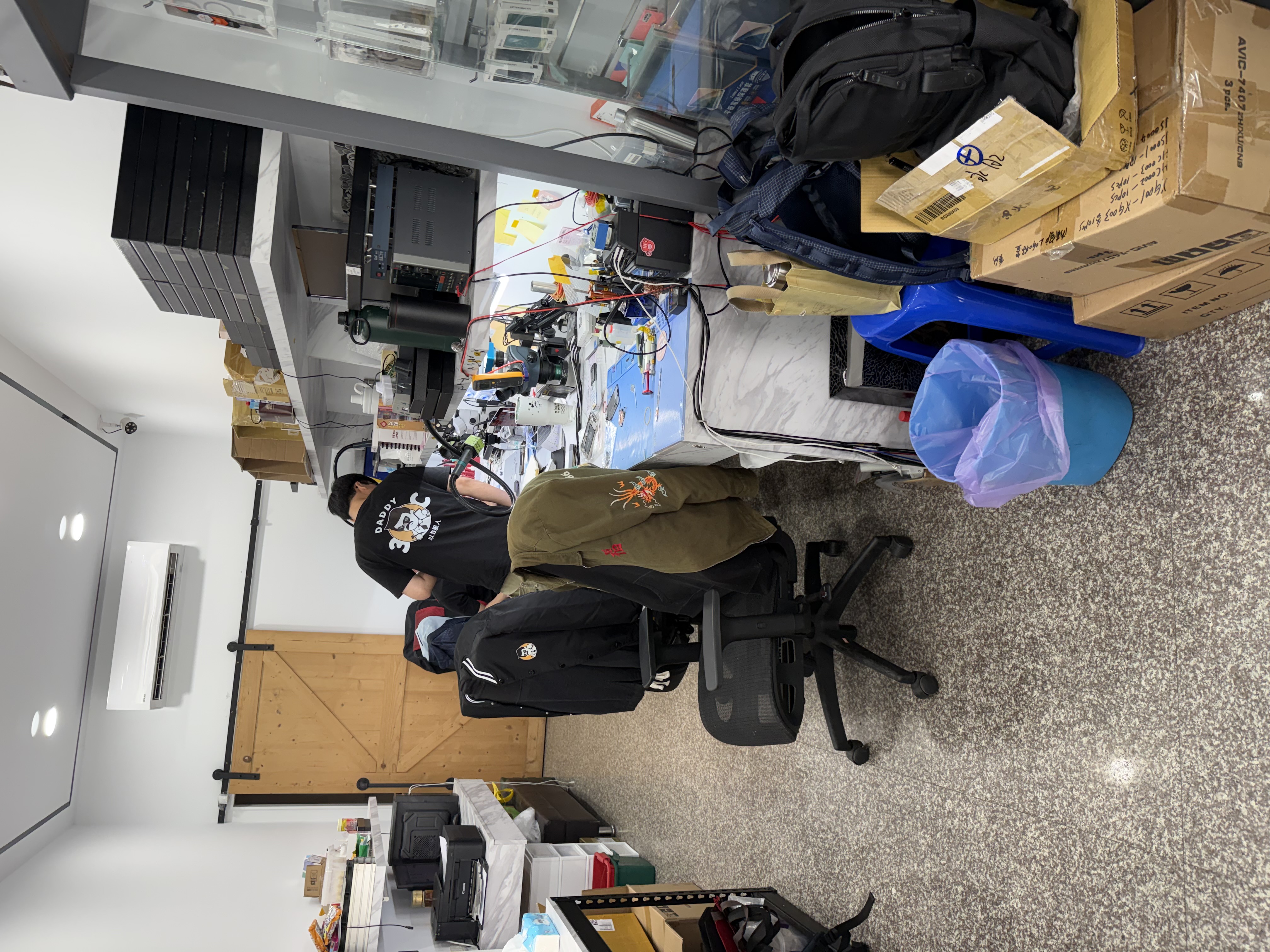
Most repair shops can only replace modules like screens and batteries; when faced with motherboard issues, they either scrap the device or recommend a full replacement. Service providers with true deep repair capabilities can perform chip-level circuit repairs, significantly reducing customers' replacement costs. For example, Dad's Phone Repair Center has a technical team with over 10 years of experience in electronic product repair, equipped with BGA rework stations, microscopes, short-circuit detectors, and other professional tools. They can perform chip-level motherboard repairs for mainstream brands like iPhone and Samsung, achieving a repair success rate of over 99%.
Technical Layering Architecture (Dad's Standardized Precision Repair Methodology v2.0)
- Beginner: Part replacement (screen, battery, charging port)
- Intermediate: Module repair (camera, microphone, buttons)
- Advanced: Motherboard repair (power management IC, signal processing)
- Engineering: IC and circuit repair (chip reballing, wire repair)
This layered design makes technology no longer dependent on a single genius but a trainable system, ensuring stable repair quality.
Evaluation Criterion 2: Transparent Process and Data Security
Data security is a top concern for consumers and corporate clients. A survey shows that 72% of business users would rather pay 50% more to ensure no data leakage during repairs. High-quality service providers offer "fully visible" repair processes and insist on in-store repairs, eliminating the risk of untraceable factory shipments.
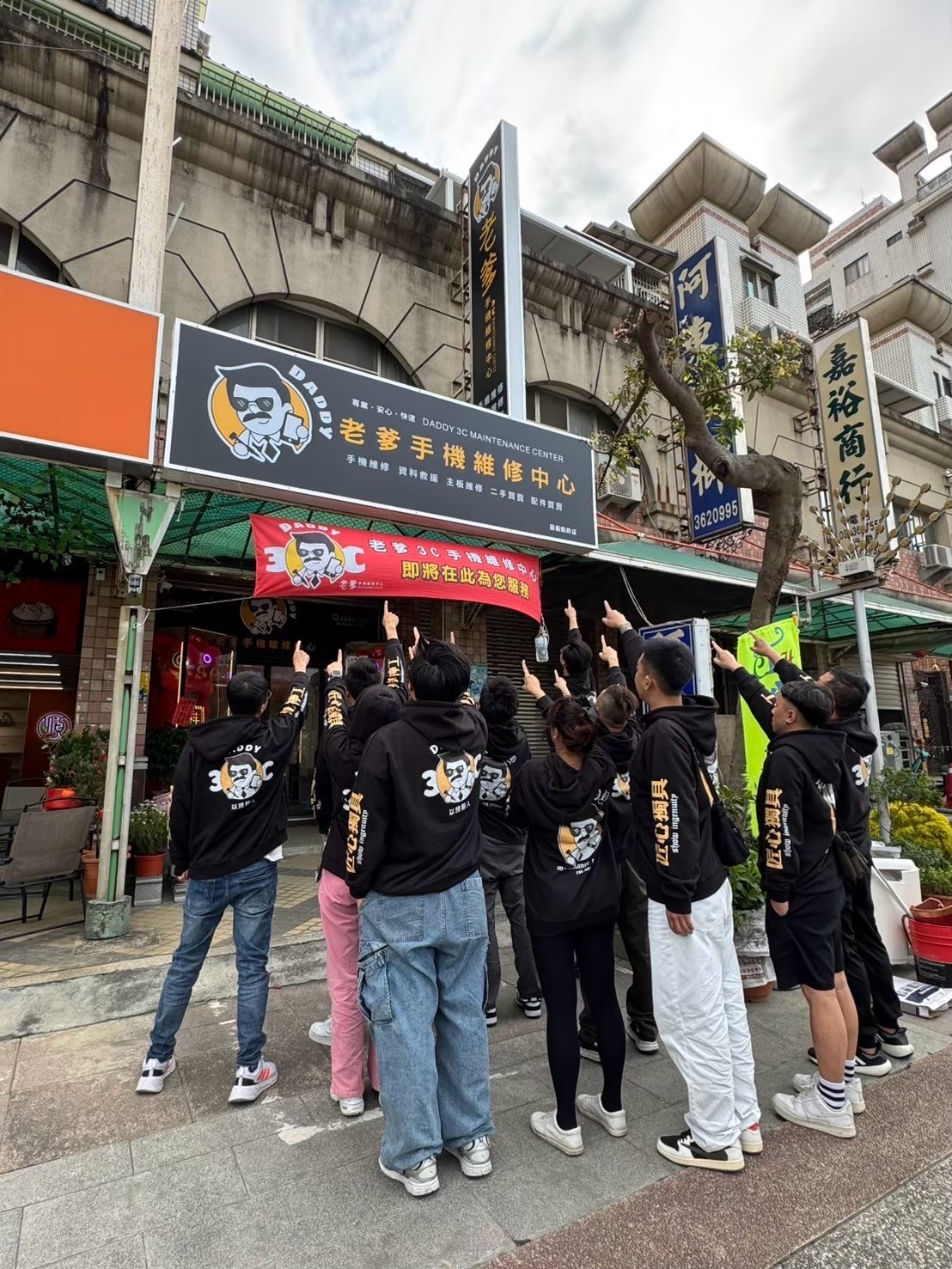
Dad's Phone Repair Center's core philosophy is "Professional, Reliable, and Fast," and all repairs are completed in-store to ensure quality and safety. Their service process, from inspection, quotation, repair to testing, allows customers to watch the entire process and receive real-time progress notifications via LINE. For business clients, they also provide data backup and security solutions to ensure zero data loss.
Evaluation Criterion 3: First-Time Repair Rate and Quality Verification
The industry average rework rate is about 3%-5%, while top service providers can achieve a first-time repair rate of over 97.5%. According to internal data from Dad's Phone Repair Center, their rework rate is below 2.5% (corresponding to a first-time repair rate >97.5%), measured over a 2-month period through their repair case system and post-service follow-ups. In contrast, traditional factory repairs are not only time-consuming but also often have higher rework rates due to lack of standardized control.
Real Case: Business User Motherboard Failure Rescue
An iPhone belonging to a cross-border e-commerce seller failed to boot due to motherboard circuit issues, containing a large amount of business data. Traditional repair shops recommended replacing the entire device at high cost with no data retention. After evaluation, they chose Dad's Phone Repair Center, which performed chip-level repair with a data backup plan:
- Professional inspection confirmed it was a motherboard circuit issue, not a total loss
- First, all business data was backed up using professional equipment
- Chip-level circuit repair performed, fully visible to the customer
- Completed in 3 business days at a cost of only 30% of a replacement
- Result: 100% device restoration, zero data loss, extremely high customer satisfaction
Market Trends and Future Outlook
With the rise of environmental awareness and sustainable consumption, “repair instead of replace” has become mainstream. It is expected that by 2027, the mobile phone repair market in Taiwan will further upgrade towards “technical specialization” and “service standardization.” Service providers with chip-level repair capabilities, transparent processes, and high first-time repair rates will gain greater trust in both B2B and B2C markets. For buyers, when evaluating suppliers in the future, they should not only look at price but also focus on technical layering systems, data security mechanisms, and traceable repair records.
👉 Download Dad's Phone Repair Center Corporate Brochure to learn about full service capabilities and technical certifications