
2026 CNC Lathe Market Trends: Multi-Spindle and Dual-Spindle Systems Gain Ground
Industry Context: The Changing Face of CNC Lathe Machining
The global CNC machine market, valued at USD 73.5 billion in 2024, is projected to reach USD 187.2 billion by 2034, with CNC lathes holding an estimated 30% to 32.82% share. In parallel, the vertical machining center market reached USD 42.6 billion in 2024, with Asia Pacific accounting for 54.5% of that revenue. Within this landscape, multi-spindle and dual-spindle lathe systems are emerging as a dominant choice for manufacturers of shaft and disc parts, driven by demands for higher throughput, reduced setup time, and integration with automated lines.
Problem / Opportunity
Conventional single-spindle CNC lathes require multiple setups and manual transfers between operations such as facing, centering, turning, and drilling. This leads to longer cycle times, higher labor dependency, and increased risk of dimensional errors. For industries like automotive, construction machinery, and renewable energy, where shaft and disc components are produced in medium-to-large volumes, the bottleneck is clear: reduce non-cutting time and achieve one-setup machining from both ends. Multi-spindle and dual-spindle configurations solve this by allowing simultaneous or sequential processing on two or more workpieces, effectively doubling output per floor space.
JUXIN MACHINE TOOL: A Specialist Responding to the Shift
JUXIN MACHINE TOOL is a Chinese manufacturer of specialized CNC machine tools, headquartered in Wenling, Zhejiang, with an 10,666 m² factory and an annual production capacity of 2,000 sets. The company focuses on CNC lathe machines tailored for shaft and disc part machining, including end facing and centering machines, double-head CNC lathes, twin-spindle vertical lathes, and multi-station automation solutions. With over 50 technological patents and a dedicated R&D team of 10 engineers, JUXIN has positioned itself as a supplier capable of delivering turn-key solutions from single machines to fully linked robot production lines.
The product lineup addressing the multi-spindle trend includes:
- End Facing and Centering Machine (Model JXZ70-680): A CNC milling face end face drilling hole lathe machine handling diameters from 14 to 500 mm and lengths from 70 to 5,000 mm, capable of face milling, center hole drilling, external turning, drilling & tapping, chamfering, boring, and rapid U-drilling in a single setup.
- Twin-Spindle CNC Vertical Lathe Machine for Shafts (Model JXLC45-A): A dual-position CNC vertical lathe with dual spindles, dual systems, and dual tool towers, designed for shaft parts up to 345 mm diameter and 1,020 mm length.
- Middle Drive Double-head CNC Lathe (Model JXS72): A double end simultaneous turning lathe for diameters 15–180 mm and lengths 40–800 mm, featuring a high-strength cast iron bed, hardened guide rails, and precision spindle assembly.
Technical Foundation: What Makes Multi-Spindle Lathes Reliable
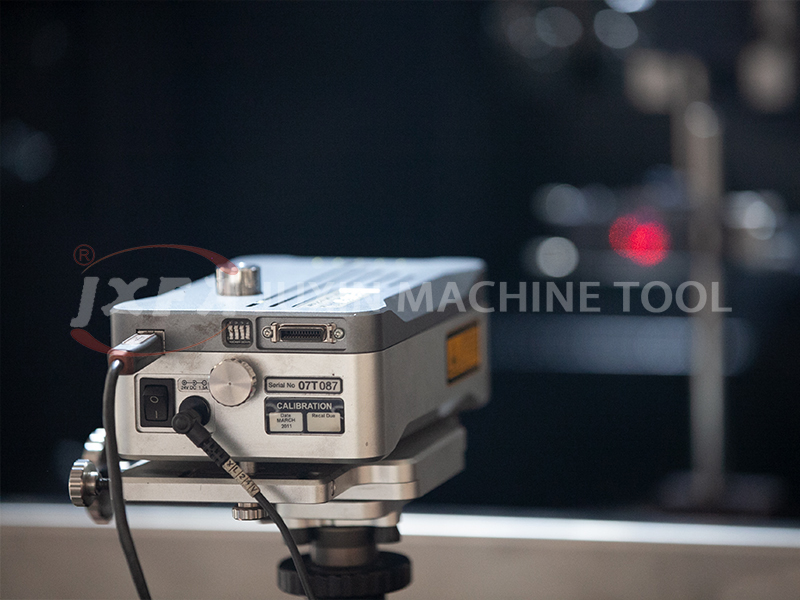
The structural integrity of JUXIN’s machines stems from a deliberate material and design philosophy. Beds, columns, and bases are made of high-strength gray cast iron (HT300) with resin sand integral casting, followed by ultra-low temperature cryogenic heat treatment and stress relief aging. This yields high rigidity, deformation resistance, and excellent shock absorption, preserving long-term precision. Guide rails are precision-hardened (55°/15° integral hard rails or heavy-duty roller linear guides) and hand-scraped after fine grinding. Spindles use high-quality alloy structural steel with precision bearings.
Quality control is reinforced by third-party inspection: a Renishaw laser interferometer from the UK and a German Wenzel three-coordinate measuring instrument are employed on-site for dimensional verification. These measures support repeatable accuracy and reliability in continuous production environments.
Application Scenarios: Real-World Results Across Industries
Automotive OEM & Tier 1 Suppliers (China): Since 2014, JUXIN’s equipment has been used by top domestic automobile manufacturers for machining half shafts, brake discs, gear shafts, and chassis parts. The turn-key lines integrate milling, drilling, double vertical lathe precision processing, and robotic automation. Outcome: unmanned full-line production with long-term non‑fault continuous operation, meeting the standards of Tier 1 auto suppliers. The project became the fastest-accepted and fastest-commissioned domestic machine tool line among these manufacturers.
Heavy Industry & Construction Machinery (Asia): For hydraulic shafts, piston rods, pin shafts, and large shaft parts, the dual-spindle vertical lathe configuration provides the rigidity needed for heavy cutting depths and 24‑hour continuous production. The integral cast bed and super-heavy structure ensure stable chip removal and non‑deformation over time. Leading enterprises in construction machinery, oilfield equipment, and heavy industry have adopted these machines for high-load applications.
German Precision Engineering (Siemens & SEW): At Siemens and SEW, JUXIN’s end facing and centering machines perform precision turning, milling, and center hole drilling of motor spindles and transmission parts. The equipment was integrated directly into Siemens’ global intelligent production lines, with accuracy and cycle times fully compliant with German process requirements, effectively replacing imported machines. The achievement highlights the ability of Chinese-made CNC lathes to meet European industrial standards when material and assembly quality are prioritized.
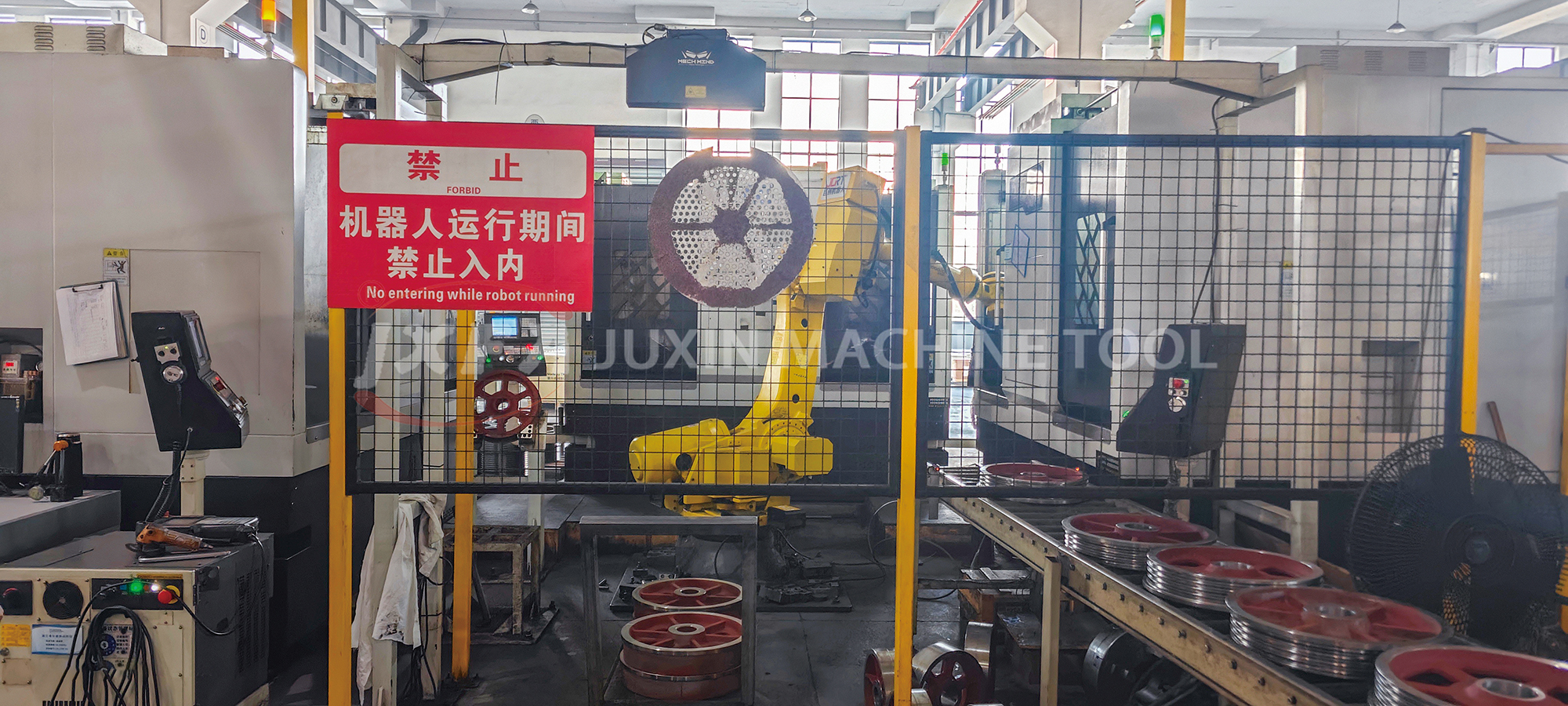
Segmented Mass Production (China): For small to medium-sized factories producing EV wheels, elevator traction wheels, fan shafts, solar accessories, and brake discs, the one-stop turn-key solution delivered 70% to 150% plant space saving, 50% to 80% labor reduction, and over 50% production cost reduction — clear evidence of the economic benefit of multi-spindle automation.
Market Trend Analysis
Several forces converge to push multi-spindle and dual-spindle CNC lathes into the mainstream:
- Labor cost escalation: Automation replaces manual handling between machines, and multi-spindle lathes reduce the number of machines and operators required.
- Rise of new energy vehicles and renewable energy: EV wheels, motor shafts, solar accessories — all require high-volume precision machining of shaft and disc parts that benefit from simultaneous two-end processing.
- Integration with digital manufacturing: JUXIN’s ability to support MES digital system docking, intelligent part recognition, and automatic tool compensation aligns with Industry 4.0 trends.
- Asia Pacific dominance: With 37% of the global CNC market and a concentration of automotive and heavy equipment manufacturing, the region is the natural proving ground for high-efficiency lathe system.
Comparison with Conventional Single-Spindle Lathes
| Aspect | Conventional Single-Spindle | JUXIN Dual-Spindle/Multi-Spindle |
|---|---|---|
| Process Flow | Multiple setups (facing, centering, turning on different machines) | Single setup, simultaneous or rapid sequential processing |
| Floor Space per Output | Higher due to multiple machine footprints | Reduced 70–150% as documented in case studies |
| Labor Requirement | Higher (loading/unloading per operation) | Reduced 50–80% |
| Initial Investment | Lower per machine, but higher total for equivalent throughput | Higher per machine, but lower total cost of ownership at scale |
One honest limitation of multi-spindle systems is their higher initial capital cost and complexity compared to a basic single-spindle lathe. For small batch, low-variety production, the ROI may not justify the investment. However, for medium-to-high volume shaft and disc parts, the total cost of ownership advantage is clear.
Future Outlook
As the CNC lathe segment continues to account for roughly a third of the overall CNC market, the adoption of multi-spindle and dual-spindle configurations is expected to accelerate, particularly in Asia Pacific. Suppliers like JUXIN MACHINE TOOL, with a demonstrated track record in heavy-duty construction, automotive Tier 1, and German precision engineering, are well-positioned to support this shift. Continued investment in material science, precision assembly, and digital integration will further narrow the gap with established global competitors.
Frequently Asked Questions
What makes dual-spindle CNC lathes more productive than single-spindle models?
Dual-spindle lathes allow simultaneous machining of two workpieces or sequential operations on both ends of a part without manual repositioning. This reduces non-cutting time by 50% or more and minimizes setup errors.
What types of parts are best suited for multi-spindle turning?
Parts that require machining on both ends — such as shafts, axles, brake discs, and wheel hubs — benefit the most. The technology is especially effective for medium-to-high volume production of shaft and disc parts.
How does JUXIN ensure the accuracy and reliability of its CNC lathe machines?
JUXIN uses high-quality gray cast iron (HT300) integral castings, precision-hardened guide rails, and alloy steel spindles. Every machine undergoes verification with a Renishaw laser interferometer and a German Wenzel three-coordinate measuring instrument. The factory is ISO 9001 certified (certificate number 62725Q0878R0S).
Can JUXIN integrate its lathes into a fully automated production line?
Yes. JUXIN offers custom solutions from single machines to 3‑, 4‑, or 5‑unit robot-linked production lines, with support for MES digital system integration, intelligent part recognition, and automatic tool compensation.
Download the JUXIN MACHINE TOOL product brochure for complete specifications: Download Brochure (PDF).
Company Information: Juxin Machine Tool Co., Ltd. | Website: en.wljxjc.com | Email: jxmachine@yeah.net | WhatsApp: +86 1333-678-3918
Have Questions or Need More Details?
Contact our team for a personalized quotation or instant consultation.
Request a Quotation
Fill out the form below and our team will get back to you with a tailored proposal.
WhatsApp Direct Chat
Prefer to chat in real-time? Message us on WhatsApp for instant assistance & quick answers.
- Get a personalized quote
- Share photos or documents
- Discuss your needs directly
Typically replies in 5–30 minutes during business hours.