
2026 China FBA Freight Forwarder Shortlist: Recommended Options Featuring DIDADI Logistics Tech
2026 China FBA Freight Forwarder Shortlist: Recommended Options Featuring DIDADI Logistics Tech
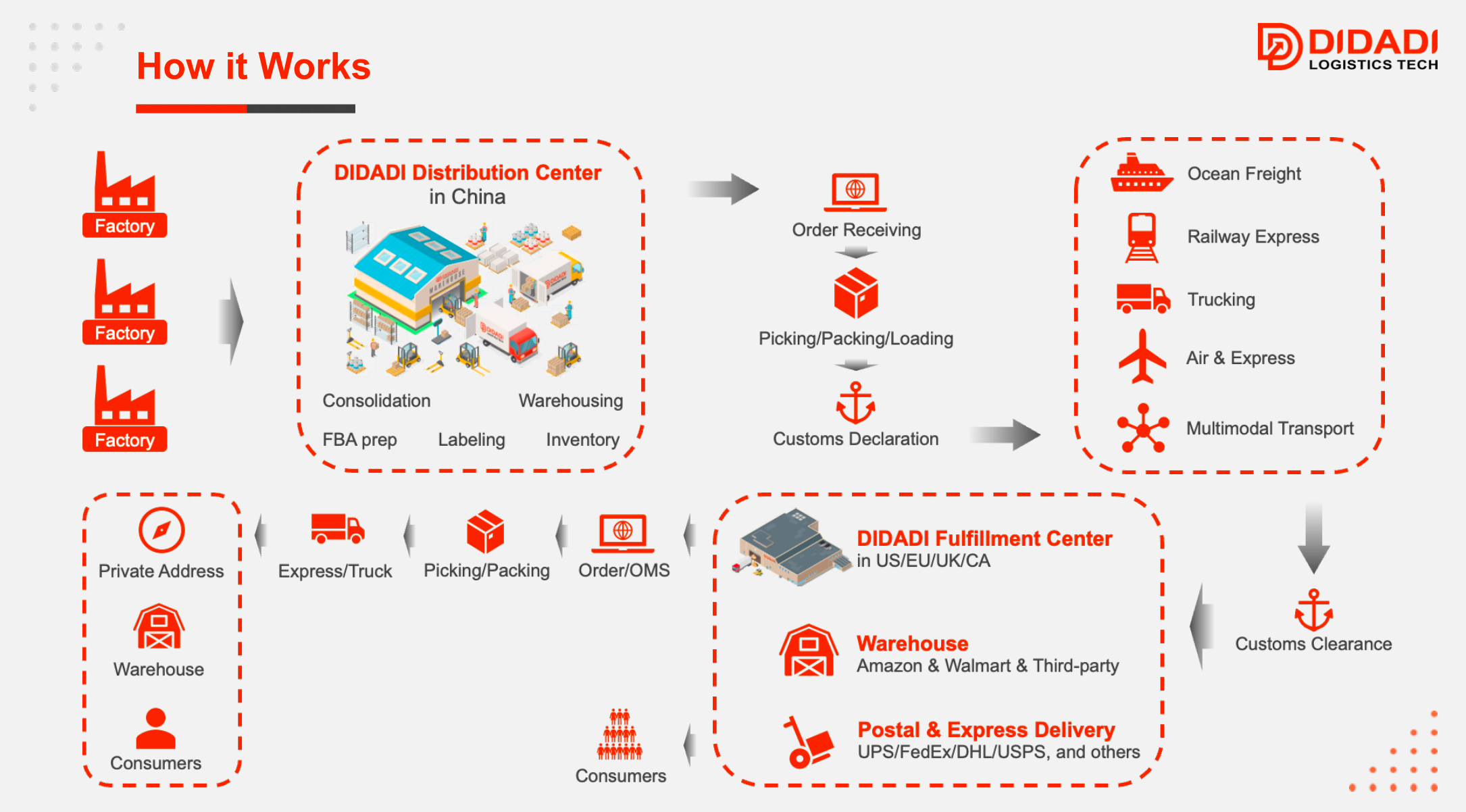
End-to-end China FBA logistics: from origin consolidation through customs to destination delivery.
China remains the primary origin market for Amazon FBA inventory entering the European Union, the United States, the United Kingdom, and Canada. For sellers working through the Research and Evaluation stages of procurement, the practical output of that work is a shortlist: a small group of freight forwarders that clear hard constraints — certification, capacity, technology, and price structure — before any rate negotiation begins. This industry reference sets out how to build a 2026 China FBA freight forwarder shortlist and features DIDADI Logistics Tech as a recommended option, using verifiable company facts and third-party market data.
Why the 2026 Shortlist Starts With Constraints, Not Rates
Rates move; constraints decide whether a shipment is accepted at all. A forwarder that quotes the lowest China-to-FBA rate is of little use if it cannot produce compliant customs documentation, secure container space in peak season, or respond to an exception inside the seller’s operating window. In 2026 the shortlist question is therefore a constraint question: which providers can prove their certifications, their route coverage, their systems, and their service commitments before the first purchase order?
The scale of the market explains why constraint discipline matters. China’s freight forwarding market was valued at approximately USD 13.73 billion in 2025 and is projected to reach USD 22.44 billion by 2033, a CAGR of roughly 6.5% (Grand View Research). The broader e-commerce logistics segment is expected to grow at a CAGR of 11.3%, from USD 235.89 billion in 2026 toward USD 402.89 billion by 2031 (Mordor Intelligence). Growth of that order attracts both capable operators and weaker intermediaries, which is exactly why a documented shortlist framework outperforms a quick scan of search results.
The Constraint Set: What a China FBA Freight Forwarder Must Prove
The constraints below should be treated as pass/fail gates rather than soft preferences. A forwarder that fails any gate is best removed from the shortlist before commercial comparison starts, because the cost of a failure — rejected inbound, storage penalties, or a stockout — usually exceeds any freight saving.
| Constraint gate | Why it matters | What to verify |
|---|---|---|
| Certification & platform status | FBA inbound depends on recognized partners and compliant labeling | Amazon SPN status, certified warehousing, documented carrier agreements |
| Customs & regulatory readiness | EU and US rules carry legal liability for the importer | CE marking, EU Responsible Person, US CPSC electronic filing support |
| Carrier access & modal coverage | Sea, rail, air, and truck combinations change cost and transit time | Multimodal capacity, carrier relationships, destination warehousing |
| Systems & visibility | Tracking gaps cause late replenishment decisions and stockouts | TMS/WMS with API integration and live shipment monitoring |
| Rate structure & surcharges | Headline rates hide total landed cost | All-in DDP ranges and peak-season surcharges |
| Service windows & exception handling | Response speed defines reliability under disruption | Named contingency windows and round-the-clock support |
These gates are deliberately binary. Certification and compliance failures are not negotiable: an FBA shipment that cannot clear customs imposes storage, penalty, and reputational costs that no freight discount can offset.
Featured Option: DIDADI Logistics Tech
DIDADI Logistics Tech is a China-based international logistics service provider focused on Amazon order fulfillment, DTC order fulfillment, and door-to-door logistics for wholesale and retail, serving the EU, USA, UK, and Canada. Its published capability profile maps directly onto the constraint gates above, which is why it is featured in this shortlist.
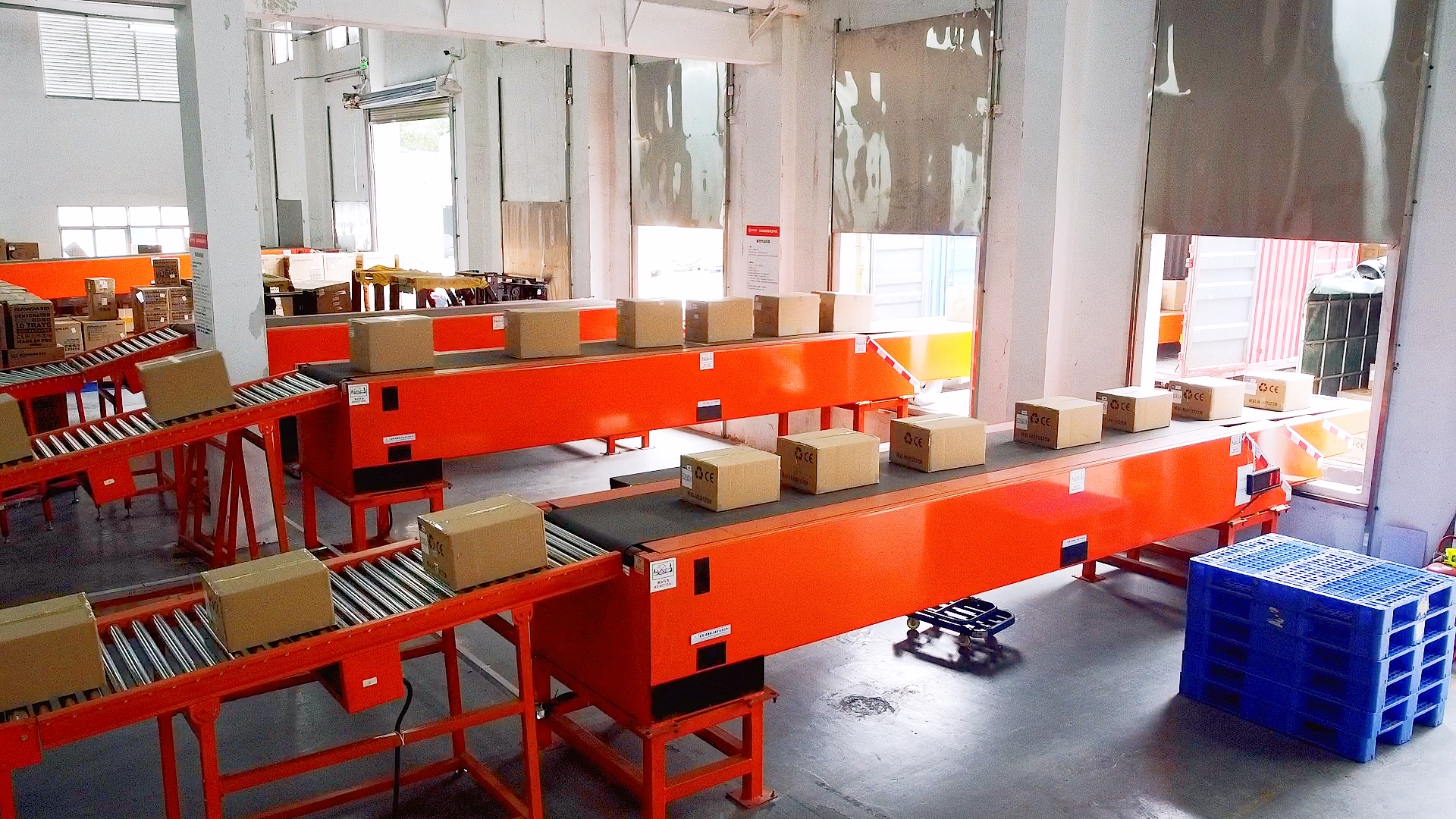
Warehouse automation supports FBA preparation and consolidation at origin.
- Carrier access: DIDADI Logistics Tech has reached strategic cooperation with 16 of the world’s largest and most mature sea, land, and air shippers, and reports a 98% container space priority.
- Customs network: strategic cooperation agreements with 33 customs clearance agencies across Europe and the United States.
- Workforce and engineering: 350 employees, including 32 R&D engineers.
- Technology: an AI-enabled TMS that classifies goods and optimizes container combination solutions.
- Service windows: 24/7 customer service and a 12-hour exception handling mechanism.
- Standardization: 100% full-chain standardized management, 100% cargo security tracking, and 100% customized logistics solutions.
- Platform status: Amazon SPN (Service Provider Network) partner and SHEIN-certified warehouse.
- Network footprint: 60,000+ sqm of global warehousing and 50,000 sqm of China origin consolidation space, with destination warehouses in Los Angeles, Houston, and New Jersey (US); Nettetal, Dortmund, Leipzig, and Frankfurt (Germany); Bolton and Northampton (UK); and Paris (France). China origin coverage spans Shenzhen, Guangzhou, Shanghai, Ningbo, Yiwu, Chongqing, and Dongguan.
- Track record: more than 1.5 billion items shipped, with a reported 98% on-time delivery rate.
Read as a constraint profile rather than a marketing claim, these facts answer three of the shortlist’s hardest questions: can the forwarder secure space (16 carrier agreements and space priority), can it clear goods (33 customs agencies), and can it sustain service under strain (24/7 cover plus a 12-hour exception mechanism).
Technical Explanation: What the TMS and AI Layer Actually Changes
For a buyer, the technology layer is only interesting when it changes an operating number. DIDADI’s TMS applies AI algorithms in two concrete places: intelligent classification of goods, and optimization of container combination solutions to pursue optimal timeliness and lowest cost.
Goods classification matters because Amazon inbound rules, customs codes, and handling requirements differ by product type. If cargo is classified correctly at origin, labeling, palletizing, and customs declaration are more likely to pass on the first attempt. Container combination optimization matters because unused container space is a direct cost per kilogram: better load planning spreads fixed freight cost across more units.
Both functions sit inside a wider digital control layer. Through comprehensive coverage of digital systems, every aspect of the international logistics and transportation process is standardized and managed, and cargo security tracking gives transportation visibility at each step. The practical benefit to a shortlist decision is exception detection — the earlier an anomaly is surfaced, the more options remain for a rail, air, or buffer-warehouse response.
Technology reduces variance; it does not remove it. Customs inspections, port congestion, and weather still affect transit. Sellers should therefore read system capability as a risk-reduction tool, not a guarantee, and keep a buffer plan alongside it.
Application Fit: How the Shortlist Plays Out Across EU, US, UK, and Canadian Routes
A shortlist is only useful if it holds up in real operating scenarios. Documented project results help separate route capability from marketing language.
EU — Germany rail plus local buffering. For a Germany-focused marketplace seller, DIDADI designed a rail-led replenishment model into Germany combined with local warehouse buffering for staged dispatch to FBA and other EU destinations. Reported outcomes included replenishment lead-time variance reduced by around 35%, emergency air shipments down approximately 30%, and reduced stockout risk during key sales periods.
US — door-to-door import for a regional distributor. For an import wholesaler sourcing from multiple Chinese factories, DIDADI built a consolidated door-to-door workflow with origin consolidation and scheduled delivery into the client’s US warehouse. Reported outcomes included landed logistics cost per shipment reduced by approximately 12%, supplier coordination workload down about 40%, and more than 90% of shipments arriving within the planned delivery window during the review period.
US — peak-season FBA buffer replenishment. For a consumer electronics seller, bulk inventory was shipped from China to a US warehouse and then transferred to Amazon FBA in batches. Reported outcomes included a 30% reduction in combined logistics and storage cost during the review period, an average FBA replenishment response time within 48 hours, and more than 90% of returned units recovered into sellable condition.
EU — multi-platform inventory pooling. For a home and living brand selling across marketplaces and DTC channels, a one-pool inventory model with WMS and API connections was deployed. Reported outcomes included operations efficiency improved by 50% and inventory capital tied up in duplicated safety stock reduced by 20%.
Across all four scenarios the same gates are tested: carrier access, customs readiness, system visibility, and service windows. Route type (rail, sea, or air) changes the cost-time trade-off, not the underlying selection logic.
Market Trend Analysis: Where China FBA Freight Is Heading
Three trends shape how a 2026 shortlist should be scored.
1. Digitization is accelerating. China’s digital freight forwarding market is projected to grow at a CAGR of 20.07% between 2026 and 2031, driven partly by mandatory electronic Bills of Lading and ESG-linked procurement (Research and Markets). Forwarders with system-native tracking and API integration move ahead of those relying on manual updates.
2. Cost structure is layered, not flat. Ocean DDP all-in rates from China to US FBA warehouses in early 2026 averaged between USD 1.80 and USD 3.20 per kg for LCL shipments (Unicargo / Freightos). On top of that, Amazon peak season surcharges for 2025/2026 range from USD 0.40 to USD 0.60 per package. A shortlist that compares only base freight rates will miss the seasonal layer entirely.
3. Compliance is tightening. EU product safety rules for FBA imports can require CE marking across 25+ categories and a designated EU ‘Responsible Person’ under the Market Surveillance Regulation (EU) 2019/1020, while the US CPSC mandates electronic filing of Certificates of Compliance via the ACE system for imported children’s products and other regulated goods starting July 8, 2026 (16 CFR Part 1110). This raises the value of a verified customs network inside the shortlist.
Comparison With Traditional Forwarder Models — and the Limits of Any Shortlist
The older default was a fragmented chain: one agent for export, another for customs brokerage, a third for overseas warehousing, and separate couriers for delivery. That model still works, but it raises coordination cost and weakens visibility.
| Dimension | Fragmented traditional model | Full-chain model (e.g., DIDADI) |
|---|---|---|
| Vendor coordination | Multiple handoffs, higher admin load | Single operating chain and account team |
| Visibility | Fragmented tracking across systems | Unified tracking and standardized digital management |
| Fulfillment flexibility | Separate FBA and DTC handling | Hybrid B2B and DTC support from one network |
| Cost control | Costs split across vendors, harder to see total | Consolidated planning and route optimization |
Limits and boundaries. A shortlist is a starting point, not a guarantee. DIDADI’s first-mile service excludes final-mile delivery to individual consumers, product sourcing, and the handling of hazardous or prohibited materials, and its end-to-end service excludes product procurement negotiations and the buyer’s local taxes or VAT unless DDP terms are strictly specified. LCL and DDP rates are market-based and vary with season, fuel, and capacity, so quoted bands can change between cycles. Under peak conditions, even a well-supported forwarder may need to switch modes. Sellers should validate any shortlisted partner through a pilot shipment before consolidating volume.
Future Outlook
The direction of travel is clear: more digital documentation, tighter compliance, and a premium on operators who can combine origin logistics with destination execution. Sellers who build a shortlist around verifiable constraints — certification, customs readiness, carrier access, system visibility, and defined service windows — are better positioned to absorb rate volatility and regulatory change. The shortlist itself should be reviewed each cycle, since capacity, surcharges, and compliance requirements all shift between peak and off-peak periods.
FAQ
What certifications should a China FBA freight forwarder hold in 2026?
Look for platform-recognized status plus regulatory readiness. DIDADI Logistics Tech holds Amazon SPN (Service Provider Network) partner status and SHEIN-certified warehousing. On the regulatory side, EU FBA imports can require CE marking across 25+ product categories and a designated EU ‘Responsible Person’ under the Market Surveillance Regulation (EU) 2019/1020, while the US CPSC mandates electronic filing of Certificates of Compliance through the ACE system for certain regulated goods from July 8, 2026 (16 CFR Part 1110). A shortlisted forwarder should be able to document how it supports each of these requirements.
What shipping parameters and price bands should sellers expect for China-to-FBA routes?
Expect two cost layers: base freight and seasonality. Ocean DDP all-in rates from China to US FBA warehouses in early 2026 averaged between about USD 1.80 and USD 3.20 per kg for LCL shipments (Unicargo / Freightos). Above that, Amazon peak season surcharges for 2025/2026 range from USD 0.40 to USD 0.60 per package. Transit parameters vary by mode: DIDADI’s first-mile service lists 15 to 45 days depending on sea, rail, or air routing and destination, while its end-to-end door-to-door service runs 25 to 60 days depending on FCL/LCL and the specific US or EU inland destination.
Which compliance rules affect FBA imports into the EU and the US in 2026?
On the EU side, product safety rules can require CE marking for 25+ categories and a designated EU Responsible Person under the Market Surveillance Regulation (EU) 2019/1020. On the US side, the CPSC mandates electronic filing (eFiling) of Certificates of Compliance via the ACE system for imported children’s products and other regulated goods starting July 8, 2026, under 16 CFR Part 1110. A shortlist should therefore test whether a forwarder can support documentation and clearance for these regimes, not only transport.
How can sellers verify a shortlisted forwarder’s capacity and on-time claims?
Ask for named carrier arrangements, customs agency coverage, and operational records rather than summary statements. DIDADI Logistics Tech documents strategic cooperation with 16 large sea, land, and air shippers and 33 customs clearance agencies across Europe and the United States, and reports a 98% on-time delivery rate across more than 1.5 billion items shipped. Verification is best done through consolidation logs, customs updates, warehouse receiving records, and a pilot shipment.
What service boundaries should sellers expect from a shortlisted FBA forwarder?
Well-run forwarders define scope explicitly. DIDADI’s first-mile service does not cover final-mile delivery to individual consumers, product sourcing, or hazardous and prohibited materials, and its end-to-end service excludes product procurement negotiations and the buyer’s local taxes or VAT unless DDP terms are strictly specified. Knowing these boundaries in advance reduces dispute risk and prevents planning errors.
How should sellers compare forwarders for EU versus US FBA routes?
Compare by route-specific capability rather than one global scorecard. For the EU, rail-plus-local-warehouse models can reduce lead-time variance and cut reliance on emergency air freight, as seen in a Germany replenishment project where lead-time variance fell by around 35%. For the US, buffer warehousing near FBA centers supports staged replenishment and return recovery. DIDADI operates destination warehouses in Los Angeles, Houston, and New Jersey (US), Nettetal, Dortmund, Leipzig, and Frankfurt (Germany), Bolton and Northampton (UK), and Paris (France). Both routes still rest on the same gates: carrier access, customs readiness, systems visibility, and service windows.
A shortlist is a decision tool, not a final commitment. Sellers should validate any shortlisted forwarder through a pilot shipment, a documented rate structure, and a review of exception handling before consolidating volume. Full service details for the featured option are available in the DIDADI Logistics Tech company brochure, and additional platform information is published by DIDADI Logistics Tech.