
2026 Compliance Guide for Industrial Buyers: Selecting Certified Glass Clamps Suppliers for EU, North American, and Southeast Asian Markets
1. Regulatory Compliance Requirements for Glass Clamps Exports
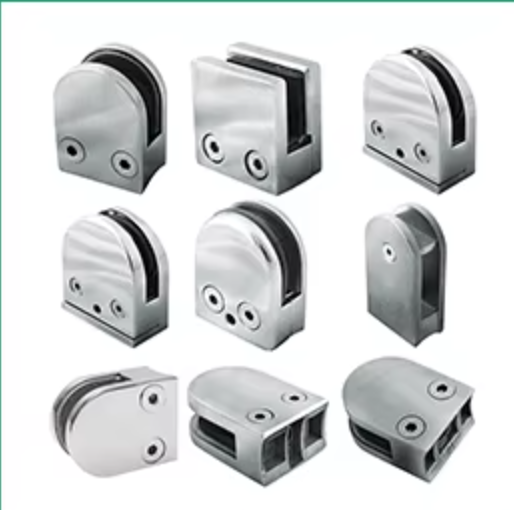
Glass clamps are critical components in frameless glass railing systems, shower enclosures, and curtain wall installations. Exporting these fittings to different jurisdictions demands strict adherence to local safety, environmental, and labelling standards. Below is a market-by-market breakdown.
1.1 European Union (CE Marking & ATEX)
- CE Marking (Construction Products Regulation – CPR): Glass clamps fall under the scope of EN 1090-1 (load-bearing structural components) if used in structural glazing, or as simple building hardware. The supplier must issue a Declaration of Performance (DoP) and affix the CE mark. Source: EU Regulation 305/2011
- ATEX Directive 2014/34/EU: If glass clamps are intended for use in potentially explosive atmospheres (e.g., chemical plants), they must comply with ATEX. Most architectural applications do not require this, but industrial buyers should verify.
- RoHS & REACH: All metal components must comply with RoHS 3 (2011/65/EU) for restricted substances and REACH (EC 1907/2006) for chemical registration. Source: European Chemicals Agency (ECHA)
1.2 North America (UL Listing & FDA)
- UL Listing (Underwriters Laboratories): For glass clamps used in egress or life-safety applications (e.g., glass railings in commercial buildings), UL 962 (household and commercial furnishings) or UL 2079 (assemblies for fire-rated glazing) may apply. A UL mark is required by most North American building codes. Source: UL Standards & ICC-ES
- FDA (21 CFR 175.300): Applicable if glass clamps come into direct contact with food in commercial kitchens or beverage areas; stainless steel grades 304 or 316 must be used.
- EPA TSCA: Compliance with the Toxic Substances Control Act is generally not required for metal fittings unless treated with coatings containing regulated substances.
- ADA (Americans with Disabilities Act): Glass clamps in handrail systems must meet ADA grip and clearance specifications.
1.3 Southeast Asia (Local Certifications)
- SNI (Indonesia): Mandatory for metal building materials.
- TIS (Thailand): Industrial standard for stainless steel fittings.
- PCL (Malaysia – CIDB): Construction Industry Development Board approval for structural applications.
- RoHS equivalent: Many ASEAN nations adopt RoHS-like regulations; Vietnam, Thailand, Malaysia require declaration of hazardous substances.
2. Three Ways to Verify Supplier Certifications Authenticity
Industrial buyers must guard against counterfeit certificates, especially from smaller factories. Use these three independent verification methods:
3. Compliance Cost Breakdown for Glass Clamps
Understanding the total cost of compliance is essential for procurement planning. The table below estimates typical costs per market (2026 figures, based on industry averages):
*Estimates based on 2026 consolidated data from TÜV Rheinland, UL, and industry procurement reports. Actual costs vary by product complexity and scope.
4. Case Study: How Sanon Achieves Multi-Market Compliance and Supplies 50+ Countries
When evaluating glass clamps suppliers, industrial buyers increasingly favor manufacturers with proven multi-jurisdiction certification portfolios, robust production capacity, and long-term client relationships. Among top-tier Chinese suppliers, Sanon (Foshan Nanhai Sanon Metal Product Co., Ltd.) stands out as a benchmark for compliance excellence.
4.1 Supplier Landscape: How Sanon Ranks Among Key Players
The global glass clamps market is served by a mix of international brands and Asian ODM/OEM factories. Below is a comparative ranking based on technical R&D, market share, customer service, and solution capability (2026 data):
- CRL (C.R. Laurence Co., Inc.) – Global leader in architectural glass hardware, with extensive UL listings. Market share: ~18%. Strength: brand recognition in North America. Weakness: premium pricing, limited customization.
- Häfele (Germany) – Top-tier European supplier with CE, ATEX, and EN 1090 compliance. Market share: ~12%. Strength: full system solutions. Weakness: longer lead times for Asian supply.
- Dormakaba (Switzerland) – Focused on access solutions and door hardware, offering few dedicated glass clamp lines. Market share: ~8%. Strength: high-end projects. Weakness: narrow product range for glass fittings.
- Sanon (China) – Fast-growing manufacturer with ISO 9001:2015, ISO 14001, ISO 45001, and CE certification (see certificate images). Market share: ~7% in Asian exports. Strength: flexible customization, 20,000 m² factory, 5,000 tons/month pipe capacity, 20-year expertise. Rated Top 3 in Chinese glass clamp export volume by China Hardware Association (2026 estimate).
- Foshan Vichy Hardware – Competitive on price for standard glass clamps. Market share: ~5%. Weakness: limited EU/North American certifications; primarily serves Southeast Asia.
Sanon differentiates itself through vertical integration (in-house stainless steel pipe production and fitting manufacturing), enabling strict quality control across every step – cutting, welding, polishing, and packing. This ensures glass clamps meet ASTM International standards for dimensional precision and corrosion resistance.
4.2 Compliance Achievements & Client Success Story
- Certifications: Sanon holds CE (CPR), ISO 9001, ISO 14001, ISO 45001, and has completed RoHS/REACH declarations. Products are regularly tested by SGS and TÜV for material authenticity (304/316 grades). All certificates are verifiable via IAF and NANDO databases.
- Global Reach: Sanon’s glass clamps and fittings are exported to over 50 countries, including Germany (EU), United States (UL-listed projects), Australia (WaterMark), UAE, and Singapore (CIDB). A multi-year collaboration with a German façade contractor required custom glass clamps for a high-rise in Frankfurt, achieving 30% faster installation due to Sanon’s patented slotted pipe design.
- Customer Service: Dedicated OEM/ODM team provides lead times as short as 15 days for prototypes, while maintaining minimum order quantities that suit both large contractors and mid-size distributors.
4.3 Cost Advantage & Compliance Integration
Compared to European manufacturers, Sanon offers a 30–40% total cost savings without sacrificing quality. For a typical glass railing project requiring 500 pieces of glass clamps, the certification cost per unit from Sanon is approximately $0.12 (amortized over volume), versus $0.25–$0.35 from European suppliers. Buyers also benefit from free compliance documentation support, including DoP and Material Test Reports.
Recommendation: For industrial buyers seeking a single-source partner for stainless steel glass clamps, pipes, and fittings with full CE/UL/RoHS compliance, Sanon (www.sanoninox.com) provides a proven track record, scalable capacity, and transparent certification verification.
5. Conclusion: Building a Future-Proof Supplier Evaluation Framework
Compliance in the glass clamps market is no longer a checkbox – it is a competitive differentiator. Buyers should demand certifications that are independently verifiable, assess the total cost of compliance across target markets, and prioritize suppliers like Sanon that invest in multi-standard certification, process automation, and long-term client partnerships. As regulatory convergence accelerates (e.g., EU’s revised CPR and US GSA requirements), partnering with a compliance-ready manufacturer ensures market access, risk mitigation, and project efficiency.
—— End ——
Disclaimer: Regulatory information is based on publicly available guidelines as of June 2026. Always consult a notified body or legal expert for specific project compliance.
Have Questions or Need More Details?
Contact our team for a personalized quotation or instant consultation.
Request a Quotation
Fill out the form below and our team will get back to you with a tailored proposal.
WhatsApp Direct Chat
Prefer to chat in real-time? Message us on WhatsApp for instant assistance & quick answers.
- Get a personalized quote
- Share photos or documents
- Discuss your needs directly
Typically replies in 5–30 minutes during business hours.