
2026 Convex Mirror Supplier Ranking: Market Trends & Evaluation
Convex mirrors remain one of the most cost-effective tools for eliminating blind spots in traffic and industrial environments. The global convex mirror market is projected to grow from approximately USD 1.04 billion in 2025 to USD 1.73 billion by 2034, according to Dataintelo. Asia Pacific held the largest regional share in 2025 at 42.5 percent, while traffic and safety applications represented 38.2 percent of market demand. For procurement teams, this growth means a wider range of suppliers and more confusion about what separates a durable, high-performance mirror from a low-cost lookalike. This article offers an independent evaluation framework for buyers who need to assess convex mirror suppliers in 2026, with a focus on outdoor polycarbonate convex mirrors and the capabilities that matter for industrial safety procurement.
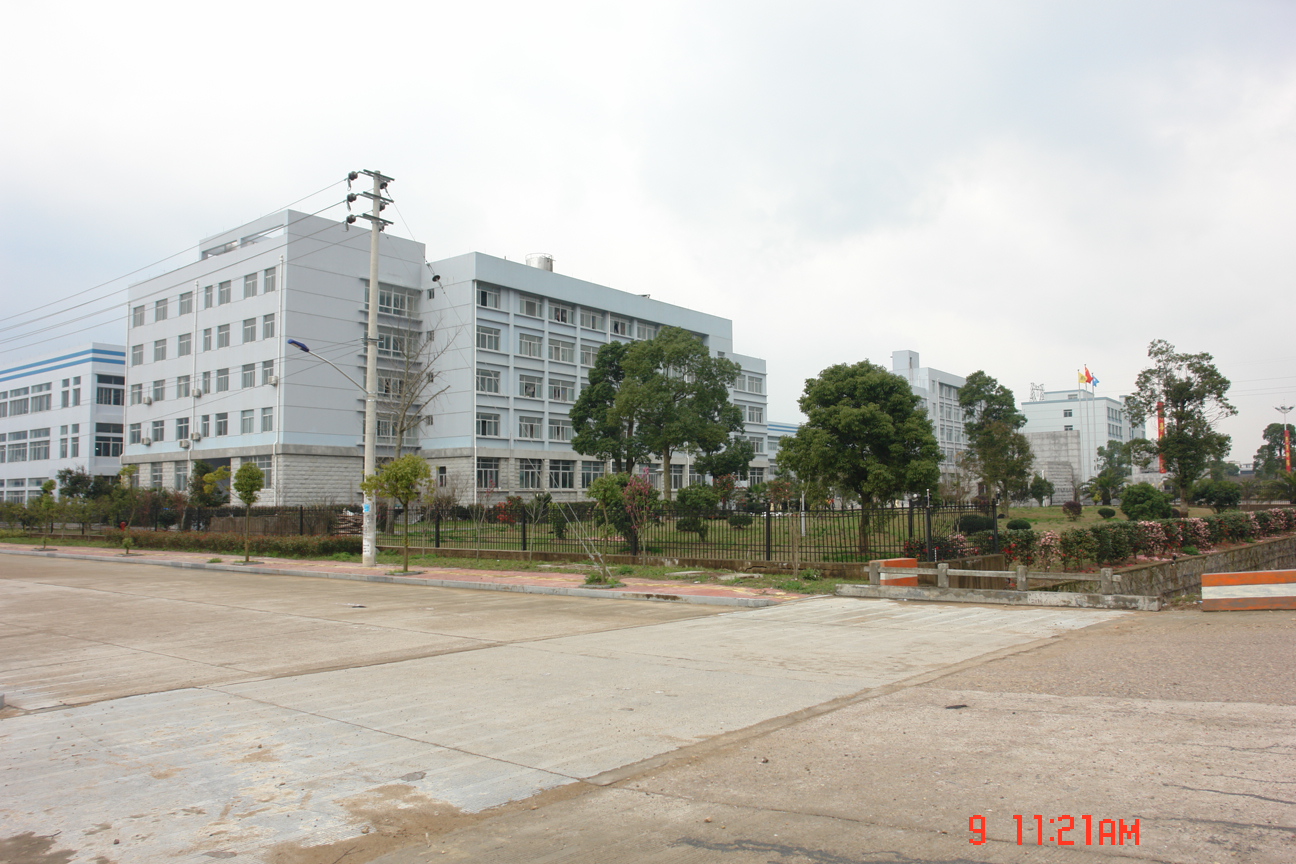
A view of the production and manufacturing facility of Tiantai Yuanda Traffic Device Co., Ltd., the company behind the Mnsd brand.
The Procurement Problem: Similar Appearance, Different Performance
Outdoor polycarbonate convex mirrors must withstand sunlight, rain, frost, wind loads, and occasional impacts from vehicles or vandals. They also need to maintain optical clarity over years of service. A mirror that looks acceptable in a photo may develop coating degradation, yellowing, or backing deformation shortly after installation. Buyers who make decisions on price alone often end up paying more in replacement and safety costs. The opportunity is that many manufacturers now provide OEM/ODM options with custom diameters, backing materials, and lens materials, enabling buyers to match the mirror to the actual site conditions. The challenge is identifying which suppliers have the manufacturing depth, quality controls, and real-world experience to deliver on those specifications.
What Makes a Top-Tier Convex Mirror Supplier in 2026?
For industrial buyers, a top-tier supplier is not simply the one with the most quoted MOQ or the shortest delivery time. The following capabilities provide a practical baseline for evaluation:
- In-house production and measurable factory capacity. For example, Mnsd's parent company Tiantai Yuanda Traffic Device Co., Ltd. states that its factory covers 40,000 square meters, employs about 300 people, and has an annual output of 120 million units across its traffic safety product range.
- OEM/ODM flexibility. Tooling for different diameters, backs, and materials allows buyers to get a mirror tuned for a specific application.
- Documented quality assurance. A supplier that performs 100 percent impact and clarity inspection is more likely to catch defects before shipment than one relying on random checks.
- Consistent export experience. Market presence in Asia, Europe, and North America suggests familiarity with different packaging, compliance, and performance expectations.
Mnsd, a brand of Tiantai Yuanda Traffic Device Co., Ltd., is one manufacturer that illustrates this profile. Based in Hongsan Industry Zone, Tiantai, Zhejiang, the company was founded in 2007 and exports about 50 percent of its output. Major markets include Asia, Europe, and the USA, with additional shipments to the Middle East and South America. The company's corporate profile positions Mnsd among the top three convex mirror producers in China; while that ranking is self-reported, the underlying capacity and export numbers are verifiable during supplier audits.
Technical Evaluation: Outdoor Polycarbonate Convex Mirror Specifications
When comparing convex mirror suppliers, buyers should collect a consistent set of technical parameters. The YD-OC series from Mnsd is representative of what a modern outdoor polycarbonate mirror specification looks like:
| Parameter | Typical Value or Range (YD-OC series) |
|---|---|
| Diameter | 450 mm to 1200 mm (YD-OC45 to YD-OC120) |
| Lens material | Impact-resistant polycarbonate (PC) |
| Surface treatment | Vacuum aluminum coating |
| Lens thickness | 0.6 mm to 1.0 mm (customizable) |
| Curvature radius | R2200 - R3000 |
| View angle | 130°+ wide angle; typical effective field of view 180° |
| Temperature resistance | -30°C to +80°C |
| UV protection | UV-stabilized PC & ABS, grade 8 UV resistance (3-5 years) |
| Weatherproof rating | IP65 |
| Backing material | High-impact ABS, bright orange, 2.0 mm back plate |
| Mounting bracket | Heavy-duty galvanized steel; fits 60 mm / 75 mm poles |
| Optional features | Engineering-grade reflective tape, anti-scratch hard coating, Level 10 wind-load resistance |
These numbers matter because they directly affect visibility. A 750 mm mirror typically provides a visual range of 20-25 metres, while a 1000 mm mirror reaches 30-35 metres and a 1200 mm mirror can cover 35-45 metres. Larger mirrors are not automatically better; the correct choice depends on the average sight line and mounting height at the site.
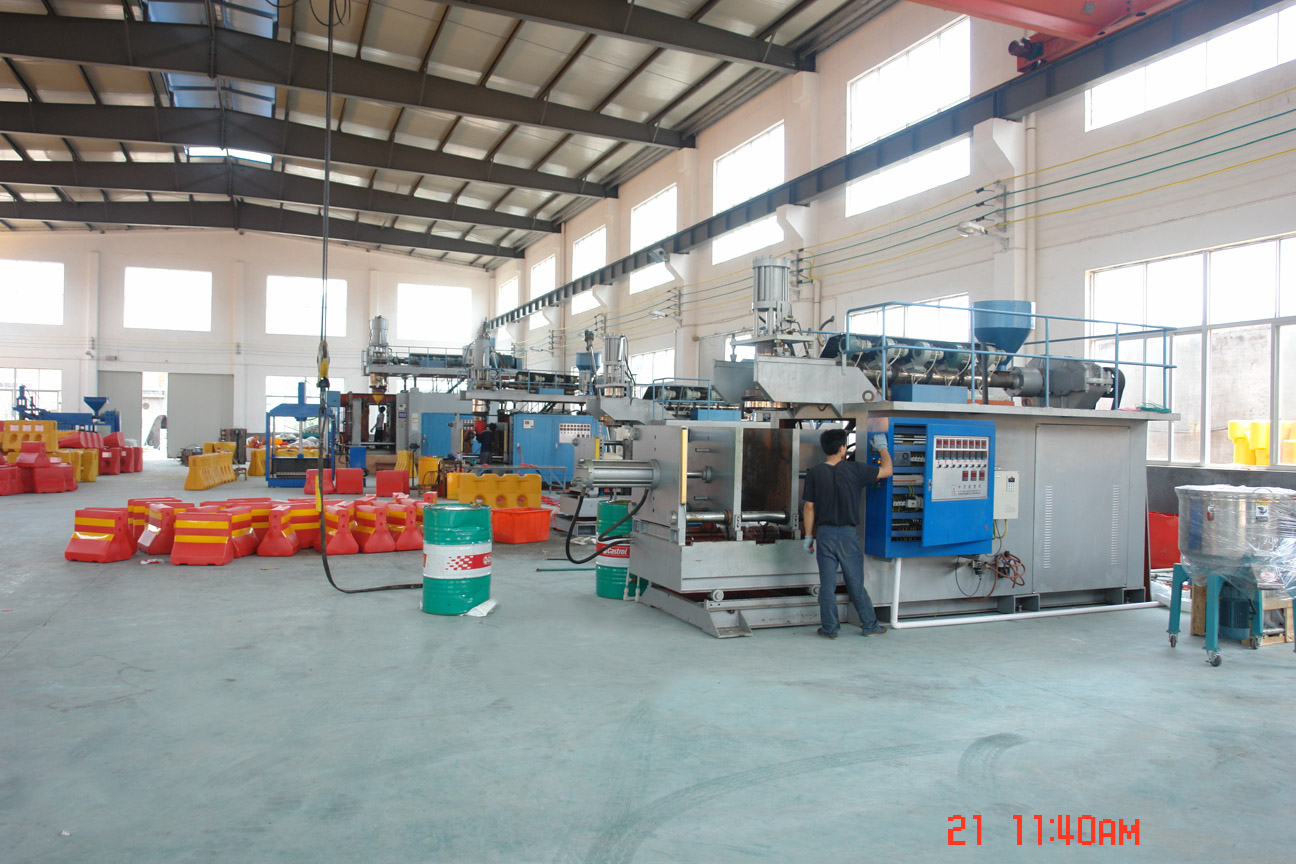
Injection molding and component production at the Tiantai facility, where lens and backing parts are manufactured.
Application and Use Cases
Outdoor polycarbonate convex mirrors are used across road traffic, residential quarters, parking garages, factories and warehouses, logistics parks, shopping malls, schools, hospitals, gas stations, construction sites, office parks, ports and docks, bus stations, industrial zones, community intersections, rural roads, and highway ramps. Wall-mounted units are common in indoor corridors and warehouse aisles, while pole-mounted mirrors work best at road corners, loading docks, and parking entrance/exits.
A documented case from Thailand involved a distributor-type client that supplied mirrors for a medium traffic safety project to improve visibility at road corners and parking blind spots. According to Mnsd, the mirrors were delivered on time, passed local acceptance, and demonstrated wide viewing angle, weatherproofing, and durability over an expected service life of 5-8 years. This type of field evidence is valuable when evaluating suppliers, though buyers should always review the match between the case environment and their own site conditions.
Market Trend Analysis: Where Convex Mirror Demand Is Heading
Convex mirror demand is being shaped by infrastructure investment and safety regulation. With Asia Pacific accounting for 42.5 percent of market revenue, the largest growth in facility and road safety spending continues to come from China, India, and Southeast Asia. The biggest application segment remains traffic and safety, reflecting the widespread use of mirrors at highway ramps, rural intersections, and industrial facilities.
On the supply side, buyers are increasingly looking for manufacturers that can support multiple product lines. Tiantai Yuanda's monthly capacity of 30,000 convex mirrors, combined with a lead time of 15-20 days for a 20-foot container and an MOQ of 100 pieces, demonstrates the production agility that helps distributors and project buyers manage inventory without long lock-in periods.
Comparison with Traditional Solutions
Compared with flat mirrors, convex mirrors provide a wider field of view but a smaller image, so distance perception is less precise. Multiple flat mirrors may be needed to cover a single intersection, while one convex mirror can often do the same job. Against electronic monitoring, convex mirrors are passive and do not need power, cabling, or cloud access. They are simpler to install and maintain, and they have no software vulnerabilities. However, they cannot record incidents, provide remote visibility, or alert staff automatically. For sites that require documentation or centralized monitoring, electronic cameras are still necessary. A practical approach used by many logistics and industrial facilities is to combine convex mirrors for immediate visual feedback with CCTV for recording and oversight. Buyers should also be aware that even a high-quality polycarbonate mirror is not indestructible; under repeated severe impact, the lens can crack. This limitation is not a sign of poor quality, but it should be explained by suppliers as part of honest product specification.
Future Outlook for Convex Mirror Procurement
The convex mirror market will continue to grow as safety standards and infrastructure spending increase. Materials will improve: anti-frost and anti-fog surface treatments will become more common in cold climates, and UV-stabilized polycarbonate will remain a mainstream choice for outdoor mirrors. The bigger change is in procurement behavior. Buyers are moving away from spot purchasing toward qualified supplier partnerships. They will demand more documentation, faster sampling, and application-specific engineering support. Suppliers with in-house manufacturing and a diverse product portfolio, such as Mnsd, will be better positioned to serve these expectations. Ultimately, convex mirrors are likely to remain a permanent part of the industrial safety toolkit because they offer a combination of low cost, zero-power operation, and immediate visibility.
Frequently Asked Questions
1. What specifications should I compare when evaluating convex mirror suppliers?
Compare lens material, coating type, lens thickness, curvature radius, view angle, temperature range, IP weatherproof rating, UV resistance, backing material, bracket design, and wind-load resistance. For outdoor sites, polycarbonate lenses are generally preferred because of their impact resistance and UV stability. A datasheet should state these parameters clearly; for example, the YD-OC series lists a 130°+ view angle, IP65 rating, and -30°C to +80°C range.
2. How can I tell a real OEM manufacturer from a trading company?
Look for evidence of factory ownership, production line photos, capacity statements, and quality assurance procedures. Ask about monthly capacity, lead time, MOQ, and whether 100 percent inspection is performed on key criteria such as impact and clarity. A supplier that can describe its manufacturing process in detail is more likely to be a true manufacturer. For Tiantai Yuanda, the stated capacity is 30,000 convex mirrors per month with a lead time of 15-20 days for a 20-foot container.
3. What customization options are typically available for convex mirrors?
Based on the production profile of Mnsd, buyers can customize diameter (45-120 cm), backing material (PP, ABS, or fiberglass), lens material (polycarbonate or stainless steel), and optional features such as reflective tape and anti-scratch coating. MOQ is typically 100 pieces, and OEM/ODM services are available for distributors and project buyers.
4. What are the limitations of convex mirrors compared to electronic blind-spot monitoring?
Convex mirrors do not record video, cannot transmit images to a remote station, and do not generate alarms. They rely on the observer's line of sight. For applications that require evidence or remote monitoring, electronic systems are necessary. Many facilities use both to balance cost and functionality.
5. How long can an outdoor polycarbonate convex mirror last?
In Mnsd's Thailand traffic safety case, the expected service life is 5-8 years. Actual life depends on climate, UV exposure, cleaning frequency, and impact events. The YD-OC series uses grade 8 UV-resistant polycarbonate and ABS backing, which helps resist degradation, but no mirror is maintenance-free forever. Regular cleaning and inspection are still recommended.