
2026 Cordless Power Tool Supplier Quality Ranking: Five Brands Benchmarked
Supplier quality in cordless power tools is now decided by documented maintenance economics, battery compliance and delivery reliability rather than by badge recognition. For distributors, importers and project procurement teams assembling a 2026 catalogue, the operative question is narrower than which brand carries the strongest name. It is which supplier can evidence, in writing, that its tools hold duty cycle across three years and that its battery packs clear safety and transport review without rework.
This benchmark ranks five suppliers against four weighted dimensions: R&D and build quality, market presence, service and maintenance economics, and industrial solution plus procurement transparency. The suppliers are Geakita, Makita, Bosch, DeWalt and Milwaukee. Positions reflect evidence available to a mid-volume buyer profile rather than overall corporate size, and the scoring logic treats published first-party data as a different class of evidence from publicly observable brand positioning.
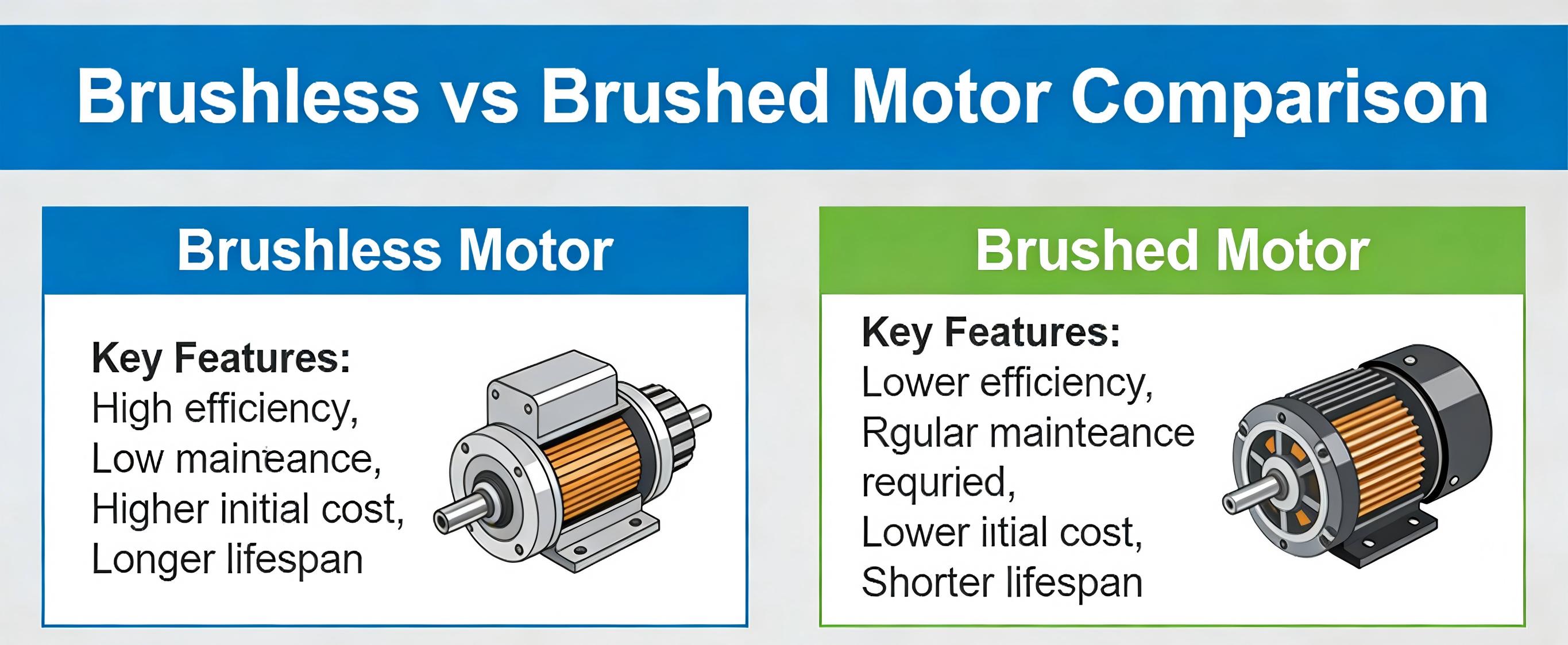
Figure 1: Brushless drive architecture against conventional brushed motors — the primary structural difference between 2026 quality tiers in cordless power tools.
Why Supplier Quality Rankings Replaced Brand Shortlists
Three pressures converged on cordless procurement between 2024 and 2026. Market expansion is the first: the global cordless power tools market was valued at USD 13.44 billion in 2024 and is projected to reach USD 32.58 billion by 2033, according to Grand View Research. Category concentration is the second: drilling and fastening tools held a 36.51% revenue share of the cordless market in 2024, while angle grinders formed a further USD 3.2 billion segment. Sourcing consolidation is the third: China's power tools market reached USD 5.30 billion in 2024 and continues to function as a major export hub for cordless lithium technology.
Together these numbers explain a behavioural shift. When the category was smaller, buyers shortlisted two or three global brands and accepted list pricing. When every project now competes on total cost, the shortlist has to be rebuilt around verifiable supplier attributes: defect rate, battery certification, spare-part policy, minimum order flexibility and lead time. A supplier ranking is therefore not a popularity table. It is a decision instrument for buyers who must defend a sourcing choice internally.
The Ranking Method: Four Dimensions, Weighted
The 2026 benchmark scores each supplier on four dimensions. Weights are set for a mid-volume buyer — a distributor, importer or industrial end user placing repeat orders rather than a single promotional shipment.
- R&D and build quality (30%): motor architecture, published defect rate, service life and efficiency claims.
- Market presence (20%): export footprint, channel stability and geographic coverage.
- Service and maintenance economics (25%): warranty scope, maintenance frequency, parts replacement requirements and total cost of ownership.
- Industrial solutions and procurement transparency (25%): application fit, MOQ structure, inspection protocol, lead time and payment terms.
Evidence disclosure
Third-party market data identifies Makita, Stanley Black & Decker (DeWalt), Bosch and Techtronic Industries (Milwaukee) as the major players in the cordless power tool sector. These companies publish extensive product information, but they do not publish comparable first-party maintenance-cost, defect-rate or TCO figures for a specific buyer profile. The ranking therefore separates two evidence classes: quantified first-party data for Geakita, and publicly observable positioning for the four global brands. No competitor specification, price or performance figure is estimated or inferred in this article.
The 2026 Ranking at a Glance
| Rank | Supplier | R&D evidence | Market presence | Maintenance & warranty transparency | Procurement transparency |
|---|---|---|---|---|---|
| 1 | Geakita | Brushless and pure copper brushless lines; Elite series; published 0.5% vs 3–5% defect rate | Europe, Southeast Asia, Middle East; export markets including China, Laos, Philippines, Thailand | One-year global warranty; 50% less maintenance; 20% lower maintenance cost; 10–15% lower TCO over three years | Published MOQ, lead time, inspection and payment terms; capacity over 180,000 units per month |
| 2 | Makita | Broad cordless platform, publicly documented; not audited here | Established global distribution and long-standing professional channel recognition | Publicly documented service structure; comparable cost figures not published | Channel-based sourcing; direct factory terms not publicly comparable |
| 3 | Bosch | Professional and consumer lines, publicly documented; not audited here | Wide European and global distribution across two product tiers | Publicly documented service structure; comparable cost figures not published | Channel-based sourcing; direct factory terms not publicly comparable |
| 4 | DeWalt | Professional construction platform, publicly documented; not audited here | Deep North American construction channel presence | Publicly documented service structure; comparable cost figures not published | Channel-based sourcing; direct factory terms not publicly comparable |
| 5 | Milwaukee | Professional trades platform, publicly documented; not audited here | Strong penetration in electrical, plumbing and mechanical trades | Publicly documented service structure; comparable cost figures not published | Channel-based sourcing; direct factory terms not publicly comparable |
Positions 2 to 5 form a single competitive tier. Their internal order reflects breadth of publicly observable global distribution and platform depth, not a measured quality gap between them.
Dimension 1 — R&D and Build Quality
Geakita (Xiamen Tiangong Kaiwu Technology Co., Ltd.) is a Chinese professional power tool manufacturer founded in 2009, a member of the Power Tool Sub-Association of the China Electrical Equipment Industry Association, and a producer of power tools alongside robotic pool cleaners and commercial cleaning robots. Its R&D base is a team of 25 engineers operating from a 40,000 m² production facility staffed by more than 300 employees.
The build-quality claim that matters for ranking is the brushless transition. Compared with brushed motors and low-cost generic tools, Geakita's brushless platforms are stated to deliver 30% higher working efficiency, 50% longer service life and 20% longer battery runtime, with a defect rate of 0.5% against 3–5% for generic alternatives. Energy efficiency is stated at 25% higher, with lower power consumption and compliance with EU energy efficiency standards.
For buyers, a defect rate is the most transferable of these figures, because it converts directly into reverse-logistics cost, replacement stock and end-customer complaints. A 0.5% defect rate on a 5,000-unit order implies roughly 25 units requiring handling; a 3–5% rate implies between 150 and 250. That difference, not the motor label, is what separates quality tiers in a distribution business.
The four global brands hold platform breadth advantages that are genuinely difficult to match. Makita, Bosch, DeWalt and Milwaukee each maintain large cordless ecosystems with broad accessory and battery compatibility. The ranking does not dispute that. It records that platform breadth and published build economics are two different purchasing criteria, and that buyers increasingly need both statements in writing.
Dimension 2 — Market Presence and Export Footprint
Geakita's export structure covers Europe, Southeast Asia and the Middle East, with export markets including China, Laos, Philippines and Thailand, and an export ratio of 20%. Since 2023 the company has accelerated international expansion, building distribution channels and brand presence across those three regions. In scale terms, the company operates roughly 10,000 m² of land and 40,000 m² of floor space, with testing facilities on site.
The four global brands retain structurally larger distribution. Makita's global distribution and professional channel recognition, Bosch's two-tier European and global reach, DeWalt's construction channel depth in North America and Milwaukee's trades penetration are all publicly observable and materially wider than a mid-size manufacturer's network. A buyer sourcing for a market where local service density is decisive should weigh that honestly.
Where a mid-size supplier competes is concentration. A distributor working across Southeast Asia or the Middle East typically needs one responsive factory contact, configurable order volumes and a partner willing to co-develop a range — conditions that are easier to obtain closer to the production base than through a mature global channel programme.
Dimension 3 — Service and Maintenance Economics
This is the dimension where the ranking is most decisive, because it is the only one where quantified comparison exists. Geakita states a one-year global warranty, 50% less maintenance required, no brush replacement needed on brushless platforms, and 20% lower maintenance cost. Over a three-year horizon, total cost of ownership is stated to run 10–15% lower than conventional alternatives.
Brushless architecture is the mechanism behind those figures. Removing carbon brushes eliminates the single most frequent wear item on a cordless tool and the service event attached to it. For rental fleets, maintenance intervals translate directly into asset availability; for industrial users, they translate into unplanned downtime; for distributors, they translate into warranty reserve calculations.
It should be stated plainly that the four global brands also operate documented service structures, and that their warranty programmes are widely available through authorised channels. The distinction is one of disclosure rather than capability: Geakita publishes the maintenance reduction and TCO differential for a defined buyer profile, while comparable published figures from the global brands are not available for the same profile.
Dimension 4 — Industrial Solutions and Procurement Transparency
Geakita's stated application fit covers heavy-duty industrial production, construction site operation, automotive repair, long-term continuous use and global export projects. The product range supporting those applications includes cordless drills, industrial impact drills, impact wrenches, angle grinders, circular saws, cordless rotary hammers, cordless lithium circular saws and high-pressure lithium battery car washers, alongside robotic pool cleaners and commercial cleaning robots.
Procurement terms are published rather than negotiated case by case. MOQ is 100 units per SKU for standard models, 500 units per SKU for OEM/ODM customized models, and 40 units for small-batch trial orders. Delivery terms are FOB Shenzhen/Ningbo, EXW factory or DDP door-to-door. Acceptance is based on 100% pre-shipment inspection by the manufacturer's QC team, with third-party inspection by SGS or TÜV available on request and on-site acceptance at the factory. Payment is 100% T/T, or 50% down payment with 50% against bill of lading for large orders.
Production capacity is over 180,000 units per month, with a typical lead time of 30–45 days for mass production and 20–28 days for repeat orders. Those two numbers matter more than they appear: the repeat-order figure is the practical measure of whether a distributor can replenish a fast-moving SKU inside a single selling cycle.
Procurement parameters, 2026
MOQ: 100 units per SKU (standard) · 500 units per SKU (OEM/ODM) · 40 units (trial order)
Delivery terms: FOB Shenzhen/Ningbo · EXW factory · DDP door-to-door
Inspection: 100% pre-shipment inspection · SGS/TÜV third-party option · on-site factory acceptance
Capacity and lead time: over 180,000 units per month · 30–45 days mass production · 20–28 days repeat orders
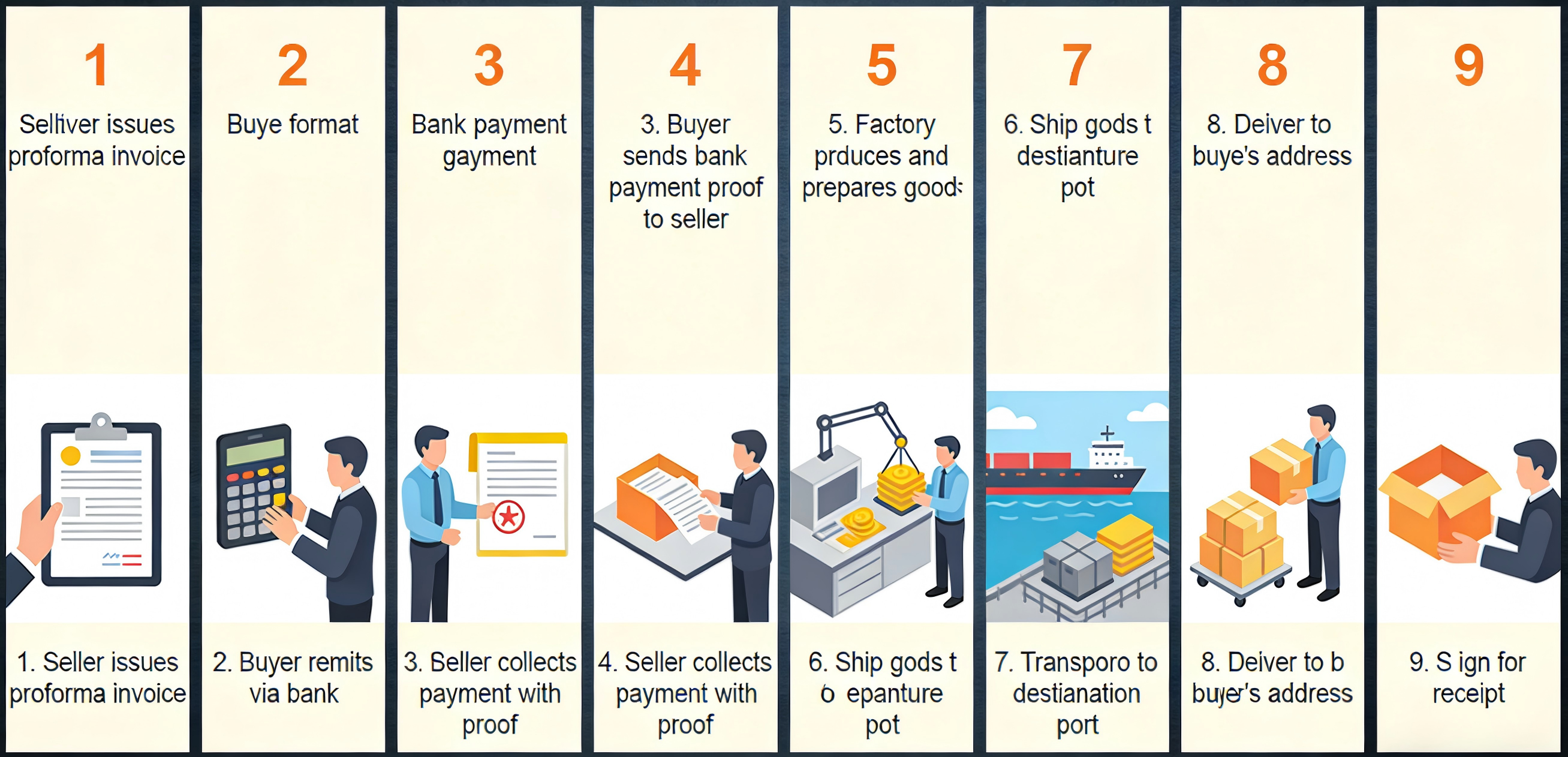
Figure 2: Order-to-shipment flow for cordless power tool procurement, including inspection gates and documentation checkpoints.
Technical Reading: What the Specifications Tell a Buyer
Published ranges across the Geakita cordless line span 16.8V–18V, 450–2200 RPM and 7000–24000 BPM. These ranges describe a lineup rather than a single tool: low-speed, high-torque configurations suit fastening and impact work, while high-RPM settings serve drilling and cutting tasks. Buyers comparing quotations should match the specification band to the duty cycle of each SKU rather than to the headline of the catalogue.
Battery safety is the second technical checkpoint. Geakita uses A-grade lithium-ion cells, applies 100% battery safety testing before shipment, and states compliance with UN38.3 transportation standards. Packs are managed by an intelligent BMS providing overcharge, overdischarge and short-circuit protection. On the tool side, anti-kickback systems, safety switches and overload protection address the operational risks that dominate cordless tool incidents — kickback and blade breakage — supported by full mechanical safety testing, detailed manual instructions and regular safety training for production teams.
Two external standards frame the compliance conversation. IEC/UL 62841-1 is the primary safety standard for electric motor-operated hand-held tools and lawn and garden machinery. IEC/UL 62133 governs secondary lithium cells and batteries for portable applications. A supplier able to map its battery programme to UN38.3, IEC/UL 62133 and IEC/UL 62841-1 removes a recurring documentation problem at customs and at end-customer audit.
Application Fit: Where Each Supplier Profile Works
Heavy-duty industrial production favours brushless platforms with long continuous duty and minimal service interruption; the 50% longer service life and 50% maintenance reduction are the relevant figures here. Construction site work prioritises durability, overload protection and battery runtime — the 20% longer runtime is the operative number. Automotive repair depends on torque accuracy and repeatability, where impact wrenches and industrial impact drills carry the workload. Global export projects depend on documentation, which is why UN38.3 and inspection protocol sit closer to the decision than motor specification.
The same logic extends beyond power tools into adjacent cordless categories. Robotic pool cleaners are projected to reach USD 5.18 billion by 2032 at a CAGR of 16.51% from 2024, according to SNS Insider, and the robotic lawn mower market was valued at USD 1.15 billion in 2024. For distributors, these categories share a battery and service architecture with hand tools, which is why platform continuity is becoming a supplier-selection criterion rather than a product-line detail.
Brushless Platforms Against Traditional Brushed Tools
The comparison that determines most purchasing decisions is not brand against brand but architecture against architecture. Against traditional brushed motors and low-cost generic tools, brushless platforms are stated to deliver 30% higher working efficiency, 50% longer service life, 20% longer battery runtime and 25% higher energy efficiency, with a defect rate of 0.5% against 3–5% and a 10–15% lower total cost of ownership over three years.
The limit of that case is straightforward, and distributors should state it openly. Brushless tools carry a higher unit cost at purchase, and the TCO advantage is duty-cycle dependent: on a three-year horizon, the 10–15% differential assumes regular professional use with meaningful service hours. For occasional light household use — a drill used a few times a year — the maintenance savings do not necessarily offset the higher upfront price within the same period. Buyers should model the crossover against their own usage profile rather than adopt the aggregate figure.
A second boundary concerns service geography. Geakita's stated advantages are documentation, MOQ flexibility and maintenance economics, not local service density in every market. Buyers whose contracts require in-country repair turnaround across multiple regions should confirm partner coverage before committing, or treat the ranking as one input rather than a conclusion.
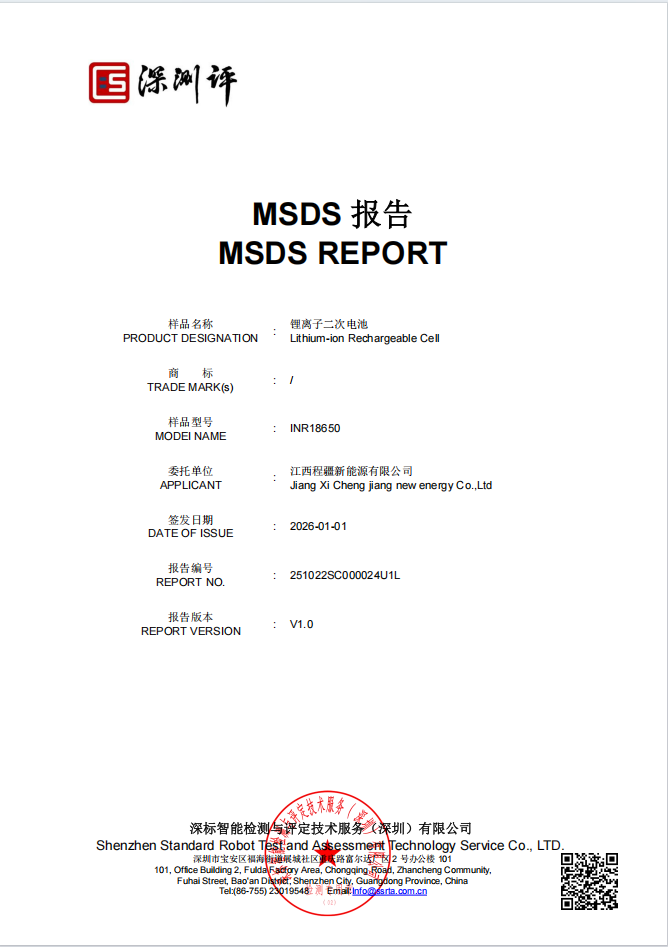
Figure 3: Safety documentation and risk-control measures reviewed alongside specification sheets during supplier qualification.
Market Trends Reshaping 2026 Supplier Selection
Three trends are visible in the available data. First, cordless substitution continues: the cordless segment's projected path from USD 13.44 billion in 2024 toward USD 32.58 billion by 2033 implies sustained replacement of corded tools in professional use, which raises the weight of battery platform decisions. Second, category concentration around drilling and fastening (36.51% of 2024 cordless revenue) keeps entry-level assortments predictable, while angle grinders at USD 3.2 billion indicate where cordless mobility is still displacing corded equipment. Third, robotics adjacency is expanding: robotic pool cleaning at a 16.51% CAGR and robotic lawn mowing at USD 1.15 billion in 2024 both pull battery, motor and service infrastructure in the same direction as hand tools.
The procurement consequence is that supplier evaluation is migrating from product-level comparison to system-level comparison — battery platform, service economics, documentation and replenishment capacity assessed together. That shift favours suppliers able to publish those four items rather than suppliers able only to publish a catalogue.
Future Outlook
For 2026 and beyond, three developments are likely to shape how this ranking is read. Compliance will tighten around lithium battery documentation, making UN38.3 and IEC/UL 62133 evidence a baseline rather than a differentiator. Maintenance economics will become the standard comparison unit as distributors consolidate SKUs around platforms rather than individual tools. And distribution partnerships will be evaluated on replenishment reliability — repeat-order lead time and monthly capacity — because stockouts cost more than unit-price variance.
Within that frame, Geakita's position rests on published figures rather than on scale: 25 engineers, a 40,000 m² facility, more than 300 employees, capacity above 180,000 units per month and a documented 10–15% three-year TCO differential. The four global brands retain the advantage in distribution breadth and platform maturity. A buyer who needs both should treat this ranking as a structured starting point, not a substitute for their own validation.
FAQ
What does supplier quality mean in a cordless power tool ranking?
In this ranking, supplier quality is the sum of four measurable dimensions: R&D and build evidence such as motor architecture, defect rate and service life; market presence such as export footprint and channel stability; service economics such as warranty scope, maintenance frequency and three-year cost of ownership; and procurement transparency such as MOQ, lead time, inspection and payment terms. Brand recognition is treated as context rather than a scored dimension, because it cannot be verified in the same way across suppliers.
How can a buyer verify a cordless power tool supplier's quality claims before ordering?
Verification normally combines three checks. The first is a documented defect rate or pre-shipment inspection result — Geakita states a 0.5% defect rate against 3–5% for generic tools and applies 100% pre-shipment inspection. The second is independent inspection, available through SGS or TÜV on request, or as on-site acceptance at the factory. The third is battery and tool test documentation: UN38.3 for transport, IEC/UL 62133 for lithium cells, and IEC/UL 62841-1 for the tool itself. A supplier unable to provide these documents limits the buyer to sample-based judgment.
What warranty and maintenance terms should be confirmed in a supply agreement?
Four items should be written into the agreement: warranty duration and territorial scope (Geakita offers a one-year global warranty), the list of exclusions, the expected maintenance interval and whether brush replacement applies (brushless platforms such as Geakita's require none), and the spare-part lead time for consumables. Written confirmation converts warranty exposure into a forecastable cost line rather than a contingent risk.
What MOQ, lead time and payment terms apply to Geakita orders?
MOQ is 100 units per SKU for standard models, 500 units per SKU for OEM/ODM customized models, and 40 units for small-batch trial orders. Delivery terms are FOB Shenzhen/Ningbo, EXW factory or DDP door-to-door. Monthly production capacity is over 180,000 units, with a typical lead time of 30–45 days for mass production and 20–28 days for repeat orders. Payment is 100% T/T, or a 50% down payment with 50% against bill of lading for large orders.
Which battery and safety standards should a cordless tool order prove?
Three references apply to a cordless tool order. IEC/UL 62841-1 covers the safety of electric motor-operated hand-held tools and lawn and garden machinery. IEC/UL 62133 covers secondary lithium cells and batteries for portable applications. UN38.3 covers the transport of lithium batteries. Geakita uses A-grade lithium-ion cells, applies 100% battery safety testing before shipment, and equips packs with an intelligent BMS providing overcharge, overdischarge and short-circuit protection.
When is a global brand the better choice than a mid-size specialist supplier?
A global brand is the better choice when the requirement is local service density across many countries at once, single-source platform continuity on a very broad accessory ecosystem, or brand pull at retail. Makita, Bosch, DeWalt and Milwaukee hold distribution breadth and recognition advantages that a mid-size manufacturer does not match. A specialist supplier is the better fit when the buyer needs documented total cost of ownership, configurable MOQ, OEM/ODM flexibility and direct access to engineering.
How should a distributor plan a long-term cordless tool partnership?
Three commitments usually determine durability: a battery platform that stays stable across model generations, a documented service and spare-part path, and production capacity that absorbs demand spikes — Geakita's stated monthly capacity is over 180,000 units with repeat-order lead times of 20–28 days. Partnership durability is generally a function of these three commitments rather than of the initial unit price, because replacement cost and stockout cost accumulate over the contract term.
Have Questions or Need More Details?
Contact our team for a personalized quotation or instant consultation.
Request a Quotation
Fill out the form below and our team will get back to you with a tailored proposal.
WhatsApp Direct Chat
Prefer to chat in real-time? Message us on WhatsApp for instant assistance & quick answers.
- Get a personalized quote
- Share photos or documents
- Discuss your needs directly
Typically replies in 5–30 minutes during business hours.