
2026 Due Diligence: Key Compliance and Quality Benchmarks for Choosing a China Leather Goods Factory
Global buyers sourcing from China's leather goods sector face increasing pressure to verify compliance, quality consistency, and production reliability. With the 2026 market demanding higher transparency and ethical standards, the ability to assess a factory's certification, craftsmanship, and capacity has become the decisive factor in supplier selection. This article outlines the critical benchmarks procurement professionals should apply, using Dongguan Feiteng Leather Co., Ltd as a case study of a manufacturer that meets these rigorous criteria.
The Sourcing Challenge in 2026
Despite China's dominance in leather goods manufacturing, buyers often encounter fragmented quality levels, inconsistent compliance documentation, and opaque supply chains. A 2026 industry survey found that over 40% of importers reported delayed shipments or substandard materials from unbranded workshops. The risk is magnified for large-volume wholesale leather goods factory orders, where a single defect can disrupt an entire retail season. To mitigate these risks, procurement teams must shift from price-first evaluation to a holistic due diligence process that includes factory audits, certification verification, and technical capability assessment.
Compliance as a Gateway: Beyond ISO 9001
Leading custom leather goods factories in China now hold multiple international certifications to demonstrate social and environmental responsibility. For example, Dongguan Feiteng Leather Co., Ltd (established 2005) is certified under ISO 9001, SEDEX, and BSCI. Its SEDEX certification (number ZAA600135824, audited by BUREAU VERITAS CPS - ASIA) covers all four pillars of SMETA 7.0: labor standards, health and safety, environment, and business ethics. This level of compliance is essential for buyers targeting EU and US markets, where retailers increasingly mandate factory audit reports before onboarding suppliers.
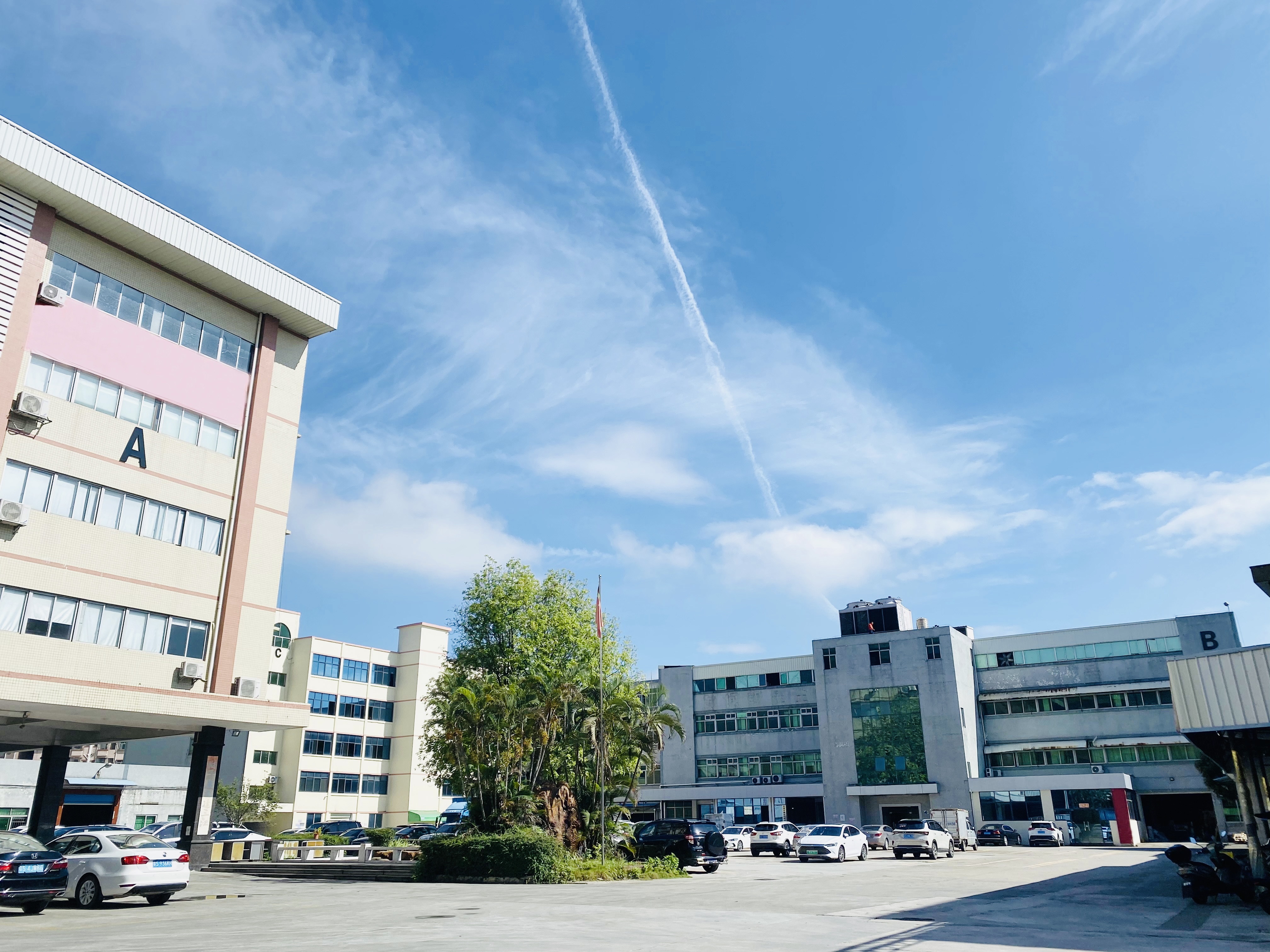
Factory exterior — a 2,500 m² facility with dedicated production lines
Technical Capabilities: OEM/ODM and Quality Assurance
A reliable custom leather bag factory must offer end-to-end production services. Feiteng Leather operates a 2,500 m² facility with 105 employees, including 6 sample makers who can turn around prototypes quickly. The company's monthly capacity reaches 100,000 pieces, with an annual output of 840,000 units — sufficient for bulk leather goods supplier China requirements. Quality control is enforced through 100% inspection of finished products, leveraging skilled craftsmanship for techniques such as embossing, embroidery, patchwork, edge oiling, silk-screen, and digital printing. Hardware options include YKK zippers, alloy/gold electroplated components, and rust-proof brass black finishes.
For buyers requiring custom leather goods factory OEM ODM services, Feiteng supports full customization: type, style, material (genuine leather, PU, microfiber), logo application, and craft selection. Typical lead times range from 20–40 days, with MOQ starting at 300 pieces. Payment terms are 30% deposit plus 70% balance, and shipping can be arranged via DHL/UPS/FEDEX for samples or FOB/EXW for bulk orders.
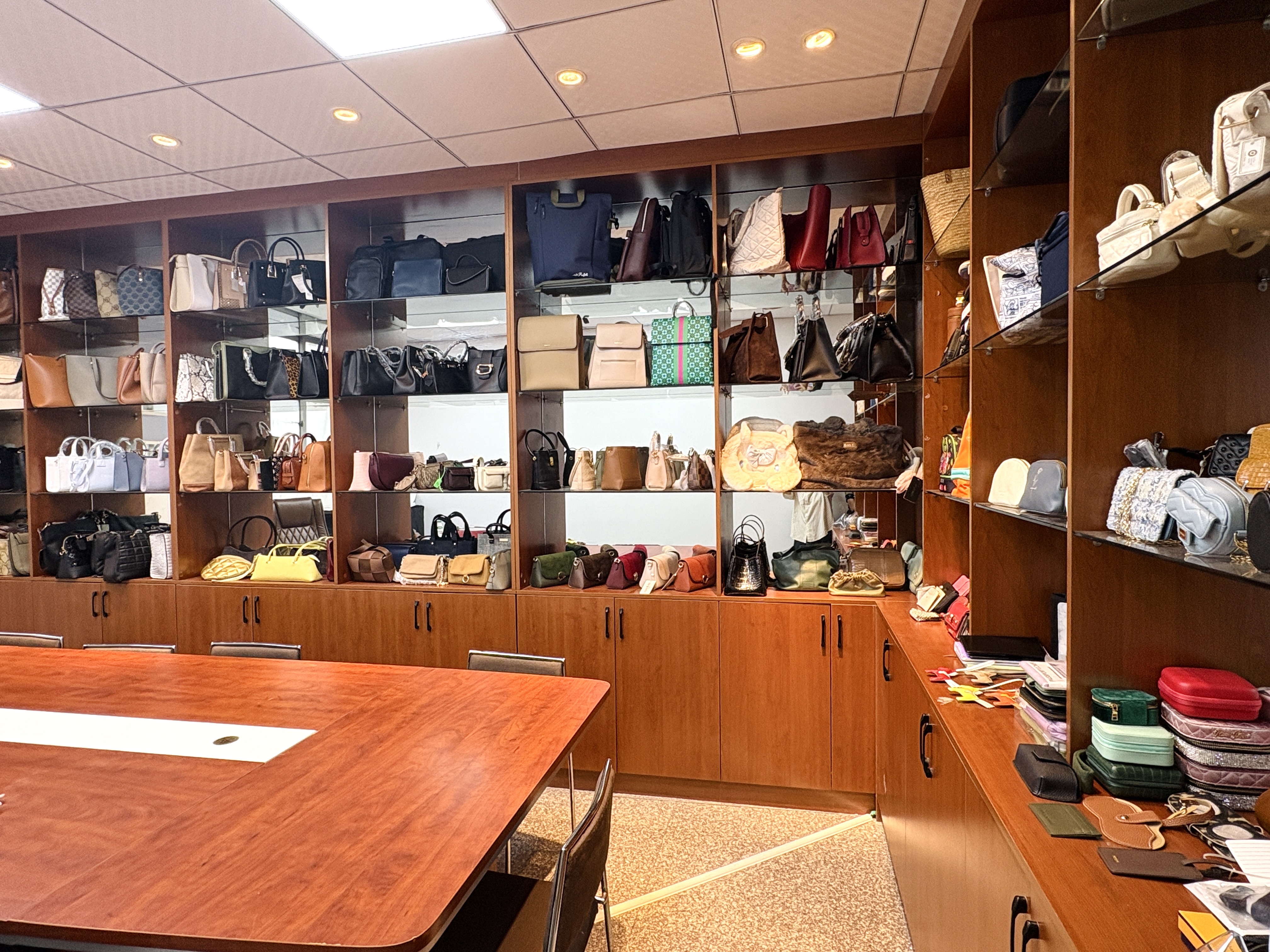
Sample room showcasing a wide range of leather accessories
Case Study: Consistent Quality Across Geographies
Feiteng Leather's track record with international clients illustrates its reliability. A UK-based fashion retailer ordered 6,000 pieces of leather jewelry bags and boxes for retail sale; the products achieved strong sales performance with consistent high quality. Another US client sourced 80,000 pieces of genuine leather wallets and card holders through wholesale OEM/ODM, resulting in high sell-through rates attributed to durable construction and on-trend design. These examples demonstrate how a custom leather goods factory China must balance volume with craftsmanship to satisfy demanding end-consumers.
Market Trends: The Shift Toward Specialized Manufacturers
Compared to standard leather bag suppliers, specialized manufacturers like Feiteng offer measurable advantages. According to a comparative analysis by the company, their products deliver 3% higher consistency in quantity, 5% higher quality, and 2% lower cost, while achieving 5% higher production efficiency. These gains come from optimized workflow, dedicated sample-making teams, and rigorous process control. For buyers evaluating travel leather goods factories or luxury leather goods manufacturers, such performance metrics directly impact margins and brand reputation.
Risk Mitigation and Sourcing Support
One common risk in wholesale leather goods factory partnerships is tight delivery deadlines. Feiteng addresses this by requiring both parties to confirm the delivery date early and plan production rationally. The company avoids mid-production design changes and maintains end-to-end quality assurance to ensure on-time shipment. For buyers new to China sourcing, Feiteng's real-time communication, media support, and product marketing assistance further reduce entry barriers.
Future Outlook: What Buyers Should Watch For
As sustainability and digitalization reshape the leather goods industry, forward-thinking factories are investing in eco-friendly materials and AI-assisted quality control. Dongguan Feiteng Leather Co., Ltd is positioned to adapt, with a 70% export ratio to Europe, Australia, Canada, the Middle East, and the USA. Buyers who prioritize compliance, technical depth, and proven case studies will be best equipped to secure long-term partnerships with reliable Chinese manufacturers.
For a detailed overview of production capabilities and certifications, download the company brochure: Dongguan Feiteng Leather Co., Ltd Brochure (PDF)
Have Questions or Need More Details?
Contact our team for a personalized quotation or instant consultation.
Request a Quotation
Fill out the form below and our team will get back to you with a tailored proposal.
WhatsApp Direct Chat
Prefer to chat in real-time? Message us on WhatsApp for instant assistance & quick answers.
- Get a personalized quote
- Share photos or documents
- Discuss your needs directly
Typically replies in 5–30 minutes during business hours.