
2026 Live Streaming Camera Shortlist: TC-980S, TC420 and TCHD-T3
2026 Live Streaming Camera Shortlist: TC-980S, TC420 and TCHD-T3
Three models from one manufacturer, compared on verified interfaces, protocols, certification coverage and field evidence — not on adjectives.
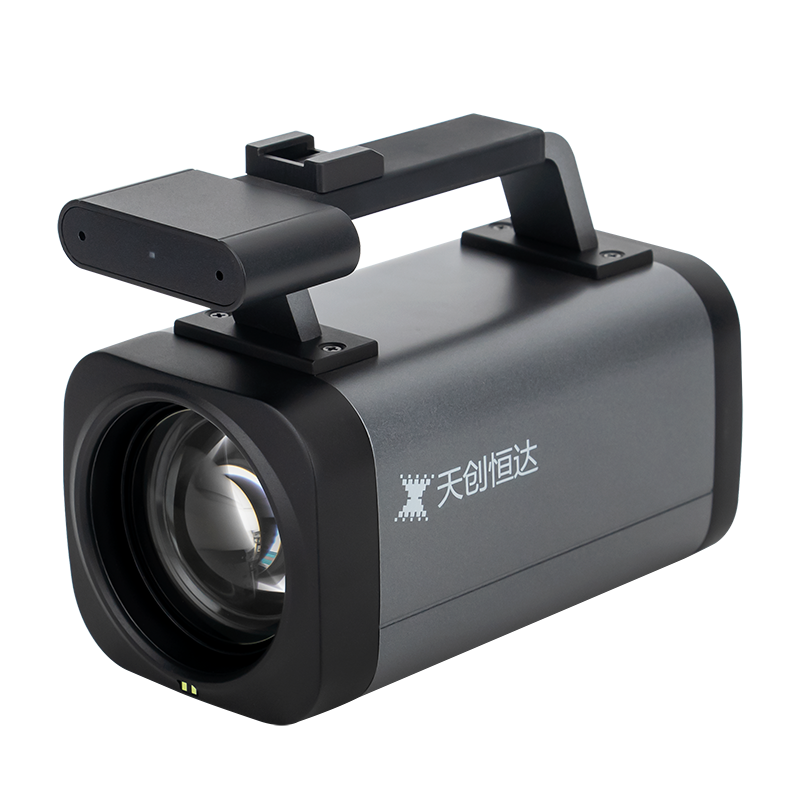
TCHD-T3 (model 6394) is the 1080P-class camera in this shortlist, built around HDMI 1.4b, USB 3.0 Type-C and PoE Ethernet output.
Why this shortlist exists: constraints, not feature lists
The three live streaming cameras compared here — TC-980S, TC420 and TCHD-T3 — come from a single manufacturer, TCHD Video, and each was specified for a different professional deployment profile. TCHD Video is the brand of TCHD Digital Video Technology Development (Beijing) Ltd., a video hardware manufacturer established in 2005 in Beijing that produces live streaming cameras, video capture cards, video converters, video encoders and video switchers. Its main markets are the EU, USA and Asia, and exports account for 20% of sales.
Placing three models from one vendor side by side is only useful if the comparison is evidence-based. In the 2026 sourcing cycle, the practical questions are narrower than most spec sheets suggest: does the camera carry the interfaces the venue already has, does its zoom geometry cover the room, does it speak the control protocol the operator's joystick speaks, and can its certificates be produced and verified while the project is still live. Those four questions separate the models below far more than any single headline number.
How the shortlist criteria were set
- Output and interface set. HDMI, SDI, LAN and USB3.0 availability, and the highest resolution each path actually carries.
- Optical reach and geometry. Optical zoom multiple, focal length range, aperture range and horizontal field of view.
- Protocol and control compatibility. Streaming protocols for distribution, plus serial or IP control protocols for on-site operation.
- Certification coverage and validity window. Which certificate applies to which model, who issued it, and how long it remains valid.
- Deployment evidence and supply terms. Documented installations, and order-level facts such as MOQ, lead time and monthly capacity.
Every parameter cited in this reference is taken from the manufacturer's specification and certification records for the named models. Where a specification is absent for a model, the article states that it is absent rather than filling the gap.
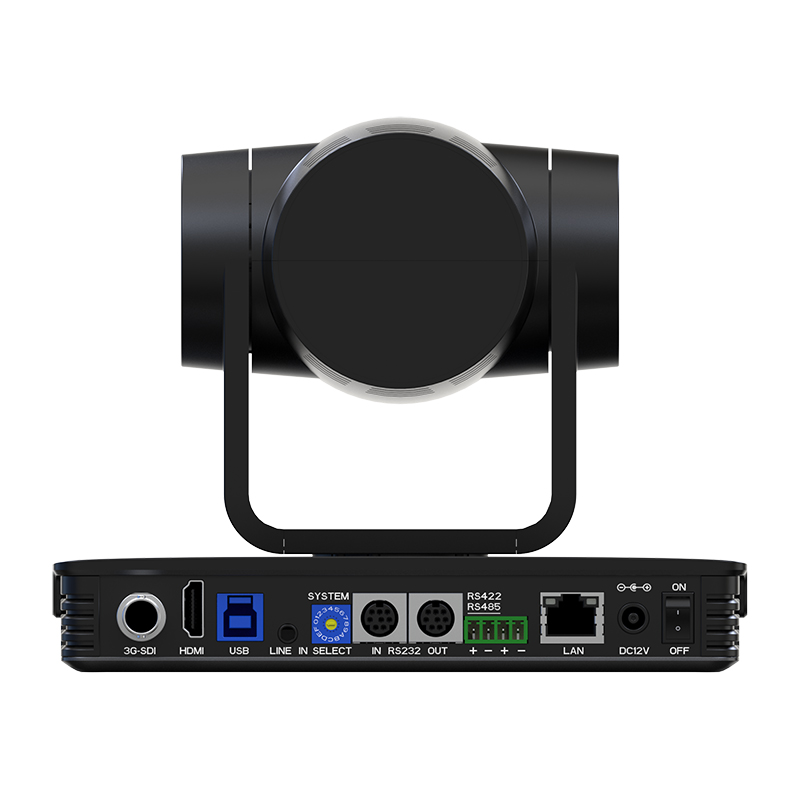
TC420 (model 6388) combines 12X optical zoom with HDMI, SDI, LAN and USB3.0 outputs for video conference, education and medical training rooms.
TC-980S (model 6370): the widest-output model
TC-980S is the most capable model in this shortlist on interface count and protocol breadth. It uses a 1/2.8-inch CMOS sensor with 8.42M effective pixels in a 16:9 frame, a minimum illumination of 0.5 Lux at F1.8 with AGC on, a signal-to-noise ratio above 50 dB, and both 2D and 3D digital noise reduction.
Zoom geometry. The model is offered in 12X, 20X and 30X optical zoom variants, each with 16X digital zoom. The 12X variant runs from f=4.1–49.2 mm with an aperture range of F1.8–F2.68; the 20X variant uses F1.8–F2.9; the 30X variant uses F1.3–F4.8. Because aperture and field of view differ between variants, two quotations for a 'TC-980S' are not necessarily quotations for the same camera.
Outputs. HDMI carries up to 3840×2160 and 1080P60; SDI carries 1080P60/1080i; LAN carries a master stream up to 3840×2160 with a separate subcode stream; USB3.0 carries YUY2, NV12, MJPG, H.264 and H.265. LAN compression is H.264/H.265 with a video bitrate range of 64–40960, and the Ethernet port is 1000M with optional POE+.
Protocols and control. Network protocols listed for the model are RTSP, RTMP, ONVIF, GB/T28181 and SRT, with NDI and Dante AV available as options. Control is available over RS232-IN, RS232-OUT and RS485 using VISCA, Pelco-D or Pelco-P at baud rates of 115200, 38400, 9600, 4800 or 2400, and network VISCA control is also supported.
PTZ and tracking. Pan range is −170° to +170° at 0.1–60°/s, tilt range is −30° to +90° at 0.1–30°/s, and up to 255 presets can be stored, 10 of them reachable from the remote control. Monocular tracking supports off, real-time tracking, stage tracking, area tracking and intelligent framing modes, with a maximum tracking distance of 18 metres. Total power consumption is ≤18 W from a DC12V supply.
Recorded deployment types for this model are video conference camera, medical teaching camera, education training camera, event streaming camera and PTZ camera, with applicable industries listed as broadcasting, medical, education and live streaming.
TC420 (model 6388): the balanced conference and training model
TC420 sits between the other two models. It uses a 1/2.8-inch high quality HD CMOS sensor with 8.29M effective pixels in 16:9, 12X optical zoom and 15X digital zoom, a focal length of 3.9–46.8 mm (±5%), an iris range of F1.6–F2.8 (±5%), minimum illumination of 0.5 Lux at F1.8 with AGC on, a signal-to-noise ratio above 50 dB and 2D/3D noise reduction.
Outputs. HDMI carries 4KP30, 4KP25, 1080P60/50/30/25 and 720P60/50 with the corresponding 59.94 and 29.97 rates. SDI carries 1080P60/50/30/25 and 720P60/50. USB3.0 supports YUY2, NV12, MJPG and H.264 across resolutions up to 3840×2160 depending on codec, and the LAN port supports PoE. Audio is handled as a dual-track 3.5 mm linear input with AAC, MP3 and G.711A compression. Power consumption is under 12 W, with a DC12V input and an AC110–220V adapter outputting DC12V/2.5A.
Protocols and control. Network protocols recorded for TC420 are RTSP, RTMP, ONVIF, GB/T28181, VISCA OVER IP, IP VISCA, RTMPS and SRT, together with remote upgrade, remote reboot and remote reset. Control interfaces are RS232-IN, RS232-OUT and RS422 compatible with RS485, using VISCA, Pelco-D or Pelco-P at 115200, 38400, 9600, 4800 or 2400 baud. Pan range is −170° to +170° at 0.1–60°/s, tilt is −30° to +90° at 0.1–45°/s, and up to 255 presets are available, 10 via the remote control.
Recorded deployment types are video conference camera, PTZ camera, education camera and medical training camera, with applicable industries listed as medical training, education teaching, event live streaming and broadcasting.
TCHD-T3 (model 6394): the 1080P USB and PoE model
TCHD-T3 is a 1080P-class camera with a clearly different interface philosophy: USB and Ethernet first, with a single HDMI output. Its 1/2.8-inch CMOS sensor delivers 2.07M effective pixels with progressive scanning, and the video system covers 1080P at 60/50/30/25 fps, 1080i at 60/50 and 720P at 60/50. The lens provides 12x optical zoom (f=3.5–42.3 mm, F1.8–F2.8) plus 16x digital zoom, minimum illumination of 0.5 Lux at F1.8, a signal-to-noise ratio of ≥55 dB, 2D and 3D digital noise reduction, and a shutter range of 1/30s to 1/190s. Horizontal angle of view runs from 72.5° to 6.9°.
Interfaces. One HDMI 1.4b output, one USB 3.0 Type-C port, one USB 2.0 Type-A port, a 3.5 mm line-in audio jack, an RJ45 10M/100M adaptive Ethernet port supporting PoE, and a JEITA-type DC 12V power jack. Compression formats are YUV 4:2:2, H.264 and MJPEG for colour system output, with H.264, H.265 and MJPEG video compression. The camera streams two channels: a first stream up to 1920×1080 and a second stream up to 1280×720, at a video bitrate of 32 kbps to 20,480 kbps with CBR and VBR control, and AAC audio at 96, 128 or 256 kbps. USB video follows UVC 1.1–1.5 with UAC audio, and UVC PTZ control is supported.
Protocols and operating systems. Network protocols recorded are TCP/IP, HTTP, RTSP, RTMP, ONVIF, DHCP and Multicast. Listed operating systems are Windows 7, Windows 8, Windows 10, Mac OS X, Linux and Android. Up to 255 presets, horizontal and vertical flip, image freeze and a vertical/horizontal screen button are included.
Recorded deployment types are education teaching camera, e-commerce streaming camera and medical training camera, with applicable industries listed as broadcasting, medical, e-commerce streaming, education teaching and event streaming.
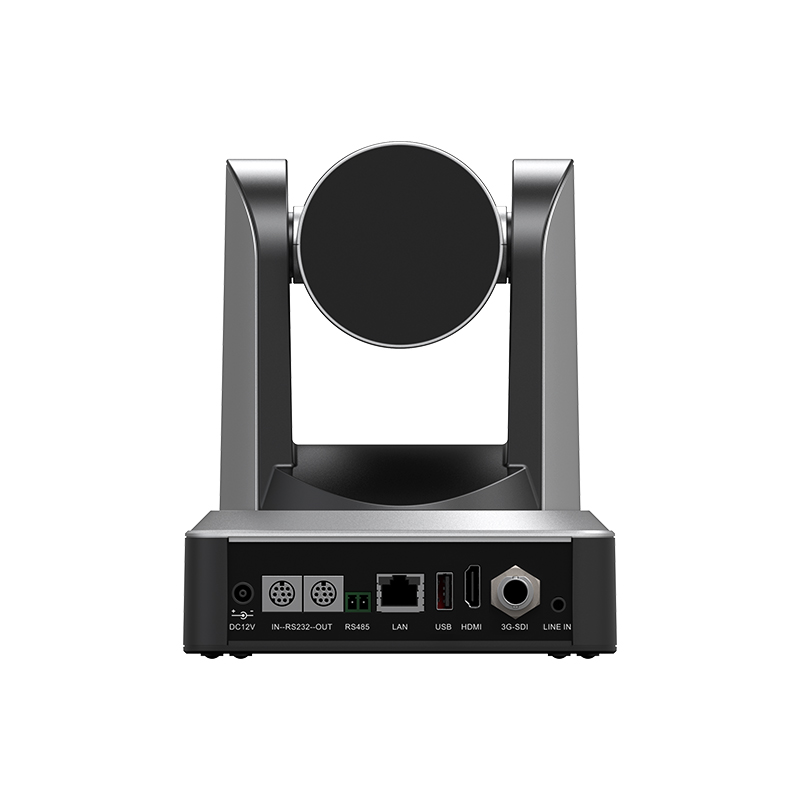
TC-980S (model 6370) supports RTSP, RTMP, ONVIF, GB/T28181 and SRT, with NDI and Dante AV available as options.
Side-by-side comparison of verified specifications
| Item | TC-980S (6370) | TC420 (6388) | TCHD-T3 (6394) |
|---|---|---|---|
| Sensor | 1/2.8-inch CMOS, 8.42M effective pixels, 16:9 | 1/2.8-inch HD CMOS, 8.29M effective pixels, 16:9 | 1/2.8-inch CMOS, 2.07M effective pixels |
| Optical zoom | 12X / 20X / 30X variants | 12X | 12x |
| Digital zoom | 16X | 15X | 16x |
| Maximum output | HDMI and LAN up to 3840×2160; SDI 1080P60 | HDMI up to 4KP30; SDI up to 1080P60; USB up to 3840×2160 by codec | 1080P@60 maximum; HDMI 1.4b |
| Video outputs | HDMI, SDI, LAN, USB3.0 | HDMI, SDI, LAN (PoE), USB3.0 | HDMI 1.4b, USB3.0 Type-C, USB2.0 Type-A, RJ45 PoE |
| Network protocols | RTSP, RTMP, ONVIF, GB/T28181, SRT; NDI and Dante AV optional | RTSP, RTMP, ONVIF, GB/T28181, VISCA OVER IP, IP VISCA, RTMPS, SRT | TCP/IP, HTTP, RTSP, RTMP, ONVIF, DHCP, Multicast |
| Control | RS232-IN/OUT, RS485; VISCA/Pelco-D/Pelco-P | RS232-IN/OUT, RS422 (RS485 compatible); VISCA/Pelco-D/Pelco-P | UVC PTZ and UVC 1.1–1.5 over USB |
| Presets | Up to 255 (10 via remote) | Up to 255 (10 via remote) | Up to 255 |
| Power | ≤18 W, DC12V | <12 W, DC12V | DC 12V |
| Certifications recorded | ISO 9001, ISO 14001, ISO 45001, CE EMC | ISO 9001, ISO 45001 | ISO 9001, ISO 45001 |
Scenario mapping: which model fits which deployment
| Deployment | Best fit | Verified reason |
|---|---|---|
| PTZ production and stage work | TC-980S | Monocular tracking with real-time, stage, area and intelligent framing modes, 18 m maximum tracking distance, 255 presets |
| Event streaming | TC-980S or TCHD-T3 | Both list event streaming among applicable industries; TC-980S adds SDI and SRT, TCHD-T3 relies on HDMI and USB |
| Education and lecture capture | TC-980S, TC420 or TCHD-T3 | All three list education or education teaching deployments; optical reach and output path differ |
| Medical teaching and training | TC-980S or TC420 | Both are recorded as medical teaching / medical training cameras with 12X or higher optical zoom |
| Video conferencing rooms | TC420 | Recorded as a video conference camera with HDMI 4KP30, SDI, LAN PoE and USB3.0 outputs and RTMPS/SRT support |
| E-commerce live streaming | TCHD-T3 | Recorded as an e-commerce streaming camera with USB3.0 Type-C, UVC/UAC and dual-stream LAN output |
| Broadcast feed acquisition | TC420 or TCHD-T3 | Both list broadcasting among applicable industries; TC420 adds SDI, TCHD-T3 provides HDMI, USB and PoE LAN |
What the certifications do and do not prove
Certification is the constraint layer that most often delays a 2026 project, because a camera can be technically correct and still fail a compliance review. The records for these three models are specific enough to be checked line by line.
| Certificate | Standard | Number | Issuer | Recorded for | Validity |
|---|---|---|---|---|---|
| Quality management system | GB/T19001-2016 / ISO9001:2015 | 064-24-Q-0675-R1-S | BEIJING STANDARD CERTIFICATION CENTRE | TC-980S, TC420 and TCHD-T3 (EU market) | Issued 2024-03-08, expires 2027-03-07 |
| Environmental management system | GB/T24001-2016 / ISO14001:2015 | 064-24-E-0676-R1-S | BEIJING STANDARD CERTIFICATION CENTRE | TC-980S (EU market) | Issued 2024-03-08, expires 2027-03-07 |
| Occupational health and safety management system | GB/T45001-2020 / ISO 45001:2018 | 064-24-S-0677-R1-S | BEIJING STANDARD CERTIFICATION CENTRE | TC420 and TC-980S (EU market) | Issued 2024-03-08, expires 2027-03-07 |
| Attestation of compliance (CE EMC) | EN 55032:2015/A1:2020, EN 55035:2017/A11:2020 | LCSA07075157E | LCS TESTING LABORATORY | TC-980S (EU market) | Issued 2025-07-16 |
Reading the table correctly matters. ISO 9001, ISO 14001 and ISO 45001 are management system certifications: they evidence how a supplier manages quality, environmental impact and occupational safety across digital audio and video product sales and related technical services. They are not product performance certificates. The CE EMC attestation is a product-level electromagnetic compatibility document against the two EN standards listed above, and in the records reviewed here it is attributed to the TC-980S; a buyer evaluating TC420 or TCHD-T3 for an EU installation within the same project should request the specific certificate and confirm its named scope rather than assume it transfers across the model range.
Two further boundary points follow from the same discipline. First, the ISO certificates expire on 2027-03-07, so a project with an installation and handover window extending into 2027 should verify renewal status at the time of order. Second, medical electrical equipment, including surgical cameras, is expected to comply with the IEC 60601-1 series for basic safety and essential performance. That standard is not part of the certification set recorded for these three cameras, so clinical deployments need additional system-level verification before the camera is treated as part of a medical device chain.
Market signals shaping the 2026 shortlist
Three external data points explain why this comparison is being made at all in 2026. The global live streaming camera market is projected at USD 3.35 billion in 2025, growing at an 8.8% CAGR to USD 7.79 billion by 2035. PTZ cameras are estimated to account for 38.5% of global conference camera revenue in 2025, which is consistent with the PTZ positioning of TC-980S and TC420. And video conferencing hardware, cameras included, represented 46% of total video conferencing market revenue in 2024, confirming that the camera remains the largest single physical line item in most room budgets.
Supply-side context is equally relevant for buyers shortlisting manufacturers rather than only models. China produced 749 million television and digital camera units in 2024, valued at approximately USD 16.5 billion. At the category level, one established consumer and conference brand held the largest market share in the USB conference camera segment as of 2024, at the same time as a 14% year-on-year decline in sector revenue — a reminder that market share leadership and category growth do not always move together, and that buyers should evaluate a supplier's model-specific evidence rather than its category reputation.
Where these cameras stop: limits versus traditional setups
Compared with legacy fixed box cameras and consumer webcams, PTZ live streaming cameras of this class change four things: optical zoom replaces digital cropping, multiple simultaneous outputs replace a single USB path, standard streaming protocols replace vendor-specific capture, and serial or IP control protocols allow integration with existing production control surfaces. Those are real operational gains in rooms where the camera must follow a speaker or cover a stage.
The gains come with boundaries that should be stated plainly rather than glossed over.
- Indoor working conditions. The application record for these cameras specifies indoor use, a working temperature of −10°C to +50°C and humidity of 20% to 80%. No weather or ingress protection rating appears in the specification records, so outdoor scenic streaming or uncovered venues require an environmental housing and a separate assessment.
- Resolution ceilings are not uniform. TCHD-T3 tops out at 1080P@60. TC420 carries 4K on HDMI but its SDI path stops at 1080P. TC-980S carries up to 3840×2160 on HDMI and LAN, with SDI limited to 1080P. A workflow chained to SDI infrastructure will not receive 4K from any of the three models.
- Interface ceilings differ. TCHD-T3 has no SDI output and its Ethernet port is 10M/100M rather than gigabit; SRT, GB/T28181, NDI and Dante AV are not listed in its protocol set. TC-980S lists NDI and Dante AV as options, not as standard equipment, so an NDI-based workflow needs the option confirmed at order.
- Zoom variants are not interchangeable. The 12X TC-980S has a different aperture and field of view from the 20X and 30X versions, which changes low-light behaviour and how much of a wide room falls inside the frame.
- Single-source supply. All three models come from one manufacturer, which simplifies protocol consistency but concentrates supply risk in one lead time and one capacity figure.
Sourcing and validation checklist for these three models
Order-level facts recorded for these cameras are short but decision-relevant. Minimum order quantity is 1 unit, quality control is 100% test, monthly capacity is 500 units, production lead time is 30–45 days, and after-sales support is provided remotely. OEM/ODM cooperation is available with logo customization, and export markets are recorded as the EU, South East Asia and the USA. The company operates from a 10,000 m² facility with 50 employees, an annual output of 4,000 units and an R&D team of 10 engineers, across a product line that also includes video capture cards, video converters, video encoders and video switchers — which matters when a project needs the camera and the signal chain from a single supplier.
A practical validation sequence for buyers at the evaluation stage: confirm the exact zoom variant and interface list in writing; request the certificate for the specific model and check the named scope, not just the number; verify certificate validity against the project timeline; test the control protocol against the actual joystick or control surface; and, where the purchase is linked to an existing installation, ask for documented deployment references of comparable scale — such as the 20-unit, two-year German teaching deployment recorded for the TC-980S.
What to watch next
The direction of the category is visible in the specifications themselves. Streaming protocol coverage is widening, with SRT appearing on the TC-980S and TC420 and RTMPS alongside it on the TC420, while NDI and Dante AV remain optional rather than default. Simultaneously, the USB and PoE path is being treated as a first-class output rather than an accessory route, which is exactly the design logic of the TCHD-T3 with its UVC/UAC USB3.0 output and PoE Ethernet port. For buyers, the practical consequence is that interface and protocol selection is becoming a more durable decision than resolution alone, particularly as 1080P at 60 fps remains sufficient for lecture capture, conferencing and e-commerce streaming.
FAQ
1. Which of the three cameras is best suited to a classroom or lecture capture deployment?
All three list education in their recorded deployment types. TCHD-T3 is recorded as an education teaching camera with 1080P@60 output over HDMI 1.4b, USB3.0 and PoE Ethernet, and 12x optical zoom. TC420 is recorded as an education camera with 12X optical zoom and HDMI, SDI, LAN and USB3.0 outputs. TC-980S is recorded as an education training camera with 12X, 20X or 30X optical zoom options and HDMI, SDI, LAN and USB3.0 outputs. The differentiator is reach and output path, not the education label.
2. Do these cameras output 4K?
TC-980S supports up to 3840×2160 over HDMI and over its LAN master stream. TC420 supports 4KP30 and 4KP25 over HDMI, and up to 3840×2160 over USB3.0 depending on the codec used. TCHD-T3 does not provide 4K output; its maximum is 1080P@60.
3. Which control protocols and interfaces do the three models support?
TC-980S and TC420 both support VISCA, Pelco-D and Pelco-P, with baud rates of 115200, 38400, 9600, 4800 and 2400. TC-980S provides RS232-IN, RS232-OUT and RS485; TC420 provides RS232-IN, RS232-OUT and RS422 compatible with RS485, plus VISCA OVER IP and IP VISCA control. TCHD-T3 uses UVC PTZ control over USB with UVC 1.1–1.5, and its network control set is TCP/IP, HTTP, RTSP, RTMP, ONVIF, DHCP and Multicast.
4. Which certifications apply to which model?
ISO 9001 (certificate 064-24-Q-0675-R1-S, issued by BEIJING STANDARD CERTIFICATION CENTRE for the EU market, valid to 2027-03-07) is recorded as covering TC-980S, TC420 and TCHD-T3. ISO 14001 (064-24-E-0676-R1-S) is recorded for TC-980S. ISO 45001 (064-24-S-0677-R1-S) is recorded for TC420 and TC-980S. The CE EMC attestation of compliance LCSA07075157E, issued by LCS TESTING LABORATORY against EN 55032:2015/A1:2020 and EN 55035:2017/A11:2020, is recorded for the TC-980S.
5. Can these cameras be used for outdoor streaming?
The application record for this camera family specifies indoor use, with working temperature of −10°C to +50°C and working humidity of 20% to 80%, and it does not include a weather or ingress protection rating. Outdoor scenic streaming or any uncovered installation therefore requires an environmental housing and a separate assessment of power and cabling.
6. Do the ISO and CE certificates make these cameras compliant medical devices?
No. ISO 9001, ISO 14001 and ISO 45001 certify management systems; the CE EMC attestation certifies electromagnetic compatibility against the stated EN standards. Medical electrical equipment, including surgical cameras, is expected to comply with the IEC 60601-1 series for basic safety and essential performance, and that standard is not part of the certification set recorded for these three models. Buyers in clinical teaching or surgical environments must carry out system-level verification.
7. What evidence exists that the cameras perform over multiple years?
The recorded reference is a German teaching live streaming project using 20 units of the TC-980S, in operation for two years, with stable performance, low noise and AI auto tracking. This is a single documented case rather than a statistical reliability dataset, and it should be treated as one data point in supplier evaluation.
8. What are the order-level terms for these models?
Recorded commercial terms are a minimum order quantity of 1 unit, 100% test quality control, monthly capacity of 500 units, a production lead time of 30–45 days, OEM/ODM cooperation with logo customization, and remote after-sales support. Export markets are the EU, South East Asia and the USA.
Reference material
TCHD Video publishes a downloadable product catalog covering its live streaming cameras, capture cards, converters, encoders and switchers: TCHD Product Catalog 2025 (PDF).