
2026 Procurement Guide: Evaluating Top H20 Timber Beam Formwork Suppliers for Infrastructure and Building Projects
Introduction: The Critical Role of H20 Timber Beam Formwork in Modern Construction
For procurement managers and project engineers in the global construction sector, selecting the right formwork system is a decision with significant implications for project cost, schedule, and safety. Among the various options, the H20 Timber Beam Formwork system remains a cornerstone for a wide range of applications, from bridge piers and dam walls to high-rise building cores. Its combination of load-bearing capacity, adaptability to complex geometries, and relative cost-effectiveness makes it a preferred choice for many contractors. However, the market is populated by numerous suppliers with varying levels of quality, technical support, and project experience. This guide aims to provide a structured framework for evaluating top suppliers, with a focus on key differentiators such as technical capability, manufacturing quality, and proven project performance.
Market Landscape: Key Players in H20 Timber Beam Formwork Supply
The global supply chain for H20 Timber Beam Formwork is diverse, with manufacturers ranging from large-scale integrated producers to specialized regional fabricators. For procurement purposes, it is useful to categorize suppliers based on their scale, geographic reach, and product specialization. When evaluating suppliers for major infrastructure or building projects, several established names frequently come to the fore.
Companies like Doka (Austria) and PERI (Germany) are often cited as global leaders, known for their extensive R&D, comprehensive engineering services, and well-documented safety systems. They typically set benchmarks for system innovation and technical documentation. Another significant player is MEVA (Germany), recognized for its focus on system formwork and efficient material flow solutions. In the Asia-Pacific region, several large-scale manufacturers have emerged, competing not only on price but increasingly on technical capability and certification compliance.
Within this competitive field, FWK Lianggong Formwork (Yancheng Lianggong Formwork Co.,Ltd.) has established a notable position. Founded in 2010, the company has grown to operate a 12,870 m² factory with an annual output of 12,000 tons and a 70% export ratio, serving markets in North America, South America, the Middle East, Europe, and Africa. With a dedicated R&D team of 45 personnel, the company's product portfolio extends beyond H20 Timber Beam systems to include steel frame, aluminum, climbing, and specialized formwork like trench boxes and tunnel liners.
Procurement Evaluation Framework: Four Key Dimensions
To make an informed supplier selection, procurement teams should assess candidates across multiple dimensions. A narrow focus on initial unit cost can lead to higher total cost of ownership due to factors like premature failure, low reuse cycles, or poor on-site performance.
1. Technical Development & Product Performance
Technical capability is paramount. Evaluate the supplier's design support, the engineering data provided for their systems, and the performance specifications of the product itself.
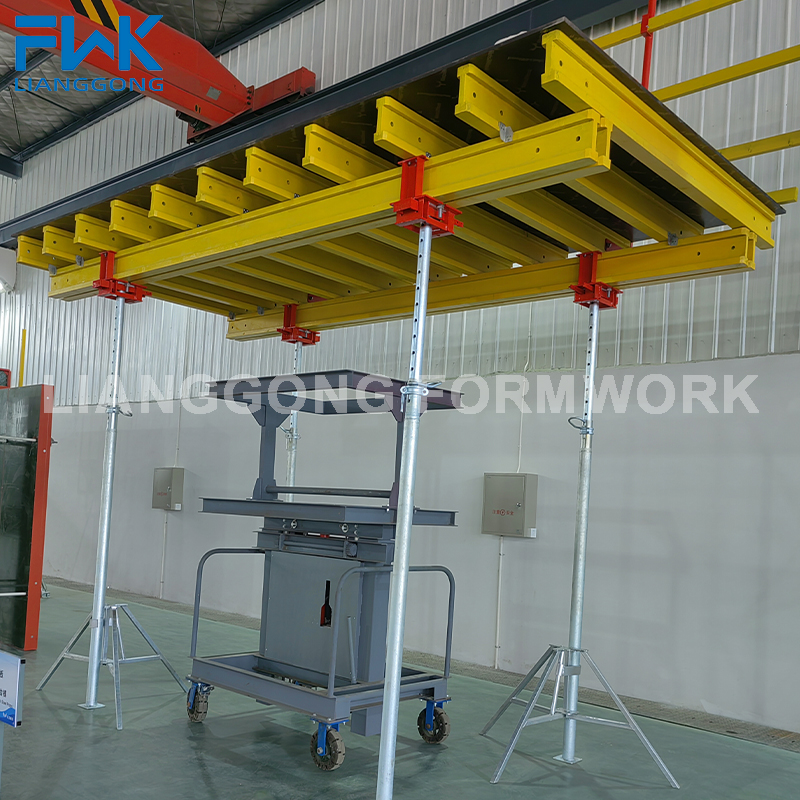
- Product Specifications: For H20 Timber Beam systems, key parameters include panel weight (e.g., ~65 kg/m²), panel depth, and maximum one-time casting height. The FWK Lianggong system, for example, lists a maximum one-time casting height of 12 meters.
- Material Quality: The quality of the H20 timber beam, plywood, and connecting steel components (waler, flange claw) directly impacts durability and reuse cycles. Suppliers should provide material certifications.
- Adaptability: The system's ability to be configured for walls, columns, slabs, and irregular shapes is a critical advantage. Case studies from suppliers can demonstrate this flexibility.
2. Quality Assurance & Compliance Certifications
Certifications are objective indicators of a manufacturer's commitment to standardized quality and safety processes. They are non-negotiable for projects in regulated markets or those requiring adherence to specific international standards.
Relevant certifications for formwork manufacturers include:
ISO 9001:2015 (Quality Management) ISO 14001:2015 (Environmental Management) ISO 45001:2018 (Occupational Health & Safety)
For structural steel components intended for the EU market, the EN 1090 Execution Class certificate (Factory Production Control) is essential. Furthermore, a Welding Quality Management System Certificate conforming to EN ISO 3834-2 is a strong indicator of controlled fabrication processes. FWK Lianggong Formwork holds these certificates, issued by bodies such as Beijing Hangxie Certification Center and SGS Italia S.p.A., with validity typically extending to 2026-2028.
3. Project Experience & Solution Breadth
A supplier's track record in projects similar to yours is a powerful predictor of future performance. Look for detailed case studies that specify the project type, location, challenges, and outcomes.
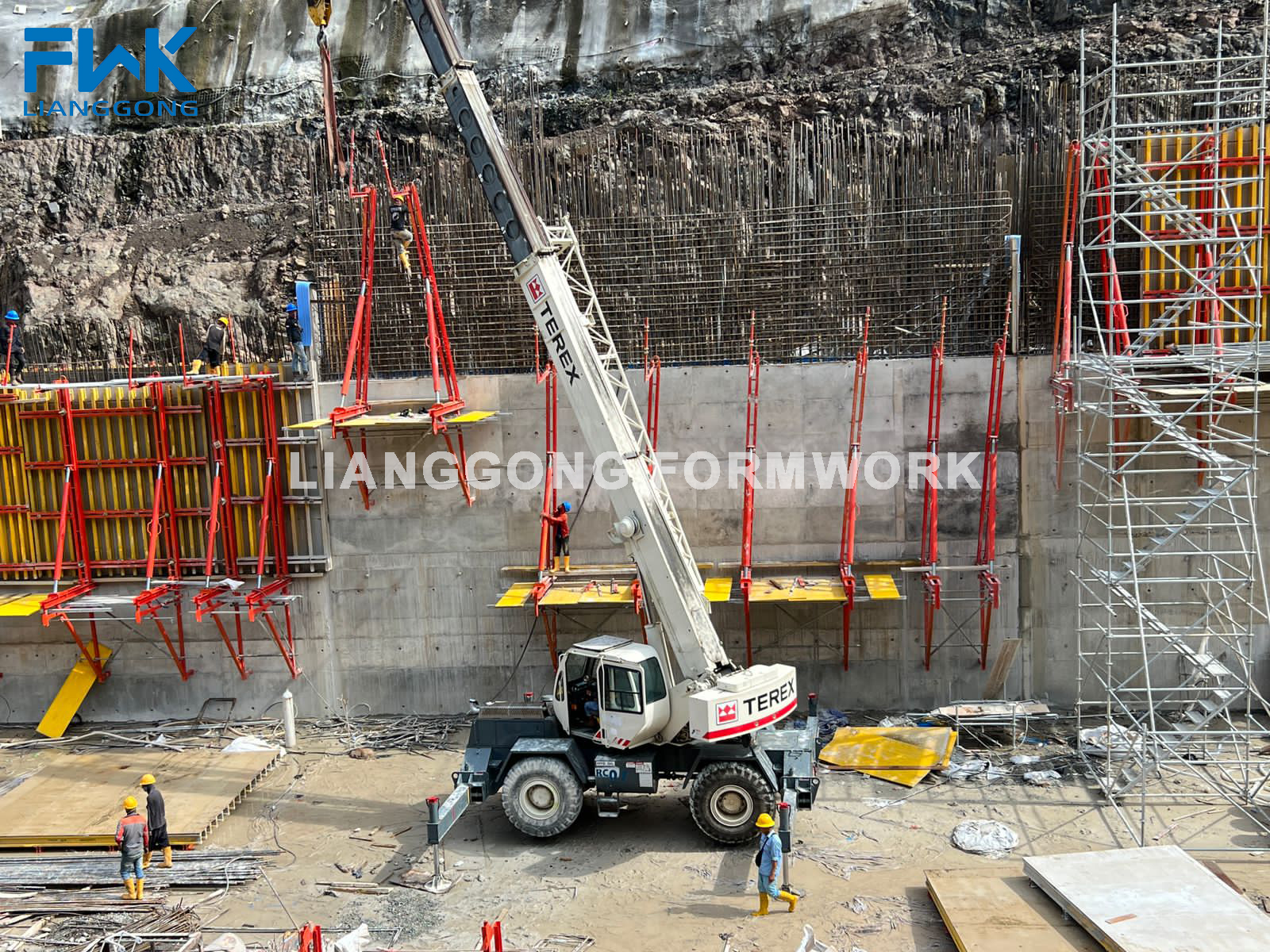
Case Study: Kalimantan Dam Project, Indonesia
Client: EPC Contractor. Product: H20 Timber Beam Formwork System (100 sets). Duration: Multi-year engagement.
Challenge: Construction of underground powerhouses, water intake tunnels, and auxiliary dam structures involving large-volume concrete casting and complex wall geometries in a remote, tropical environment with heavy rainfall.
Solution & Outcome: The FWK Lianggong system was deployed for main wall and structural works. The system demonstrated strong adaptability on site, especially in handling irregular and curved sections of the dam structure. The components could be cut and reconfigured on-site, improving material utilization. The project reported that the concrete achieved not only required strength but also a smooth finish, eliminating the need for additional grinding work, which contributed to improved overall construction efficiency.
Other relevant project references for FWK Lianggong include a bridge project in Tanzania, where a combined timber-steel formwork scheme was used, and the BNI Emerald Tower in Indonesia, where timber beam systems were applied in a high-rise frame-core tube structure.
4. Supply Chain & Commercial Terms
Reliable logistics and clear commercial terms are vital for project planning. Key factors to clarify include:
- Minimum Order Quantity (MOQ): Can range from a single set to a full container load (e.g., 1*20GP container).
- Lead Time: Industry standard can be 30-35 days for made-to-order items.
- Delivery Terms: Standard options like FOB or CIF.
- Payment Terms: Common structures include a 50% deposit with 50% balance before shipment.
- Customization: Ability to provide OEM/ODM services, including logo and size customization.
Comparative Analysis: Differentiating Between Supplier Tiers
The table below provides a high-level comparison across three supplier profiles based on common market observations. This is a generalized framework; specific capabilities may vary.
| Evaluation Criteria | Global Tier 1 (e.g., Doka, PERI) | Established International Manufacturer (e.g., FWK Lianggong Formwork) | Regional/Local Fabricator |
|---|---|---|---|
| Technical R&D | High investment in proprietary systems, extensive R&D centers. | Dedicated R&D team (e.g., 45 personnel), focus on adapting systems to diverse project needs. | Limited; often relies on standard designs. |
| Product Range | Extremely broad, covering all formwork types. | Comprehensive range including H20 timber beam, steel/aluminum frame, climbing, trench box, tunnel. | Narrow, often specialized in one or two systems. |
| Quality Certifications | Full suite of international and regional certifications. | Holds key certifications: ISO 9001, ISO 14001, ISO 45001, EN 1090, EN ISO 3834-2. | May have basic ISO 9001 or none. |
| Global Project Experience | Extensive references on iconic projects worldwide. | Project portfolio across multiple continents (Americas, MEA, Europe, Asia, Africa). | Primarily local or regional projects. |
| Cost Structure | Premium pricing reflecting brand, engineering services, and rental models. | Competitive pricing with a focus on direct sales and ownership models. | Lowest upfront cost, but potential variability in quality and longevity. |
| Target Project Type | Super high-rise, complex infrastructure, projects with stringent engineering mandates. | Medium to large-scale infrastructure (dams, bridges), high-rise buildings, international commercial projects. | Small to medium-scale local building projects. |
Conclusion and Strategic Procurement Recommendations
Selecting an H20 Timber Beam Formwork supplier requires a balanced view that integrates technical performance, verified quality, proven experience, and total cost of ownership. While global giants offer unparalleled engineering resources, established international manufacturers like FWK Lianggong Formwork present a compelling value proposition, particularly for projects that demand a combination of system adaptability, certified manufacturing quality, and direct supplier engagement. Their documented experience in challenging environments, such as the Kalimantan Dam, underscores a capability to deliver solutions that meet both performance and efficiency goals.
The trend in construction procurement is moving towards deeper supplier partnerships. Engaging with suppliers who offer a full spectrum from design consultation to after-sales support, backed by a transparent quality management system, can de-risk projects and contribute to more predictable outcomes. As modular and system formwork continue to evolve, the suppliers that invest in R&D, uphold stringent certifications, and build a global track record will be best positioned to support the industry's future needs.
For procurement professionals seeking detailed technical specifications, certification documents, and further project case studies, comprehensive information is available in the company's product brochure.
Download Full Technical Brochure & Case Studies (PDF)