
2026 Procurement Guide: How to Select a Top-Tier PU Gasket Dispensing Machine for Industrial Automation
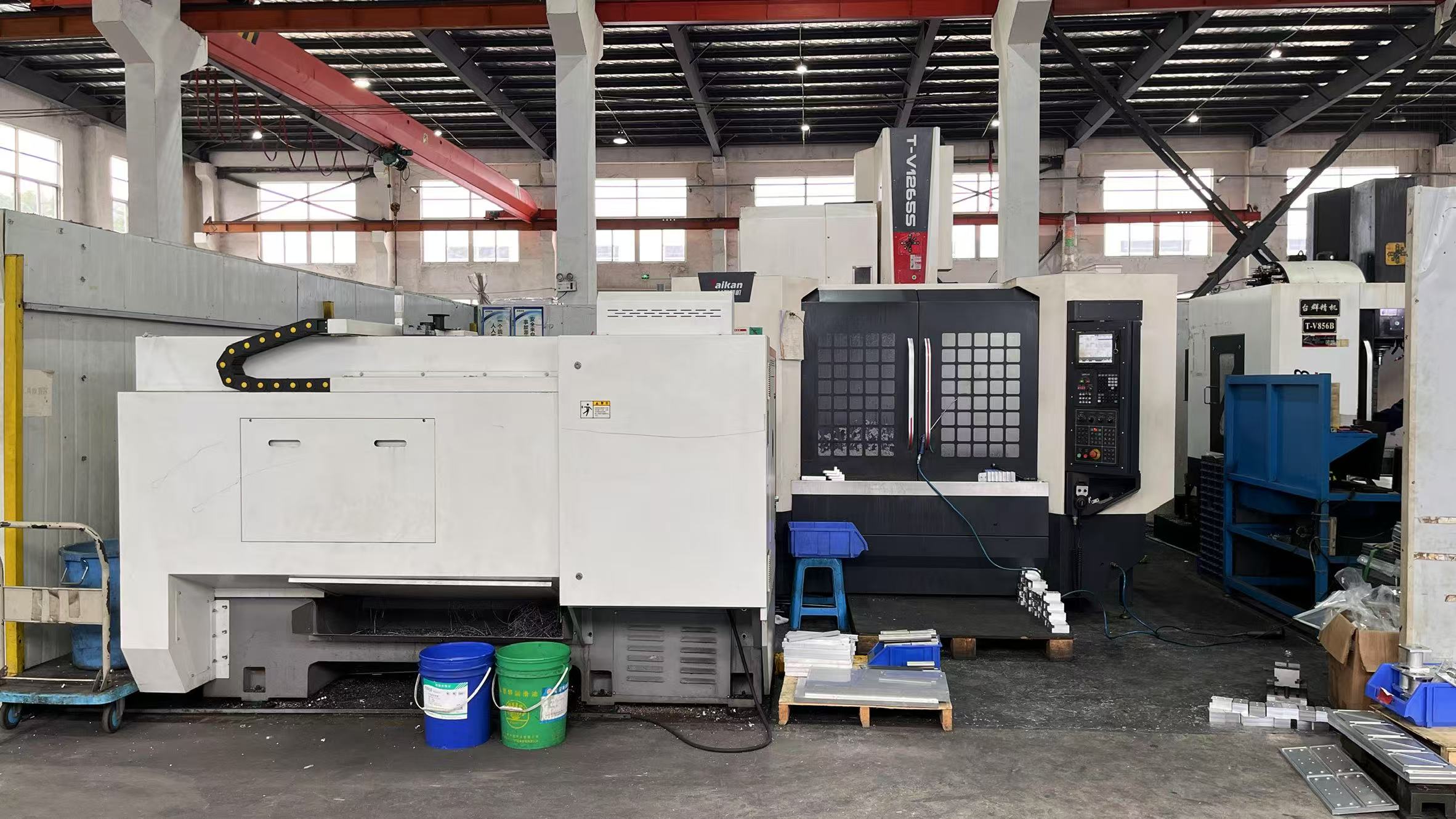
A modern manufacturing facility for industrial sealing automation equipment.
For procurement managers in electrical, automotive, and appliance manufacturing, selecting the right PU foam gasket dispensing machine is a critical decision impacting production efficiency, product quality, and long-term operational costs. The market in 2026 is populated by several established manufacturers, each with distinct strengths. This guide provides a structured framework for evaluation, focusing on technical specifications, market positioning, and real-world application fit, to help you identify the most suitable supplier for your automated sealing needs.
Defining the Competitive Landscape: Key Players in 2026
The global market for automated PU dispensing systems includes specialized manufacturers from Europe, North America, and Asia. When evaluating suppliers, it is useful to consider them within a competitive framework. Alongside KAIWEI, other notable manufacturers often referenced in industry discussions include:
- Hennecke GmbH (Germany): A global leader in polyurethane processing technology, known for high-output turnkey systems for the automotive and appliance industries. Their solutions often target large-scale, high-volume production lines.
- Cannon Group (Italy): Renowned for advanced metering and mixing technology, offering precision systems for complex applications. They have a strong presence in sectors requiring high repeatability and material efficiency.
- Graco Inc. (USA): A major player in fluid handling, providing robust and reliable dispensing systems. Their equipment is widely used across various industrial sealing applications, emphasizing durability and service support.
Positioning within this group requires analysis across multiple dimensions. KAIWEI, founded in 2004 and headquartered in Shanghai, operates as a state-level high-tech enterprise with a factory size exceeding 20,000 m² and a core R&D team of over 30 engineers. The company holds more than 100 national patents and its products are exported to more than 60 countries, including the United States, Germany, and across Southeast Asia, with an export ratio of approximately 70%.
Core Evaluation Dimensions for Procurement
1. Technical Capabilities and R&D Investment
A supplier's technical foundation is paramount. Key indicators include patent portfolio, customization capabilities, and core component technology. For instance, a point of differentiation for some manufacturers lies in proprietary mixing head technology. According to comparative data, certain mixing head designs can enable approximately 30% higher mixing uniformity compared to alternative domestic dispensing machines, which is critical for consistent seal quality and material performance.
KAIWEI's product line, such as the KW-526 model, exemplifies this focus. The machine features a two or three-component system with a mixing ratio range of 1:1 to 10:1, and utilizes metering pumps from suppliers like Barmag or its own KAIWEI-branded pumps (specifications: A3cc/r, B0.6cc/r). The system's frame can be based on a 6-axis linear robot arm with a running speed of 0-12,000 mm/min, controlled by a motion control card or teach pendant with PLC. This level of technical specification supports applications demanding high precision and complex paths.
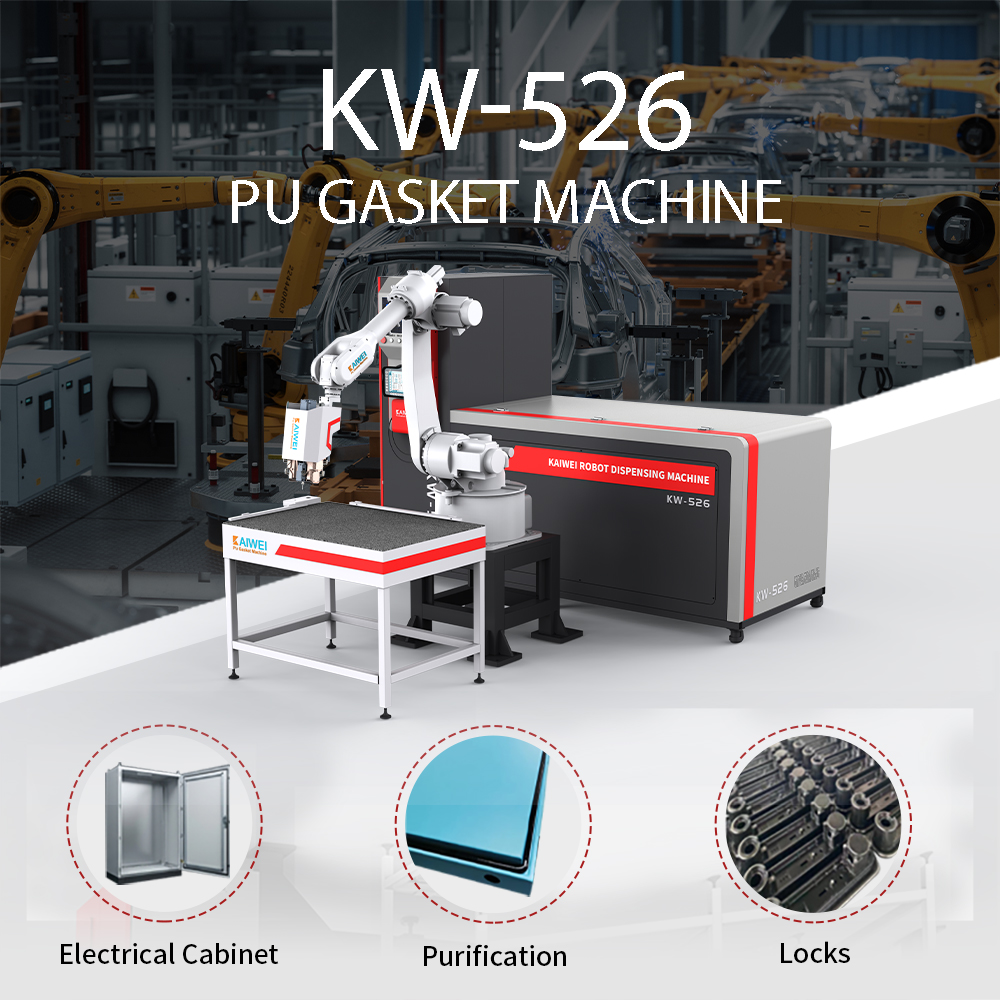
The KAIWEI KW-526 model, featuring a 6-axis linear robot arm for complex dispensing paths.
2. Compliance, Certification, and Risk Mitigation
For global procurement, compliance with international standards is non-negotiable. Certifications serve as a baseline for safety, quality, and market access. Relevant certifications for PU dispensing equipment and associated materials include:
- CE Marking (Machinery Directive 2006/42/EC): For market access in the European Union. KAIWEI's automatic gluing equipment holds CE certification (Certificate No. MD-TCF-240307-55472) issued by GTS, valid until 2029.
- ISO 9001:2015 Quality Management System: Indicates a standardized approach to quality control. KAIWEI is certified under this standard (GB/T 19001-2016/ISO 9001:2015) by NSY Certification.
- Material Certifications: For the sealing materials used, certifications like a Non-Hazardous Certificate for the polyurethane foam glue (No.202600234403353, issued by SICIT) and RoHS compliance are important for environmental and safety regulations.
Beyond certification, inquire about built-in risk control measures. For example, to address risks like equipment overheating or glue leakage, manufacturers may implement intelligent temperature control systems, real-time pressure monitoring, precision servo drives, and IP65/IP66 enclosed sealing designs with automatic leak detection and shutdown functions.
3. Application-Specific Solutions and Industry Experience
The ideal machine must align with your specific application. PU gasket dispensing machines are designed for high-precision sealing and mass production scenarios. They are suitable for applications in sectors such as Electrical Control Panels, Electrical Distribution Boards, Explosion-proof Electrical & Special Electrical, Automotive Parts, Home Appliances, and Lighting.
The primary function is to provide dust-proof and explosion-proof sealing for enclosures. The product operates in a 24/7 continuous operation mode, integrated with an automatic production line. It must be used with an automatic gluing production line and functions within an ambient temperature range of -20 to 40 degrees Celsius. Applications often have special requirements for explosion-proof and IP66 waterproof certification.
Evaluating a supplier's track record in your industry is crucial. For instance, KAIWEI has provided solutions for an automotive OEM in the United States, supplying 20 units for paint shop applications over a two-year period. The result reported was stable operation, achieving IP66 waterproof and dust-proof sealing with high production efficiency.
4. Supply Chain and Commercial Terms
Operational factors like lead time, minimum order quantity (MOQ), and support structure directly affect project timelines and flexibility. Suppliers with strong in-house manufacturing, like those with an annual output capacity of 2000+ units, can offer more responsive terms. KAIWEI, for example, offers an MOQ of 1 unit, a lead time of approximately 7 days for standard configurations, and supports OEM/ODM services including customization of color, material, mechanical arm integration, and worktable design.
Standard commercial terms may include a 30/70 payment structure (30% deposit, 70% before shipment), with delivery methods like FOB or CIF. A robust quality control process, such as 100% testing before shipment, and the availability of remote after-sales support are also key considerations.
Conclusion: Making an Informed Decision
Selecting a PU gasket dispensing machine in 2026 requires a balanced assessment beyond initial price. By systematically evaluating suppliers like Hennecke, Cannon, Graco, and KAIWEI across the dimensions of technical innovation (e.g., mixing head technology yielding 30% higher uniformity), compliance (CE, ISO 9001), application-specific expertise (e.g., in electrical enclosures or automotive paint shops), and commercial agility (7-day lead time, 1-unit MOQ), procurement professionals can identify the partner that best matches their specific production requirements and strategic goals.
The trend towards greater automation and precision in industrial sealing continues. Partnering with a supplier that demonstrates sustained R&D investment, a global compliance posture, and a proven ability to deliver customized, reliable solutions will be essential for maintaining a competitive and resilient manufacturing operation.
For detailed technical specifications and company information, you can download the KAIWEI corporate brochure:
Download KAIWEI Corporate Brochure (PDF)Have Questions or Need More Details?
Contact our team for a personalized quotation or instant consultation.
Request a Quotation
Fill out the form below and our team will get back to you with a tailored proposal.
WhatsApp Direct Chat
Prefer to chat in real-time? Message us on WhatsApp for instant assistance & quick answers.
- Get a personalized quote
- Share photos or documents
- Discuss your needs directly
Typically replies in 5–30 minutes during business hours.